Motor oil ratings can seem like alphabet soup to most drivers. You’ll see labels like API SN, dexos 1, and viscosity grades on every bottle, but what do they actually mean? Understanding these standards is essential for maintaining your engine’s health and protecting your warranty.
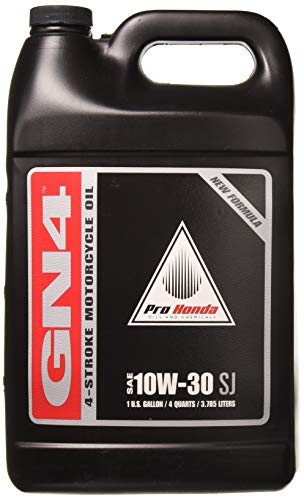
Honda Pro 10W-30 Engine Oil
This guide explains how the American Petroleum Institute (API) and General Motors’ dexos specification system work, what each rating certifies, and how to use this information when picking oil for your vehicle.
What Is the API Standard and Why It Matters
The American Petroleum Institute (API) is the primary authority that sets performance standards for motor oils in the United States. Since 1911, the API has developed and maintained specifications that ensure motor oils meet minimum performance requirements for engine protection, detergency, and wear prevention.
API ratings appear as two-letter codes on oil bottles, with the first letter indicating whether the oil is for gasoline (S) or diesel (C) engines. The second letter advances alphabetically as standards become more stringent. For example, API SN is a more recent and strong standard than API SM.
These ratings aren’t marketing terms. They represent evaluated performance criteria verified through standardized engine tests overseen by the American Society for Testing and Materials (ASTM) and SAE International. When an oil meets an API rating, it has passed specific laboratory and engine dynamometer tests that measure oxidation resistance, detergent performance, anti-wear protection, and sludge control.
Understanding API Gasoline Engine Ratings
For gasoline vehicles, API ratings follow a progression. Current and recent ratings include:
- API SN Plus (2020-present): The newest standard, offering improved high-temperature deposit control and better protection in modern turbocharged engines.
- API SN (2010-present): Provides enhanced protection against pre-ignition in turbocharged engines and improved fuel economy performance.
- API SM (2006-2010): Still acceptable for many vehicles, though newer oils offer better performance in modern engines.
- API SL (2001-2010): Older standard; most manufacturers recommend upgrading to SN or SN Plus.
Each new rating builds on previous requirements while adding new performance criteria. An API SN Plus oil will meet all SN requirements plus additional tests. However, newer ratings aren’t always required for older vehicles. Consult your owner’s manual to determine the minimum API rating your engine needs.
What Is the dexos Specification System
Dexos is General Motors’ proprietary oil specification that goes beyond API standards. Introduced in 2010, dexos represents additional performance requirements that GM determined were necessary for optimal protection of its engines. While dexos is a GM specification, it has become relevant to many drivers because GM engines are common and dexos oils are widely available.
There are two primary dexos categories for gasoline engines:
- dexos 1: For most GM gasoline engines. Dexos 1 oils meet API SN or higher standards but also pass additional GM-specific tests for deposit control, fuel economy, and low-temperature fluidity.
- dexos 1 Gen 2: The updated specification offering enhanced performance in newer GM engines with improved protection against sludge and higher-temperature stability.
Dexos oils must still meet API standards, but they represent a higher tier of performance certification. If your GM vehicle’s manual specifies dexos, using a non-dexos API SN oil may not provide adequate protection and could affect warranty coverage. Non-GM vehicles aren’t required to use dexos oil unless the manufacturer specifically recommends it.
Viscosity Grades and What the Numbers Mean
Viscosity describes how thick or thin oil is. Motor oil viscosity is rated using the SAE (Society of Automotive Engineers) grading system, which appears as numbers like 5W-30 or 10W-40.
The number before the W (winter) indicates how the oil flows in cold conditions. Lower numbers (5W, 0W) mean the oil flows more easily when your engine starts in freezing temperatures. This is critical for cold-climate starts because thick oil that doesn’t flow quickly can’t protect engine bearings during startup.
The number after the W indicates viscosity at operating temperature (212 degrees Fahrenheit). A 30-weight oil is thinner at operating temperature than a 40-weight. Your owner’s manual specifies the correct viscosity for your engine based on its design and climate considerations.
Choosing the wrong viscosity can reduce fuel economy, increase wear, or cause inadequate protection. Use only the viscosity your manufacturer recommends. Modern engines are designed for thinner oils like 0W-20 or 5W-30, which improve fuel efficiency. Using a heavier oil like 10W-40 in a modern engine wastes fuel and may not provide proper protection.
How to Read an Oil Bottle Label
A motor oil bottle contains several key pieces of information you should understand before purchasing:
- API Donut: A circular symbol showing the API rating (e.g., SN Plus) and viscosity grade.
- Manufacturer Approvals: Logos or text indicating dexos certification, Ford Motorcraft, Chrysler MS-6395, or other OEM approvals.
- Viscosity Grade: The SAE rating (0W-20, 5W-30, etc.).
- Type: Conventional, synthetic blend, or full synthetic. This affects change intervals and performance but doesn’t change API or dexos ratings.
- Bottle Size: Usually 1 quart or 5 quarts.
Match three elements to your owner’s manual: the API rating (or dexos if required), the viscosity grade, and any manufacturer-specific approvals. If your manual says 5W-30 dexos 1, buy 5W-30 dexos 1. If it says 0W-20 API SN Plus, any API SN Plus 0W-20 oil works, regardless of brand.
API Diesel Ratings and Commercial Vehicles
Diesel engines use a different API rating system, indicated by a C (commercial) rather than S (spark ignition). Diesel ratings include CK-4, CJ-4, and older designations. These ratings address the unique demands of diesel combustion, including higher pressures, soot accumulation, and sulfur content in fuel.
If you own a diesel pickup truck or commercial vehicle, consult your manual for the correct diesel rating. Using gasoline engine oil (API S-rated) in a diesel engine can cause inadequate protection and engine damage. Conversely, diesel oils are formulated specifically for diesel engines and shouldn’t be used in gasoline engines unless the manual permits it.
Most diesel vehicles manufactured after 2010 require API CK-4, which provides better soot handling and oxidation stability than earlier ratings. Always verify your specific engine’s requirements in the owner’s manual or maintenance guide.
Choosing the Right Oil for Your Vehicle
The process for selecting motor oil is straightforward when you follow these steps:
- Step 1: Consult Your Owner’s Manual. This is the definitive source. It specifies the API rating, viscosity grade, and any OEM approvals (dexos, Motorcraft, etc.) required or recommended.
- Step 2: Verify Current Standards. If your manual is older and specifies API SM or SL, you can use newer ratings like SN Plus, which offer better protection. However, don’t use older ratings than specified.
- Step 3: Choose a Reputable Brand. All oils meeting a given API rating have passed the same tests. Brand reputation, availability, and price are reasonable deciding factors once you have confirmed the rating and viscosity match your requirements.
- Step 4: Check Manufacturer Approvals. If your manual lists dexos, Motorcraft, or other OEM approvals, confirm the bottle displays that certification.
- Step 5: Confirm Viscosity. Double-check the SAE grade (0W-20, 5W-30, etc.) matches your manual exactly.
Once you have verified these elements, any oil meeting the specifications will provide the protection your engine needs. Premium brands and synthetic oils offer additional benefits like extended drain intervals, but they don’t change the API or dexos rating. Buying the cheapest API SN Plus 5W-30 and the most expensive synthetic API SN Plus 5W-30 provide equivalent baseline protection if both meet your manufacturer’s specifications.
Frequently Asked Questions
Can I use an oil with a higher API rating than my manual specifies?
Yes. API ratings are backward compatible. If your manual specifies API SM, you can safely use API SN, SN Plus, or future ratings. Newer ratings meet all previous requirements plus additional performance criteria. However, don’t use a lower rating than specified, as it may not provide adequate protection.
What is the difference between synthetic and conventional oil in terms of API ratings?
API and dexos ratings apply to both synthetic and conventional oils. The rating indicates performance level, not base stock type. A conventional API SN Plus 5W-30 and a synthetic API SN Plus 5W-30 meet identical performance standards. Synthetic oils often maintain their properties longer, allowing extended drain intervals, but the API rating itself doesn’t differ based on whether the oil is synthetic or conventional.
Do I need dexos oil if my vehicle isn’t a General Motors product?
Only if your non-GM manufacturer’s manual specifies dexos. Most non-GM vehicles specify API ratings and other manufacturer approvals instead. Using dexos in a non-GM vehicle that doesn’t require it’s unnecessary and may cost more. Always follow your specific vehicle’s owner’s manual.
What happens if I use the wrong viscosity oil?
Using the wrong viscosity can reduce fuel economy, increase engine wear, and potentially void your warranty. Oils thinner than specified may not protect bearings adequately at operating temperature. Oils thicker than specified may not flow quickly enough during cold starts and can increase fuel consumption. Always use the exact viscosity your manual recommends.
Is an API rating the only thing that matters when picking oil?
API ratings guarantee minimum performance standards, but they aren’t the only consideration. Your viscosity grade must match your manual, any OEM approvals (dexos, Motorcraft, etc.) must be verified, and the oil type (synthetic vs. Conventional) affects drain intervals. However, once these elements match your manual’s specifications, the API rating indicates equivalent baseline protection regardless of brand or price.
The Bottom Line
API and dexos ratings exist to ensure motor oils meet rigorous performance standards that protect your engine. The API system provides a transparent, evaluated foundation for all motor oils sold in the United States, while dexos and other OEM specifications add manufacturer-specific requirements for certain vehicles. By understanding these rating systems and consulting your owner’s manual, you can confidently select oil that provides the protection your engine needs without overpaying for unnecessary upgrades. The most important step is matching the API rating, viscosity grade, and any required manufacturer approvals to your specific vehicle’s requirements. When you do, you’re ensuring your engine receives adequate protection regardless of the brand or price point you choose.