Going wireless with CarPlay is one of the easiest ways to make an older car feel modern, but there are two very different paths to get there. You can install a brand new wireless CarPlay stereo, which is a full replacement of your existing head unit, or you can buy a small wireless CarPlay adapter that simply plugs into a stereo you already own. Both end up with your phone connecting over a wireless link, yet the time, effort, and result aren’t the same.
This guide breaks down the pros and cons of each route so you can decide what fits your car and your patience. If you lean toward the quick and simple option, our roundup of the best wireless CarPlay adapters is a good place to start. First, let’s look at what each choice really involves.
A new wireless CarPlay stereo: pros and cons
A wireless CarPlay stereo is a complete head unit replacement. You remove the factory radio and fit a new aftermarket unit that supports wireless CarPlay out of the box. The big advantage is that you often get a much bigger screen, sharper graphics, and modern features such as a faster processor, split screen layouts, and improved touch response. Because the wireless support is built in, the connection tends to be stable and the whole system feels purpose built rather than bolted on.
The trade off is effort and complexity. Replacing a stereo means dealing with wiring harnesses, mounting kits, and sometimes a dash adapter to make a new unit fit an odd shaped opening. It takes more time, more know how, and in many cars you may want professional installation. You also lose some factory integration, such as steering wheel controls or original menus, unless you add extra interface modules. For drivers who want a true upgrade and don’t mind the work, the payoff is a noticeably better experience.
A wireless CarPlay adapter: pros and cons
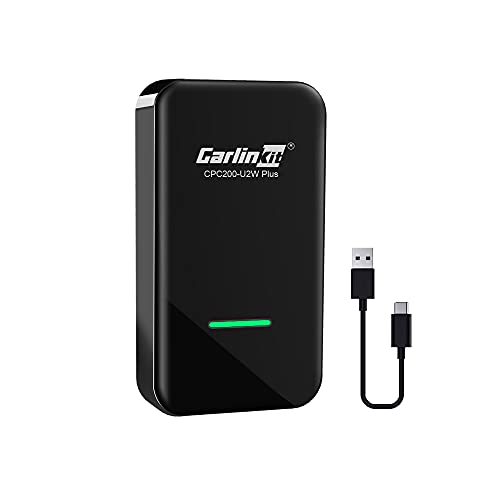
A wireless CarPlay adapter is a small dongle that plugs into a stereo that already supports wired CarPlay. This is the key point to understand: an adapter doesn’t add CarPlay to a car that never had it. Instead, it takes your existing wired CarPlay connection and turns it wireless, so your phone can stay in your pocket while CarPlay still appears on the screen.
The appeal is obvious. It’s cheap and quick. In most cars you plug the adapter into the same USB port you used for the wired cable, pair it once with your phone, and from then on it connects automatically. There’s no dash removal, no wiring, and no installation skill required. The downsides are minor by comparison. You may notice a short delay when the connection starts as the car powers on, and a small number of units can run warm or occasionally drop the link. Even so, for the vast majority of people who already have wired CarPlay, an adapter is the fastest and lowest cost way to go wireless.
Which is right for you, and products to consider
The choice comes down to one question: does your car already have a CarPlay capable stereo? If you plug your phone in with a cable today and CarPlay appears, you already have a wired CarPlay head unit, and a wireless adapter is almost certainly the smart move. It’s the cheapest and quickest fix, it keeps your familiar screen and controls, and it can be moved to another car later. When shopping, look for adapters that support fast pairing, automatic reconnection, and your phone software version, and check that owners of your exact vehicle report a reliable experience.
If your car has no CarPlay at all, or you simply want a larger and more capable screen, a new wireless CarPlay stereo is the better answer. In that case, prioritise a unit that physically fits your dash, matches your speaker and wiring setup, and offers the screen size and features you actually care about. Many shoppers who want the simple path still start by comparing the best wireless CarPlay adapters before committing to a full stereo swap, since the adapter route solves the problem for far less effort.
Mistakes to avoid
- Buying an adapter when your car has no CarPlay at all. Adapters only convert an existing wired CarPlay connection to wireless, so they’ll do nothing in a car that never supported CarPlay.
- Assuming every adapter works with your phone. Confirm it supports your current phone software before you buy.
- Ignoring the USB port type. Some adapters need a specific USB A or USB C port, and using the wrong one can stop it working.
- Expecting an adapter to add a bigger screen. The screen stays the same size; only the connection changes.
- Choosing a stereo that doesn’t fit your dash. Always check the mounting kit and harness for your exact car before buying a head unit.
- Skipping owner feedback for your specific vehicle, since compatibility can vary even within the same brand.
When to replace the whole head unit
There are clear cases where a full stereo replacement makes more sense than an adapter. The most obvious is when your car has no CarPlay support at all, because an adapter can’t create a feature that was never there. In that situation a new wireless CarPlay stereo is the only way to bring CarPlay into the car.
Replacing the head unit is also the right call when your current screen is small, slow, or hard to read, or when the factory unit is aging and starting to fail. If you want modern extras such as a high resolution display, better sound processing, or a camera input, a new stereo delivers those in a way no adapter can. The rule of thumb is simple. If you already have wired CarPlay and are happy with the screen, choose an adapter. If you lack CarPlay or want a real hardware upgrade, replace the head unit.
Frequently Asked Questions
Will a wireless CarPlay adapter work if my car has no CarPlay?
No. An adapter only converts an existing wired CarPlay connection into a wireless one. If your car has never shown CarPlay when you plug your phone in with a cable, you need a new CarPlay capable stereo instead.
Is a wireless adapter as good as a new wireless CarPlay stereo?
For the connection itself it’s very close, since both end up wireless. The difference is that a new stereo can also give you a bigger screen and more features, while an adapter simply makes your current wired CarPlay wireless for far less effort and cost.
Do I need professional installation for either option?
Most adapters need no installation at all; you just plug them into the USB port you already use for wired CarPlay. A full stereo replacement is more involved and many drivers prefer professional installation to handle wiring and fitment correctly.
The Bottom Line
Both paths get you to the same place of wireless CarPlay, but they suit different needs. A wireless CarPlay adapter is the cheap and quick choice for any car that already has wired CarPlay, while a new wireless CarPlay stereo is the upgrade for cars that lack CarPlay or where you want a bigger and more capable screen. Match the option to what your car already supports and you’ll avoid wasted money and effort. If you have wired CarPlay today and just want to cut the cable, compare the best wireless CarPlay adapters and pick one that owners of your vehicle trust.