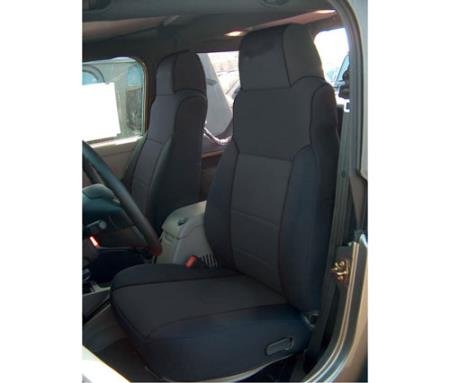
Leather versus cloth is the first fork in the road when you shop for seat covers, and it’s really a choice between two kinds of upkeep. Leather-style covers wipe clean in seconds but demand conditioning and run hot in summer; cloth breathes and forgives temperature swings but holds onto spills, smells, and pet hair. One honesty note before we compare: almost every affordable “leather” seat cover on the market is leatherette, meaning PU or PVC faux leather, not hide. That isn’t a scam, it’s actually easier to live with than real leather, but you should know what you’re buying. This comparison covers durability, cleaning, looks, heat, environmental impact, and the airbag safety check that applies to both.
Durability
Quality leatherette covers resist spills, mud, and general grime better than any woven fabric, which is why rideshare drivers and parents gravitate to them. Their weak points are different ones: sharp objects, pet claws, and years of UV exposure crack and peel the coated surface, and once the coating splits it can’t be repaired invisibly. Cloth covers, especially tight neoprene and canvas weaves, shrug off claws and abrasion far better and never peel, but they absorb what leather repels; a coffee spill is a wipe on leatherette and a stain campaign on polyester. Lifespan is roughly comparable at the same price tier, three to five years of daily use, with the failure mode being peeling on one and fading plus stains on the other.

CAR PASS Faux Leather Seat Covers, Full Set
A widely fitted PU leatherette set with anti-slip backing and airbag-compatible seams, the wipe-clean option at a cloth-cover price.
Maintenance
This is the clearest practical difference. Leatherette maintenance is a damp cloth after messes and an occasional vinyl-safe conditioner to keep the surface from drying out; there’s nothing to launder and stains don’t soak in. Cloth maintenance is vacuuming for crumbs and hair, fabric cleaner for stains, and, on many sets, unzipping the covers for a machine wash a few times a year. If your car carries kids, dogs, or food, leatherette saves you real time every month. If your car mostly carries you, cloth’s upkeep is light enough that the difference stops mattering.
Style
Leatherette wins the showroom test: piped seams and a smooth grain read as an interior upgrade, and black or two-tone sets can make an older cabin look a class above its price. Cloth trades that upscale look for variety, with far more colors, patterns, and textures available, which makes it easier to match a specific interior or hide inevitable wear in a busy weave. Comfort tracks the seasons: leatherette is cold on winter mornings and sticky against skin in July, while cloth stays close to cabin temperature year-round. If summer heat is your reality, a breathable weave or a cooling seat cover will beat any smooth-surface material.
Environmental Impact
Neither material is a clean win, so honest framing helps. Real leather carries the footprint of livestock plus tanning chemistry; leatherette avoids the animal input but is plastic, made from petroleum, and sheds microplastic as it degrades rather than biodegrading. Cloth covers are usually polyester, which is also plastic, though recycled-polyester sets exist and woven fabric tends to stay out of landfill longer simply because it doesn’t peel. If the environmental column drives your decision, look for covers with recycled-content fabric and plan to keep whatever you buy for years; replacement frequency swamps material choice in total impact.
Safety
One check outranks every preference on this page: side airbags. Most modern vehicles deploy airbags through the outboard seam of the front seatbacks, and a cover that isn’t airbag-rated can delay or block that deployment. Reputable brands in both materials sew the outboard seam with breakaway thread and label the covers airbag compatible; no-name sets often don’t. Beyond airbags, make sure any cover, leather or cloth, uses non-slip backing and proper strap anchoring so the cover can’t slide on the cushion, and never route straps around under-seat wiring or occupancy sensors. Our installation guide covers the safe routing step by step.
Conclusion
Pick leatherette if your car sees spills, pets, kids, or passengers for hire, or if the upgraded look is the point; you’re buying wipe-clean convenience and accepting summer stickiness and eventual peeling. Pick cloth if comfort across seasons, claw resistance, and machine-washability matter more than looks, or if you park in the sun where coated surfaces age fastest. Both choices are sound; the wrong move is a no-name cover without airbag-rated seams in either material.
Frequently Asked Questions
Are leather seat covers more durable than cloth seat covers?
Against spills and grime, yes; against claws, abrasion, and long sun exposure, cloth usually outlasts them because coated leatherette eventually cracks and peels. Match the material to your actual hazards rather than assuming leather means tougher.
Can cloth seat covers be washed and dried?
Most cloth sets can be machine washed on a gentle cold cycle, and it’s the reason many owners choose them. Air dry rather than machine dry, since heat shrinks elastic and warps the fit.
Are leather seat covers more expensive than cloth seat covers?
Real leather is dramatically more expensive, but the leatherette that dominates the market now overlaps cloth pricing almost completely, with full faux-leather sets commonly in the same bracket as quality fabric ones.
Can I customize my cloth seat covers?
Cloth offers the widest range of colors, patterns, and trims, and custom-fit makers will cut fabric sets for your exact seats. Leatherette customization exists too but the palette is narrower.
Are cloth seat covers more eco-friendly than leather seat covers?
Modestly, and mainly when you choose recycled-polyester fabric. Standard polyester and PU leatherette are both plastics; cloth’s edge is longevity and the availability of recycled versions, not a fundamentally greener material.
The Bottom Line
Leatherette for easy cleanup and an upscale look, cloth for breathability, claw resistance, and washability. Check the airbag rating before anything else, expect three to five years from either at a given price tier, and remember that nearly all affordable leather covers are faux leather, which for seat-cover duty is a feature rather than a flaw. When you’re ready to pick a specific set, our best car seat covers roundup compares the leading options in both materials.
More Seat Covers Guides
- 7 Best Car Seat Covers in 2026 (Fit, Material and Durability Ranked)
- 7 Best Seat Covers for 2011 Toyota Camry in 2026 (Fit and Comfort Evaluated)
- 7 Best Cooling Car Seat Covers for Cars in 2026 (Hot-Day Evaluated)
- How to Install Car Seat Covers
- 7 Best Seat Covers for Dodge Caravan in 2026 (Fit and Comfort Evaluated)
- 7 Best Heated Car Seat Covers for Cars in 2026 (Cold-Morning Evaluated)