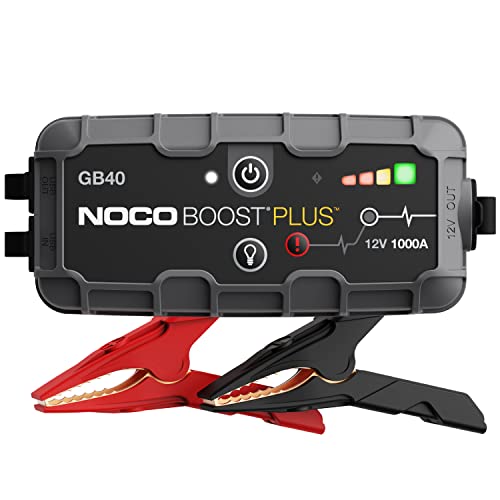
A portable jump starter is a compact device designed to start a dead battery in your vehicle. According to the American National Standards Institute (ANSI), these devices are also known as booster packs or battery jumpers.
It’s essential to use a portable jump starter correctly to avoid any potential risks, such as electrical shock or damage to your vehicle’s electrical system. In this guide, we’ll walk you through the steps to use a portable jump starter safely and effectively.
NOCO Boost Plus GB40
Preparation is Key
Before using a portable jump starter, make sure you follow these precautions:
- Choose a well-ventilated area, away from any open flames or sparks.
- Ensure the vehicle’s engine is turned off and the transmission is in park (automatic) or first gear (manual).
- Set the parking brake.
- Turn off all electrical accessories, such as headlights and radios.
- Check the portable jump starter’s battery level and ensure it’s fully charged.
Connecting the Cables
To connect the cables, follow these steps:
- Locate the positive (+) and negative (-) terminals on the vehicle’s battery.
- Connect the positive cable from the portable jump starter to the positive terminal on the vehicle’s battery.
- Connect the negative cable from the portable jump starter to a metal surface on the vehicle, away from the battery.
- Don’t connect the negative cable to the negative terminal on the vehicle’s battery.
Jump-Starting the Vehicle
Once the cables are connected, follow these steps:
- Turn on the portable jump starter and let it charge the vehicle’s battery for a few minutes.
- Start the engine and let it run for a few minutes to recharge the battery.
- Once the engine is running, remove the cables in the reverse order that they were connected.
Safety Precautions
Remember to always follow these safety precautions when using a portable jump starter:
- Never touch the cables or the battery terminals with your bare hands.
- Never connect the cables to a vehicle with a damaged or corroded battery.
- Never use a portable jump starter in a vehicle with a frozen battery.
Maintenance and Storage
To ensure your portable jump starter remains in good condition, follow these maintenance and storage tips:
- Charge the portable jump starter regularly to maintain its battery health.
- Store the portable jump starter in a cool, dry place, away from direct sunlight.
- Check the portable jump starter’s battery level and replace the battery as needed.
Troubleshooting
If you encounter any issues with your portable jump starter, follow these troubleshooting steps:
- Check the battery level and ensure it’s fully charged.
- Check the cables for any damage or corrosion.
- Consult the user manual or contact the manufacturer for further assistance.
Frequently Asked Questions
Can I use a portable jump starter on any vehicle?
No, not all vehicles are compatible with portable jump starters. Check your vehicle’s owner’s manual or consult with a mechanic to ensure it’s compatible with a portable jump starter.
How do I know if my vehicle's battery is dead?
Check your vehicle’s owner’s manual for the recommended battery testing procedure. You can also consult with a mechanic or use a multimeter to test the battery’s voltage.
Can I use a portable jump starter to charge my phone or other devices?
No, portable jump starters are designed specifically for jump-starting vehicles and shouldn’t be used to charge other devices.
What is the difference between a portable jump starter and a traditional jumper cables?
A portable jump starter is a self-contained unit that includes a battery and a charger, while traditional jumper cables require a separate battery or a vehicle with a functioning battery to jump-start the vehicle.
How often should I replace my portable jump starter's battery?
The lifespan of a portable jump starter’s battery varies depending on usage and storage conditions. Check the manufacturer’s recommendations for replacement and maintenance schedules.
The Bottom Line
By following these steps and taking the necessary precautions, you can use a portable jump starter safely and effectively to start a dead battery in your vehicle. Remember to always consult your vehicle’s owner’s manual and follow the manufacturer’s instructions for specific guidance.
