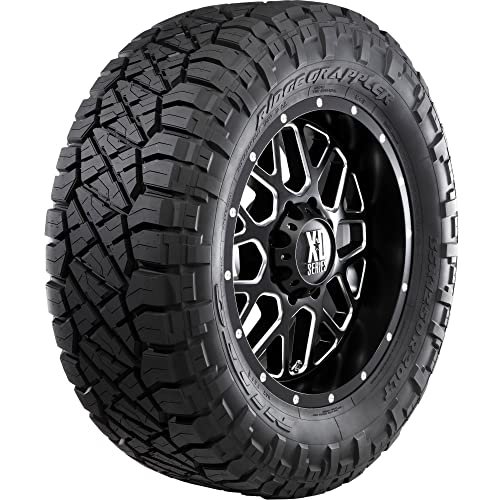
Every tire on your vehicle carries a wall of numbers and letters molded into its sidewall. To most drivers, that string of characters looks like meaningless code. But each part tells you something critical: the tire’s size, its load capacity, how fast it can safely go, and exactly how old it’s.
Understanding sidewall markings helps you buy the correct replacement tire, verify that a used or stored tire is safe to mount, and comply with federal standards set by NHTSA and DOT. This guide walks through every marking in plain language, from the size designation to the four-digit date code that reveals a tire’s birth week.
The Size Designation: What That Letter-Number Combination Means
The most prominent marking on any tire sidewall is the size designation. A typical passenger tire reads something like P215/65R16. Each segment has a specific meaning.
- Service type prefix (P, LT, ST, T): P stands for passenger vehicle. LT means light truck, rated for heavier loads. ST is special trailer. T means temporary spare. Some tires carry no prefix, which indicates a Euro-metric sizing standard with slightly different load assumptions than P-metric tires.
- Section width (215): This is the tire’s width in millimeters, measured from sidewall to sidewall at the widest point when properly inflated and unmounted.
- Aspect ratio (65): This number is the ratio of the tire’s sidewall height to its section width, expressed as a percentage. A 65 means the sidewall height is 65 percent of 215 mm, which works out to roughly 139 mm of sidewall. A lower number means a shorter, stiffer sidewall.
- Construction type (R): R stands for radial construction, which is used on virtually every modern passenger and light truck tire. D means diagonal or bias-ply, still found on some trailers and older vehicles. B means belted bias-ply.
- Rim diameter (16): This is the wheel diameter the tire is designed to fit, measured in inches.
So P215/65R16 means: passenger tire, 215 mm wide, 65 percent aspect ratio, radial construction, fits a 16-inch wheel.
Load Index and Speed Rating
Immediately after the size designation you’ll find two more characters that define the tire’s performance limits. For example, a marking of 95H means load index 95, speed rating H.
- Load index: This is a numerical code from roughly 70 to 126 that corresponds to a specific maximum load capacity per tire. A load index of 95 equals 1,521 pounds per tire. A load index of 110 equals 2,337 pounds. Always replace tires with a load index equal to or higher than the original specification listed in your owner’s manual or door jamb sticker. Going lower risks overloading the tire structure.
- Speed rating: This letter tells you the maximum sustained speed the tire is certified to handle. Common ratings include Q (99 mph), R (106 mph), S (112 mph), T (118 mph), H (130 mph), V (149 mph), W (168 mph), and Y (186 mph). The rating Z appears on some high-performance tires and was historically the highest category, though W and Y ratings have since been standardized above it. Your replacement tire should meet or exceed the speed rating of the original tire.
The SAE and the Tire and Rim Association (TRA) maintain the load and speed rating tables that manufacturers use to assign these codes. These aren’t marketing claims; they reflect standardized structural testing.
The DOT Code and How to Find the Tire's Age
Federal law requires every tire sold in the United States to carry a DOT (Department of Transportation) code, as mandated under FMVSS No. 139 for light vehicle tires. This code appears on at least one sidewall, often on the inner sidewall facing the vehicle, which is why many drivers never notice it.
The code begins with the letters DOT followed by a series of characters. The last four digits are the most important for consumers: they form the week and year of manufacture. For example, DOT ends in 2319 means the tire was made in the 23rd week of 2019.
- Weeks 01 through 52: The first two digits indicate the production week of the year.
- Year: The last two digits indicate the year. 19 means 2019, 24 means 2024, and so on.
- Before 2000: Tires made before the year 2000 use a three-digit date code at the end, such as 239, meaning week 23 of 1999. A small triangle after the three digits was used in the 1990s to indicate a tire made in that decade.
The characters before the date code identify the plant and tire line. The first two characters after DOT identify the manufacturing plant, assigned by NHTSA. The middle characters identify the tire size and type code used by the manufacturer internally.
NHTSA recommends that consumers check the DOT date code before purchasing any tire, including new tires sitting in warehouse inventory. Tires degrade chemically even when stored unused, so age matters regardless of tread depth.
When to Replace a Tire Based on Its Age
Tread depth alone doesn’t tell the whole story. Rubber compounds oxidize and harden over time, causing cracking in the tread grooves and sidewalls. This process accelerates with heat, UV exposure, and improper storage. A tire can pass a visual tread-depth check and still be structurally compromised from age.
NHTSA doesn’t mandate a universal tire age limit by federal law, but it does advise consumers to follow manufacturer guidance and inspect tires carefully after six years. Several major tire manufacturers, including Michelin and Continental, publish guidance recommending replacement after ten years regardless of appearance. Vehicle manufacturers such as Ford, GM, and Volkswagen have recommended six-year replacement intervals for tires and spare tires.
- Check the DOT date code on any used tire before buying or mounting it.
- Inspect the sidewall for fine cracks, crazing, or surface checking, which are early signs of age hardening.
- A full-size spare that has never touched the road still ages. Check its date code the same way.
- Tires stored outdoors or in hot environments age faster than those kept indoors away from ozone sources such as electric motors.
The short version: use the four-digit DOT date code, not just the tread wear indicator, to evaluate whether a tire is still safe to drive on.
Treadwear, Traction, and Temperature Grades (UTQG)
The Uniform Tire Quality Grading (UTQG) system, established by NHTSA under 49 CFR Part 575, requires most passenger tires to carry three standardized grades on the sidewall: treadwear, traction, and temperature. Light truck and winter tires are exempt from UTQG requirements.
- Treadwear grade: A number such as 300, 500, or 800. This is a relative index. A tire graded 400 is expected to last twice as long as a baseline tire graded 200, under government-specified test conditions. Real-world mileage will vary based on driving style, road surface, and inflation habits. Higher is longer-lasting, but very high treadwear grades often mean harder rubber with less grip.
- Traction grade: AA, A, B, or C. This measures the tire’s ability to stop on wet asphalt and concrete under controlled government testing. AA is the highest. Most quality all-season tires carry an A or AA rating. This grade doesn’t measure cornering traction or dry braking.
- Temperature grade: A, B, or C. This measures the tire’s ability to dissipate heat at sustained highway speeds. Grade A is the highest, meaning it can handle sustained speeds above 115 mph without heat failure under test conditions. FMVSS requires that all tires meet at least grade C to be sold legally in the United States.
UTQG grades are assigned by manufacturers based on their own testing under NHTSA guidelines, so they allow cross-brand comparison but aren’t externally audited. Use them as a relative guide rather than an absolute performance guarantee.
Other Markings You May See on the Sidewall
Beyond the main size, load, speed, DOT, and UTQG markings, tires carry several other designations worth knowing.
- M+S (Mud and Snow): This marking indicates the tire meets a basic standard for mud and snow performance. It doesn’t mean the tire is a dedicated winter tire. Most all-season tires carry M+S.
- Three-peak mountain snowflake (3PMSF): A symbol showing a snowflake inside a mountain peak. Tires with this symbol have passed standardized snow traction testing and are considered genuine winter-capable tires. This is a more meaningful snow designation than M+S alone.
- Max inflation pressure: Printed on the sidewall in a format such as MAX PRESS 51 PSI. This is the maximum cold inflation pressure the tire structure can hold safely. It isn’t the recommended operating pressure for your vehicle. Use the pressure listed on your door jamb sticker or owner’s manual for daily driving.
- Ply composition and materials: A listing such as TREAD: 2 PLIES POLYESTER, 2 STEEL, 1 NYLON describes the internal belt and casing structure. This is an FMVSS labeling requirement.
- Tubeless or tube type: Virtually all modern passenger tires are tubeless (TL). Some older and specialty tires require a tube (TT).
- Run-flat markings: Manufacturers use different terms such as RFT, ROF (Run On Flat), SSR (Self-Supporting Runflat), ZP (Zero Pressure), or EMT (Extended Mobility Tire) to indicate run-flat construction.
How to Read the Sidewall Step by Step on Your Own Vehicle
You don’t need any tools to decode your tires. Here’s a practical approach to reading your own sidewalls.
- Step 1, find the main size string: Look for the largest set of characters on the outer sidewall. It’ll follow the pattern described above, such as LT265/70R17.
- Step 2, locate the load and speed suffix: The two characters immediately after the size string give load index and speed rating, for example 121S.
- Step 3, find the DOT code: Look on both the inner and outer sidewalls. The code starts with the letters DOT. The last four digits are the date code. If you see DOT xxxxxxxx2422, the tire was made in week 24 of 2022.
- Step 4, check the UTQG: Usually printed separately near the DOT code or tread area. It’ll read something like TREADWEAR 560 TRACTION A TEMPERATURE A.
- Step 5, note any special symbols: Look for the 3PMSF snowflake, M+S designation, run-flat markings, or any other symbols relevant to your use case.
If you’re comparing two tires and need to verify they’re equivalent, the size string, load index, and speed rating must match the vehicle placard. For specialty uses such as towing, the load index is the most critical variable to confirm.
Frequently Asked Questions
How do I find the manufacture date on my tire?
Look for the DOT code on the tire sidewall. It begins with the letters DOT and ends with a four-digit number. The first two digits are the week of manufacture and the last two are the year. For example, 1124 means week 11 of 2024. The DOT code is sometimes stamped only on the inner sidewall, so you may need to look at the side facing the vehicle or use a flashlight.
What does the P mean at the start of a tire size?
The P prefix stands for passenger metric. It indicates the tire is designed and load-rated for passenger vehicles under standards set by the Tire and Rim Association. If there’s no letter prefix, the tire uses Euro-metric sizing, which has slightly different load capacity assumptions. LT at the start means light truck, ST means special trailer, and T means temporary spare.
How old is too old for a tire?
NHTSA doesn’t set a federal age limit, but multiple vehicle and tire manufacturers recommend replacing tires at six to ten years from the DOT manufacture date, regardless of remaining tread depth. Rubber degrades from heat, UV light, and oxidation even when the tire looks fine. A tire showing surface cracking or sidewall crazing should be inspected by a technician even if the tread is within specification. Always check the four-digit DOT date code before mounting any used or stored tire.
Can I mix tires with different speed ratings on the same car?
Mixing speed ratings is generally not recommended. If you must mix, the lower-rated tire should be placed on the rear axle to reduce the risk of oversteer during an emergency. Your vehicle’s effective speed rating becomes the lowest rating among the four tires. More importantly, matching load index to or above the vehicle placard specification is a safety requirement. Check your owner’s manual and the door-jamb tire placard for the minimum ratings your vehicle requires.
What is the difference between M+S and the three-peak mountain snowflake symbol?
M+S (Mud and Snow) is a self-certification by the manufacturer that the tire meets a basic tread pattern standard for mud and light snow. It doesn’t require independent performance testing. The three-peak mountain snowflake symbol, by contrast, means the tire passed a standardized snow traction test and achieved at least 10 percent better acceleration than a reference tire on packed snow. If you drive in genuine winter conditions, look for the snowflake symbol rather than relying on M+S alone.
The Bottom Line
Tire sidewall markings follow a federal system governed by NHTSA and FMVSS requirements, and reading them takes only a few seconds once you know what each segment means. The size designation tells you what wheel the tire fits, the load index and speed rating define its performance limits, and the four-digit DOT date code tells you exactly how old it’s. Checking these markings before buying, mounting, or continuing to drive on a tire is one of the simplest ways to protect yourself and your passengers on the road.
Related Guides
- 7 Best All Season Tires for Snow and Ice in 2026 (Researched and Compared)
- 7 Best Mickey Thompson Wheels and Tires in 2026 (Researched and Compared)
- 7 Best Tires for Ram TRX (Researched and Compared)
- 7 Best 12 Ply Truck Tires in 2026 (Researched and Compared)
- 7 Best Low Profile Tires for 20 Inch Rims (Researched and Compared)
- 7 Best Tubeless Dirt Bike Tires in 2026 (Researched and Compared)