Choosing between a dog hammock and a flat bench cover comes down to how you travel and what you need to protect. Both keep fur, mud, and scratches off your upholstery, but they do it in different ways. A hammock drapes across the whole back area, while a bench cover sits flat on the seat and leaves room for people.
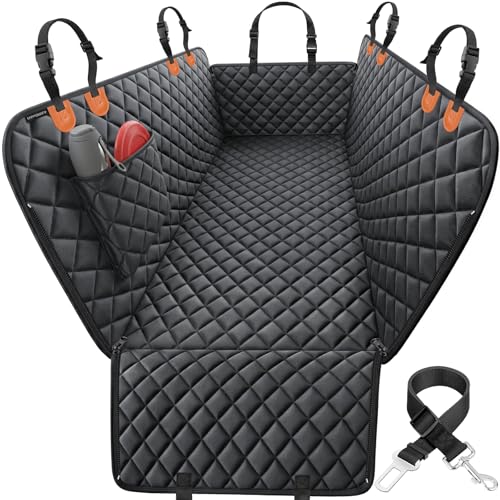
URPOWER Dog Car Seat Cover for Pets 100% Waterproof Seat…
A quilted hammock with side flaps and a seatbelt opening, the layout most back-seat dogs settle into.
If you mostly want to guard the seat and keep your pet from sliding into the footwell, a protective dog seat cover in hammock form may suit you. If you sometimes need to share the back seat with passengers, a flat cover gives you more flexibility. This guide breaks down the trade-offs so you can decide with confidence.
Dog hammock: pros and cons
A dog hammock is a large panel of fabric that hangs between the back of the front seats and the bottom of the rear seats, forming a soft cradle. Because it covers the whole back seat and the footwell gap, it offers full protection for the area your dog occupies. The raised side that connects to the front headrests stops the dog from falling forward into the footwell during braking, which is one of its biggest safety perks.
The main downside is that a hammock fills the entire back space, so passengers can’t easily ride next to your pet. It can also take a little longer to fit the first time, since you attach straps to both the front and rear headrests. For owners with active or anxious dogs, though, the extra containment and coverage usually outweigh the bulk.
Bench seat cover: pros and cons
A bench seat cover lays flat across the rear seat cushion and back rest, much like a fitted blanket. It’s lighter and quicker to install than a hammock, and many designs roll up small for storage. Because it sits on the seat surface only, it lets passengers share the seat with your dog, which is handy for family trips or carpooling.
The trade-off is less containment. A flat cover doesn’t create a barrier across the footwell, so a dog can still slip down into that space or climb toward the front. It protects the upholstery well but does little to keep your pet in one spot. If your dog rides calmly and you value flexibility, a bench cover is often enough.
Which to choose, and products to consider
Match the product to your typical trip. If you drive with your dog alone most of the time and want maximum coverage plus a footwell barrier, a hammock is the stronger pick. If you regularly carry passengers and want a cover you can install in seconds, a flat bench style fits better. Many owners keep both: a hammock for long drives and a flat cover for quick errands.
When you compare options, look for waterproof backing, non slip grips, and seat belt openings so you can still buckle in a harness or a person. Reading through a roundup of the best dog seat covers can help you weigh fabric quality, fit for your vehicle, and ease of cleaning before you commit to one style.
Mistakes to avoid
- Poor anchoring: loose straps let the cover shift and bunch, which reduces protection and can unsettle your dog.
- Blocking seat belts for people: a cover that hides the buckles makes it unsafe for passengers to ride along, so choose one with belt slots.
- Picking the wrong size: a cover that’s too small leaves gaps where fur and mud reach the seat.
- Skipping non slip features: without grip, the cover slides during turns and braking.
- Forgetting to clean it: a damp cover traps odor and can stain the seat underneath over time.
When to add a harness too
A cover protects your seats, but it doesn’t restrain your dog the way a crash tested harness does. If your dog is large, excitable, or prone to moving around, pair the cover with a harness that clips to a seat belt anchor. This keeps your pet steady, reduces driver distraction, and adds a layer of safety in a sudden stop.
A hammock with seat belt openings works well alongside a harness, since you can thread the strap through and still keep the footwell barrier. For puppies and senior dogs, a harness also stops them from wandering into the front seat. Think of the cover and harness as a team: one guards the upholstery, the other guards your dog.
Frequently Asked Questions
Can I use a dog hammock if I also carry passengers?
A hammock fills the whole back seat, so it isn’t ideal when people need to ride in the rear. For those trips, a flat bench cover is the better choice because it leaves room for a passenger to sit beside your dog.
Do these covers fit every car?
Most covers are adjustable and fit many cars, SUVs, and trucks, but you should check the listed dimensions and headrest requirements. Measuring your back seat first helps you avoid a cover that’s too small or too loose.
Will a seat cover keep my dog safe in a crash?
A cover protects upholstery, not your dog. For crash safety you still need a tested harness or a secured crate. Many owners combine a hammock that has belt openings with a harness for both protection and restraint.
The Bottom Line
Both styles do a solid job of keeping your back seat clean, so the decision really hinges on how you travel. Pick a hammock when you want full coverage and a footwell barrier, and pick a flat bench cover when you value quick fitting and the option to share the seat with passengers. Either way, choosing the right cover for your dog protects your car and makes every ride more comfortable. Add a harness when restraint matters, and you have a setup that keeps both your upholstery and your pet in good shape.


