For many car owners, the factory audio system provides adequate sound for daily commutes and casual listening. However, for those seeking a richer, more dynamic, or simply louder audio experience, the question of whether to add an amplifier often arises. Understanding the role of an amplifier in a car audio system is crucial to deciding if it’s a necessary upgrade for your specific needs.
This guide from MustCarBeast will look at the mechanics of car amplifiers, explore the scenarios where they offer significant benefits, and help you determine if your car speakers truly need the extra power and clarity an external amplifier can provide. We’ll examine the factors that influence sound quality and how an amplifier fits into the overall audio equation.
Avantree CK11 Bluetooth Visor Car Speakerphone
Understanding Your Car's Audio System: The Basics
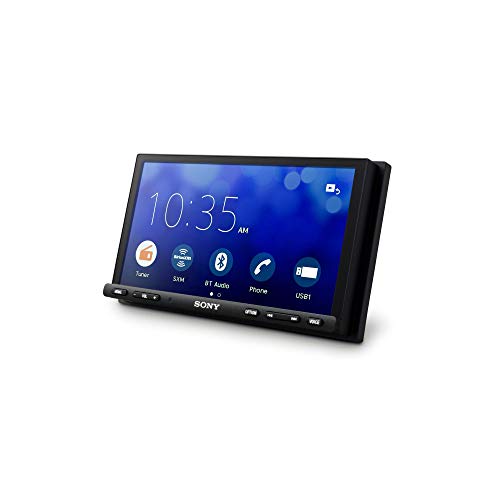
Before we discuss amplifiers, it’s helpful to understand the fundamental components of your car’s audio system. At its core, every system consists of a head unit (the radio/receiver), speakers, and the wiring that connects them. The head unit is the brain, processing audio signals from various sources (radio, CD, Bluetooth, USB). It then sends these low-level electrical signals to an internal amplifier, which boosts them sufficiently to drive the speakers.
Factory head units typically have modest internal amplifiers, usually rated between 10-20 watts RMS (Root Mean Square) per channel. While this is enough to produce sound, it often lacks the power reserves needed for high fidelity, significant volume, or driving more demanding aftermarket speakers. The quality of these components, from the head unit to the speakers themselves, dictates the baseline sound experience in your vehicle.
What Does a Car Amplifier Actually Do?
An external car amplifier is a dedicated device designed to take the relatively weak audio signal from your head unit and amplify it to a much higher power level, then send that clean, strong signal to your speakers. This isn’t just about making things louder; it’s primarily about delivering cleaner, more consistent power. When a speaker receives insufficient power, especially at higher volumes, it can lead to ‘clipping’ or distortion, where the audio waveform is cut off, resulting in a harsh, muddy sound.
A good amplifier provides several key benefits:
- **Increased Power Output:** Delivers more watts RMS to your speakers, allowing them to perform at their full potential without strain.
- **Reduced Distortion:** By providing ample, clean power, an amplifier prevents the head unit’s internal amplifier from being overdriven, drastically reducing distortion, particularly at higher volumes.
- **Improved Dynamic Range:** The ability to reproduce the quietest and loudest parts of a piece of music with greater clarity and impact.
- **Better Speaker Control:** More power means the amplifier has better control over the speaker’s cone movement, leading to tighter bass and more accurate mid-range and treble reproduction.
Signs You Might Benefit from an Amplifier
Not every car owner needs an amplifier, but certain situations strongly suggest it could be a valuable upgrade:
- **Distortion at Moderate to High Volumes:** If your music sounds harsh, crackly, or muddy when you turn up the volume, your factory head unit is likely struggling to provide enough clean power.
- **Lack of Bass or Impact:** Even with decent speakers, if the bass response feels weak or ill-defined, an amplifier can provide the necessary power to make woofers move more effectively.
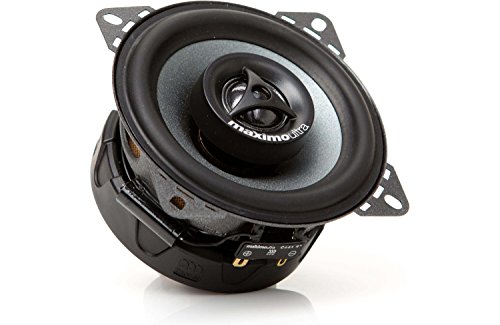
- **Upgraded Aftermarket Speakers:** Most aftermarket speakers are designed to handle significantly more power than a factory head unit can provide. To truly unlock their potential, an external amplifier is almost always required.
- **Adding a Subwoofer:** Subwoofers require a substantial amount of power to reproduce low frequencies effectively. A dedicated monoblock amplifier is virtually essential for any aftermarket subwoofer setup.
- **Desire for High-Fidelity Sound:** If you’re an audiophile seeking the best possible sound reproduction with maximum clarity, detail, and dynamic range, an amplifier is a fundamental component of a high-performance system.
When a Factory System Is Sufficient
It’s important to acknowledge that not everyone needs an amplifier. Many modern vehicles, especially those with premium factory audio packages (e.g., Bose, Harman Kardon, Sony, JBL systems), come with sophisticated head units and often include a decent factory amplifier and well-matched speakers. These systems are typically designed to provide a good listening experience for the average consumer, offering acceptable clarity and volume without the need for additional aftermarket components.
If your primary use for car audio is background music during commutes, listening to talk radio, or if you’re generally satisfied with the sound quality and volume levels your current system provides, then investing in an aftermarket amplifier might not be necessary. For casual listeners, the benefits an amplifier offers in terms of increased clarity and dynamic range might not justify the cost and installation effort.
Key Factors to Consider Before Buying
If you’re leaning towards an amplifier, consider these crucial factors:
- **Speaker RMS Power Rating:** This is the most important specification. Your amplifier’s RMS output should ideally match your speakers’ RMS power handling. Overpowering speakers can damage them, while underpowering can lead to clipping and distortion.
- **Head Unit Output:** Determine if your head unit has preamp outputs (RCA jacks). These provide a clean, low-level signal ideal for amplifiers. If not, you may need an amplifier with high-level inputs or a line output converter.
- **Impedance Matching:** Speakers have an impedance rating (typically 2 or 4 ohms). Your amplifier must be stable and able to deliver its rated power at the impedance of your speakers.
- **Sound Quality Goals:** Are you looking for a subtle improvement in clarity, or do you want a full-blown, high-power system? This will influence the amplifier’s power, number of channels, and class (e.g., Class D for efficiency, Class A/B for potentially warmer sound).
- **Space and Installation:** Amplifiers vary in size. Consider where you’ll mount it (under a seat, in the trunk, etc.) and if you’re comfortable with the wiring complexity (power, ground, remote turn-on, signal wires). Professional installation is often recommended to ensure proper wiring and safety, adhering to best practices for electrical systems, as outlined by organizations like the Society of Automotive Engineers (SAE) in relation to vehicle electrical system design.
The Benefits Beyond Just 'Loudness'
While an amplifier can certainly make your music louder, its true value lies in enhancing the overall quality of your sound. A properly matched and installed amplifier contributes to:
- **Enhanced Clarity and Detail:** You’ll hear subtle nuances in your music that were previously masked by distortion or lack of power. Instruments and vocals will sound more distinct and lifelike.
- **Improved Dynamic Range:** The difference between the quietest and loudest passages of a song becomes more pronounced, making music more engaging and realistic.
- **Reduced Listening Fatigue:** When an audio system struggles to reproduce sound, the resulting distortion can be tiring to listen to over extended periods. Clean, powerful audio is much more enjoyable.
- **Extended Speaker Lifespan:** By providing clean power, an amplifier prevents your speakers from being overdriven into distortion, which can cause heat buildup and damage over time.
Ultimately, an amplifier allows your speakers to perform as they were designed, delivering a more accurate and enjoyable audio experience.
Choosing the Right Amplifier for Your Setup
The ‘right’ amplifier depends entirely on your existing or planned speaker setup. If you’re only adding a subwoofer, a monoblock (single-channel) amplifier is ideal. For upgrading front door speakers, a 2-channel amplifier might suffice. If you’re replacing all four main speakers, a 4-channel amplifier is typically the best choice. Some amplifiers offer 5 channels or more, allowing you to power all four full-range speakers and a subwoofer from a single unit.
Matching the amplifier’s RMS power output to your speakers’ RMS power handling is paramount. For example, if your speakers are rated for 75 watts RMS each, you’d look for an amplifier that delivers close to 75 watts RMS per channel at the correct impedance. Consulting with a reputable car audio specialist can help ensure you select an amplifier that perfectly complements your speakers and achieves your desired sound quality without compromising reliability or safety.
Frequently Asked Questions
Can I add an amplifier to my factory radio?
Yes, most amplifiers can be integrated with a factory radio. If your factory radio lacks RCA preamp outputs, you’ll need an amplifier with high-level (speaker-level) inputs or a line output converter (LOC) to convert the speaker wire signals into a low-level RCA signal that an amplifier can use.
Will an amplifier drain my car battery?
A properly installed amplifier shouldn’t drain your car battery under normal operating conditions. It draws power from the alternator when the engine is running. However, an improperly installed amplifier (e.g., not wired to a switched power source) or one that’s too powerful for your car’s electrical system could potentially cause issues. Always ensure proper gauge wiring and fusing, and consider upgrading your car’s ‘big three’ wiring (battery to alternator, battery to chassis, engine to chassis) for very high-power systems.
What's the difference between RMS and Peak power?
RMS (Root Mean Square) power is the continuous power an amplifier can produce, or a speaker can handle, over a long period. It’s the most important and realistic rating for audio performance. Peak power, on the other hand, is the maximum power an amplifier can produce for a very brief instant, or a speaker can handle momentarily. Peak power figures are often much higher but are less indicative of sustained performance or speaker longevity.
Do I need an amplifier for a subwoofer?
Almost always, yes. Subwoofers require significantly more power to reproduce low-frequency sounds effectively compared to full-range speakers. A dedicated monoblock amplifier designed specifically for subwoofers is essential to ensure the subwoofer receives enough clean power to produce deep, impactful bass without distortion.
Will adding an amp void my car's warranty?
Generally, adding an aftermarket amplifier itself won’t void your entire car’s warranty. However, if the installation of the amplifier directly causes damage to other components in your vehicle (e.g., electrical system issues due to improper wiring), then the repair of those specific damaged components might not be covered under warranty. It’s always best to have professional installation or ensure you follow best practices to avoid potential issues.
The Bottom Line
Deciding whether your car speakers need an amplifier boils down to your personal audio preferences and the capabilities of your current system. If you’re content with your factory sound, an amplifier may be an unnecessary expense. However, if you crave clearer, more dynamic sound, desire increased volume without distortion, or are upgrading to aftermarket speakers and subwoofers, an external amplifier is an indispensable component. By understanding its role and considering the factors outlined in this guide, you can make an informed decision to improve your in-car listening experience to new heights.