A completely dead car battery is among the most common roadside emergencies, but the good news is that jump starting is often a viable solution. Understanding the difference between a dead battery and a completely discharged one, along with the proper jump starting procedure, can save you time and money.
This guide explains the science behind jump starting, the conditions that make it possible, and the safety precautions you need to take to do it correctly.
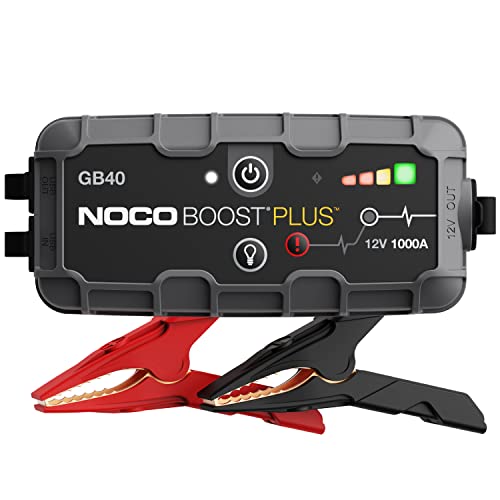
NOCO Boost Plus GB40
Understanding Battery Death and Discharge
A car battery becomes “dead” when its voltage drops too low to start the engine, typically below 12 volts for a standard lead-acid battery. However, there’s an important distinction between a completely discharged battery and one that has failed permanently.
A discharged battery has lost its charge but retains the ability to hold a charge again. A failed battery, by contrast, has internal damage such as a broken cell or corroded terminals that prevents it from functioning even after charging. Jump starting works only on discharged batteries, not failed ones.
According to the Society of Automotive Engineers (SAE), a standard automotive battery should maintain at least 9.6 volts to crank an engine, though successful starting typically requires 12.6 volts or higher. Modern vehicles with electronic systems may require even higher voltage thresholds.
Can You Actually Jump Start a Completely Dead Battery?
Yes, you can jump start a completely dead battery in most cases, provided the battery itself isn’t damaged. The jump starting process works by using another vehicle’s battery to supply electrical current to your dead battery, allowing enough power to turn the starter motor and begin the engine.
The National Highway Traffic Safety Administration (NHTSA) confirms that jump starting is an effective emergency procedure when performed correctly. However, success depends on several factors:
- The battery has no internal damage or broken cells
- The battery terminals are clean and make good contact
- The donor vehicle’s battery has sufficient charge (typically 12.6 volts or higher)
- The jumper cables are in good condition with proper gauge (AWG 4 or 2)
- The electrical system of your vehicle isn’t damaged
If your battery is truly “dead” and won’t accept a charge even after 30 minutes of jump starting, the battery has likely failed and needs replacement.
The Jump Starting Process Step-by-Step
Proper technique is essential for both safety and success. Follow these steps carefully:
- Turn off both vehicles and ensure all accessories are off in both cars
- Inspect battery terminals for corrosion or loose connections; clean if necessary with a wire brush
- Verify the donor vehicle’s battery voltage is adequate (use a multimeter if available)
- Position vehicles within 18 inches of each other but not touching
- Attach the positive (red) cable clamp to the positive terminal of the dead battery
- Attach the other positive clamp to the positive terminal of the donor battery
- Attach the negative (black) cable clamp to the negative terminal of the donor battery
- Attach the final negative clamp to an unpainted metal surface on your vehicle’s engine block, away from the battery
- Start the donor vehicle and let it run for 2-3 minutes
- Start your vehicle; if it doesn’t start after 30 seconds, wait and try again
- Once started, let your engine run for at least 20 minutes to recharge the battery
- Remove cables in reverse order: negative from your car, negative from donor car, positive from donor car, positive from your car
The American Automobile Association (AAA) emphasizes that the order of cable attachment and removal is critical to preventing electrical damage and sparks.
Safety Precautions You Must Take
Jump starting involves electrical hazards and flammable hydrogen gas that batteries can produce. Safety must be your priority.
- Wear safety glasses to protect against acid splash or sparks
- Never smoke or use open flames near the battery
- Ensure the donor vehicle is in good working condition before offering assistance
- Keep metal objects away from the battery terminals to prevent short circuits
- Never jump start a battery that’s visibly cracked, leaking, or swollen
- If the battery emits a rotten egg smell, don’t attempt jump starting as this indicates a dangerous chemical reaction
- Ensure the ground cable attachment point is clean, bare metal, not painted
- Don’t lean over the battery while jump starting
The Occupational Safety and Health Administration (OSHA) classifies lead-acid batteries as hazardous materials due to their sulfuric acid content. Proper handling prevents serious injury.
When Jump Starting Won’t Work
Jump starting has limitations. Recognize these situations where jump starting will fail or is unsafe:
- Battery has internal damage or failed cells, indicated by swelling or visible damage
- Battery terminals are severely corroded and can’t be cleaned enough for contact
- The electrical system has damage, such as a failed alternator that caused the dead battery
- The starter motor is faulty and can’t turn the engine even with adequate power
- Battery voltage is so low (below 9 volts) that it can’t accept a charge safely
- The vehicle has a hybrid or electric system with specialized battery requirements
- Multiple jump starting attempts over several hours have failed
If your vehicle doesn’t start after two or three jump starting attempts separated by 5-10 minute intervals, the problem is likely not a discharged battery. Call for professional roadside assistance rather than continuing to attempt jump starting.
What to Do After Successful Jump Starting
A successful jump start is just the beginning. Your battery is now charged enough to run, but you must take follow-up steps to prevent the same situation from occurring again.
Drive your vehicle for at least 30 minutes without stopping to allow the alternator to fully recharge the battery. Avoid using electrical accessories like the radio, air conditioning, or headlights during this period if possible, as they draw power from the battery during the charging process.
Once you reach your destination or a service facility, have the battery and charging system evaluated. A professional diagnostic can determine if the battery is holding a proper charge or if the alternator is failing. According to the Car Care Council, a properly functioning alternator should produce 13.5 to 14.5 volts at idle.
If your battery repeatedly dies or dies without warning, the battery is likely near the end of its service life. Most automotive batteries last 3 to 5 years in the United States, depending on climate and driving habits. Replacing an aging battery before it fails completely is more convenient and safer than dealing with roadside emergencies.
Preventing Dead Battery Situations
Proactive maintenance prevents most dead battery situations. Regular battery maintenance extends service life and prevents unexpected failures.
- Check battery terminals monthly for corrosion and clean them with a wire brush and baking soda solution if needed
- Ensure battery cables are tight and not cracked or damaged
- Test battery voltage at least annually, especially before winter
- Verify the alternator is charging properly by checking voltage while the engine runs (should be 13.5 to 14.5 volts)
- Avoid leaving accessories on when the engine is off, particularly headlights
- Keep the battery secure and protected from extreme temperatures
- Replace batteries that are more than 5 years old, even if they still function
- Have the electrical system inspected if the battery dies without obvious cause
The Battery Council International recommends having batteries evaluated before winter months, as cold temperatures reduce battery capacity by up to 50 percent.
Frequently Asked Questions
How long does it take to jump start a completely dead battery?
The entire process typically takes 5 to 15 minutes. Allow 2 to 3 minutes for the donor vehicle to charge your battery before attempting to start your engine. If your vehicle doesn’t start within 30 seconds of trying, wait 5 to 10 minutes before attempting again. If it still doesn’t start after two or three attempts, the battery is likely damaged and needs professional assistance.
Can a completely dead battery be permanently damaged by jump starting?
No, jump starting itself doesn’t damage a healthy battery. However, jump starting won’t work if the battery is already damaged. A battery with internal damage, broken cells, or severe corrosion can’t be repaired by jump starting. If a battery repeatedly fails to hold a charge after jump starting, it likely has internal damage and needs replacement.
Is it safe to jump start a battery in the rain or wet conditions?
Jump starting in light rain is generally safe if you follow proper procedures and keep the battery terminals dry. However, avoid jump starting during heavy rain, thunderstorms, or if water is pooling around the battery. Water can create electrical hazards and reduce the effectiveness of the connection. If weather is severe, wait for conditions to improve or call for professional roadside assistance.
What is the difference between jump starting and push starting a car?
Jump starting uses another vehicle’s battery to provide electrical power to start your engine. Push starting (or bump starting) uses the vehicle’s momentum to turn the engine over. Push starting works only on manual transmission vehicles and doesn’t work on modern vehicles with electronic fuel injection and computers. Jump starting is the correct and safe method for dead batteries in all vehicles.
How do I know if my battery is completely dead or if something else is wrong?
A completely dead battery typically shows no signs of electrical power: no dashboard lights, no clicking sound when turning the key, and no interior lights. If you hear clicking sounds when turning the key, the battery has some charge but is weak. If the engine cranks but doesn’t start, the problem is likely not the battery. Use a multimeter to check battery voltage; a reading below 12 volts indicates discharge, while a reading of 0 volts may indicate a failed battery or a broken connection.
The Bottom Line
Jump starting a completely dead battery is possible and effective in most situations, provided the battery itself isn’t damaged and you follow proper safety procedures. The key to success is understanding the difference between a discharged battery and a failed one, using correct technique, and recognizing when professional help is needed.
By following the step-by-step process outlined in this guide and prioritizing safety, you can successfully jump start your vehicle and get back on the road. However, remember that jump starting is a temporary solution. Have your battery and charging system evaluated afterward to prevent future emergencies, and consider replacing aging batteries before they fail completely. Regular battery maintenance and monitoring are the best ways to avoid dead battery situations altogether.
