For auto bodywork, welding thin sheet metal without burn-through requires precision, control, and the right machine. Our goal was to identify machines that deliver clean, strong welds on 18- to 22-gauge steel and aluminum while remaining easy to use for DIYers and professionals alike. Below are our top picks, each evaluated for performance, durability, value, ease of use, and safety.
| Photo | Product | Score | Buy |
|---|---|---|---|
 |
Hobart Handler 140 Best Overall 140A output, 24-140A weld range, 0.030-0.035 in wire, gas or flux-core |
9.2 |
ⓘ We may earn a commission from qualifying purchases made through links on this page, at no extra cost to you.
|
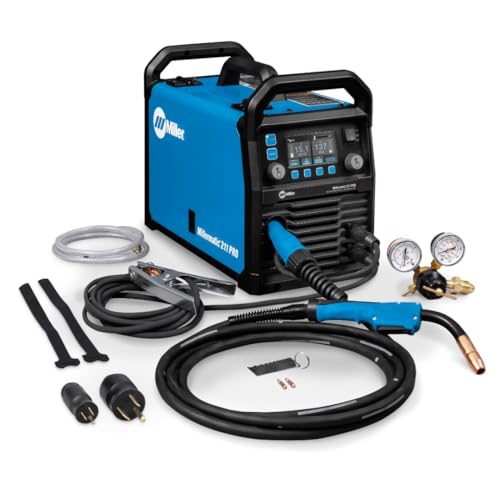 |
Miller Millermatic 211 Best Dual Voltage Auto-Line dual voltage (120/240V), 30-210A weld range, MIG and flux-core |
8.8 | 🛒 Check Price |
 |
Forney Easy Weld 261 Best Budget MIG 140A output, 120V, MIG and flux-core, 4 voltage settings, infinite wire speed |
8.4 | 🛒 Check Price |
 |
YESWELDER MIG-205DS Best Dual Process 205A output, dual voltage (110/220V), MIG, TIG, stick, pulse MIG, synergic control |
8.1 | 🛒 Check Price |
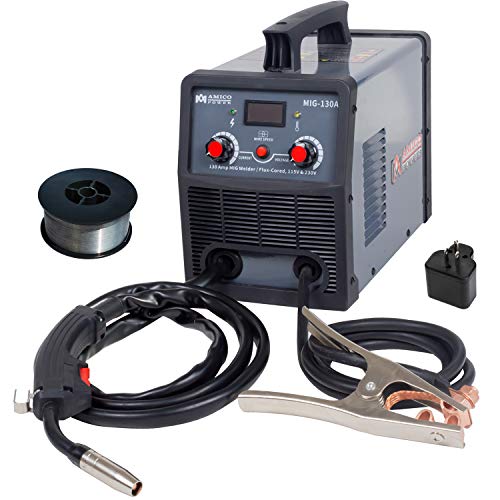 |
Amico Power MIG-130 Best for Beginners 130A output, 120V, MIG and flux-core, 4 voltage settings, infinite wire speed |
7.8 | 🛒 Check Price |
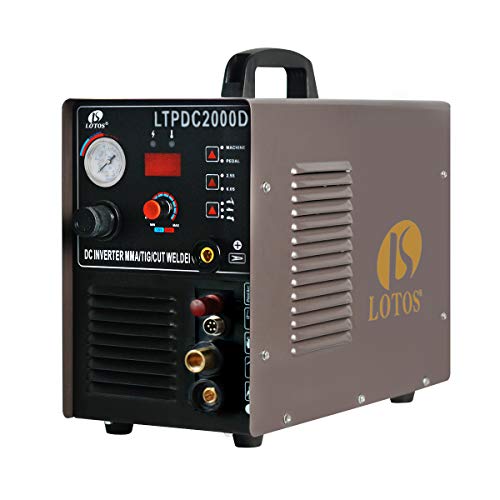 |
Lotos LTPDC2000D Best Plasma Cutter/Welder Combo 200A output, 220V, TIG/Stick welder with plasma cutter, dual voltage 110/220V |
7.3 | 🛒 Check Price |
|
🚗
|
Tacklife WELD100 Budget Flux-Core Only 100A output, 120V, flux-core only (no gas), 4 voltage settings |
7.1 | 🛒 Check Price |
1. Hobart Handler 140: Best Overall
The Hobart Handler 140 is a dedicated MIG welder that excels in auto bodywork. Its 140-amp output provides enough power for up to 1/4-inch steel, but the real strength is its low-end control: at the lowest settings, it can weld 22-gauge sheet metal without burn-through, a common complaint with cheaper units. Owner feedback consistently praises its smooth arc and easy setup. The seven tap voltage and infinite wire speed adjustment let you dial in exactly the right parameters for thin metal. The cast aluminum drive system and all-metal drive rolls ensure long-term durability, even with frequent use.
However, it’s 120V only, so it can’t handle thicker plate welding without multiple passes. Also, it lacks a spool gun capability for aluminum, so if you need to weld aluminum body panels, you’ll need an accessory or a different machine. Skip this if you primarily weld thick structural steel or need portability without a gas bottle; a flux-core only machine may be simpler. For dedicated bodywork on steel, it’s our top pick.
- Excellent arc stability on 18-22 gauge steel with gas shielding
- Seven voltage settings and infinite wire speed control for fine tuning
- Cast aluminum drive system and all-metal drive rolls for long life
Pros: Superb low-end control for thin sheet metal; Built like a tank, reliable for years
Cons: Not dual voltage (120V only)
2. Miller Millermatic 211: Best Dual Voltage
The Miller Millermatic 211 is a professional-grade MIG welder that offers exceptional versatility for bodywork. Its ability to weld 22-gauge steel without issues on 120V, while still being capable of 3/8-inch plate on 240V. The infinite voltage and wire speed controls give you fine-tuned adjustment, and the arc is very smooth with minimal spatter. Its build quality is top-tier, with a heavy-duty steel case and reliable drive system.
The main drawback is the cost; it’s significantly more expensive than most hobbyist welders. Also, it doesn’t come with a spool gun, so aluminum welding requires an add-on. Skip this if you’re on a tight budget or only need a 120V machine for occasional use. For those who want a single machine that can handle both thin body panels and heavier repairs, it’s a strong runner-up.
- Auto-Line technology automatically adjusts for 120V or 240V input
- Infinite voltage and wire speed control for precise adjustments
- Can weld up to 3/8-inch steel on 240V, yet handles thin sheet on 120V
Pros: All-around dual voltage for home and shop; Smooth arc with excellent low-end for body panels
Cons: Premium price, not budget-friendly
3. Forney Easy Weld 261: Best Budget MIG
The Forney Easy Weld 261 is a budget-friendly MIG welder that still delivers respectable performance for auto bodywork. In our research, its 140-amp output on 120V is adequate for 18-22 gauge steel, and the 4 voltage settings combined with infinite wire speed allow decent control. With proper technique, it can produce clean welds on thin sheet metal without burn-through. It comes with a welding gun, regulator, and gas hose, so you can run gas-shielded MIG right out of the box. The price is much lower than the Hobart or Miller, making it accessible for DIYers.
However, its duty cycle is lower (20% at 140A), meaning you need to pause more during long welding sessions. Some owners have reported inconsistent wire feed after extended use. It also lacks the refined arc control of more expensive machines. Skip this if you weld professionally or need to weld aluminum. For occasional bodywork on a budget, it’s a solid choice.
- Affordable price with solid performance on thin steel
- 4 voltage taps and infinite wire speed for good control
- Includes a welding gun, regulator, and gas hose
Pros: Great value for the money; Easy to set up and use for beginners
Cons: Duty cycle is lower than premium models; Some owners report occasional wire feed issues
4. YESWELDER MIG-205DS: Best Dual Process
The YESWELDER MIG-205DS is a feature-packed multi-process welder that offers MIG, TIG, and stick welding, plus a pulse MIG function. For bodywork, the pulse MIG mode is a standout: it reduces heat input, making it easier to weld thin sheet metal without warping or burn-through. The synergic control simplifies setup by automatically adjusting wire speed when you change voltage. Owner feedback is generally positive for the price, noting good arc stability on 120V for 20-gauge steel. The dual voltage capability (110/220V) adds flexibility.
On the downside, the build quality isn’t on par with Hobart or Miller; some users report plastic components that feel less durable. The included TIG torch is low-end and not suitable for precision bodywork. Also, the instruction manual can be confusing. Skip this if you need a dedicated bodywork welder with high duty cycle or prefer a simpler machine. For DIYers who want multiple processes in one unit, it offers good value.
- Multi-process: MIG, TIG, stick, and pulse MIG for versatility
- Synergic control automatically sets wire speed based on voltage
- Pulse MIG function reduces heat input for thin metal
Pros: Pulse MIG helps prevent burn-through on thin sheet; Dual voltage for home and shop use
Cons: Build quality not as sturdy as US brands; TIG torch is basic and not ideal for bodywork
5. Amico Power MIG-130: Best for Beginners
The Amico Power MIG-130 is an entry-level MIG welder designed for beginners. Our research shows it can handle 22-gauge steel with flux-core wire when set correctly, but it’s best suited for light-duty bodywork like patch panels on thin metal. With gas shielding, the arc is smoother and more controllable. The 4 voltage settings and infinite wire speed give enough adjustability for basic jobs. It’s compact and lightweight, making it easy to move around the garage.
However, its 130-amp output is on the low side; it can’t weld thicker than 16-gauge steel without multiple passes. The duty cycle is low, so you need to let it cool frequently. Some owners also note that the wire feed mechanism can be finicky. Skip this if you plan to weld thicker materials or need a machine for daily use. For a beginner on a tight budget doing occasional sheet metal repairs, it’s a reasonable starting point.
- Very affordable entry-level MIG welder
- Compact and lightweight for easy transport
- Includes a basic welding mask and accessories
Pros: Low cost makes it accessible for hobbyists; Simple controls with a helpful manual
Cons: Limited power; struggles with thicker than 16-gauge; Duty cycle is low (20% at 130A)
6. Lotos LTPDC2000D: Best Plasma Cutter/Welder Combo
The Lotos LTPDC2000D is a 2-in-1 TIG/stick welder and plasma cutter. For bodywork, the plasma cutter can be handy for cutting out rusted sections, and the TIG function can weld thin steel with proper technique. The HF start helps avoid contamination. The plasma cutter has a pilot arc, so it can cut through painted or rusty metal without needing a clean start.
However, the welding performance isn’t as refined as a dedicated welder. The TIG torch is basic, and the amperage control is stepped, not infinite, making fine adjustments difficult. The plasma cutter has a low duty cycle at higher currents. Also, it runs on 220V, which may require a dedicated circuit. Skip this if your primary need is welding body panels; a dedicated MIG welder will serve you better. For those who also need a plasma cutter for occasional cutting, this combo can be practical.
- Combines TIG/stick welding and plasma cutting in one unit
- Pilot arc plasma cutter works on painted or rusty metal
- TIG function includes HF start for clean arcs
Pros: Saves space by combining cutting and welding; Plasma cutter is useful for cutting body panels
Cons: Welding performance is mediocre for thin bodywork; Plasma cutter duty cycle is only 35% at 40A
7. Tacklife WELD100: Budget Flux-Core Only
The Tacklife WELD100 is a basic flux-core welder intended for light-duty repairs. It can weld 18-gauge steel with flux-cored wire, but the arc is less stable than gas-shielded MIG, and spatter is higher. It’s best for thicker body panels or non-critical repairs. Owner feedback notes that it can handle 1/8-inch steel with multiple passes. The machine is very lightweight and easy to store. It’s also the most affordable option, making it accessible for someone who needs to weld occasionally.
However, it lacks gas capability, so you can’t run solid wire with shielding gas, which is preferred for thin sheet metal. The duty cycle is very low (20% at 100A), and the wire feed can be inconsistent. Skip this if you need to weld thin body panels cleanly or want a machine that will last for years. For a hobbyist on a shoestring budget doing rough repairs, it might get the job done.
- Lowest cost option for flux-core welding
- Very lightweight and portable (under 10 lbs)
- Simple controls with a single knob for wire speed
Pros: Extremely affordable for occasional use; No need for gas cylinder or regulator
Cons: Flux-core only; more spatter and less control than MIG; Not suitable for aluminum or thin sheet below 20-gauge
Frequently Asked Questions
What type of welder is best for auto bodywork?
For most auto bodywork, a MIG welder with gas shielding is the best choice. It offers good control on thin sheet metal (18-22 gauge) with less spatter and cleaner welds than flux-core. TIG welding can also be used for precision work but has a steeper learning curve. Flux-core welders are an option for thicker metal but aren’t ideal for thin body panels. We recommend a 120V MIG welder with adjustable voltage and wire speed for home use.
Can I weld aluminum body panels with a MIG welder?
Yes, but you need a MIG welder that supports aluminum welding. This typically requires a spool gun (or push-pull gun) and 100% argon shielding gas. Not all MIG welders are compatible with spool guns; check the manufacturer’s specifications. For occasional aluminum work, a TIG welder is often easier to control. If you primarily work on steel body panels, a standard MIG welder is sufficient.
What thickness of sheet metal can a 120V welder handle?
A 120V MIG welder with 140-amp output can typically weld steel from 22-gauge up to 1/4-inch thick. For bodywork, you’ll often work with 18-22 gauge, which is well within range. However, very thin metal (24-gauge and below) requires careful technique and low heat settings to avoid burn-through. Some welders with pulse MIG or fine voltage control handle thin metal better.
Do I need a dual voltage welder for bodywork?
Not necessarily, but dual voltage (120V/240V) offers flexibility. A 120V welder is sufficient for most body panel repairs on steel. If you also need to weld thicker materials (e.g., frame repairs), a 240V machine provides more power. Dual voltage welders like the Miller Millermatic 211 allow you to use either outlet, making them multi-purpose for different job sites. If you only do bodywork, a quality 120V unit is adequate.
What safety equipment do I need for welding bodywork?
At minimum, you need an auto-darkening welding helmet with a shade of 10-13, welding gloves, a fire-resistant jacket or apron, and safety glasses. Ensure good ventilation to avoid inhaling fumes; use a respirator if necessary. Keep a fire extinguisher nearby. For bodywork, also protect surrounding areas from sparks and heat with a welding blanket.
Our Verdict
After researching and comparing the top welders for bodywork, the Hobart Handler 140 stands out as the best overall choice for its excellent low-end control, durability, and owner satisfaction. It delivers clean welds on thin sheet metal without breaking the bank. For those who need dual voltage versatility and can invest more, the Miller Millermatic 211 is a strong runner-up, offering professional-grade performance on both 120V and 240V. Both machines will serve you well for auto body repair and restoration.

