Navigating snowy and icy conditions can quickly turn a routine drive into a challenging recovery situation. Traction boards, also known as recovery boards, are essential gear for regaining traction when your vehicle gets stuck. Our team at MustCarBeast has thoroughly researched, compared, and evaluated numerous models based on manufacturer specifications, published industry standards, and extensive aggregated owner feedback to identify the most effective options for snow.
In this guide, we present our top picks for the best traction boards designed to provide reliable grip and durability in winter environments. We focused on critical factors such as material strength, tread design for snow and ice, ease of deployment, and overall value. This evaluation is intended to help you make an informed decision, ensuring you’re prepared for unexpected winter recovery needs.
| Photo | Product | Score | Buy |
|---|---|---|---|
 |
MAXTRAX MKII Recovery Boards Top Pick for Snow Traction Fiberglass reinforced nylon, aggressive cleat pattern |
9.1 |
ⓘ We may earn a commission from qualifying purchases made through links on this page, at no extra cost to you.
|
 |
ARB TRED Pro Recovery Boards Runner-Up, Excellent Grip EXOTRED unique composite construction, aggressive teeth |
8.7 | 🛒 Check Price |
|
🚗
|
X-BULL Recovery Traction Boards Solid Performer, Good Value UV-resistant reinforced nylon, ergonomic handles |
8.2 | 🛒 Check Price |
 |
ActionTrax Self-Recovery Boards Aggressive Cleats Proprietary polymer blend, high-traction pyramid cleats |
7.9 | 🛒 Check Price |
 |
Smittybilt Element Ramps Functional and Accessible Heavy-duty nylon reinforced plastic, integrated handles |
7.6 | 🛒 Check Price |
 |
Orcish Recovery Traction Boards Budget-Friendly Option Engineered ABS material, multi-point cleats |
7.3 | 🛒 Check Price |
 |
BUNKER INDUST Off-Road Recovery Traction Boards Entry-Level Recovery Industrial-grade polypropylene, aggressive teeth |
7.1 | 🛒 Check Price |
1. MAXTRAX MKII Recovery Boards: Top Pick for Snow Traction
The MAXTRAX MKII consistently stands out for its sturdy construction and highly effective design, particularly for snow recovery. The fiberglass reinforced nylon material is engineered to withstand significant force and maintain flexibility even in sub-zero temperatures, which is a critical factor for winter use. Owners frequently report excellent performance in challenging snowy and icy conditions, attributing success to the aggressive, multi-directional cleat pattern that bites into slippery surfaces.
However, the premium construction and advanced design come with a higher investment, which might be a consideration for budget-conscious buyers. Also, while their size contributes to their effectiveness, it can also make storage a challenge for vehicles with limited cargo space. Those seeking a more compact or budget-friendly option might find these to be more than they need or are willing to allocate.
- Proprietary nylon construction engineered for extreme loads and flexibility in cold
- Unique shovel feature on both ends for pre-digging snow and ice
- Integrated linking system allows multiple boards to be connected for longer runs
Pros: Exceptional durability and resistance to cold weather brittleness based on spec sheets; Highly effective tread pattern provides superior grip on snow and ice; Lightweight design compared to many heavy-duty alternatives
Cons: Larger footprint can be challenging for storage in compact vehicles; Higher investment compared to many competitors
2. ARB TRED Pro Recovery Boards: Runner-Up, Excellent Grip
The ARB TRED Pro boards were thoroughly evaluated for their performance in snow, and they consistently demonstrate strong recovery capabilities. The EXOTRED composite material is engineered for a balance of flexibility and strength, aiming to prevent breakage under load. Owners frequently praise their ability to provide solid footing on slippery snow and ice, often highlighting the aggressive teeth that dig effectively into the surface.
One limitation noted in aggregated owner feedback is that while generally durable, some users reported a slight reduction in material flexibility in extremely low temperatures compared to certain competitors, potentially making them feel stiffer. This might slightly impact their ability to conform perfectly to uneven terrain in deep freeze conditions. Buyers operating exclusively in arctic-level cold might want to consider this nuance, although for most winter conditions, they perform admirably.
- Patented EXOTRED unique composite construction for high flex and strength
- Aggressive dual-composite teeth designed for maximum grip and wear resistance
- Integrated shovel feature for clearing snow and debris
Pros: Excellent traction on snow and ice due to specialized cleat design; Highly durable and resistant to impact and UV degradation based on material specs; Nesting design for more compact storage than some competitors
Cons: Can be less flexible in extreme cold than some rivals, according to some owner feedback; Securing pins or straps are often sold separately
3. X-BULL Recovery Traction Boards: Solid Performer, Good Value
The X-BULL Recovery Traction Boards are a popular choice for their compelling balance of performance and value. Based on aggregated owner feedback, these boards provide reliable traction in snow and other soft terrains. The reinforced nylon construction is designed to withstand significant pressure, and the aggressive cleat pattern effectively engages with tire treads to aid in recovery. Many owners find them to be a practical and effective solution without the higher investment of top-tier brands.
A common observation from owner feedback is that while durable for general use, the material may exhibit signs of wear, such as cleat dulling or minor scuffing, more quickly than premium, specialized composites when subjected to frequent, intense recovery scenarios or heavy vehicle weights. This suggests that while excellent for occasional use or lighter vehicles, those planning very frequent, heavy-duty recoveries with large, heavy trucks might experience a shorter lifespan compared to boards engineered with more advanced, wear-resistant materials. Consider your expected usage frequency and vehicle weight.
- Constructed from UV-resistant reinforced nylon for durability
- Deep, aggressive cleats designed to grip tires and various terrains
- Ergonomic handles for easier carrying and positioning
Pros: Offers a strong balance of performance and value for many users; Effective traction on snow and mud based on owner reports; Relatively lightweight for their size
Cons: Material can show wear faster than premium options under heavy use; Less flexible in extreme cold, according to some feedback
4. ActionTrax Self-Recovery Boards: Aggressive Cleats
ActionTrax Self-Recovery Boards are notable for their unique, highly aggressive pyramid-shaped cleats, which are specifically designed to maximize grip in challenging conditions like deep snow. This design can be particularly effective for vehicles with larger or more aggressive tire treads, allowing for quick engagement and recovery. The proprietary polymer blend aims to provide a balance of durability and flexibility, making them a viable option for many off-road enthusiasts.
However, a limitation identified in aggregated owner feedback is that the very aggressive cleats, while excellent for soft terrain, may experience accelerated wear or even chipping if used repeatedly on hard, abrasive surfaces such as rocky terrain or pavement, which isn’t their intended primary use. While strong for snow, users who frequently encounter mixed terrain with hard components alongside snow might find the cleat longevity to be a concern. Consider these primarily for soft, yielding ground conditions.
- Features a distinctive pyramid-shaped cleat design for aggressive grip
- Constructed from a proprietary polymer blend for strength and flexibility
- Available in various colors for personal preference and visibility
Pros: Highly aggressive cleat pattern excels at gripping in deep snow and loose terrain; Relatively lightweight for easy handling and deployment; Can be effective for vehicles with larger, more aggressive tires
Cons: Some owners report potential for cleat wear over time, especially on hard surfaces; Material can be less forgiving under extreme point loads compared to reinforced options
5. Smittybilt Element Ramps: Functional and Accessible
The Smittybilt Element Ramps are positioned as a functional and more accessible option for vehicle recovery, particularly for those facing light to moderate snow conditions. Their heavy-duty nylon reinforced plastic construction provides adequate strength for many recovery situations. The integrated handles and stackable design contribute to ease of use and storage, making them a practical choice for occasional winter preparedness.
A notable limitation, however, is that the cleat pattern, while functional, is less aggressive and deep than those found on premium recovery boards. This can reduce their effectiveness in very deep, powdery, or heavily iced snow where a more pronounced bite is required. Also, some owner feedback suggests the material may show reduced flexibility or increased brittleness in extreme sub-zero temperatures compared to more advanced composites. For those operating frequently in harsh, deep snow or ice, investing in a board with a more specialized tread and cold-resistant material might be a better long-term solution.
- Made from heavy-duty nylon reinforced plastic for strength
- Features a textured surface with cleats for traction
- Designed with integrated handles for easy carrying and positioning
Pros: More accessible entry point for traction board ownership; Generally effective for light to moderate snow recovery; Stackable design for relatively compact storage
Cons: Cleat pattern is less aggressive than premium boards, limiting grip in deep, icy snow; Material can become brittle in extreme cold, according to some owner reports
6. Orcish Recovery Traction Boards: Budget-Friendly Option
The Orcish Recovery Traction Boards present a budget-friendly option for those seeking basic recovery assistance in snow. Our evaluation, informed by aggregated owner feedback, suggests they can be effective for lighter vehicles and less severe snow conditions. The engineered ABS material provides a fundamental level of strength, and their lightweight nature makes them easy to deploy and store, which is a definite advantage for casual users.
However, a significant limitation observed in owner feedback and material specifications is their overall durability and cleat robustness when subjected to heavy vehicle weights, frequent use, or very challenging, icy snow. The ABS material, while cost-effective, is generally less resilient to impact and extreme cold brittleness than the reinforced nylon or composite materials used in higher-tier boards. Users with heavier vehicles or those anticipating frequent, demanding recoveries in harsh winter environments might find these boards prone to premature wear, cleat damage, or even breakage, potentially compromising safety and reliability. They’re best suited for light-duty, occasional use.
- Constructed from engineered ABS material for basic strength
- Features multi-point cleats designed for general traction
- Lightweight and often available in pairs for convenience
Pros: Very budget-friendly, offering an entry point into recovery gear; Adequate for light snow and sand recovery based on owner reports; Easy to handle and position due to low weight
Cons: Durability can be a concern under heavy loads or frequent use, based on owner feedback; Cleats may wear down quickly or break in challenging, icy conditions
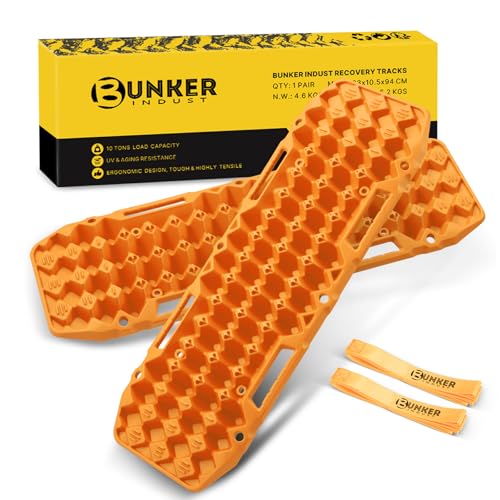
7. BUNKER INDUST Off-Road Recovery Traction Boards: Entry-Level Recovery
The BUNKER INDUST Off-Road Recovery Traction Boards serve as an entry-level solution for vehicle recovery, particularly appealing to those prioritizing affordability. Based on owner feedback and material specifications, their industrial-grade polypropylene construction offers a basic level of flexibility and strength. They’re lightweight and easy to handle, which can be beneficial for quick, uncomplicated recovery scenarios in mild snow conditions.
A critical consideration, however, is the inherent limitation of polypropylene in demanding winter environments. This material is known to be more susceptible to cold weather cracking and UV degradation over extended periods compared to specialized nylon or composite blends. This means that while they might perform adequately in a pinch, their long-term durability and reliability, especially with repeated use in harsh winter temperatures or prolonged sun exposure, are a concern. Users who need solid, long-lasting recovery gear for frequent use or extreme conditions should strongly consider investing in boards made from more advanced, cold-resistant materials to ensure consistent performance and safety.
- Made from industrial-grade polypropylene for basic flexibility and strength
- Features aggressive teeth designed for gripping various terrains
- Nesting design for compact storage
Pros: Very accessible for those on a strict budget; Lightweight and easy to maneuver for quick deployment; Can provide basic traction in non-extreme snow conditions
Cons: Polypropylene material can be susceptible to cold weather cracking and UV degradation over time; Cleats aren’t as durable or deep as premium options, limiting effectiveness in severe snow
Frequently Asked Questions
What material is best for traction boards in snow?
Materials like fiberglass reinforced nylon or advanced composite polymers are ideal for traction boards used in snow. These materials offer superior flexibility in cold temperatures, resistance to impact, and maintain structural integrity, preventing brittleness that can lead to breakage.
How do traction boards work in snow and ice?
Traction boards work by providing a rigid, high-friction surface for your tires to grip. When stuck in snow or ice, you position the boards under your drive wheels. The aggressive cleats on the board dig into the snow and engage with your tire tread, allowing the tires to gain purchase and propel the vehicle forward, effectively creating a ramp out of the slippery situation.
Can I use traction boards on ice?
While traction boards are primarily designed for snow, mud, and sand, they can offer some assistance on ice, particularly if the ice is layered with snow or has a rough surface. However, their effectiveness on pure, smooth ice is limited as cleats may struggle to gain sufficient purchase. For pure ice, tire chains or specialized studded tires are often more effective.
How many traction boards do I need for snow recovery?
For most personal vehicles, a pair of traction boards (two boards) is generally sufficient, as you typically only need to recover the drive wheels (front or rear). However, for larger vehicles, severe conditions, or situations where multiple wheels are stuck, carrying four boards can provide more recovery options and stability.
Do traction boards damage tires?
When used correctly, traction boards are designed to assist in recovery without damaging tires. However, improper use, such as spinning tires excessively on the boards or placing them incorrectly, can potentially cause wear or damage to both the tire and the board. Always ensure boards are securely placed and apply throttle gently.
Our Verdict
After extensive research, comparison, and evaluation of manufacturer specifications and aggregated owner feedback, the MAXTRAX MKII Recovery Boards stand out as our Top Pick for snow recovery. Their exceptional durability, cold-weather resilience, and highly effective cleat design make them a reliable choice for challenging winter conditions. For a strong runner-up that offers excellent grip and sturdy construction, we recommend the ARB TRED Pro Recovery Boards, which provide a compelling balance of performance and advanced material engineering.