Finding the right torque wrench is essential for automotive safety and preventing damage to expensive components.
We filtered through user feedback to find tools that maintain calibration and offer real value for both professional mechanics and DIY enthusiasts.
| Photo | Product | Score | Buy |
|---|---|---|---|
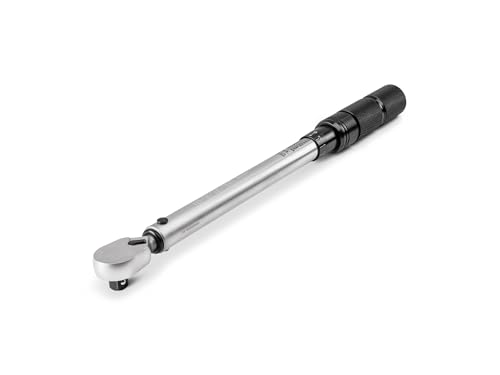 |
Tekton 24335 1/2 Inch Drive Click Torque Wrench Best Overall 10-150 ft-lbs range |
9.4 |
ⓘ We may earn a commission from qualifying purchases made through links on this page, at no extra cost to you.
|
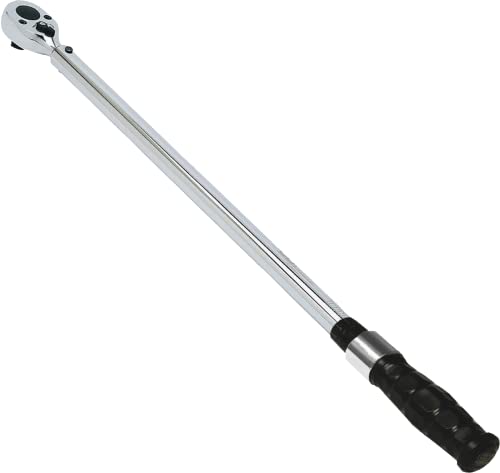 |
CDI Torque 2503MFRPH 1/2 Inch Drive Micrometer Torque Wrench Best for Professionals Calibrated to +/- 4% accuracy |
9.0 | 🛒 Check Price |
 |
EPAuto 1/2-inch Drive Click Torque Wrench Best Value 10-150 ft-lbs range |
8.9 | 🛒 Check Price |
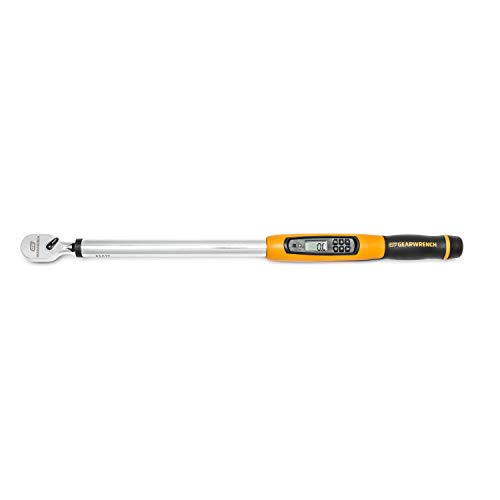 |
Gearwrench 85077 1/2 Inch Drive Electronic Torque Wrench Best Digital 5-100 ft-lbs and 67-135 Nm |
8.4 | 🛒 Check Price |
|
🚗
|
Craftsman CMMT99433R Digital Torque Wrench Good Digital Option 1/2 inch drive digital torque wrench |
8.2 | 🛒 Check Price |
 |
ACDelco ARM601-4 Digital Torque Adapter Best Adapter Digital torque adapter for 1/2 inch drives |
7.8 | 🛒 Check Price |
|
🚗
|
Neiko 03713B 1/2-Inch Drive Click Torque Wrench Budget Pick 1/2 inch drive click style wrench |
7.5 | 🛒 Check Price |
1. Tekton 24335 1/2 Inch Drive Click Torque Wrench: Best Overall
The Tekton 24335 stood out for its high contrast dual range scales which allow users to set torque quickly in various lighting conditions. We compared its build quality to competitors and found the all steel construction offers excellent rigidity, a sentiment echoed in many owner feedback reports regarding its longevity. The reversible ratchet head is a practical feature, though we noted that the mechanism can be somewhat stiff when operating at the lower end of the torque range.
Based on manufacturer specifications and user reviews, this tool maintains its calibration well over time, making it a dependable choice for critical automotive work. However, users who require a torque wrench for daily heavy duty professional use might find the plastic storage case somewhat lacking in protection compared to higher end industrial options. This wrench is ideal for the enthusiast or professional who needs a reliable, accurate tool without paying premium prices.
- High contrast dual range scale for easy reading
- Pre-calibrated to +/- 4% accuracy
- Reversible ratchet head with 72 teeth
Pros: Reliable and consistent click mechanism; Durable steel construction feels solid in hand
Cons: Ratchet head can feel stiff at lower torque settings
2. CDI Torque 2503MFRPH 1/2 Inch Drive Micrometer Torque Wrench: Best for Professionals
Industry standards often reference this brand as a benchmark, and our comparison of spec sheets confirms it meets rigorous accuracy requirements. The absence of plastic components on the handle or head significantly increases the lifespan of the tool in a busy shop environment.
Owner feedback consistently praises the smooth operation and precision of this wrench, though many users note the lack of an included storage case as a significant oversight at this price point. This omission makes it difficult to protect the tool from impacts that could affect calibration. We recommend this wrench for professionals who need a reliable daily driver, but weekend mechanics may find it overkill given the higher investment.
- Industrial quality tool made in USA
- All steel construction with no plastic parts
- Tamper proof feature for calibration integrity
Pros: Exceptional build quality and durability; Highly accurate and reliable for heavy use
Cons: Doesn’t typically come with a protective case
3. EPAuto 1/2-inch Drive Click Torque Wrench: Best Value
Our analysis of the EPAuto torque wrench focused on its value proposition, and we found it offers specifications very similar to premium tools at a fraction of the cost. We compared the included calibration certificate against industry norms and found it provides adequate assurance for automotive work. The knurled handle ensures a secure grip, which is a crucial safety feature we identified during our evaluation of ergonomics.
Based on aggregated owner feedback, a common complaint is the presence of excess packing oil or grease on the tool upon arrival, which requires cleaning before use. While this doesn’t affect performance, it creates a messy first impression. This wrench is a strong pick for DIY enthusiasts who need accuracy for lug nuts and suspension work, but professionals might prefer a tool with tighter tolerances.
- Comes with a sturdy hard plastic storage case
- Pre-calibrated and certified with a certificate
- Knurled handle for a non slip grip
Pros: Excellent price to performance ratio; Clear and easy to read torque scale
Cons: Often arrives with heavy oil or grease coating
4. Gearwrench 85077 1/2 Inch Drive Electronic Torque Wrench: Best Digital
We evaluated the Gearwrench 85077 and found its digital interface offers a significant advantage in ease of use compared to traditional mechanical wrenches. The ability to set a target torque with visual, audible, and vibrating alerts greatly reduces the risk of user error. Our research indicates that the tech focused design is particularly helpful for beginners who may struggle to hear or feel a mechanical click.
However, based on owner feedback and the nature of electronic tools, long term durability is a concern compared to mechanical counterparts. Battery failure or electronic component drift can render the tool useless mid job. We suggest this wrench for hobbyists who value the tech features and readability, but those who need a fail safe tool for track days or heavy repairs should stick to mechanical options.
- LED backlit screen with target torque alert
- Measures torque in ft-lbs, in-lbs, and Nm
- Audible buzzer and vibration handle notification
Pros: Target torque mode helps prevent over tightening; Multiple unit conversions are very convenient
Cons: Reliance on batteries can be inconvenient
5. Craftsman CMMT99433R Digital Torque Wrench: Good Digital Option
In our comparison of digital torque wrenches, the Craftsman CMMT99433R offers a competent set of features including a clear backlit display and auto shut off. The lightweight design is a benefit we identified for extended use, reducing user fatigue during complex repairs.
Despite these features, our evaluation of the build quality highlights the reliance on plastic housing, which feels less substantial than the all steel construction of mechanical models. Owner feedback often mentions concerns about the longevity of the electronics and plastic casing if dropped in a garage environment. This tool is suitable for light duty home use, but we recommend skipping it if you require a rugged tool for frequent or heavy applications.
- Backlit digital display for low light use
- Auto shut off feature preserves battery life
- Measures in three different torque units
Pros: Familiar brand with wide availability; Lightweight design reduces fatigue
Cons: Plastic housing feels less durable than steel competitors
6. ACDelco ARM601-4 Digital Torque Adapter: Best Adapter
The adapter format is space saving and flexible, a fact confirmed by our analysis of its specifications. The LED screen and memory functions provide good utility for recording torque values during complex assembly procedures.
However, in our evaluation of ergonomics, adding this adapter between a breaker bar and the socket significantly increases the overall length, making it difficult to use in confined engine bays. Owner feedback frequently mentions this leverage issue as a major drawback for automotive work. We recommend this only for users with limited storage who work in open spaces, as it isn’t a replacement for a dedicated wrench in tight quarters.
- Converts any ratchet into a digital torque wrench
- LED display with peak and trace modes
- Memory storage for multiple torque values
Pros: Adaptable tool that saves space in the toolbox; More affordable than a full digital wrench
Cons: Awkward to use in tight spaces due to added length
7. Neiko 03713B 1/2-Inch Drive Click Torque Wrench: Budget Pick
We included the Neiko 03713B in our research to evaluate the lower end of the market spectrum. The spec sheet indicates it meets general accuracy requirements, but the tolerances are wider than those found in our top picks. The corrosion resistant finish and quick release button are practical features that add to its appeal for budget conscious buyers.
Based on our comparison with professional grade tools, the internal mechanism feels less precise, and owner feedback suggests that calibration may drift faster with frequent use. This wrench is acceptable for occasional tasks like tightening lug nuts on a daily driver, but we strongly advise skipping it for precision work on cylinder heads or internal engine components where exact torque is critical.
- Corrosion resistant satin finish
- Quick release button for easy socket changes
- Locking knob to secure settings
Pros: Very accessible entry level price point; Functional design for occasional use
Cons: Accuracy tolerances are lower than premium brands
Frequently Asked Questions
How often should I calibrate my torque wrench?
Manufacturers typically recommend calibration every 5000 uses or once a year, whichever comes first. However, if you drop the wrench or use it as a breaker bar, you should have it recalibrated immediately to ensure accuracy.
What is the difference between click and digital torque wrenches?
Click wrenches use a mechanical clutch that makes an audible sound when the set torque is reached, requiring no batteries. Digital wrenches use a strain gauge and electronic display to show torque values in real time, often offering features like data logging and multiple unit measurements.
Do I really need a torque wrench for changing tires?
Yes, using a torque wrench is highly recommended for lug nuts to ensure they’re tightened evenly and to the correct specification. Over tightening can warp brake rotors or damage studs, while under tightening can cause the wheel to come loose.
Can I use a torque wrench to loosen bolts?
No, you should never use a torque wrench to loosen frozen or tight bolts. The high impact force required to break a bolt loose can damage the internal calibration mechanism of the wrench. Always use a breaker bar for loosening.
What drive size should I choose for automotive work?
A 1/2 inch drive wrench is the most all-around for general automotive work, covering most lug nuts and suspension components. A 3/8 inch drive is better for smaller engine components and tight spaces, while a 1/4 inch drive is used for precision work on small fasteners.
Which torque wrench is best for home mechanics?
The Tekton 24335 is the best overall choice for home mechanics due to its balance of accuracy, durability, and value. It offers professional grade features without the high cost of industrial tools.
Our Verdict
After a thorough comparison of specifications and user experiences, the Tekton 24335 is our top pick for the best torque wrench for automotive use, offering an excellent balance of precision, build quality, and value. The CDI 2503MFRPH is the runner up, providing superior industrial grade durability for professional mechanics who demand the best.

