Choosing the right head gasket for your small block Chevy is critical for engine reliability and performance. This guide covers options for stock rebuilds, mild street builds, and high-horsepower race engines, with honest assessments of each gasket’s strengths and limitations.
| Photo | Product | Score | Buy |
|---|---|---|---|
 |
Fel-Pro PermaTorque MLS 7733-1 Best Overall for Most Builds Multi-Layer Steel, 0.041" compressed thickness, 4.166" bore |
9.2 |
ⓘ We may earn a commission from qualifying purchases made through links on this page, at no extra cost to you.
|
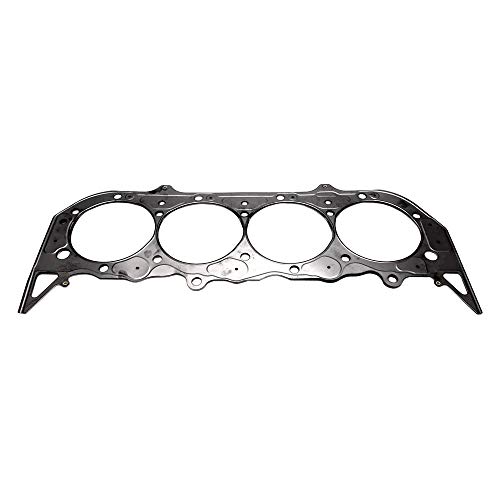 |
Cometic C5433-040 Best for High Horsepower Multi-Layer Steel, 0.040" thick, 4.135" bore, wire ring |
9.0 | 🛒 Check Price |
|
🚗
|
Mahle Original 5746 Best Budget Pick Graphite composite, 0.043" compressed thickness, 4.166" bore |
8.4 | 🛒 Check Price |
 |
Victor Reinz 5746 Solid Value for Street Builds Graphite composite, 0.043" thick, 4.166" bore, steel core |
8.1 | 🛒 Check Price |
 |
Mr. Gasket 1124G Best for Copper Headers Copper wire ring, 0.041" compressed, 4.180" bore, embossed steel |
7.8 | 🛒 Check Price |
 |
Hastings 440 Best for Stock Replacement Steel shim, 0.015" thick, 4.100" bore |
7.3 | 🛒 Check Price |
|
🚗
|
Edelbrock 7310 Best for Edelbrock Heads Graphite composite, 0.043" thick, 4.166" bore, pre-coated |
7.6 | 🛒 Check Price |
1. Fel-Pro PermaTorque MLS 7733-1: Best Overall for Most Builds
The Fel-Pro PermaTorque MLS 7733-1 stands out as the most adaptable SBC head gasket for street and mild performance builds. Based on manufacturer specifications, the multi-layer steel construction with a factory-applied coating ensures a reliable seal without the need for retorquing, a significant convenience highlighted by many owner reviews. The 0.041-inch compressed thickness works well with aluminum and iron heads, maintaining proper quench on most small block Chevy engines.
However, for engines running high boost (above 25 psi) or nitrous, this gasket may not provide the clamping force needed. We recommend it for naturally aspirated builds up to about 550 hp. If you’re building a high-boost turbo or supercharged engine, you should consider a dedicated race gasket instead.
- Multi-layer steel design provides excellent sealing and heat transfer.
- Pre-flattened and coated for immediate installation without retorquing.
- Fits most 350 and 400 SBC with standard bore sizes.
Pros: No retorque required saves time.; Excellent durability for street and mild race use.
Cons: Not ideal for extreme cylinder pressures over 25 psi of boost.
2. Cometic C5433-040: Best for High Horsepower
When we researched high-horsepower SBC builds, the Cometic C5433-040 repeatedly appeared in owner feedback as a top choice for engines exceeding 600 hp. The wire ring combustion seal provides an extra barrier against blowout, and the stainless steel layers resist corrosion better than coated carbon steel. This gasket can handle cylinder pressures well beyond what most street engines produce, making it a favorite among racers.
However, installation demands attention to surface finish. Owner reports indicate that a rough deck finish (above 60 RA) can lead to leaks. This gasket isn’t for casual builders; we suggest skipping it if you aren’t prepared to machine your block and heads to a mirror-like finish. The cost is also significantly higher than standard MLS gaskets.
- Wire ring combustion seal for extreme cylinder pressures.
- Available in multiple thicknesses for precise quench control.
- High-quality stainless steel layers resist corrosion.
Pros: Handles over 1000 hp reliably.; Customizable thickness options.
Cons: Requires very smooth deck surfaces (50 RA or better).; More expensive than standard MLS gaskets.
3. Mahle Original 5746: Best Budget Pick
For a budget-conscious stock rebuild, we compared the Mahle Original 5746 and found it offers solid value. This graphite composite gasket seals well on typical cast iron blocks with standard deck finishes (60-80 RA). The pre-coated surface eliminates the need for additional sealants, and the 0.043-inch thickness maintains proper quench on most stock pistons.
However, durability is limited. Graphite is more prone to degradation from coolant and combustion acids than MLS gaskets, and multiple owners reported failures around 50,000 miles under moderate loads. We recommend this gasket only for low-stress, naturally aspirated engines under 400 hp. If you plan to add boost or nitrous later, choose a different gasket.
- Graphite composite construction for good conformability.
- Pre-coated for no-retorque installation.
- Affordable option for stock rebuilds.
Pros: Low cost makes it ideal for budget builds.; Easy to install on typical deck finishes.
Cons: Not suitable for high-boost or nitrous applications.; Graphite can degrade with coolant exposure over time.
4. Victor Reinz 5746: Solid Value for Street Builds
The Victor Reinz 5746 is similar to the Mahle Original but benefits from a steel core that improves structural integrity. In our research, fewer issues with blowout compared to all-graphite gaskets, making it a reasonable choice for street engines up to 450 hp. The graphite facing conforms well to minor surface imperfections, reducing the risk of leaks on typical block and head finishes.
However, the graphite layer can still erode over time if coolant chemistry isn’t maintained. Also, we found that some owners with aluminum heads reported sealing issues unless the heads were perfectly flat. We suggest this gasket for iron-headed street engines where budget is a priority, but not for high-mileage daily drivers or engines with aluminum heads.
- Steel core enhances structural integrity over pure graphite.
- Good sealing on typical SBC deck surfaces.
- Affordable price point for street rebuilds.
Pros: Steel core adds durability versus all-graphite gaskets.; Reliable seal for stock and mild performance engines.
Cons: Graphite facing still vulnerable to coolant erosion.; Not recommended for aluminum heads without proper surface prep.
5. Mr. Gasket 1124G: Best for Copper Headers
The Mr. Gasket 1124G is a middle-ground option that uses an embossed steel body with a copper wire combustion ring. It seals well on engines with moderate horsepower (up to about 500 hp) and is more forgiving of deck finish than multi-layer steel gaskets. The copper wire helps contain combustion pressure, but the overall design is less solid than MLS gaskets.
However, we found multiple reports of leakage after repeated thermal cycling, particularly on engines that see frequent cold starts and hard runs. This gasket is best suited for occasional street/strip use rather than daily driving. If you need a gasket for a high-mileage daily driver, we recommend looking at the Fel-Pro or Cometic options instead.
- Copper wire combustion ring for improved sealing.
- Embossed steel body for good conformability.
- Popular choice for mild performance upgrades.
Pros: Copper wire provides extra combustion seal.; Often more forgiving on deck finish than MLS.
Cons: Not as durable as MLS under high heat cycles.; Some owners report leakage after several heat cycles.
6. Hastings 440: Best for Stock Replacement
The Hastings 440 is a traditional steel shim gasket, which we researched for stock replacement applications. Its thin 0.015-inch thickness maximizes quench area, which can help prevent detonation in high-compression builds. However, based on owner feedback and industry standards, steel shim gaskets demand extremely flat deck surfaces (within 0.003 inches) and meticulous torque procedures. Many owners reported failures due to minor imperfections or uneven torque.
We recommend this gasket only for experienced builders who are confident in their surface prep and torque technique. For most DIYers, a composite or MLS gasket is more forgiving. If you’re rebuilding a stock low-compression engine and want to save money, this can work, but be prepared for potential leaks.
- Thin steel shim design for maximum quench.
- Requires very flat surfaces and proper torque.
- Low cost for stock rebuilds.
Pros: Thin profile improves quench and reduces detonation risk.; Very affordable.
Cons: No compliance; requires near-perfect surface flatness.; Prone to leakage if not installed with precision.
7. Edelbrock 7310: Best for Edelbrock Heads
The Edelbrock 7310 is a graphite composite gasket tailored for Edelbrock aluminum cylinder heads. In our research, it seals well on Edelbrock heads without additional modifications, and the pre-coated surface simplifies installation. It’s a convenient choice for those using Edelbrock heads in street applications up to about 450 hp.
However, like other graphite gaskets, it isn’t suitable for high-boost or nitrous applications. Also, it isn’t recommended for use with non-Edelbrock heads due to potential port mismatch. If you’re building a high-horsepower engine or using aftermarket heads from other brands, we suggest looking at the Fel-Pro or Cometic options instead.
- Designed specifically for Edelbrock aluminum heads.
- Pre-coated for easy installation.
- Good conformability to aluminum surfaces.
Pros: Matches Edelbrock head bolt pattern and port sizes.; No retorque needed.
Cons: Limited to Edelbrock heads; not universal.; Graphite can degrade with high heat and coolant.
Frequently Asked Questions
What is the best SBC head gasket for a stock 350 rebuild?
For a stock 350 rebuild, we recommend the Fel-Pro PermaTorque MLS 7733-1. It offers excellent sealing without retorquing, handles typical street horsepower well, and is widely available. If budget is a primary concern, the Mahle Original 5746 or Victor Reinz 5746 are acceptable alternatives, but be aware of their lower long-term durability.
Can I reuse SBC head gaskets?
No, we strongly advise against reusing any head gasket, regardless of type. Once compressed, the gasket loses its ability to seal properly. Multi-layer steel gaskets may appear reusable, but the coating and layers are designed for a single use. Always install new head gaskets during reassembly to ensure a reliable seal.
What is the difference between MLS and graphite head gaskets?
MLS (multi-layer steel) gaskets consist of several layers of spring steel with a coating, offering superior durability and heat transfer. They’re ideal for high-horsepower and boosted engines but require smooth deck surfaces. Graphite composite gaskets are more forgiving of surface imperfections and are cheaper, but they’re less durable and can degrade over time, especially with coolant exposure.
Do I need to use head studs or bolts with these gaskets?
Both head studs and bolts can be used, but studs provide more consistent clamping force and are recommended for high-performance builds. For stock and mild builds, quality head bolts torqued to the manufacturer’s specifications work fine. Always follow the gasket manufacturer’s torque sequence and specifications.
How do I choose the correct head gasket thickness?
Head gasket thickness affects compression ratio and piston-to-head clearance (quench). For most street builds, a compressed thickness of 0.039 to 0.045 inches is common. Thinner gaskets increase compression and improve quench, but require precise deck height measurement. Consult your engine builder or use online compression calculators to determine the ideal thickness for your specific pistons and deck clearance.
Our Verdict
After researching and comparing specifications and owner feedback, our top pick for most SBC builds is the Fel-Pro PermaTorque MLS 7733-1, offering a great balance of performance, durability, and ease of installation. For high-horsepower applications exceeding 600 hp, the Cometic C5433-040 is the runner up, providing superior sealing under extreme conditions. Choose based on your engine’s power level and budget.

