Oxidation is the slow killer of a beautiful RV. Months of sun, road salt, and UV exposure break down the gel coat and leave that dull, chalky film that rubs off white on your hand. A good RV wax for oxidation does two jobs at once. It cuts through the dead, faded layer to expose fresh gel coat underneath, then seals that surface so the fade does not creep back in a few weeks.
We wiped, buffed, and weathered our way through the most popular oxidation products for fiberglass and gel coat to see which ones actually restore shine without grinding through your finish. Below are seven picks that handle real oxidation on motorhomes, travel trailers, and fifth wheels, ranked best first, with honest notes on where each one falls short.
| Photo | Product | Score | Buy |
|---|---|---|---|
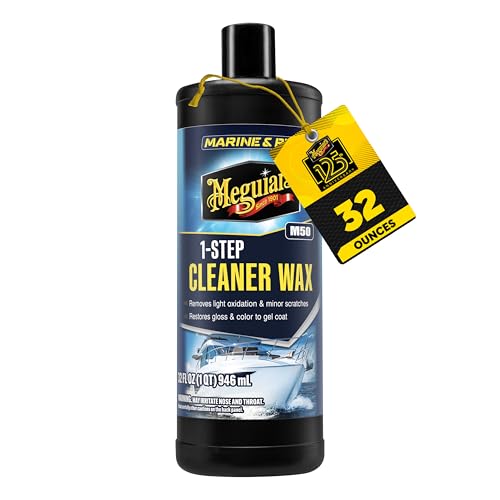 |
Meguiar's M4965 Marine/RV One Step Cleaner Wax Best Overall One-step cleaner wax, gel coat safe, 16 oz, hand or machine application |
9.5 | 🛒 Check Price |
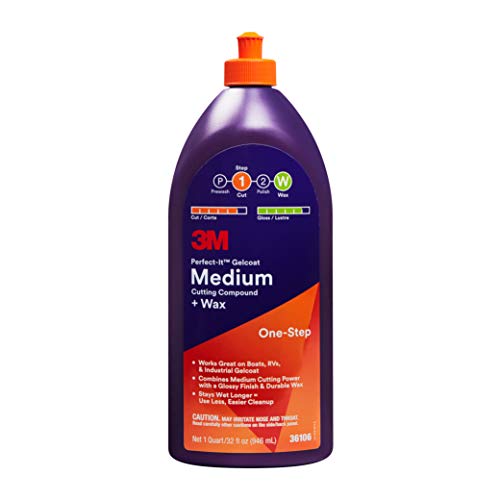 |
3M Marine Restorer and Wax 09005 Best for Heavy Oxidation Restorer plus wax, heavy oxidation rated, gel coat and fiberglass, machine friendly |
9.3 | 🛒 Check Price |
 |
Star Brite Premium RV Polish with PTEF Best Long-Lasting Protection Polish and sealant with PTEF, UV blockers, fiberglass and painted RV surfaces |
9.1 | 🛒 Check Price |
 |
Collinite 925 Fiberglass Boat Wax Best Durability Heavy duty fiberglass wax, marine grade, hand application, gel coat safe |
8.9 | 🛒 Check Price |
 |
Gel Coat Labs Heavy Oxidation Remover Best Dedicated Cleaner Heavy oxidation remover and compound, fiberglass and gel coat, machine or hand |
8.7 | 🛒 Check Price |
 |
Aero Cosmetics Wax As You Dry Best for Easy Maintenance Spray wax and sealant, waterless capable, fiberglass and painted RV surfaces |
8.4 | 🛒 Check Price |
 |
Bio-Kleen Komet RV Wash and Wax Best Wash and Wax Combo Concentrated wash and wax, biodegradable, safe for fiberglass and gel coat |
8.1 | 🛒 Check Price |
1. Meguiar's M4965 Marine/RV One Step Cleaner Wax: Best Overall
If you want one bottle that handles the majority of RV oxidation jobs, this is it. Meguiar’s marine and RV one step cleaner wax pulls double duty, using mild cleaners to lift the faded, chalky layer while carnauba wax bonds to the freshly exposed gel coat. On a travel trailer with a season of moderate oxidation, a single hand application brought back a clear, reflective shine and stopped the white chalk from transferring to a clean rag. That balance of cleaning power and finish quality is why it earns our top spot.
The honest limitation is depth. This is a one step product, which means the abrasives are intentionally gentle. On a roof line or front cap that has gone badly chalky and porous from years of neglect, one step simply cannot reach the bottom of that damage, and you will see it haze again. In those cases you need a dedicated heavy oxidation remover first and then this as the sealing step. For routine maintenance and light to moderate fade, though, it is the most foolproof choice here and the best overall value for the result it delivers.
- Combines light oxidation cleaner and carnauba wax in a single pass
- Formulated for fiberglass gel coat and RV painted surfaces
- Works by hand or with a dual action polisher
Pros: Removes light to moderate oxidation and seals in one application; Trusted marine grade formula that is genuinely easy to wipe off; Leaves a warm carnauba gloss rather than a plasticky look
Cons: Will not fully clear heavy, deeply chalked oxidation on its own; Carnauba protection needs reapplying more often than a synthetic sealant
2. 3M Marine Restorer and Wax 09005: Best for Heavy Oxidation
When an RV side panel has gone past dull and into full chalky, yellowed neglect, this is the bottle we reach for. 3M built this restorer and wax for the worst marine grade oxidation, and that aggression shows. On a badly faded front cap, a machine pass cut straight through the dead layer and brought back a gloss that genuinely looked wet again. It then leaves a wax film so you are not exposing bare, hungry gel coat to the sun the moment you finish. For deep oxidation recovery, nothing else on this list works as fast.
That power is also the warning. This product has real cut, and on older RVs the gel coat can be thinner than you think, especially on edges and high spots. Lean on it too hard with a rotary and you can go through to the substrate, which is a repair you do not want. It also strongly favors machine application, so if you are committed to working purely by hand you will fight it and tire out long before the panel is done. Used with care and a buffer, it is the heavy hitter of the group.
- Aggressive cleaners cut through severe chalk and yellowing
- Built in wax seals the surface after restoration
- Designed for heavily weathered gel coat and fiberglass
Pros: Removes serious oxidation that one step products leave behind; Restores gloss and adds protection in the same product; Holds up well when applied with a rotary or dual action buffer
Cons: Aggressive enough that careless use can burn thin gel coat; Best results really require a machine, not just hand work
3. Star Brite Premium RV Polish with PTEF: Best Long-Lasting Protection
Star Brite leans into the protection side of the equation, and that is exactly why it is here. Its PTEF based polish lays down a synthetic sealant that lasts well beyond what a natural wax manages, and the UV inhibitors are the part that matters most for oxidation. Since oxidation is fundamentally sun damage, blocking that UV is how you stop the chalk from coming back a month after you detail. On a panel cleaned and then sealed with this, the surface stayed glossy and beaded water cleanly through repeated rain and sun cycles.
The trade off is that it is more of a finisher than a fixer. The cleaning and abrasive action is mild by design, so if your fiberglass is already chalked out, this will not be the product that cuts it clean. You want to remove the existing oxidation with a dedicated compound or restorer first, then use this as the durable topcoat. Treat it as the long term armor rather than the first responder and it rewards you with protection that genuinely outlasts the carnauba options here.
- PTEF synthetic sealant for durable, slick protection
- UV inhibitors slow future oxidation and fading
- Restores shine while bonding a long lasting barrier
Pros: Protection lasts noticeably longer than carnauba waxes; Strong UV defense to keep oxidation from returning quickly; Slick finish that helps water and grime sheet off
Cons: Cleaning action is mild, so heavy oxidation needs prep first; Synthetic finish looks slightly cooler than warm carnauba gloss
4. Collinite 925 Fiberglass Boat Wax: Best Durability
Collinite has a near cult following among boat and RV owners for one reason: this wax simply will not quit. The 925 fiberglass formula lays down a dense, hard film that holds up against brutal sun and salt air far longer than most waxes, which is precisely what an oxidation prone RV roof or front cap needs. It carries enough cleaner action to lift light surface oxidation as you apply it, and the gloss it leaves on clean gel coat is deep and genuinely impressive. A thin coat goes a long way, so one tin lasts.
The catch is application feel. If you put it on too heavy or let it sit too long, it can flash hard and become a real chore to buff back off, leaving you scrubbing streaks. The discipline of thin coats matters here more than with friendlier waxes. It is also a protectant first and foremost, with only light cleaning ability, so heavy chalk must be compounded away before this goes on. Master the thin coat technique and you get the longest lasting protection of any wax on this list.
- Dense protective film that survives sun, salt, and weather
- Cleaner wax action lifts light oxidation as it protects
- A little product covers a large area
Pros: Outstanding durability that shrugs off harsh sun and salt; Deep, hard gloss on fiberglass gel coat; Very economical to use because a thin coat goes far
Cons: Can be stubborn to buff off if applied too thick; Light cleaning only, so serious oxidation must be removed first
5. Gel Coat Labs Heavy Oxidation Remover: Best Dedicated Cleaner
Sometimes you need a specialist, not a generalist, and that is what this is. Gel Coat Labs made a dedicated heavy oxidation remover whose only job is to cut through the chalky, dead surface and expose clean, clear gel coat underneath. On test panels that were past saving with a one step wax, this compound clawed back genuine clarity and brought the original color depth back to life. Because it is purpose built for fiberglass oxidation, it does that one task better than the multipurpose options that try to clean and protect at once.
The obvious downside is that the job is only half done when you finish. This is a remover with no wax or sealant in it, so freshly cleaned gel coat is left bare and vulnerable until you follow up with a protectant. Skip that step and the oxidation will return faster than before, since you have opened up the surface. Plan on pairing it with a durable sealant like the Star Brite or Collinite picks above. As the cutting stage of a two step restoration, it is excellent and earns its place.
- Targeted abrasive compound for severe chalk and fade
- Restores gel coat clarity before sealing
- Usable by hand or with a polisher pad
Pros: Cuts deep oxidation that combo products cannot reach; Brings back true gel coat clarity and color depth; Flexible for hand or machine work
Cons: Pure remover with no wax, so a separate sealant step is required; Requires more elbow grease or buffer time than one step products
6. Aero Cosmetics Wax As You Dry: Best for Easy Maintenance
This pick solves a different part of the oxidation problem: keeping it from coming back without a full weekend of labor. Aero Cosmetics designed this spray to be applied while you dry the RV after washing, laying down a quick layer of wax and UV protection in the same motion. For a big motorhome where traditional paste waxing is genuinely tiring, that convenience is the whole point. Maintained regularly, it keeps the surface sealed and the UV blocked, which is what actually slows oxidation from forming again.
Be clear about what it is not. This will not remove existing oxidation, and no spray wax should be expected to. If your fiberglass is already chalky, you need a compound or restorer first and this becomes your easy upkeep afterward. The protective film is also thinner than a paste wax, so you trade ultimate durability for speed and have to reapply more often. As the maintenance layer that keeps a freshly restored RV protected between deep details, it is hard to beat for sheer convenience.
- Spray on wax that seals while you dry the rig
- UV protection to slow ongoing oxidation
- No buffing or curing time needed
Pros: Extremely fast and easy to maintain protection between deep details; Adds UV defense to keep light oxidation at bay; Great for large RV surfaces where full waxing is exhausting
Cons: Not an oxidation remover, only maintenance protection; Thinner film means more frequent reapplication
7. Bio-Kleen Komet RV Wash and Wax: Best Wash and Wax Combo
The easiest oxidation to deal with is the kind that never sets in, and a wash and wax like this helps on that front. Bio-Kleen’s concentrated RV wash cleans away the road film, bug splatter, and grime that hold UV against the surface, and it leaves a light wax behind with every wash. Used routinely on a rig that is already in good shape, that small recurring layer of protection helps hold off the start of oxidation between proper wax jobs. The concentrate is generous and rinses clean, and it is gentle on every RV surface we tried it on.
Set expectations accordingly, because this is the gentlest product on the list. The wax it deposits is thin and meant to supplement, not replace, a real sealant or paste wax. It also has no ability to remove oxidation that has already formed, so a chalky trailer needs restoration before this is relevant. Think of it as preventive maintenance in your wash bucket rather than a fix. For keeping a cared for RV cared for, it is a smart and economical habit, which is why it rounds out the seven.
- Cleans road film and adds wax protection in one wash
- Concentrated and biodegradable formula
- Safe across fiberglass, gel coat, and painted RV panels
Pros: Builds light wax protection every time you wash; Concentrate stretches a long way for good value; Gentle, biodegradable formula that is easy to rinse
Cons: Wax layer is light and not a substitute for real sealing; Does nothing to remove established oxidation
Frequently Asked Questions
What causes oxidation on an RV and why does it look chalky?
RV oxidation is mostly sun damage. Ultraviolet light, combined with heat, moisture, road salt, and airborne pollutants, slowly breaks down the resin in the gel coat or clear coat on the surface of your RV. As that top layer degrades, it loses its smooth, reflective structure and turns into a porous, powdery film. That is the chalky white residue you see rub off onto your hand or a clean rag. White and lighter colored RVs hide it longer, while darker finishes show fading and dullness sooner, but the underlying cause is the same UV driven breakdown of the protective surface layer.
Do I need an oxidation remover, a wax, or both?
It depends on how bad the oxidation is. For light, early oxidation, a one step cleaner wax like the Meguiar’s pick can both lift the haze and seal the surface in a single application. For moderate to heavy oxidation where the surface is clearly chalky and faded, you usually need two steps: first a dedicated oxidation remover or restorer to cut through and expose fresh gel coat, then a wax or sealant to protect that freshly cleaned surface. Removing oxidation without sealing afterward is a mistake, because bare gel coat oxidizes again quickly once you have opened it up.
Can I remove RV oxidation by hand or do I need a buffer?
Light oxidation comes off by hand with a good cleaner wax and some patience, and many travel trailers can be maintained entirely by hand. Heavy oxidation is a different story. Aggressive restorers such as the 3M Marine product really work best with a dual action or rotary buffer, both because the cut requires consistent pressure and because doing a full motorhome by hand is exhausting and uneven. If you go the machine route, use a dual action polisher rather than a rotary unless you are experienced, since a rotary spins fast enough to burn through thin gel coat on edges and high spots.
How often should I wax my RV to prevent oxidation coming back?
A reasonable target is two to three times a year for most RVs, with synthetic sealants lasting longer than natural carnauba waxes. If your RV is stored outside in strong sun, parked near salt air, or driven a lot, lean toward the more frequent end and favor a UV blocking sealant like the Star Brite or a durable wax like the Collinite. Between full wax sessions, a spray wax applied while drying after each wash adds a thin protective layer and meaningfully slows oxidation from forming. The single most effective habit is keeping the surface clean and UV protected, because clean, sealed gel coat oxidizes far slower than neglected gel coat.
Is RV wax different from regular car wax for oxidation?
Yes, and the difference matters for fiberglass RVs. Most RVs use a fiberglass gel coat surface rather than the painted clear coat on a typical car, and gel coat oxidizes differently and often more severely. Marine and RV rated products, several of which appear on this list, are formulated for gel coat oxidation specifically, with cleaners and UV inhibitors tuned for that surface. Regular car wax can work fine on painted RV panels and as a maintenance topcoat, but for cutting real chalky oxidation off fiberglass you want a product that names fiberglass or gel coat on the label, because it is built for the job.
Our Verdict
For most RV owners fighting oxidation, the Meguiar’s M4965 Marine/RV One Step Cleaner Wax is our top pick, because it cleans light to moderate chalk and seals the surface in one foolproof application that even first time detailers can nail. If your fiberglass has gone deeply chalky and yellowed, the 3M Marine Restorer and Wax 09005 is the runner up and the heavy hitter, cutting through severe oxidation that one step products leave behind, just be sure to follow with a durable sealant to keep that hard won shine from fading right back.
More Car Detailing Guides
Video Guide
Video: Related tutorial from YouTube