New paint is softer and more delicate than people expect, which is exactly why choosing the wrong rubbing compound can leave you with haze, sanding marks or burn-through on a panel that should look flawless. Whether you’re knocking back orange peel on a fresh respray, removing 1500 to 3000 grit sanding scratches, or correcting installer-induced swirls before the clear cures fully, the compound you reach for decides whether the panel finishes crystal clear or cloudy.
We spent weeks testing compounds on fresh single-stage and base-coat-clear panels, watching how aggressively each one cut, how cleanly it wiped off, how much dust it threw, and most importantly how clear the finish looked under direct light. Below are the seven rubbing compounds we trust most on new paint, ranked from best overall down, with honest notes on where each one falls short so you can match the right cut to your project.
| Photo | Product | Score | Buy |
|---|---|---|---|
 |
Meguiar's M105 Ultra-Cut Compound Best Overall Cut: heavy | Body shop grade | Body shop safe SMAT abrasive | Both rotary and DA |
9.5 |
ⓘ We may earn a commission from qualifying purchases made through links on this page, at no extra cost to you.
|
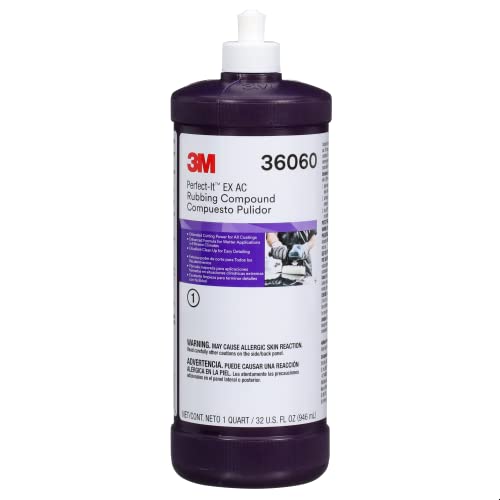 |
3M Perfect-It Rubbing Compound 39060 Best for Fresh Respray Cut: heavy | Body shop standard | Water based | Rotary friendly |
9.3 | 🛒 Check Price |
 |
Chemical Guys V32 Optical Grade Compound Best Cut and Finish Balance Cut: medium-heavy | Optical grade | Dust free formula | DA and rotary |
9.1 | 🛒 Check Price |
 |
Griot's Garage Complete Compound Best for Beginners Cut: medium | One step capable | Dust free | DA optimized |
8.9 | 🛒 Check Price |
 |
Turtle Wax T-415 Premium Grade Rubbing Compound Best Value Cut: medium-heavy | Hand or machine | Restores gloss | Single stage and clear coat |
8.6 | 🛒 Check Price |
 |
Sonax Profiline Cut and Finish 05-05 Best One-Step Correction Cut: medium-heavy | Cut plus finish | Silicone free | DA and rotary |
8.4 | 🛒 Check Price |
 |
Mothers California Gold Scratch Remover Best for Light Defects Cut: light-medium | Hand or machine | Micro-abrasive | Clear coat safe |
8.0 | 🛒 Check Price |
1. Meguiar's M105 Ultra-Cut Compound: Best Overall
Meguiar’s M105 is the compound we kept returning to on new paint because it solves the old trade-off between cut and clarity. Its SMAT abrasives don’t break down the way traditional diminishing compounds do, so the cut stays consistent from the first pass to the last, and it chews through wet-sanding marks and orange peel knock-down that would stall softer products. On a fresh base-coat-clear panel it pulled 1500 grit sanding scratches out fast while leaving a finish far clearer than its aggression suggests.
The honest weakness is working time. M105 flashes fast and can grab on the pad if you spread it too thin or work too large an area, which on a hot panel means you have to move with purpose and keep a misting bottle handy. It also benefits from a dedicated polish like M205 afterward to perfect dark metallics. Treat it as a serious cutting step rather than an all-in-one and it’s hard to beat on new paint.
- Super Micro Abrasive Technology cuts hard and finishes far cleaner than old grinding compounds
- Removes 1200 to 3000 grit sanding marks and heavy defects on fresh paint
- Works on both rotary and dual action polishers without separate adjustment
Pros: Aggressive cut with a surprisingly clear finish for a compound this strong; Body shop trusted on fresh and cured clear coat alike; A little product covers a large area, so a bottle lasts
Cons: Flashes and grabs quickly, so you must keep it worked and not let it dry; Needs a follow-up polish to fully refine on dark colors
2. 3M Perfect-It Rubbing Compound 39060: Best for Fresh Respray
If your project is a genuinely fresh respray, the 3M Perfect-It rubbing compound is the product painters have leaned on for decades, and it earns that reputation on new paint. Used right after color sanding, it knocks back sanding marks and levels the surface with a controlled, predictable cut. The lubrication is excellent, so the panel stays cool, the product stays workable, and you get a uniform finish across the whole panel rather than hot spots that need re-doing.
Where it shows its age is the tool requirement. Perfect-It really shines behind a rotary polisher with a wool or foam cutting pad, and on a budget dual action machine you won’t extract the same speed of correction. It’s also clearly aimed at professionals, so the packaging assumes you’ll go through it. For a one car DIY job that’s fine, but pair it with the matching Perfect-It polish to refine the finish to a true mirror.
- Body shop standard for cutting fresh paint right after color sand
- Removes 1200 to 1500 grit sanding scratches and heavy oxidation
- Smooth lubrication keeps the panel cool and reduces sling
Pros: Industry trusted on brand new respray work; Excellent cut with minimal swirling for an aggressive compound; Wipes off cleanly without crusting
Cons: Best results come from a rotary, less ideal on entry level DA; Container size means frequent reordering for high volume shops
3. Chemical Guys V32 Optical Grade Compound: Best Cut and Finish Balance
Chemical Guys V32 sits in the sweet spot for hobbyists working on new paint who want serious correction without immediately needing a second refining step. The optical grade abrasives remove moderate to heavy swirls, water spots and lighter sanding marks while finishing down clear enough that on many lighter colors you can go straight to a sealant. The low dust formula is a genuine quality of life win, especially when you’re correcting a whole car in a garage.
Its limitation is at the extreme end. Against truly heavy 1200 grit sanding marks or deep installer swirls, V32 needs more passes than a dedicated cutting compound like M105 or 3M Perfect-It, and impatient users sometimes flood the pad with product, which reduces the cut further. Used in the right quantity on medium defects, though, it gives one of the best gloss to effort ratios on this list and is forgiving on fresh, soft clear.
- Optical grade abrasives cut defects while leaving high clarity
- Low dust and low sling formula keeps the work area cleaner
- Body shop safe on fresh clear coat and single stage paint
Pros: Strong correction with a noticeably glossy after-finish; Very low dust compared to traditional compounds; Works well on both DA and rotary for flexible users
Cons: Slightly less raw cut than M105 on the worst defects; Can over-lubricate if you apply too much product
4. Griot's Garage Complete Compound: Best for Beginners
For someone correcting new paint for the first time, Griot’s Garage Complete Compound is the most forgiving choice here. It’s formulated to cut moderate defects and refine at the same time, and it’s clearly tuned for the long throw dual action polishers most DIYers buy. On softer modern clear coats it routinely removes swirls and light marring in a single pass and finishes clear enough to seal, which removes a lot of the guesswork that trips up newcomers.
That convenience comes with a ceiling. Complete Compound is a medium cutter, so on heavy color-sand scratches or hard, stubborn clear it simply won’t bite the way a true rubbing compound does, and you may chase a defect that a stronger product would erase immediately. Think of it as the safe, do-most-things option for fresh, soft paint, and step up to a dedicated heavy compound only when the defects genuinely demand it.
- Engineered to cut and refine in one step on softer paint
- Tuned for dual action polishers that most beginners own
- Low dust and easy wipe off for first time users
Pros: Very forgiving and hard to go wrong with on new paint; Often corrects and finishes in a single pass on lighter defects; Cleans off easily without staining trim
Cons: Not aggressive enough for heavy sanding marks; Best on softer modern clear coats rather than hard ceramic clears
5. Turtle Wax T-415 Premium Grade Rubbing Compound: Best Value
Turtle Wax T-415 is the accessible workhorse on this list, the compound you can find on a shelf almost anywhere and still get real correction from on new paint. It removes oxidation, light scratches and staining, and crucially it works by hand, which makes it genuinely useful for spot repairs on a fresh panel where dragging out a polisher would be overkill. For touch-up work and general gloss restoration it punches well above what its no-nonsense reputation suggests.
The compromise is refinement. T-415 leaves a slightly coarser finish than the optical grade products here, so on dark or metallic new paint you’ll usually want to follow it with a finishing polish to clear the last bit of haze, and overworking it on a black panel can introduce light marring. As a flexible, reach-for-it-anywhere compound that delivers solid value, though, it remains a smart thing to keep on the shelf.
- Removes scratches, oxidation and stains on fresh and older paint
- Can be applied by hand or with a machine for flexibility
- Widely available formula that has been refined over many years
Pros: Strong correction available almost anywhere you shop; Works by hand for small spot repairs on new paint; Good gloss restoration for a general purpose compound
Cons: Coarser finish than premium optical compounds, often needs a polish after; Can haze on very dark colors if overworked
6. Sonax Profiline Cut and Finish 05-05: Best One-Step Correction
Sonax Profiline Cut and Finish is the efficiency pick for new paint, built to cut moderately heavy defects and lay down a refined finish in one product rather than two. The silicone free formula matters here, because it means you can use it safely on paint that may see further repair or blending without contaminating the surface. The longer working time is welcome too, letting you work a full panel without the product grabbing the way faster compounds do.
It isn’t a miracle that erases the line between cutting and polishing entirely. On the harshest sanding marks the cut falls a little short of a dedicated heavy compound, so very aggressive correction still belongs to M105 or 3M Perfect-It. It also rewards good machine pads, and on cheap foam you lose some of its finishing magic. For knocking out swirls and light marring on fresh clear in one efficient pass, however, it’s a genuinely smart choice.
- Combines heavy cut with a refined finish in a single product
- Silicone free, so it’s body shop and repaint safe
- Holds up across multiple panels without flash drying too fast
Pros: Genuine one step correction that saves time on new paint; Silicone free formula is safe before further paint work; Long working time compared to fast flashing compounds
Cons: Pricier feel in use as it benefits from quality pads; Cut isn’t quite at the level of dedicated M105 style compounds
7. Mothers California Gold Scratch Remover: Best for Light Defects
Mothers California Gold Scratch Remover is the gentle finishing-end pick for new paint, and on soft, fresh clear coat that gentleness is a feature rather than a flaw. Its micro-abrasives lift light scratches, swirl marks and minor blemishes without the risk of hazing or burning that a heavy compound carries on delicate paint, and because it works by hand it’s ideal for tidying up a single scuff or a small swirl cluster without setting up a machine.
Its honest limitation is right there in its character. This is a light to medium corrector, so asking it to remove color-sand scratches or deep defects on a respray will only frustrate you, and on larger areas the mild cut means a lot of repetitive passes. Used for what it’s, a safe, low-risk way to polish out light imperfections and boost gloss on fresh paint, it’s a reliable last step that’s very hard to damage anything with.
- Micro-abrasive formula removes light scratches and swirl marks
- Clear coat safe and gentle enough for delicate fresh paint
- Works by hand for quick localized correction
Pros: Very gentle, low risk of marring soft new clear coat; Easy to use by hand with no machine required; Leaves a clean, glossy finish on light defects
Cons: Too mild for heavy sanding marks or deep scratches; Larger correction jobs take many passes
Frequently Asked Questions
Is rubbing compound safe to use on brand new paint?
Yes, but timing and product choice matter. Fresh paint is softer and the clear coat continues to cure for several weeks after spraying, so it cuts more easily and can mar more easily too. Most body shops will color sand and compound a fresh respray within days, but if you’re correcting factory or recently sprayed paint you can compound it, just start with the least aggressive product that will do the job. Use a quality compound with modern micro-abrasives like Meguiar’s M105 or 3M Perfect-It, work small sections, keep the panel cool, and avoid sealing or waxing the surface until any solvents have fully gassed out, which is typically around 30 days for fresh paint.
What is the difference between rubbing compound and polish?
Rubbing compound has larger, more aggressive abrasives designed to cut, meaning it physically removes a thin layer of paint to level out scratches, sanding marks, oxidation and orange peel. Polish uses finer abrasives to refine the surface, removing the lighter haze and micro-marring that compounding can leave behind and bringing up gloss and clarity. On new paint the usual workflow is compound first to do the heavy correction, then polish to perfect the finish, then seal or wax to protect it. Some products like Griot’s Complete Compound or Sonax Cut and Finish try to do both jobs in one step, which works well on lighter defects but can’t match a dedicated two-step process on heavy correction.
Can I apply rubbing compound by hand or do I need a machine?
You can apply many compounds by hand, and products like Turtle Wax T-415 and Mothers California Gold are specifically designed to work that way for spot repairs. However, hand application is far slower and produces a less uniform cut than a machine, and on a full panel or a whole car you’ll struggle to generate the consistent correction a polisher provides. A dual action polisher is the sweet spot for most DIYers because it’s forgiving and very hard to damage paint with, while a rotary cuts faster but demands more skill. For new soft paint, a dual action machine with a quality cutting pad gives you strong, even correction with a low risk of burning through the clear.
Will rubbing compound remove orange peel from new paint?
Compound alone will only reduce mild orange peel, and the proper way to remove it on fresh paint is to wet sand first, then compound. Painters typically color sand with 1500 to 3000 grit paper to level the texture, which leaves fine sanding scratches, and then they use an aggressive cutting compound like 3M Perfect-It or Meguiar’s M105 to remove those sanding marks and restore clarity. Trying to chase heavy orange peel with compound by itself wastes product and risks uneven thinning of the clear. Always confirm you have enough clear coat thickness before sanding, because there’s a finite amount of material to work with on any paint job.
How do I avoid swirl marks and haze when compounding new paint?
Most swirls and haze after compounding come from poor technique or dirty tools rather than the compound itself. Always start with a clean, decontaminated panel, because trapped grit will drag across the paint and create scratches. Use clean pads and swap them often, as a clogged pad smears spent abrasive instead of cutting. Keep your pad flat, use moderate pressure, and don’t let the compound dry out and dust on the surface. Finally, follow your compound with a dedicated polish to refine away the light micro-marring that even good compounds leave, especially on dark colors. Wiping off with a fresh, plush microfiber towel rather than a worn one also prevents you from re-instilling fine scratches.
Our Verdict
For correcting new paint, our top pick is the Meguiar’s M105 Ultra-Cut Compound, which delivers body-shop-grade cutting power on fresh sanding marks and defects while finishing far clearer than its aggression suggests, making it the most multi-purpose heavy compound for soft new clear coat. Our runner up is the 3M Perfect-It Rubbing Compound 39060, the long-standing painter’s standard that excels right after color sanding a fresh respray, especially behind a rotary. If you’re newer to paint correction, Griot’s Garage Complete Compound is the safest, most forgiving way to start, but for serious correction on new paint these two should be at the top of your list.