A clear coat takes the abuse so your color coat doesn’t have to, which means it ends up covered in swirls, water spots, light scratches, and oxidation long before the paint underneath shows any wear. The right rubbing compound levels that damaged top layer back to a smooth, glossy surface, but the wrong one can leave its own hazing or even burn through thin factory clear. Knowing which compound matches your defect level is the whole game.
We spent time working these compounds across single-stage and clear-coated panels, by hand and with both dual-action and rotary machines, watching how aggressively each one cut, how cleanly it finished, and how forgiving it was if you left it on a beat too long. Below are seven compounds that genuinely earn their place on a detailer’s shelf, ranked from our top overall pick down, with honest notes on where each one falls short.
| Photo | Product | Score | Buy |
|---|---|---|---|
 |
Meguiar's Ultimate Compound Best Overall 16 oz liquid, micro-abrasive, clear-coat safe, body shop and DIY rated |
9.5 |
ⓘ We may earn a commission from qualifying purchases made through links on this page, at no extra cost to you.
|
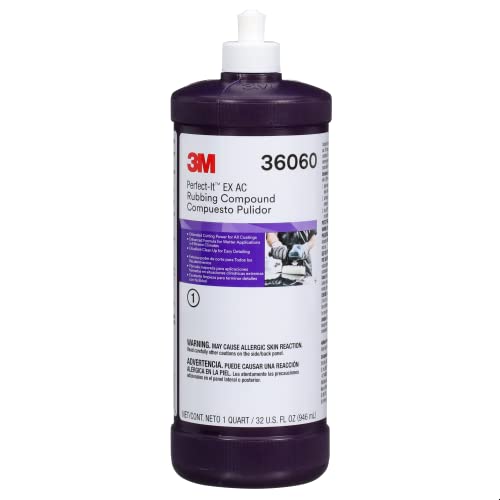 |
3M Perfect-It Rubbing Compound Best for Pros Quart bottle, body shop grade, fast cut with machine, low dust |
9.3 | 🛒 Check Price |
 |
Chemical Guys V32 Optical Grade Compound Best Cutting Power 16 oz, optical-grade abrasives, heavy correction, rotary and DA compatible |
9.1 | 🛒 Check Price |
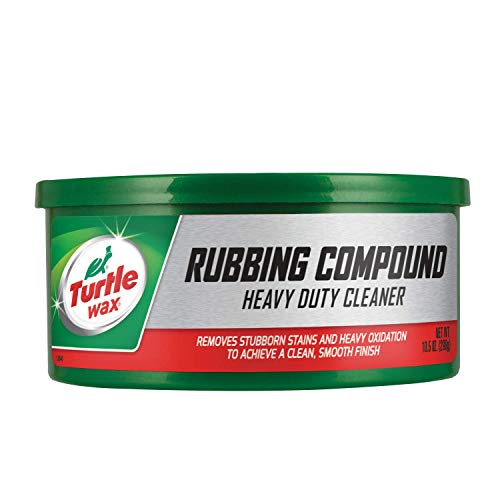 |
Turtle Wax Premium Grade Rubbing Compound Best Value 18 oz, paste-style, restores oxidized and scratched clear coat |
8.8 | 🛒 Check Price |
 |
Mothers California Gold Scratch Remover Best for Light Scratches 8 oz, micro-abrasive paste, spot scratch and swirl treatment |
8.6 | 🛒 Check Price |
 |
Griot's Garage Complete Compound Best One-Step 16 oz, ceramic-coating-safe abrasives, cut and finish in one step |
8.4 | 🛒 Check Price |
 |
Adam's Polishes Heavy Cut Compound Best for Oxidation 16 oz, heavy cut, removes deep defects and severe oxidation |
8.2 | 🛒 Check Price |
1. Meguiar's Ultimate Compound: Best Overall
Meguiar’s Ultimate Compound is the rubbing compound we reach for first because it does the single hardest thing well: it removes real defects from clear coat while still finishing down clean enough that many cars don’t strictly need a separate polish afterward. The micro-abrasives break down as you work them, so the cut tapers off and the surface gets glossier the longer you go, which is exactly what you want from a forgiving compound. By hand it knocked out light swirls and water etching on our test hood, and on a dual-action polisher it pulled out deeper marring without much fuss.
The honest weakness is ceiling. Because it’s tuned to be safe and clean-finishing, it simply won’t cut through deep scratches that catch your fingernail or severe orange-peel oxidation, and on hard ceramic clears it can stall out and just smear. For those jobs you need a dedicated heavy cutting compound and a wool or microfiber pad. But for the swirls and light scratches that the vast majority of clear-coated cars actually have, this is the most reliable all-around choice and the easiest to get a good result with.
- Micro-abrasive technology cuts defects without leaving heavy compound haze
- Safe for clear coats by hand or with a dual-action polisher
- Works as a one-step on lightly to moderately damaged paint
Pros: Excellent balance of cutting power and clean finish; Very forgiving for beginners working by hand; Widely available and consistent batch to batch
Cons: Not aggressive enough for deep scratches or heavy oxidation; Can sling if you apply too much product to the pad
2. 3M Perfect-It Rubbing Compound: Best for Pros
3M Perfect-It’s the compound that lives on the bench in actual collision and paint shops, and it shows. It’s built to chase out the scratches left behind by wet sanding fresh clear, so on the everyday defects most owners face it has cutting power to spare. Run it on a rotary or a stronger dual-action with a cutting pad and it levels marring fast, then refines down far cleaner than you expect from something this aggressive. That combination of bite plus a respectable finish is why it has stayed a shop standard for years.
The flip side is that this is unmistakably a professional tool. By hand the cut is weak and you’ll wear yourself out for mediocre results, because the formula relies on machine heat and pad pressure to work the abrasives properly. It also rewards experience: the same power that removes sand scratches will thin or burn factory clear on an edge if you linger or use too much speed. If you own a machine and know your panel temperatures, it’s outstanding. If you’re brand new, start gentler.
- Body shop formula designed for sanding scratch removal after wet sanding
- Heavy initial cut that levels 1500 and finer grit marks
- Low sling and low dusting for cleaner machine work
Pros: Serious cutting power that handles real sand scratches; Finishes cleaner than most compounds with this much bite; Large bottle lasts through many full corrections
Cons: Really meant for machine use, struggles by hand; Easy to over-cut thin clear if you’re inexperienced
3. Chemical Guys V32 Optical Grade Compound: Best Cutting Power
Chemical Guys V32 is the heavy hitter in their correction lineup, and it’s the one to grab when Ultimate Compound runs out of road. The optical-grade abrasives diminish as you work them, so you get an aggressive opening cut that knocks down deeper scratches and heavy oxidation, then a progressively finer action that refines the surface as the product breaks down. On a hard clear that resists softer compounds, V32 keeps biting where gentler products just glaze over the defect.
What keeps it out of the top spot is that it’s genuinely a two-step product. It cuts hard, but on darker paint it tends to leave fine machine marring or light hazing that you really need to chase with a follow-up polish like V36 or V38 to get a flawless show finish. That’s normal for a true cutting compound, but it means more time and more products, so it’s overkill if your paint only has light swirls. Buy V32 when you have serious correction to do, not for a quick refresh.
- Optical-grade diminishing abrasives for heavy defect removal
- Designed to pair with the V series polish for a two-step system
- Body-shop-safe and effective on both soft and hard clears
Pros: Strong cut that tackles deeper scratches and oxidation; Diminishing abrasives leave a surprisingly refined finish; All-around across rotary and dual-action machines
Cons: Almost always needs a follow-up polish to remove micro-marring; Pricier system if you buy the full V lineup
4. Turtle Wax Premium Grade Rubbing Compound: Best Value
Turtle Wax Premium Grade earns the value pick because it delivers genuine correction at a level of accessibility that punches above its standing. It’s a thicker, more traditional compound that grabs and cuts oxidation, dull weathered paint, and light scratches without you needing to hunt down a specialty supplier. On an older neglected hood with chalky oxidation, it brought back real gloss by hand, which is a fair test for a compound this approachable.
The trade-off is refinement. The abrasives are coarser and don’t break down as gracefully as the premium systems, so on dark clear coats you’ll usually see some haze or fine marring that has to be cleaned up with a follow-up polish or glaze. It also tends to dry and start grabbing if you work it too long in one area, so smaller sections and a steady pace matter. Manage those quirks and it’s a lot of correction for very little investment.
- Restores faded, oxidized, and lightly scratched clear coat
- Thick formula clings to the pad with minimal sling
- Works by hand or machine on most paint finishes
Pros: Strong performance for an accessible, everyday compound; Effective on oxidation and weathered single-stage paint; Easy to find at almost any auto parts store
Cons: Coarser finish that often needs polishing afterward; Can dry out and grab if worked too long in one spot
5. Mothers California Gold Scratch Remover: Best for Light Scratches
Mothers California Gold Scratch Remover is the compound to keep for surgical, localized work rather than full-panel correction. The micro-abrasives are tuned mild, so when a shopping cart leaves a light scuff or a door edge picks up swirls, you can work that exact spot by hand and blend it back into the surrounding clear without creating a halo of haze. It’s about as safe as a corrective product gets, which makes it ideal for owners nervous about touching their paint.
That gentleness is also its limit. This isn’t a compound for reviving a whole oxidized hood or removing scratches you can feel with a fingernail; push it at that kind of damage and you’ll work forever for little payoff. The 8 ounce bottle also disappears fast if you try to use it across an entire car. Treat it as a precision spot tool that lives next to your detailing kit, and it’s excellent at the narrow job it was built for.
- Micro-abrasives target light scratches, swirls, and water spots
- Gentle enough for spot repairs without machine equipment
- Leaves a clean, polished surface ready for wax
Pros: Very safe on clear coat, hard to do damage by hand; Great for localized scratch and swirl spot treatment; Finishes clean enough to wax directly in many cases
Cons: Too mild for heavy oxidation or deep defects; Small bottle goes quickly on a full vehicle
6. Griot's Garage Complete Compound: Best One-Step
Griot’s Garage Complete Compound is built around a simple promise: cut the defect and finish the surface in one pass so you aren’t constantly swapping products and pads. The smart abrasives have a genuinely long working time, meaning they keep cutting without dusting or flashing off, which gives you room to spread the product and let it do its job. On light to moderate swirls and water spots it lives up to the one-step claim and leaves a finish clean enough that many cars are ready to seal afterward.
The catch is the one inherent to every one-step product. To finish that cleanly, it gives up some top-end cutting power, so on deep scratches or hard, heavily oxidized clear it runs out of bite and you’ll want a dedicated heavy compound instead. It also leans on machine work, since by hand you lose much of the abrasive action that makes the one-step result possible. For maintenance correction on a reasonably cared-for car, though, it’s a genuine time saver.
- Engineered to cut and finish in a single step on many paints
- Smart abrasives that break down for a clean final pass
- Body-shop-safe and friendly to ceramic-coated surfaces
Pros: Real one-step convenience that saves time on lighter defects; Long working time before it dusts or grabs; Clean finish that often skips a separate polish
Cons: Less raw cut than dedicated heavy compounds; Best results really need a dual-action polisher
7. Adam's Polishes Heavy Cut Compound: Best for Oxidation
Adam’s Polishes Heavy Cut Compound is the specialist for paint that’s genuinely far gone. When clear coat has gone chalky and dull from years of sun, or carries deeper scratches and heavy marring, this is the kind of aggressive compound that actually levels enough material to bring it back. It has a long working time and low dusting for something this strong, so you can make controlled machine passes and watch the oxidation lift rather than fighting a product that flashes off in seconds.
Because it’s tuned for maximum cut, it’s unapologetically a first step, not a finish. On dark paint it leaves visible hazing and micro-marring that you must follow with a finishing polish to reach any kind of gloss, so plan on a two-step process and the extra time that takes. It’s also the wrong tool for light defects or thin factory clear, where its aggression is simply more than the paint can spare. Reserve it for serious oxidation jobs and it rewards you, but it isn’t a casual one-bottle solution.
- Heavy cut formula for deep scratches and severe oxidation
- Low dusting and long working time for controlled machine passes
- Pairs with finishing polish in a full correction system
Pros: Aggressive cut that revives badly weathered clear coat; Controlled, low-dust application for cleaner work; Strong on hard clears that resist softer compounds
Cons: Requires a follow-up polish to remove the haze it leaves; Too aggressive for light defects and thin clear
Frequently Asked Questions
Will rubbing compound damage my clear coat?
Rubbing compound works by removing a microscopically thin layer of clear coat, so it can cause harm only if you overdo it, usually by using too aggressive a compound, too much machine speed, or too many passes in one spot. Used correctly, it removes just the damaged top layer and leaves plenty of clear behind. Start with the mildest compound that will tackle your defects, work in small sections, keep your machine moving, and avoid lingering on panel edges where the clear is thinnest. For most cars with normal swirls and light scratches, a clear-coat-safe compound like Meguiar’s Ultimate Compound poses very little risk.
What is the difference between rubbing compound and polishing compound?
Rubbing compound is more aggressive and uses coarser abrasives to cut through deeper defects like scratches, heavy swirls, and oxidation, while polishing compound is finer and is meant to refine the surface and restore gloss after the heavy correction is done. Think of it as a two-step process: the rubbing compound does the cutting and may leave fine haze behind, then the polish removes that haze and brings up the shine. Some modern products, like one-step compounds, blur the line by cutting and finishing in a single step, but for serious correction you generally compound first and polish second.
Can I apply rubbing compound by hand or do I need a machine?
You can absolutely apply many rubbing compounds by hand, and forgiving formulas like Meguiar’s Ultimate Compound or Mothers Scratch Remover are designed to work well that way for spot repairs and lighter defects. A dual-action polisher, however, applies more consistent pressure and generates the controlled friction that lets the abrasives cut and break down properly, so it delivers better, faster, and more even results, especially across a full vehicle. Heavy body-shop compounds like 3M Perfect-It really need a machine to perform at all. For occasional touch-ups, hand application is fine; for full corrections, a machine is worth it.
How often should I use rubbing compound on my car?
Rubbing compound should be used sparingly, only when your paint actually has defects that a wash and polish can’t fix, because every application removes a little clear coat. For most well-maintained cars that means once a year at most, and often far less. Relying on a compound as routine maintenance will thin your clear over time and eventually expose the color coat underneath. Between compounding sessions, protect the finish with a wax, sealant, or ceramic coating and use proper wash technique to prevent the swirls that send people reaching for compound in the first place.
Do I need to wax or seal after using rubbing compound?
Yes, you should always apply a protective layer after compounding because the process strips away any existing wax or sealant and leaves bare, freshly leveled clear coat exposed to the elements. Once you have finished correcting and, if needed, polishing, follow up with a quality wax, paint sealant, or ceramic coating to lock in the gloss and shield the paint from UV, water spots, and contaminants. Skipping this step leaves your clear coat unprotected and lets new swirls and oxidation set in much faster, undoing the work you just put in.
Our Verdict
For the vast majority of clear-coated cars, Meguiar’s Ultimate Compound is our top pick because it removes real swirls and light scratches while finishing clean enough that many owners can skip a separate polish, and it’s forgiving whether you work by hand or by machine. If you have a polisher and tougher correction work, especially leveling sand scratches or heavier defects, the 3M Perfect-It Rubbing Compound is our runner up and the body shop standard for serious cutting power. Match the compound to your actual defect level, protect the paint afterward, and you’ll get gallery-quality results without putting your clear coat at risk.

