The single most asked question we get about car washing is simple: how much PSI is actually safe? The honest answer surprises people. You don’t want the most powerful machine on the shelf. For paint, trim, and badges, the sweet spot sits between roughly 1200 and 1900 PSI. Go much higher with a tight nozzle held too close and you can chip clear coat, force water past door seals, or peel a vinyl wrap. Go too low and you’re basically rinsing with a garden hose.
We focused on washers that land in that safe-but-effective window, or that let you dial the pressure down so you stay there. Every pick below has a foam cannon path, a sane flow rate for rinsing, and real-world manners around delicate surfaces. We weighted gentle paint safety, foam quality, hose and nozzle quality, and how easy each one is to store in a normal garage. Here are the seven we trust on our own cars.
| Photo | Product | Score | Buy |
|---|---|---|---|
 |
Sun Joe SPX3000 Electric Pressure Washer Best Overall Up to 2030 PSI, 1.76 GPM, dual detergent tanks, 14.5 amp electric motor |
9.5 |
ⓘ We may earn a commission from qualifying purchases made through links on this page, at no extra cost to you.
|
 |
Greenworks GPW1950 Electric Pressure Washer Safest For Paint 1950 PSI, 1.2 GPM, 13 amp electric, 25-foot high pressure hose |
9.3 | 🛒 Check Price |
|
Ryobi RY142300 Electric Pressure Washer Best Foam Performance 2300 PSI, 1.2 GPM, brushless induction motor, onboard foam blaster |
9.1 | 🛒 Check Price |
 |
Karcher K5 Premium Power Control Pressure Washer Best Pressure Control 2000 PSI, 1.4 GPM, water-cooled motor, app-guided pressure presets |
9.0 | 🛒 Check Price |
 |
Worx WG620 Hydroshot Portable Pressure Washer Best For Gentle Wash 320 to 450 PSI cordless, 20V battery, draws from any water source |
8.7 | 🛒 Check Price |
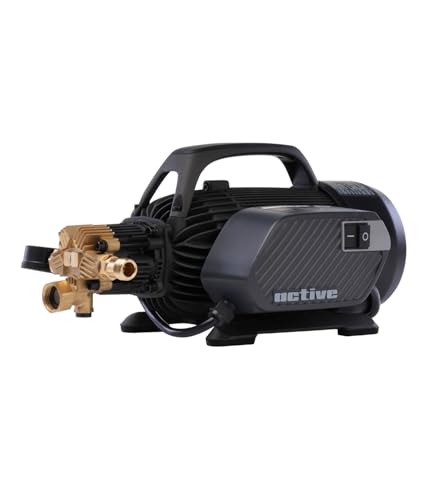 |
Active VE52 Power Washer Best Detailer Pick 2000 PSI, 1.6 GPM, low pressure mode included, M22 universal fittings |
8.6 | 🛒 Check Price |
|
Stanley SLP2050 Electric Pressure Washer Best Easy Storage 2050 PSI, 1.4 GPM, compact upright design, onboard accessory storage |
8.3 | 🛒 Check Price |
1. Sun Joe SPX3000 Electric Pressure Washer: Best Overall
The SPX3000 has been the default recommendation in detailing circles for years, and after using one weekly we understand why. Its peak rating sits a bit above the ultra-safe zone, but the secret is the included nozzle set. Snap on the 40-degree tip and you get a wide, soft fan that cleans bug splatter and road film without the focused jet pressure that actually threatens clear coat. That’s the real lesson of PSI for car washing: the tip and your distance matter as much as the number on the box. For panels we stay on the wider tips and keep the wand a foot or two back.
What sets it apart for car care is the twin detergent tank setup. We load snow foam in one and a wheel or all-purpose cleaner in the other, then switch without dumping and rinsing a single reservoir. The honest weakness is that the soap tanks produce a thin, watery foam compared to a dedicated foam cannon, so most owners end up adding a third-party cannon on the quick-connect. The hose also runs a little short for a long driveway. Neither flaw is a dealbreaker, and for all-around safe car washing this remains the one to beat.
- Two onboard detergent tanks so you can pre-load soap and wheel cleaner separately
- Five quick-connect nozzle tips including a 40-degree fan that’s ideal for paint
- Total Stop System cuts the motor when the trigger is released to save the pump
Pros: The 40-degree and 25-degree tips keep you safely under chip-risk pressure on panels; Dual tanks make a full two-stage wash genuinely convenient; Light enough to carry around the car without a struggle
Cons: The included nozzles are fine but the foam cannon you’ll want is a separate buy; Hose is a touch short, so you may reposition the unit mid-wash
2. Greenworks GPW1950 Electric Pressure Washer: Safest For Paint
If you’re nervous about pressure and just want a machine that’s safe by default, the GPW1950 is the easy answer. Its 1950 PSI peak sits squarely in the range detailers recommend for car paint, so even with a moderately focused nozzle you’re unlikely to do harm at a sensible distance. We threw it at a month of road grime on a daily driver and it lifted everything with the 25-degree tip while never feeling aggressive against trim or badges. The included hose reel is a small thing that makes a real difference to whether you actually bother to wash the car.
The tradeoff for that gentle pressure is flow. At 1.2 GPM it moves less water than the punchier units here, which means rinsing a fully foamed SUV takes a bit longer and uses a touch more patience. The quick-connect fittings are also plastic, and while they have held up fine for us, they don’t inspire the same confidence as metal. Those are minor gripes against a washer that nails the core brief: clean a car well without ever putting the finish at risk.
- 1950 PSI peak lands right in the recommended car-wash window out of the box
- Comes with 25-degree and soap nozzles plus a turbo tip for tougher jobs
- Onboard soap tank and a hose reel for tidy storage between washes
Pros: Rated pressure sits in the gentle range so it’s hard to damage paint by accident; Generous 25-foot hose reaches around most vehicles without moving the unit; Compact upright body tucks into a corner of the garage easily
Cons: 1.2 GPM flow rinses a little slower than higher-flow rivals; Plastic quick-connect fittings feel less rugged than brass
3. Ryobi RY142300 Electric Pressure Washer: Best Foam Performance
Ryobi built the RY142300 around an induction motor, and you feel it. It’s markedly quieter than the screaming universal motors on most electric washers, and it stays cool through a long session, which matters when you’re foaming, dwelling, and rinsing a whole car plus wheels. The standout for detailing is the integrated foam blaster nozzle. It isn’t quite a dedicated cannon, but it lays down thicker, clingier foam than the watery siphon tanks on cheaper units, giving you real dwell time to soften grit before you ever touch the panel with a mitt.
The number to respect here’s 2300 PSI. That’s above the gentle window, so this is a case where technique protects your paint. We keep it on the widest fan tip and hold the wand well back from panels, saving the turbo nozzle strictly for wheels, tires, and stubborn driveway stains. Treated with that discipline it’s a fantastic car washer. Treated carelessly with the narrow tip up close, it has enough punch to mark soft clear coat, so it loses a little ground to the lower-rated, idiot-proof machines on this list.
- Brushless induction motor runs quieter and cooler than universal-motor rivals
- Integrated foam blaster nozzle lays down thicker soap than basic siphon tanks
- Three included nozzles plus a turbo tip for driveways and wheel arches
Pros: Foam blaster produces noticeably clingier suds for a proper contact wash; Quiet induction motor is pleasant for long detailing sessions; Solid build quality with metal connections that feel durable
Cons: 2300 PSI peak means you must stick to wide tips and distance on paint; Heavier and bulkier than the most compact options here
4. Karcher K5 Premium Power Control Pressure Washer: Best Pressure Control
Karcher’s Power Control system is the most thoughtful answer to the whole PSI question on this list. Instead of relying on you to pick the correct nozzle, the wand has a dial with labeled modes, including a car setting, so you can deliberately drop into the gentle range with a twist. For anyone who finds nozzle math confusing, that takes the guesswork out of protecting paint. At a 2000 PSI ceiling and 1.4 GPM it has the muscle to rinse foam quickly while the control system keeps you from accidentally blasting at full force.
The water-cooled induction motor is a genuine durability upgrade over throwaway electric washers, and the whole unit feels premium in a way the specs alone don’t capture. The catch is the closed accessory ecosystem. You’re committed to Karcher’s bayonet fittings, so adding a generic foam cannon or third-party tips is harder, and the brand’s own accessories carry a premium to source. If you’re happy to live inside that ecosystem, the built-in pressure control makes this among the most foolproof car washers you can buy.
- Power Control wand lets you select the right pressure for car, wood, or stone
- Water-cooled induction motor is built for longer life and quieter running
- Reel-mounted hose and onboard storage keep the package neat and ready
Pros: Selectable pressure modes make staying in the car-safe range easy; Water-cooled motor is rated for serious longevity; Premium fit and finish throughout the build
Cons: You’re locked into Karcher quick-connect accessories; Replacement Karcher attachments are pricier to source
5. Worx WG620 Hydroshot Portable Pressure Washer: Best For Gentle Wash
The Hydroshot answers a different reading of best PSI for car washing: the lowest pressure that still does the job. At roughly 320 to 450 PSI it’s gentler than many garden hose nozzles under thumb pressure, which means there’s essentially no scenario where it harms paint, peels a wrap, or forces water past a seal. It’s cordless and self-priming, so it’ll pull from a bucket, a rain barrel, or a lake, making it the pick for apartment dwellers, RV owners, and anyone without a convenient spigot. For a maintenance rinse between full washes it’s genuinely liberating.
That same gentleness is the honest limitation. This isn’t the tool for blasting a winter’s worth of caked salt and mud off a truck. You’ll make multiple passes on heavy grime, and the foam it produces is light, so it leans on contact washing with a mitt rather than touchless foam dwell. Battery runtime also means a full two-bucket detail can outlast a single charge. As a convenient, paint-safe rinser, though, nothing here’s easier to live with.
- Cordless 20V design washes anywhere, including from a bucket or rain barrel
- Low pressure is inherently safe for paint, wraps, and delicate trim
- Variable spray nozzle and onboard soap dispenser for quick rinse washes
Pros: Pressure low enough that paint damage is essentially impossible; Total freedom from hoses and outlets makes spot washing easy; Light, packable, and great for apartments or trips to the lake
Cons: Far less cleaning power, so caked-on mud needs more passes; Battery runtime limits you on a full deep clean
6. Active VE52 Power Washer: Best Detailer Pick
The Active VE52 has quietly become a favorite among hardcore detailers, and the reason is flexibility. It uses universal M22 fittings, so unlike the closed-system brands you can bolt on any popular foam cannon, undercarriage lance, or specialty tip you already own. It pairs a 2000 PSI ceiling with a relatively generous 1.6 GPM, and crucially it has a dedicated low pressure mode. Flip to that and you drop into a paint-friendly setting without hunting for the right nozzle, which is exactly the kind of deliberate control the safe-PSI question calls for.
It’s built for people who want to assemble a real wash kit rather than buy a sealed appliance, and that’s also its weakness. The base unit leans on you to supply the foam cannon and some tips, so the out-of-box experience is less complete than the all-in-one Sun Joe or Karcher. Active is also a smaller, more boutique brand, so support and parts aren’t as turnkey as the big names. For an enthusiast building a proper detailing setup, the open standard and low pressure mode make it a smart core.
- Dedicated low pressure mode steps down to a paint-friendly setting on demand
- Universal M22 fittings accept almost any aftermarket foam cannon or tip
- Higher 1.6 GPM flow rinses foam off panels quickly and thoroughly
Pros: Open M22 standard means total freedom to add your favorite foam cannon; Built-in low pressure mode keeps you in the safe range without swapping tips; Strong flow makes rinsing fast and complete
Cons: Foam cannon and some nozzles aren’t included in the base kit; Less of a household name, so support is more boutique
7. Stanley SLP2050 Electric Pressure Washer: Best Easy Storage
The Stanley SLP2050 wins on the boring virtue that actually keeps cars clean: it’s so easy to store and deploy that you use it. The compact upright body has hooks for the hose, wand, and tips, so the whole thing tucks into a closet or garage corner without becoming a tangle. It ships with a foam cannon, which means you can run a proper foam-and-rinse car wash straight out of the box rather than shopping for the one accessory that makes the others worthwhile. For a casual weekend washer, that completeness is a real plus.
At a 2050 PSI peak it sits at the upper edge of acceptable, so the same rule applies as with the other punchy units: stay on the wide nozzle and keep your distance from panels. The build is also clearly more budget-oriented than the Karcher or Ryobi, with more plastic and a slightly buzzier motor. It isn’t the unit for daily heavy-duty use, but as an affordable, complete, easy-to-stash car washer for the average driveway, it earns its place.
- Compact vertical body with onboard hooks for hose, wand, and nozzles
- Includes a 30-degree variable nozzle and a foam cannon for car washing
- Lightweight enough to carry one-handed out to the driveway
Pros: Genuinely small footprint that stores in a closet or garage corner; Comes with a foam cannon in the box, ready for a car wash; Easy to set up and put away, so it gets used more often
Cons: 2050 PSI peak demands wide tips and care on delicate paint; Build feels more budget than the premium machines here
Frequently Asked Questions
What is the best PSI for washing a car without damaging the paint?
For car paint, the safe and effective range is roughly 1200 to 1900 PSI. That’s enough to lift bug splatter, road film, and mud, but low enough that you won’t chip clear coat or force water past door and window seals when you use a sensible nozzle and keep your distance. Many electric washers peak around 2000 PSI, which is fine as long as you use a wide-angle tip and hold the wand about a foot or two back from the panel. Pressure on the box matters far less than the nozzle you choose and how close you hold it.
Is 2000 PSI too much for a car?
Not by itself. A 2000 PSI machine is perfectly safe for cars as long as you control how that pressure is delivered. The danger is never the rated number alone, it’s a narrow, focused nozzle held close to the surface. With a 25-degree or 40-degree fan tip and a foot or more of distance, a 2000 PSI washer cleans beautifully without harming paint, trim, or badges. Save any narrow or turbo nozzle for wheels, tires, and the driveway, never for painted panels, and you’ll be fine.
Can a pressure washer actually damage my car?
Yes, if it’s misused. The most common ways people damage a car with a pressure washer are holding a narrow jet too close to the clear coat, blasting directly at vinyl graphics or wraps until an edge lifts, and aiming high pressure straight at rubber seals or emblems until water gets behind them. The fix is straightforward. Use wide nozzles on paint, keep at least a foot of distance, never linger on one spot, and ease off around trim, badges, and seals. Treated with that respect, a pressure washer is one of the gentlest ways to clean a car because it’s largely touchless.
Does GPM or PSI matter more for washing a car?
Both matter, but for different reasons. PSI is the cleaning force that breaks dirt loose from the surface, while GPM, the flow rate, is how much water you have to carry that loosened dirt away and rinse foam off. For car washing you want moderate PSI so you don’t damage paint, paired with decent GPM so rinsing is fast and complete. A unit around 1.2 to 1.6 GPM rinses a foamed car well. Very low flow still cleans, it just makes you spend longer rinsing, which is why a balanced machine beats one that’s all pressure and no flow.
Do I need a foam cannon, or are the built-in soap tanks enough?
The built-in soap or detergent tanks on most electric washers work, but they produce thin, watery suds because they siphon soap at low pressure. For a real touchless wash you want a dedicated foam cannon, which mixes soap and air under pressure to lay down thick, clingy foam that dwells on the paint and softens grit before you ever touch it with a mitt. A few machines here include a cannon in the box. For the others, adding an aftermarket cannon on the quick-connect is an inexpensive upgrade that dramatically improves the wash and reduces the risk of grinding dirt into your paint.
Our Verdict
For most people the Sun Joe SPX3000 is the best all-around choice, because its included nozzle set keeps you safely in the gentle range while the dual detergent tanks make a real two-stage car wash genuinely convenient. If your top priority is never having to think about pressure at all, the Greenworks GPW1950 is our runner up, since its rated 1950 PSI sits right in the paint-safe window out of the box, so it’s almost impossible to damage your finish by accident. Pick the Sun Joe for value and versatility, the Greenworks for foolproof gentleness, and remember that with any of these, your nozzle choice and distance protect your paint more than the number on the box ever will.
