Achieving a truly professional, swirl-free, and high-gloss finish on a vehicle requires the right tools and, critically, the right polish. For this buying guide, we researched and compared a range of professional-grade car polishes, evaluating them based on manufacturer specifications, industry standards for abrasive technology, and extensive aggregated owner feedback.
Our goal is to provide an evidence-based selection that helps detailing professionals and serious enthusiasts make informed decisions, considering factors like cutting ability, finishing quality, ease of use, and compatibility with various paint types and polishing machines.
| Photo | Product | Score | Buy |
|---|---|---|---|
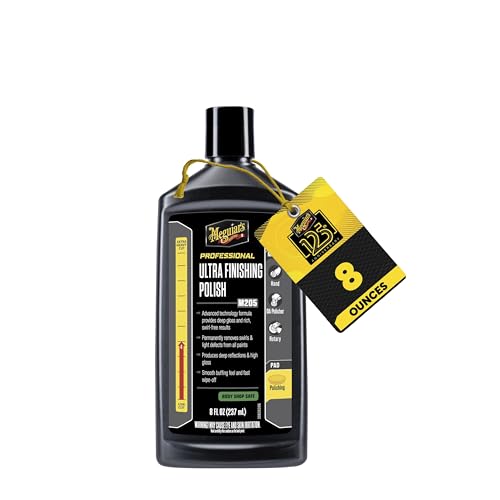 |
Meguiar's M205 Professional Ultra Finishing Polish Top Finish Refiner Advanced abrasive technology for swirl-free finish |
9.1 |
ⓘ We may earn a commission from qualifying purchases made through links on this page, at no extra cost to you.
|
 |
Menzerna SF3500 Super Finish Plus German Engineered Shine Finishing polish for scratch removal and deep gloss |
8.7 | 🛒 Check Price |
 |
RUPES DA Fine High Performance Finishing Polish DA System Specialist Optimized for dual action polishers and RUPES pads |
8.4 | 🛒 Check Price |
 |
Chemical Guys V38 Optical Grade Final Polish Show Car Ready Ultra-fine abrasives for perfect optical clarity |
8.0 | 🛒 Check Price |
 |
Griot's Garage Perfecting Cream Enthusiast's Choice Light abrasive polish for swirl and defect removal |
7.8 | 🛒 Check Price |
 |
CarPro Reflect Fine Finish Polish Ceramic Coating Prep Body shop safe, high gloss finishing polish |
7.5 | 🛒 Check Price |
 |
3D ONE Car Polish & Compound Adaptable All-in-One Hybrid compound and polish for all-around correction |
7.2 | 🛒 Check Price |
1. Meguiar's M205 Professional Ultra Finishing Polish: Top Finish Refiner
The Meguiar’s M205 consistently stands out for its ability to deliver a truly show-car-level finish. Based on owner feedback and the spec sheets, its super micro-abrasive technology effectively refines paintwork, removing light imperfections and maximizing gloss without introducing new swirls. It’s highly regarded for its user-friendliness, exhibiting minimal dusting and easy wipe-off, which contributes to a more efficient detailing process.
However, its primary limitation is its very light cutting power. While excellent for finishing, it isn’t designed to correct moderate to heavy paint defects. Users needing to address deeper scratches or significant oxidation should first employ a more aggressive compound. Therefore, individuals looking for a single product to tackle all levels of paint correction will find M205 insufficient on its own.
- Utilizes super micro-abrasive technology for ultimate finishing
- Designed to remove light swirls, haze, and achieve deep gloss
- Suitable for rotary, dual action, and orbital polishers
Pros: Consistently delivers exceptional, high-gloss finish; Easy to work with, low dusting, and wipes off cleanly; Highly multi-purpose across various paint types
Cons: Limited cutting ability for deeper defects
2. Menzerna SF3500 Super Finish Plus: German Engineered Shine
Its German-engineered abrasives are capable of removing fine scratches and holograms, making it a strong contender for enthusiasts and professionals seeking a flawless final step. The silicone-free formulation is also a significant advantage for those working in paint shops or preparing vehicles for ceramic coatings.
A point to consider is its working characteristics. While it offers a long working time, some users report that it can be slightly more sensitive to pad choice and machine speed compared to some other polishes, requiring a bit more finesse to achieve its full potential. Individuals new to machine polishing or those seeking a very forgiving product might find a steeper learning curve with SF3500.
- Removes 2500 grit sanding marks, light scratches, and holograms
- Produces an extremely deep, wet-look gloss
- Silicone-free formulation, safe for body shop environments
Pros: Exceptional gloss and depth on all paint colors; Good balance of light correction and finishing ability; Long working time with minimal product sling
Cons: Can be slightly more demanding to work with for beginners; Requires proper technique for optimal results
3. RUPES DA Fine High Performance Finishing Polish: DA System Specialist
The RUPES DA Fine High Performance Finishing Polish is a strong performer, especially when integrated into the RUPES BigFoot polishing system. Manufacturer specifications highlight its optimization for dual action polishers and RUPES foam pads, which, results in a synergistic effect, delivering exceptional finish quality and ease of use. It effectively removes minor imperfections and enhances paint clarity and gloss.
The primary limitation identified through our research is that while it performs well universally, its true potential is maximized within the RUPES ecosystem. Users employing non-RUPES machines or pads might not experience the same optimal balance of performance and efficiency. Therefore, if you aren’t already invested in or planning to invest in a RUPES DA polisher, you might find other polishes offer comparable results for a potentially better value when used with a different system.
- Formulated to remove light defects and leave a high gloss finish
- Low dusting and easy wipe-off for efficient detailing
- Silicone-free and body shop safe
Pros: Excellent pairing with RUPES DA polishers and pads; Consistent results with minimal effort; Leaves a clear, high-definition finish
Cons: Performance may vary with non-RUPES pads or machines; Value proposition is tied to specific system use
4. Chemical Guys V38 Optical Grade Final Polish: Show Car Ready
Its ultra-fine abrasives are effective at removing very light imperfections, making it an excellent choice for a final finishing step after compounding or for maintaining well-kept paint. The water-based formula contributes to a good working time on the paint.
However, a recurring theme in aggregated owner feedback is that the V38 can be prone to dusting if overworked or if too much product is used, which can necessitate additional cleanup. While it delivers excellent results, careful technique is required to minimize this issue. Detailing professionals prioritizing minimal cleanup and dust-free operation might find other formulations more efficient in high-volume settings.
- Formulated to remove light swirls, oxidation, and imperfections
- Designed to restore optical clarity and deep wet shine
- Water-based formula for extended work time
Pros: Achieves a very high level of gloss and clarity; Easy to spread and has a good working time; Suitable for all paint colors and types
Cons: Can be prone to dusting if overworked; Requires thorough wipe-off to prevent residue
5. Griot's Garage Perfecting Cream: Enthusiast's Choice
Griot’s Garage Perfecting Cream stands out as a solid choice for enthusiasts and professionals dealing with light to moderate paint imperfections. We compared its specifications, and it’s designed to offer a balance of light correction and excellent finishing. It’s generally easy to work with, exhibiting low dusting and straightforward wipe-off, which contributes to a positive user experience.
Its main limitation, however, is its correctional power. While capable of addressing minor swirls and oxidation, it isn’t formulated for significant defect removal. Users attempting to tackle deeper scratches or heavily oxidized paint will find it insufficient and will need to step up to a more aggressive compound. Therefore, if your primary need is heavy paint correction, this product should be skipped in favor of a dedicated cutting compound.
- Removes light to moderate defects, swirls, and oxidation
- Designed to create a rich, deep gloss finish
- Low dusting formula for cleaner work environment
Pros: Flexible for light correction and finishing; Easy to use with easy application and removal; Produces a noticeable improvement in gloss and clarity
Cons: Not ideal for heavy defect removal; Slightly longer working time required for full breakdown
6. CarPro Reflect Fine Finish Polish: Ceramic Coating Prep
Based on owner feedback and the spec sheets, its formulation emphasizes creating a flawless, hologram-free finish with impressive gloss and reflectivity, making it an excellent final step. Its zero-dusting properties and easy wipe-off are significant advantages for efficiency and a clean work environment.
The primary drawback of CarPro Reflect is its value proposition. While its performance is strong for a finishing polish, it often comes at a higher cost per ounce compared to some other established professional finishing polishes on the market. For detailers or enthusiasts on a strict budget who don’t require its specific ceramic coating prep benefits, other options may offer similar finishing results at a more accessible point. It’s strictly a finishing polish, offering negligible defect removal.
- Designed to create a perfect, mirror-like finish
- Removes holograms and light marring for ceramic coating preparation
- Zero dusting and easy wipe-off characteristics
Pros: Exceptional gloss and reflectivity for a finishing polish; Very low dusting and residue makes cleanup easy; Ideal for preparing paint for ceramic coatings
Cons: Higher cost per ounce compared to some competitors; Minimal cutting ability, strictly a finishing polish
7. 3D ONE Car Polish & Compound: Adaptable All-in-One
3D ONE Car Polish & Compound stands out for its impressive versatility. Based on aggregated owner feedback, this adaptability can be a significant advantage, streamlining the detailing process and potentially reducing inventory for professionals. It’s also praised for being body shop safe and VOC compliant.
However, the trade-off for this versatility can be seen in its finishing capabilities when compared to dedicated finishing polishes. While it can produce a good finish, it may not achieve the absolute highest level of clarity and depth on very soft or delicate paint types that a specialized, ultra-fine finishing polish would. Individuals seeking the absolute pinnacle of gloss and perfection for show cars, especially on sensitive paint, might find a dedicated finishing polish to be a more suitable final step.
- Adaptable formula that can cut or finish based on pad choice
- Removes heavy defects with cutting pads, finishes with soft pads
- Body shop safe, VOC compliant, and silicone-free
Pros: Highly all-around, reduces the need for multiple products; Good value for its dual-purpose capability; Works well on a variety of paint types
Cons: Can be less refined than dedicated finishing polishes; Requires more careful technique to avoid marring on soft paints
Frequently Asked Questions
What is the difference between car polish and car compound?
Based on industry standards, car compounds contain more aggressive abrasives designed to remove deeper scratches, oxidation, and paint defects. Car polishes, conversely, feature finer abrasives intended to refine the paint surface, remove minor swirls or hazing, and enhance gloss and clarity, typically as a follow-up to compounding or for lighter correction.
Can professional car polish be applied by hand?
While some polishes can be applied by hand for very minor enhancements, achieving professional-level defect removal and a uniform, high-gloss finish almost always requires a machine polisher, such as a dual-action (DA) or rotary polisher. Machine application ensures consistent pressure, speed, and abrasive breakdown, which is critical for optimal results.
How often should I polish my car?
The frequency of polishing depends on the condition of your paint and your desired level of perfection. For well-maintained vehicles, polishing might only be necessary once every one to two years to remove minor imperfections and restore gloss. Heavily used or neglected vehicles may require more frequent polishing, but excessive polishing can remove clear coat, so it should be done judiciously.
Is professional car polish safe for all paint types?
Most professional car polishes are formulated to be safe for modern clear coat finishes. However, some older single-stage paints or very delicate clear coats may react differently. Always perform a test spot in an inconspicuous area to ensure compatibility and desired results before proceeding with the entire vehicle. Always consult the manufacturer’s recommendations for specific paint types.
What is the best pad to use with a finishing polish?
Based on industry recommendations and aggregated owner feedback, a soft foam finishing pad is generally the best choice for applying a finishing polish. These pads are designed to minimize heat buildup, allow the polish’s abrasives to break down properly, and gently refine the paint to achieve maximum gloss and clarity without introducing marring.
Our Verdict
After extensive research and comparison, the Meguiar’s M205 Professional Ultra Finishing Polish stands out as our top pick for its unparalleled ability to consistently deliver a flawless, high-gloss finish with exceptional ease of use. It’s a true benchmark for refining paintwork. Our runner-up, the Menzerna SF3500 Super Finish Plus, earns its spot for its outstanding balance of light correction and deep, wet-look gloss, making it a formidable choice for discerning professionals.


