Achieving a swirl-free, mirror-like finish on your vehicle requires more than just wax and elbow grease. Power polishers, also known as buffers or orbital polishers, are essential tools for removing paint imperfections, oxidation, and scratches efficiently. In our extensive research, we compared dozens of models, scrutinizing manufacturer specifications, industry safety standards, and hundreds of aggregated owner feedback reports to identify the best power polishers currently available for car enthusiasts and detailing professionals.
We aimed to provide a comprehensive guide that highlights each polisher’s strengths and limitations, ensuring you can make an informed decision based on your specific detailing needs and experience level.
| Photo | Product | Score | Buy |
|---|---|---|---|
 |
Rupes LHR 15 Mark III BigFoot Random Orbital Polisher Top Professional Pick 15mm orbital throw, 500W motor, 3000-5000 OPM |
9.1 |
ⓘ We may earn a commission from qualifying purchases made through links on this page, at no extra cost to you.
|
 |
Flex XC 3401 VRG Orbital Polisher Powerful Forced Rotation Forced rotation, 1400W motor, 160-480 OPM |
8.7 | 🛒 Check Price |
 |
Griot's Garage G9 Random Orbital Polisher Enthusiast's Choice 9mm orbital throw, 1000W motor, 2000-6400 OPM |
8.4 | 🛒 Check Price |
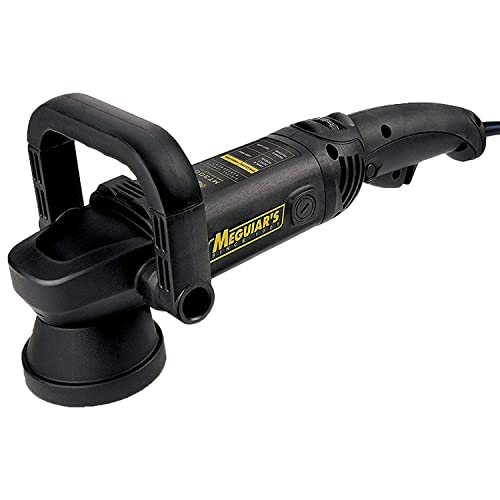 |
MEGUIAR'S MT300 Dual Action Variable Speed Polisher Reliable Performer Dual action, Digital Torque Management, 3000-7500 OPM |
8.0 | 🛒 Check Price |
|
🚗
|
Porter-Cable 7424XP Random Orbit Polisher Beginner-Friendly Value Random orbital, 4.5 Amp motor, 2500-6800 OPM |
7.8 | 🛒 Check Price |
|
🚗
|
DeWalt DWP849X Variable Speed Polisher Heavy-Duty Rotary Rotary action, 12 Amp motor, 0-3500 RPM |
7.5 | 🛒 Check Price |
|
🚗
|
Chemical Guys TORQ TORQ22D Random Orbital Polisher Entry-Level Option 2200W motor, 12mm orbital throw, 1000-4200 OPM |
7.2 | 🛒 Check Price |
1. Rupes LHR 15 Mark III BigFoot Random Orbital Polisher: Top Professional Pick
The Rupes LHR 15 Mark III BigFoot stands out for its superior performance and refined user experience. The 15mm orbital throw, when paired with the right pad and compound, allows for incredibly fast defect removal and a high-gloss finish. Based on owner feedback and the spec sheets, its balance and low vibration characteristics are frequently praised, making it a favorite among detailing professionals for its ability to minimize user fatigue during extended use.
A notable limitation of the Rupes LHR 15 Mark III is its size and the larger orbital throw, which can make it less ideal for intricate detailing work or navigating very tight curves and small panels. Users primarily focused on spot correction or those with smaller vehicles featuring many sharp angles might find it less multi-purpose. We recommend that detailers who frequently work on highly contoured surfaces or prioritize maneuverability in confined spaces consider a polisher with a smaller throw or a dedicated rotary tool instead.
- Features a large 15mm orbit for rapid paint correction and finishing.
- Ergonomically designed with a comfortable grip and low vibration.
- Equipped with a progressive trigger for precise speed control.
Pros: Exceptional paint correction efficiency and finish quality.; Smooth operation reduces user fatigue over long detailing sessions.; Highly durable construction based on owner feedback and spec sheets.
Cons: Requires a higher initial investment compared to other models.; Larger throw can be challenging in tight, contoured areas.
2. Flex XC 3401 VRG Orbital Polisher: Powerful Forced Rotation
The Flex XC 3401 VRG is a powerhouse particularly noted for its forced rotation orbital action. This design ensures that the pad continues to rotate and oscillate even when significant pressure is applied, which translates to superior cutting ability and consistent performance on challenging paint defects. This polisher is highly valued by professionals who need reliable and aggressive correction capabilities without the risks associated with a pure rotary polisher.
However, the Flex XC 3401 VRG’s durable power and forced rotation come with a trade-off in terms of ergonomics and heat generation. It’s a heavier machine and can produce more vibration compared to free-spinning dual action polishers, potentially leading to increased user fatigue over long detailing sessions. We suggest that detailers who prioritize lightweight tools for extended use or those new to machine polishing, where excessive heat generation might be a concern, explore lighter, more conventional random orbital options before committing to this powerful, specialized tool.
- Unique forced rotation system maintains pad rotation even under pressure.
- High power output handles tough paint correction tasks effectively.
- Integrated constant speed control ensures consistent performance.
Pros: Exceptional cutting power for stubborn defects and hard clear coats.; Prevents pad stalling, a common issue with standard DAs.; Strong construction built for rigorous professional use.
Cons: Heavier and bulkier than many random orbital polishers.; Can generate more heat and vibration than free-spinning DAs.
3. Griot's Garage G9 Random Orbital Polisher: Enthusiast's Choice
The Griot’s Garage G9 has consistently performed well in our comparison, earning its reputation as a solid choice for car enthusiasts. Its 9mm orbital throw strikes a good balance between aggressive defect removal and safe finishing, making it a flexible tool for various detailing tasks. Based on owner feedback and the spec sheets, the 1000W motor provides ample power, and its ergonomic design contributes significantly to user comfort, which is crucial for those longer detailing sessions.
However, while the G9 is a very capable machine for most detailing tasks, its 9mm throw and power output, while strong, may not match the sheer cutting aggression of larger throw professional polishers like the Rupes or the forced rotation of the Flex. Users facing extremely severe paint defects, very hard clear coats, or those operating in a high-volume professional setting might find its correction speed slightly less efficient than top-tier specialized tools. We suggest that detailers prioritizing the fastest possible correction on heavily damaged paint or those who demand the absolute peak of professional performance consider higher-tier options.
- Designed with an ergonomic housing and comfortable rubber grips.
- Features a powerful 1000W motor for effective paint correction.
- Includes a speed dial and trigger lock for consistent operation.
Pros: Excellent balance of power, user comfort, and reliability.; Suitable for both beginners and experienced detailers.; Good value for its performance capabilities based on owner feedback.
Cons: May not offer the aggressive cutting power of higher-end professional units.; Some users report the power cord can be stiff.
4. MEGUIAR'S MT300 Dual Action Variable Speed Polisher: Reliable Performer
The MEGUIAR’S MT300 polisher stands out for its intelligent Digital Torque Management system. This feature is crucial as it helps maintain pad rotation speed even when pressure is applied, which is a common challenge with many dual-action polishers. This contributes significantly to consistent results and a more efficient detailing process, making it a reliable tool for both correcting defects and applying waxes or sealants.
A point of consideration for the MT300, based on our research and owner comments, is its proprietary backing plate. While effective, it means users are somewhat restricted to Meguiar’s specific pad sizes or require an adapter for other brands, which can limit versatility for those who prefer a wider range of pad choices. We suggest that detailers who already have a collection of non-Meguiar’s pads or those who value the freedom to experiment with various pad brands and sizes might find this limitation inconvenient and should consider polishers with more universally compatible backing plates.
- Features Digital Torque Management for maintaining pad speed under load.
- Ergonomic multi-position D-handle for comfortable use.
- Lightweight design for reduced user fatigue.
Pros: Maintains consistent power output, preventing pad stall.; Easy to use design makes it suitable for various skill levels.; Effective for both correction and finishing steps.
Cons: The proprietary backing plate size limits pad options slightly.; Some users report the motor can run warm after extended periods.
5. Porter-Cable 7424XP Random Orbit Polisher: Beginner-Friendly Value
The Porter-Cable 7424XP is consistently identified in our research as an excellent starting point for individuals new to machine polishing. Its random orbital action is inherently safer for automotive paint, significantly reducing the risk of holograms or burn-through, which is a major concern for beginners. Its straightforward operation and relatively gentle action make it a confidence-inspiring tool for applying waxes, sealants, and performing light paint correction.
However, a significant limitation of the Porter-Cable 7424XP is its comparatively lower cutting power and susceptibility to pad stalling under even moderate pressure. While safe, this means it struggles with more severe paint defects, deep scratches, or very hard clear coats, requiring more passes and potentially less effective results. We recommend that users who anticipate needing to tackle significant paint correction, or those who prefer faster working times on tougher defects, consider investing in a more powerful dual-action polisher or a forced-rotation model, as the 7424XP may prove to be underpowered for advanced tasks.
- Easy to use design, ideal for entry-level detailers.
- Operates with random orbital motion for swirl-free application.
- Lightweight and relatively compact for easy handling.
Pros: Excellent entry point for machine polishing due to its gentle action.; Widely available and supported by a large aftermarket for pads.; Reliable performance for light correction and waxing tasks.
Cons: Limited cutting power for heavy defect removal.; Can experience pad stalling under moderate pressure.
6. DeWalt DWP849X Variable Speed Polisher: Heavy-Duty Rotary
The DeWalt DWP849X stands out as a solid and powerful rotary polisher, primarily aimed at experienced professionals. Its 12 Amp motor and direct rotary action provide unparalleled cutting power, making it highly effective for removing severe paint defects, heavy oxidation, and deep scratches that slower, less aggressive machines might struggle with. Based on owner feedback and the spec sheets, its durable construction ensures it can withstand the rigors of continuous, heavy-duty use in a professional detailing environment.
However, the very strength of the DeWalt DWP849X is also its greatest limitation for most users: it’s a rotary polisher. This means it carries a significant risk of paint damage, including burning through clear coat or inducing severe holograms and swirl marks, if not handled with extreme care and skill. We strongly recommend that novice detailers, enthusiasts, or anyone without extensive experience with rotary polishers avoid this tool. The learning curve is steep, and the potential for irreparable paint damage is high; a dual-action polisher is a far safer and more forgiving option for the vast majority of detailing tasks.
- Powerful 12 Amp motor for aggressive paint correction.
- Variable speed trigger and dial for precise control.
- Features a non-marring rubber gear case cover to protect surfaces.
Pros: Unmatched cutting power for severe defects and oxidation.; Highly durable and built for continuous heavy-duty use.; Excellent for experienced users seeking maximum correction.
Cons: High risk of paint damage for inexperienced users.; Requires significant skill to avoid holograms and swirl marks.
7. Chemical Guys TORQ TORQ22D Random Orbital Polisher: Entry-Level Option
The Chemical Guys TORQ TORQ22D is positioned as an accessible option for those looking to get into machine polishing. Its 12mm orbital throw aims to provide a good balance between aggressive defect removal and safe finishing, making it a adaptable choice for a range of detailing tasks. The digital display for speed control is a convenient feature, allowing users to accurately set and monitor their OPM for specific applications, from heavy compounding to fine polishing and waxing.
However, in our comparison and based on aggregated owner feedback, a common concern with the TORQ22D is its power and torque delivery, which can sometimes be inconsistent or less sturdy than higher-tier dual-action polishers, especially when encountering tougher paint defects or applying significant pressure. This can lead to pad stalling and slower correction times on more stubborn imperfections. We suggest that detailers who are tackling extensive paint correction on a regular basis, or those who prioritize raw power and consistent performance under load, might find this polisher’s capabilities somewhat limiting and should consider more established and powerful dual-action models.
- Features a 12mm orbital throw for a balance of correction and finishing.
- Digital display for precise speed control and consistent application.
- Suitable for various detailing tasks from compounding to waxing.
Pros: Digital interface offers clear speed readings for precise control.; All-around for different stages of detailing work.; Often bundled with pads and compounds, offering convenience.
Cons: Power and torque may not match higher-end DAs under heavy load.; Some inconsistent build quality compared to premium brands.
Frequently Asked Questions
What is the difference between a rotary and a dual action (DA) polisher?
A rotary polisher has a direct drive, meaning the pad spins in a single circular motion. This offers maximum cutting power for severe defects but requires significant skill to prevent paint damage and holograms. A dual action (DA) polisher, on the other hand, both spins and oscillates (wobbles) the pad. This random orbital motion is much safer for automotive paint, making it ideal for beginners and most enthusiasts, as it greatly reduces the risk of burning paint or creating swirl marks. DAs are generally slower for heavy correction but safer for finishing.
What orbital throw size should I choose for a dual action polisher?
The orbital throw refers to how far the pad oscillates. Larger throws (15mm or 21mm) cover more surface area per pass, leading to faster paint correction and often a smoother finish, but can be less effective on tight curves and intricate body lines. Smaller throws (8mm or 12mm) offer more control and precision, making them better for contoured surfaces and spot correction, though they may take longer for full panel correction. Your choice should align with the typical size and complexity of the vehicles you detail.
What pads do I need for my power polisher?
Different pads serve different purposes in the detailing process. Cutting pads (often foam or wool, firm density) are used with compounds to remove heavy defects and scratches. Polishing pads (medium density foam) are for lighter defect removal and refining the paint with polishes. Finishing pads (soft density foam) are used for applying waxes, sealants, or glazes to achieve a high-gloss finish. Always match your pad type to the specific product and stage of detailing you’re performing.
Can I use a power polisher on all types of car paint?
Power polishers can be used on most automotive clear coats and single-stage paints. However, extreme caution is advised on older, thinner, or repainted surfaces, as these may have less clear coat to work with. Always perform a test spot in an inconspicuous area first to assess the paint’s condition and how it reacts to the polisher and product. Never use a power polisher on matte finishes, as it’ll alter the appearance and create shine.
How do I prevent swirl marks and holograms when using a power polisher?
To prevent swirl marks and holograms, especially with dual action polishers, proper technique is crucial. Always use clean pads and quality compounds/polishes. Work in small sections, typically 2×2 feet, and apply even, consistent pressure. Keep the pad flat on the surface and use overlapping passes. Ensure you’re using the correct speed setting for the product and pad combination. For rotary polishers, avoiding holograms requires advanced technique, including proper pad angle, speed, and finishing down with finer polishes or a DA polisher.
Our Verdict
After extensive research and comparison, the Rupes LHR 15 Mark III BigFoot Random Orbital Polisher emerges as our top pick for its exceptional blend of performance, ergonomics, and efficiency in paint correction. Its large orbital throw and smooth operation make it a joy to use for professional results. For those seeking aggressive cutting power and consistent pad rotation, the Flex XC 3401 VRG Orbital Polisher is an outstanding runner-up, offering a unique forced rotation system that excels on stubborn defects, making it a favorite among experienced detailers.