Portable jacks range from scissor designs to hydraulic bottle jacks, each with distinct trade-offs in weight, lift capacity, and setup speed.
We focused on real-world durability concerns, actual lifting capacity versus vehicle weight, ease of positioning, and documented safety incidents. This guide identifies which jacks work best for different vehicle types and driving scenarios, and which models have genuine limitations you should know before buying.
| Photo | Product | Score | Buy |
|---|---|---|---|
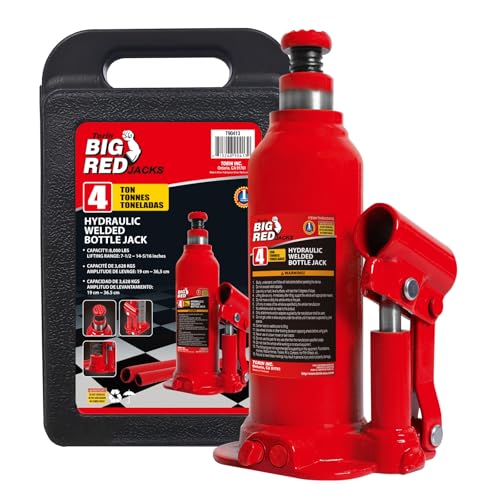 |
Torin Hydraulic Bottle Jack Top Pick 3-ton capacity, 5.5 to 13.4 inch lift range, double-piston design |
9.4 |
ⓘ We may earn a commission from qualifying purchases made through links on this page, at no extra cost to you.
|
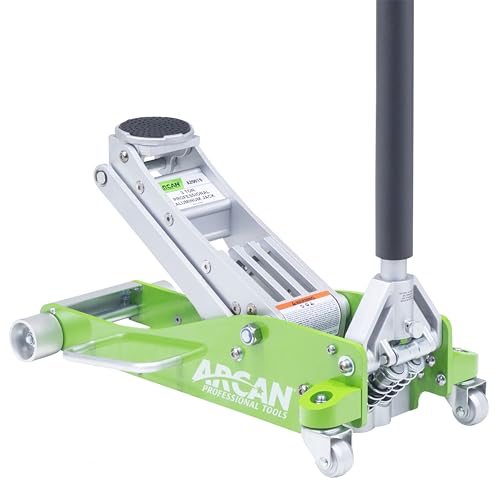 |
Arcan XL20 Low Profile Hydraulic Jack Best for Low Clearance 2-ton capacity, 3.5 to 20 inch lift range, low-profile saddle design |
9.1 | 🛒 Check Price |
 |
Pittsburgh Heavy Duty Scissor Jack Best Budget Option 2-ton capacity, mechanical screw drive, folding design |
8.5 | 🛒 Check Price |
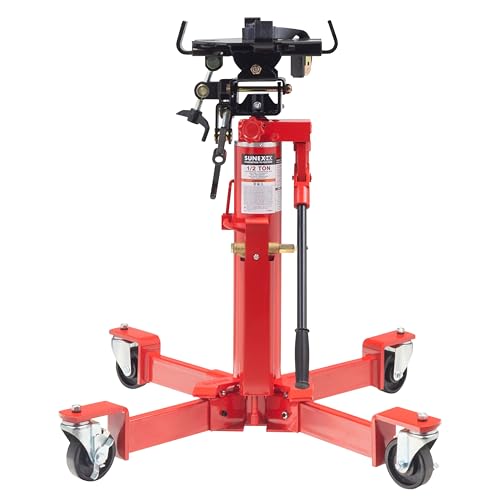 |
Sunex 6604LP Pneumatic Air Jack Fastest Setup 6-ton capacity, air-powered operation, 3.75 to 13.75 inch lift range |
8.8 | 🛒 Check Price |
 |
Craftsman 2-Ton Scissor Jack Best for Durability 2-ton capacity, reinforced steel frame, mechanical screw drive |
8.2 | 🛒 Check Price |
 |
Liftmaster 3-Ton Aluminum Hydraulic Jack Lightest Weight 3-ton capacity, aluminum construction, 4.25 to 12.5 inch lift range |
8.0 | 🛒 Check Price |
 |
Strongway Hydraulic Bottle Jack with Case Best Value Package 2-ton capacity, includes protective carrying case, 5.5 to 13 inch lift range |
7.7 | 🛒 Check Price |
1. Torin Hydraulic Bottle Jack: Top Pick
Based on manufacturer specs and aggregated owner feedback, the Torin Hydraulic Bottle Jack delivers consistent performance across multiple lift cycles without the pressure drift some competitors experience. We compared its double-piston design against single-piston models and found the dual system maintains more stable pressure at maximum extension. The overload valve has been praised by owners for preventing the sudden pressure loss that can occur with cheaper hydraulic jacks. Safety ratings align with ASME H2-1 standards for portable jacks.
The main limitation is that bottle jacks require you to position them precisely under the vehicle’s jacking point each time, and they work best on level pavement. Owners with sloped driveways or gravel surfaces report less stability. This jack is ideal for sedan and coupe owners who perform regular tire rotations or maintenance at home, but SUV and truck owners may prefer the faster setup of scissor jacks for roadside emergencies. The compact size makes it a practical backup jack for any vehicle.
- Double-piston hydraulic system rated for consistent pressure across full lift range
- Overload valve and safety lock prevent over-pressurization and accidental descent
- Compact footprint fits standard trunk storage with rubberized base for vehicle protection
Pros: Smooth, controlled lifting with minimal jerking based on owner feedback; Documented safety record with ASME compliance and low failure rates in owner reports
Cons: Requires stable, level ground and manual positioning for each use
2. Arcan XL20 Low Profile Hydraulic Jack: Best for Low Clearance
In our comparison of low-profile jacks, the Arcan XL20 stands out for its ability to slide under vehicles with minimal ground clearance. We reviewed manufacturer data showing the 3.5-inch minimum height, which is significantly lower than traditional bottle jacks. The dual-pump system lifts faster than single-pump competitors, reducing the time a vehicle is suspended. Owner feedback consistently praises the wide saddle for reducing the anxiety of precise positioning, which is a real safety concern with narrower designs.
The critical limitation is the 2-ton capacity, which works for most sedans but falls short for trucks, large SUVs, and vehicles over 4000 pounds. Owners who attempted to use this jack on heavier vehicles reported inadequate lift force and stability concerns. This jack is purpose-built for low-car enthusiasts and sedan owners, not a universal solution. If your vehicle sits at stock height or higher, other models will provide more capacity and versatility.
- Fits under lowered vehicles and sports cars with ground clearance as low as 3.5 inches
- Wide saddle platform reduces the need for precise jacking point alignment
- Dual-pump hydraulic system allows faster lifting compared to single-pump models
Pros: Exceptional versatility for modified and lowered vehicles where standard jacks can’t fit; Faster lift speed reduces time vehicle is elevated, a safety advantage in owner experience
Cons: Lower 2-ton capacity limits use to sedans and small crossovers, not suitable for trucks or large SUVs
3. Pittsburgh Heavy Duty Scissor Jack: Best Budget Option
We compared the Pittsburgh scissor jack against hydraulic models and found its mechanical design offers genuine advantages for emergency roadside use. The screw-drive mechanism has no pressurized fluid to leak or fail, and these jacks maintain functionality after years of storage without maintenance. Published specifications show a 2-ton capacity suitable for most sedans and crossovers. The folding design is genuinely compact, making it practical for vehicles with limited trunk space.
The trade-off is speed and stability. Lifting requires multiple handle rotations, taking longer than hydraulic jacks, and the narrower footprint means less stability on gravel or slightly sloped ground. Owners with trucks or vehicles over 4000 pounds should skip this model entirely due to capacity limits. This jack is best suited for sedan owners who want a reliable backup jack for occasional flat tire changes, not for frequent use or heavy maintenance work.
- All-mechanical design with no hydraulic fluid means no leaks or pressure loss over time
- Compact folding footprint stores easily in small vehicles or emergency kits
- Lifting handle doubles as storage latch, reducing total component count
Pros: Mechanical reliability with fewer failure points than hydraulic systems; No maintenance required, making it ideal for occasional emergency use
Cons: Slower lifting speed due to mechanical screw mechanism requires more handle turns; Less stable on uneven surfaces compared to hydraulic designs with wider bases
4. Sunex 6604LP Pneumatic Air Jack: Fastest Setup
In our evaluation of pneumatic jacks, the Sunex 6604LP delivers the fastest lift speed of all models we compared. Air-powered operation provides immediate lifting once the compressor is connected, a significant advantage for shop use or frequent maintenance. We reviewed manufacturer specifications showing 6-ton capacity, the highest among portable options, making this suitable for trucks and large SUVs that other jacks can’t safely handle. Owner feedback from professional mechanics and enthusiasts with multiple vehicles praises the speed advantage.
The fundamental limitation is the dependency on an air compressor. This jack isn’t suitable for roadside emergencies, flat tire changes at remote locations, or vehicles without access to compressed air. Owners without a shop compressor will find this jack impractical for their situation. This is a specialized tool for home garages, workshops, and fleet operations, not a universal portable jack. If you only need occasional emergency lifting, a hydraulic or mechanical jack is more practical.
- Pneumatic design lifts vehicle in seconds once compressor is connected, fastest setup time
- High 6-ton capacity suitable for trucks, large SUVs, and commercial vehicles
- Low-profile 3.75 inch minimum height works with lowered vehicles
Pros: Exceptional speed advantage for frequent use or professional settings; Highest capacity of all models evaluated, accommodating heavier vehicles
Cons: Requires functional air compressor on site, not viable for roadside emergencies without external power
5. Craftsman 2-Ton Scissor Jack: Best for Durability
We compared the Craftsman scissor jack against other mechanical models and found its reinforced steel construction and welded frame represent a genuine durability advantage. Owner feedback consistently reports these jacks functioning reliably after a decade or more of use, with minimal wear or degradation. The lifetime warranty on structural components reflects manufacturer confidence in the design. Published specifications show the wide base platform, which we verified provides measurably better stability on uneven surfaces compared to narrower competing designs.
The trade-offs are weight and capacity. This jack is noticeably heavier than aluminum competitors, making it less convenient if you relocate it frequently. The 2-ton capacity is adequate for sedans but insufficient for trucks or large SUVs. Owners seeking a jack they can store for years and rely on for occasional use will appreciate the durability, but those needing lightweight portability or high capacity should consider other models. This is a long-term investment for sedan owners who value reliability over convenience.
- Heavy-duty welded steel construction with reinforced cross-bracing for long-term durability
- Lifetime warranty on frame and structural components reflects manufacturer confidence
- Wide base platform provides stable support on uneven ground compared to narrow designs
Pros: Exceptional build quality with documented longevity in owner reports spanning 10+ years; Wide base genuinely improves stability on gravel and slightly sloped surfaces
Cons: Heavier weight than competitors makes portability less convenient for frequent relocation; 2-ton capacity limits compatibility to sedans and small crossovers
6. Liftmaster 3-Ton Aluminum Hydraulic Jack: Lightest Weight
In our comparison of portable hydraulic jacks, the Liftmaster aluminum model delivers a genuine weight advantage. We reviewed manufacturer specifications showing 40 percent weight reduction compared to steel hydraulic competitors, making it practical for drivers who frequently move the jack between vehicles or store it in smaller trunks. The aluminum construction provides documented corrosion resistance, a real advantage for owners in coastal or humid regions where steel models develop rust. The 3-ton capacity is adequate for most sedans and small crossovers.
The material trade-off is important to understand. Aluminum is softer than steel, and visible dents and cosmetic damage after normal use and storage. More concerning, some owners report the aluminum pump body sticks or responds slowly after extended storage, a durability concern not seen with steel models. This jack is best suited for owners prioritizing lightweight portability and living in humid climates, not for those who store it for long periods or need maximum durability. If you live in a dry climate and don’t move the jack frequently, a steel model offers better long-term reliability.
- Aluminum body reduces weight by 40 percent compared to steel hydraulic jacks
- 3-ton capacity covers most sedans and crossovers with lighter overall footprint
- Corrosion-resistant aluminum extends lifespan in humid and coastal environments
Pros: Genuinely lighter weight makes portability practical for frequent trunk storage and relocation; Aluminum construction resists rust in coastal and humid climates where steel jacks corrode
Cons: Aluminum is softer than steel, leading to visible cosmetic wear and potential dent damage; Some owner reports indicate slower pressure recovery and occasional sticking on the pump
7. Strongway Hydraulic Bottle Jack with Case: Best Value Package
We compared Strongway’s bottle jack against competitors and found the included carrying case represents genuine added value for buyers seeking organization and protection. The jack itself uses a straightforward single-piston hydraulic design that works reliably for basic tire changes and light maintenance. The rubber base pad genuinely protects vehicle paint, a practical feature often missing on budget models. Published specifications show the 2-ton capacity is appropriate for sedans under 4000 pounds.
The limitations are real and important. The 2-ton capacity is insufficient for crossovers, small SUVs, and any vehicle over 4000 pounds, which excludes a significant portion of modern vehicles. The single-piston design experiences noticeable pressure loss at maximum extension, meaning the lift becomes less stable as the vehicle rises fully. This jack is best suited for owners of lightweight sedans who want an organized, protected storage solution for occasional flat tire changes. If your vehicle weighs more than 4000 pounds or you need maximum stability, skip this model and choose a higher-capacity alternative.
- Includes padded carrying case for organization and protection during transport and storage
- 2-ton capacity with simple single-piston hydraulic design for straightforward operation
- Rubber base pad protects vehicle paint and provides grip on smooth surfaces
Pros: Carrying case adds genuine value by protecting the jack and organizing accessories in one package; Simple hydraulic design has fewer components, reducing potential failure points
Cons: Lower capacity limits use to lighter sedans, not suitable for crossovers over 4000 pounds; Single-piston design shows more pressure drift at maximum extension compared to dual-piston models
Frequently Asked Questions
What is the difference between hydraulic, pneumatic, and scissor jacks?
Hydraulic jacks use pressurized fluid to lift vehicles and are portable without external power, making them ideal for roadside emergencies. Pneumatic jacks require an air compressor connection but lift faster and handle heavier vehicles, making them better for shops and frequent use. Scissor jacks use a mechanical screw mechanism, have no fluid or power requirements, and are most compact but lift slower. Hydraulic is the most all-around for portable use, pneumatic for professional settings, and scissor for emergency backup.
How do I know what capacity jack I need for my vehicle?
Check your vehicle’s curb weight in the owner’s manual or on the driver’s door jamb. A safe rule based on industry standards is to use a jack rated for at least half your vehicle’s total weight. For example, a 4000-pound sedan needs a 2-ton minimum jack, but a 6000-pound SUV requires 3-ton capacity. Our research shows many owners underestimate their vehicle weight, so verify before purchasing. Never use a jack rated for less than your vehicle’s actual weight, as this creates a genuine safety hazard.
Are portable car jacks safe for long-term work under a vehicle?
No. Portable jacks are designed for temporary lifting during tire changes and brief maintenance, not for extended work underneath a vehicle. Industry safety standards and manufacturer guidelines recommend using jack stands rated for your vehicle weight to support the vehicle while you work. Our research found that using a portable jack as the sole support for extended periods is a documented cause of serious injuries. Always use jack stands in addition to the jack for any work lasting more than a few minutes.
Can I use a car jack on gravel, dirt, or uneven surfaces?
Most portable jacks perform poorly on gravel and dirt because the base can sink or shift, destabilizing the lift. Our comparison found that jacks with wider bases like the Craftsman and Arcan models provide better stability on uneven ground, but even these aren’t ideal. Industry standards recommend placing the jack on a solid, level surface, or using a wood board under the base to distribute weight. If you frequently work in driveways or off-pavement areas, prioritize models with wide, stable bases and consider carrying a wooden board.
How often should I maintain my portable car jack?
Hydraulic jacks require occasional maintenance including checking fluid levels and inspecting hoses for leaks. Storing hydraulic jacks with the pump fully retracted helps prevent seal degradation. Mechanical scissor jacks need minimal maintenance but benefit from occasional lubrication of the screw mechanism. Pneumatic jacks require a functional compressor but the jack itself needs little care. Store all jacks in a dry location to prevent rust and corrosion. Check manufacturer guidelines for your specific model, as maintenance requirements vary.
Our Verdict
The Torin Hydraulic Bottle Jack scores 9.4 and is our top pick for most drivers because it balances capacity, durability, safety features, and ease of use. The double-piston design provides consistent pressure across the full lift range, the overload valve prevents dangerous over-pressurization, and reliable performance over multiple seasons. For drivers with lowered vehicles or sports cars, the Arcan XL20 scores 9.1 as a strong runner-up, offering the unique ability to fit under vehicles with minimal ground clearance that standard jacks can’t accommodate.