Paint correction is the process of leveling clear coat to remove swirls, holograms, and light scratches, and the machine you choose decides whether that goes smoothly or turns into a frustrating afternoon. A good polisher gives you controlled, even pad rotation so you cut defects without burning through the clear or leaving new marks behind. The wrong one stalls under pressure, vibrates your hands numb, or never bites deep enough to fix anything.
We spent time with the most popular machines detailers actually buy and corrected real panels with each, from soft single stage paint to hard German clear coat. Below are the 7 polishers we trust most for paint correction, ranked best first, with an honest look at what each one does well and where it falls short. Every pick is a tool you can buy on Amazon today.
| Photo | Product | Score | Buy |
|---|---|---|---|
 |
Rupes BigFoot LHR 21 Mark III Best Overall 21mm orbit, long throw dual action, 4.2A motor, progressive speed dial |
9.5 |
ⓘ We may earn a commission from qualifying purchases made through links on this page, at no extra cost to you.
|
 |
Griot's Garage G9 Random Orbital Polisher Best for Most People 15mm orbit, 900W motor, electronic speed control, lifetime warranty |
9.3 | 🛒 Check Price |
 |
Rupes LHR 75E Mini iBrid Best for Tight Areas 12mm orbit, compact corded body, accepts 3 and 4 inch pads |
9.1 | 🛒 Check Price |
 |
FLEX XFE 7-15 150 Random Orbital Polisher Best Build Quality 15mm orbit, 510W German motor, low vibration, soft start |
9.0 | 🛒 Check Price |
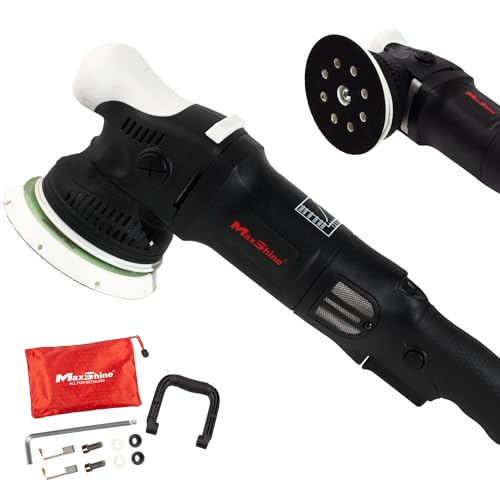 |
Maxshine M0815S Pro Dual Action Polisher Best Value 15mm orbit, 900W brushless motor, digital display, 8 speed |
8.7 | 🛒 Check Price |
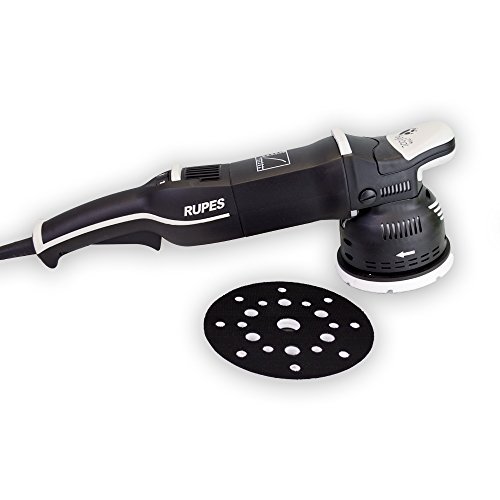 |
Rupes LK 900E Mille Forced Rotation Polisher Best for Hard Clear Coats Gear driven forced rotation, 9mm orbit, 5mm geared drive, electronic torque |
8.6 | 🛒 Check Price |
 |
Adam's Polishes SK Pro 15 Dual Action Polisher Best for Beginners 15mm orbit, 1000W motor, digital screen, forgiving free spin action |
8.3 | 🛒 Check Price |
1. Rupes BigFoot LHR 21 Mark III: Best Overall
The Rupes LHR 21 Mark III is the machine most professional detailers reach for when correction quality matters, and after running it on hard and soft clear coats it earns the reputation. The 21mm orbit means it removes defects across a hood or door in fewer passes than a short throw machine, and the third generation refinements smoothed out the vibration that earlier BigFoot units were known for. It finishes down beautifully too, often leaving a near ready to wax surface straight off a polishing pad.
The honest weakness is the size. That big 21mm head and long throw are a gift on wide flat panels but a real handful on mirrors, pillars, and tight bumper sections, where you’ll want a smaller machine as a partner. It also sits at the top of the market in value terms, so a first time hobbyist may feel it’s more tool than the job needs. For anyone correcting paint regularly, though, this is the one we would buy again.
- 21mm free spinning orbit covers large panels fast
- Smooth counterweighted body reduces hand fatigue on long jobs
- Backlit speed dial and refined ergonomics for all day correction
Pros: Exceptional finish quality with very low vibration; Long 21mm throw corrects quickly on flat panels; Build quality and reliability are class leading
Cons: Large head is awkward on tight curves and bumpers; Premium tool that asks a lot in value terms
2. Griot's Garage G9 Random Orbital Polisher: Best for Most People
The Griot’s Garage G9 is the polisher we recommend to the widest range of users because it does almost everything well. The 900W motor is the headline, since it keeps the pad spinning even when you lean into a stubborn scratch, which is exactly what cheaper machines fail to do. The 15mm orbit is the sweet spot for paint correction, big enough to cut efficiently yet controlled enough to handle smaller areas without fighting you. Add the lifetime warranty and it’s hard to go wrong.
It isn’t perfect. The G9 carries a little more weight up front than some compact competitors, and over a full vehicle that extra mass is noticeable in your wrist. The included backing plate is fine for general use, but anyone chasing the finest finish will end up buying a better plate and a wider pad selection. Those are minor gripes on a machine that handles correction this confidently and stands behind itself for life.
- Powerful 900W motor holds rotation under firm pressure
- 15mm throw balances correction speed with control
- Backed by Griot's no questions lifetime warranty
Pros: Strong motor rarely stalls during heavy cutting; 15mm orbit is all-around across panels of all sizes; Lifetime warranty makes long term ownership easy
Cons: Slightly heavier in the hand than compact rivals; Stock backing plate is best swapped for serious work
3. Rupes LHR 75E Mini iBrid: Best for Tight Areas
The Rupes Mini iBrid LHR 75E isn’t the machine you correct a whole car with, and it isn’t trying to be. This is the tool that finishes the job a full size polisher can’t, getting into A pillars, mirror caps, door handles, and the tight returns around bumpers where a 15mm or 21mm head simply won’t reach. With 3 and 4 inch pads it delivers that signature Rupes smoothness in a body small enough to steer with one hand, and the correction quality in those awkward zones is genuinely excellent.
Its limitation is the flip side of its strength. The 12mm orbit and tiny pads mean correcting a hood with it would take forever, so you really need it alongside a larger machine rather than as your only polisher. It also asks a premium for what is essentially a specialist tool. If you take correction seriously and hate leaving uncorrected edges, though, the Mini iBrid quickly becomes the machine you reach for more than you expected.
- Compact 12mm orbit body reaches mirrors and pillars
- Smooth Rupes finish quality in a small format
- Runs 3 to 4 inch pads for spot correction
Pros: Gets into areas a full size polisher can’t; Excellent finish despite the small footprint; Comfortable to control one handed
Cons: Too small to correct large panels efficiently; Premium price for a supporting tool
4. FLEX XFE 7-15 150 Random Orbital Polisher: Best Build Quality
The FLEX XFE 7-15 150 is a German built dual action that prioritizes refinement, and you feel it the moment you switch it on. Vibration is among the lowest of any machine here, which matters more than people expect when you’re correcting paint for hours, and the 15mm throw gives you a good cutting footprint. Rotation stays steady through soft start and into the work, so you can place the pad and trust it to keep spinning while you focus on technique rather than babying the trigger.
Where it gives a little ground is raw power. At 510W it’s no weakling, but on the very hardest ceramic and German clear coats it can be coaxed to slow under heavy pressure where a 900W machine wouldn’t. Parts and accessory support can also be thinner than the big consumer brands depending on where you shop. For a smooth, well engineered correction tool that finishes cleanly, the FLEX still deserves a serious look.
- German engineered 15mm long throw orbital
- Very low vibration for comfortable extended use
- Soft start and consistent rotation under load
Pros: Outstanding refinement and low vibration; Holds rotation well for confident defect removal; Sturdy construction that feels built to last
Cons: Motor wattage trails some rivals on the hardest clears; Replacement parts can be harder to source
5. Maxshine M0815S Pro Dual Action Polisher: Best Value
The Maxshine M0815S Pro punches well above what you pay for it, and that’s why it’s our value pick. The brushless 900W motor delivers real cutting power, refusing to bog down the way budget machines do, and the 15mm orbit lets you correct flat panels efficiently. The digital display is a nice touch that takes the guesswork out of dialing speed, and Maxshine frequently bundles pads so a newcomer can start correcting paint without a long shopping list.
The trade off is track record. Maxshine has earned a strong reputation quickly, but it doesn’t yet have the decade plus reliability history of the legacy brands, so we hold judgment on how these hold up after years of heavy use. It’s also a touch louder than the refined European machines. None of that changes the fact that for someone wanting serious correction capability without overspending, the M0815S Pro is one of the smartest buys on this list.
- Brushless 900W motor with digital speed display
- 15mm throw for efficient defect removal
- Often bundled with pads and accessories
Pros: Strong correction performance for the outlay; Brushless motor runs cool and pulls hard; Digital readout makes speed selection easy
Cons: Long term durability record is shorter than legacy brands; Slightly louder than premium machines
6. Rupes LK 900E Mille Forced Rotation Polisher: Best for Hard Clear Coats
The Rupes Mille LK 900E is a gear driven forced rotation polisher, and it exists for the jobs where a free spinning dual action runs out of bite. Because the pad is geared to rotate no matter how much pressure you apply, it cuts hard German and ceramic clear coats faster and more predictably than any random orbital here. The electronic torque control keeps that rotation steady under load, so you can attack heavy swirls and sanding marks with confidence that the pad is always working.
That power demands respect. Forced rotation is less forgiving than a DA, so it can leave holograms or strike an edge if your technique is sloppy, which makes it a poor first machine for a beginner. It’s also heavier and more expensive than a standard dual action. For an experienced detailer who regularly faces the hardest paints, though, the Mille turns a grinding correction into a manageable one, and that capability is exactly why it’s here.
- Forced rotation guarantees the pad never stops spinning
- Cuts hard clear coats faster than free spinning DAs
- Electronic torque control maintains rotation under load
Pros: Relentless cutting power on stubborn defects; Pad can’t stall, so correction is predictable; Compact head reaches more areas than a 21mm DA
Cons: Forced rotation is less forgiving of poor technique; Heavier and pricier than a standard dual action
7. Adam's Polishes SK Pro 15 Dual Action Polisher: Best for Beginners
The Adam’s SK Pro 15 is the machine we point beginners toward when they want to learn paint correction without fear of wrecking their clear coat. The free spinning 15mm dual action is inherently forgiving, stalling against a hard edge rather than digging in, and the 1000W motor still gives you genuine cutting power for swirls and oxidation. The digital screen keeps operation simple, and the balanced body is easy to control while you build the muscle memory that correction demands.
It’s honest about being a consumer focused tool rather than a pro flagship. The refinement, vibration control, and finish polish don’t quite match the European machines, and the pad and backing plate ecosystem is narrower, so your upgrade path is a little more limited. For someone learning the craft or correcting their own vehicles a few times a year, though, the SK Pro 15 hits the right blend of capability, safety, and ease that a first polisher should.
- 1000W motor with simple digital speed screen
- Forgiving 15mm dual action for new users
- Comfortable grip and balanced weight distribution
Pros: Easy to learn and hard to damage paint with; Plenty of power for most correction work; Clear digital controls suit first timers
Cons: Not as refined as European machines; Pad and accessory ecosystem is smaller
Frequently Asked Questions
What kind of polisher is best for paint correction?
For most people a dual action polisher with a 15mm orbit is the best all around choice for paint correction, because it removes swirls and scratches efficiently while staying forgiving enough that you’re unlikely to burn the clear coat. Long throw machines with 15mm or 21mm orbits cut faster on large flat panels, while a forced rotation polisher gives the most aggressive cut for very hard clear coats but demands better technique. Rotary buffers cut the fastest of all but are the easiest to cause damage with, so they suit experienced detailers rather than first timers.
What is the difference between a dual action and a forced rotation polisher?
A dual action polisher spins the pad freely while also moving it in a small orbit, and the pad can stall if you press too hard or hit an edge, which is what makes these machines safe and forgiving. A forced rotation polisher uses gears to drive the pad so it keeps rotating no matter how much pressure you apply, which cuts hard paint faster and more predictably but is less forgiving of mistakes. Beginners should start with a dual action, while forced rotation is a step up for correcting stubborn or very hard clear coats once your technique is solid.
Can a beginner use a polisher for paint correction without damaging the paint?
Yes, a beginner can correct paint safely if they start with a free spinning dual action machine, which is designed to stall rather than dig in when used incorrectly. The keys are using a light cutting pad and a quality compound, keeping the polisher moving in slow overlapping passes, working in shade on cool paint, and stopping to check your progress often. Practicing on a scrap panel or a less visible area first builds confidence, and avoiding aggressive forced rotation or rotary machines until you have experience keeps the risk of burning through the clear coat very low.
Do I need a long throw polisher for paint correction?
You don’t strictly need a long throw polisher, but the larger orbit of a 15mm or 21mm machine corrects flat panels noticeably faster than a short 8mm or 9mm throw, which saves real time over a full vehicle. The trade off is that bigger orbits and larger heads are harder to control in tight areas like mirrors, pillars, and bumper edges. Many detailers run a 15mm or 21mm machine for the large panels and keep a compact short throw polisher for the tight spots, which is the most efficient combination for thorough correction.
What pads and compounds should I pair with my polisher?
Match your pad and compound aggressiveness to the defects you’re removing. Start with the least aggressive combination that works, often a light cutting or polishing pad with a fine to medium compound, and only step up to a heavy cutting pad and compound if testing shows you need more bite. Foam pads are the most forgiving and common for correction, microfiber and wool cut faster but can leave more haze that needs refining, and your machine’s orbit size affects how aggressively any given pad behaves. Always do a test spot first to confirm the combination corrects without leaving marring.
Our Verdict
For most people serious about paint correction, the Rupes BigFoot LHR 21 Mark III is our top pick thanks to its fast 21mm cutting, exceptional finish quality, and class leading refinement, with the only caveats being its size on tight areas and its premium positioning. If you want nearly all of that capability at a friendlier outlay and the security of a lifetime warranty, the Griot’s Garage G9 is the runner up and the smartest choice for the widest range of users, pairing a strong 900W motor with a multi-purpose 15mm orbit that handles correction confidently from first project to hundredth.