White paint is forgiving with dust and water spots, but it hides a different problem. Swirl marks, light scratches, and a dull grey haze of oxidation are surprisingly hard to see on white until the sun hits at the right angle, and then they ruin the whole look. The right polish cuts that damage out of the clear coat and brings back a crisp, bright, almost wet shine that makes a white car look freshly painted.
Below are the picks that earned a spot, ranked best first, with honest notes on where each one falls short.
| Photo | Product | Score | Buy |
|---|---|---|---|
 |
Meguiar's Ultimate Polish Best Overall Type: pure finishing polish, 16 oz, hand or DA safe |
9.5 |
ⓘ We may earn a commission from qualifying purchases made through links on this page, at no extra cost to you.
|
 |
Chemical Guys VSS Scratch and Swirl Remover Best for Swirl Removal Type: one step polish plus light cutting, 16 oz |
9.3 | 🛒 Check Price |
 |
3M Perfect-It Machine Polish Best for Pro Results Type: machine finishing polish, 32 oz, body shop grade |
9.2 | 🛒 Check Price |
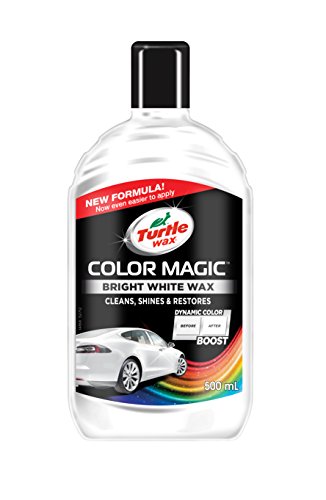 |
Turtle Wax Color Magic White Polish Best Color Matched Type: color matched polish for white paint, 16 oz |
8.8 | 🛒 Check Price |
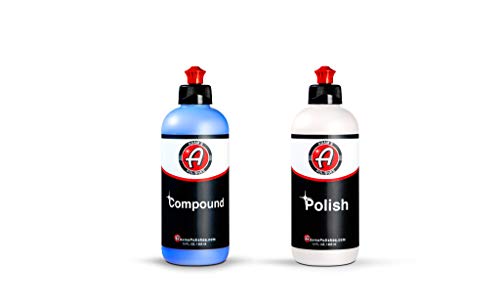 |
Adam's Polishes Correcting Polish Best One Step Correction Type: one step correcting polish, 16 oz, DA optimized |
8.6 | 🛒 Check Price |
 |
Mothers California Gold Pure Polish Best Pre-Wax Prep Type: pure non-abrasive polish, 16 oz, clear coat safe |
8.4 | 🛒 Check Price |
 |
Griot's Garage Complete Compound Best for Oxidation Type: compound plus polish hybrid, 16 oz |
8.2 | 🛒 Check Price |
1. Meguiar's Ultimate Polish: Best Overall
Meguiar’s Ultimate Polish is our top pick because it does exactly what most white car owners actually need. It’s a non-abrasive finishing polish, so instead of grinding away clear coat it brightens the paint, fills very fine swirls, and adds real depth and gloss. On white that means the dull flat look lifts and you get a clean, bright, slightly wet finish that holds up under direct sun, the exact condition where white paint usually shows its flaws.
The honest weakness is that this is a finisher, not a corrector. If your white car has deeper scratches, heavy oxidation, or strong swirling, Ultimate Polish will mask some of it but it won’t remove it, so you may need a true cutting compound first. It also runs slightly oily, so buff it off with a fresh microfiber while it’s still fresh or you can leave a faint film. For maintenance and prepping before wax, it’s hard to beat.
- Non-abrasive finishing formula safe for white clear coats
- Fills fine swirls while boosting depth and gloss
- Works by hand or with a dual action polisher
Pros: Leaves a clean bright finish with no haze on white; Very forgiving and beginner friendly; Pairs well as a pre wax step
Cons: Not aggressive enough for heavy scratches; A little oily, needs a clean buff off
2. Chemical Guys VSS Scratch and Swirl Remover: Best for Swirl Removal
Chemical Guys VSS is the pick when your white paint actually has swirls and light scratches you want gone, not just hidden. It’s a hybrid polish that cuts and finishes in one step, removing light to medium defects while still leaving a high gloss. Because it contains no fillers or silicones, what you see after wiping is the real result, which matters on white where filled scratches tend to reappear after the first wash.
The trade off is that VSS really wants a dual action polisher to perform. By hand it’ll help, but you won’t get the full correction it’s capable of, and you’ll work much harder for it. Keep your application thin, because a thick layer is where dusting and uneven cut tend to show up. Use it correctly with a machine and a cutting pad, and it brings tired white paint back to a clean, swirl free shine.
- Combines correction and finishing in one bottle
- Removes light to medium swirls and scratches
- Body shop safe with no fillers or silicones
Pros: True correction in a single step; Finishes down cleanly on white; Good cut to gloss balance
Cons: Needs a machine for best results; Can dust if applied too thick
3. 3M Perfect-It Machine Polish: Best for Pro Results
3M Perfect-It’s the polish detailers reach for when they want a flawless final finish, and it shines on white paint. As a dedicated machine finishing polish, its job is to take paint that has already been compounded and refine it to a glassy, hologram free shine. On white that produces a clean, bright, almost mirror like surface, the kind of result you usually only see on show cars and fresh repaints.
This is squarely a machine product, so it’s the wrong choice if you only plan to work by hand. It’s also a finisher, meaning it’s built to follow a cutting compound rather than replace one, so on heavily damaged paint it’s the second step, not the only one. Within that role it’s outstanding, with low dust and a long working time, and the generous bottle size makes it good value for anyone polishing more than one car.
- Body shop grade polish used after compounding
- Removes fine swirls and haze for a glassy finish
- Low dust formula designed for dual action and rotary
Pros: Finishes flawlessly with no holograms on white; Large bottle goes a long way; Trusted in professional body shops
Cons: Designed for machine use, not by hand; Best results need a compound step first
4. Turtle Wax Color Magic White Polish: Best Color Matched
Turtle Wax Color Magic is unusual because it’s tinted to match white paint, so beyond polishing it actively brightens the color and helps hide fine scratches and chips. On an older white car that has gone slightly dull or yellow, it gives a quick, noticeable lift back toward a clean bright white, and it does it with simple hand application and no machine required.
You should understand what it’s doing, though. Color Magic leans on color matched fillers to disguise defects rather than cutting them out of the clear coat, which means a deep wash or a few weeks of weather can bring some of those scratches back. It’s best seen as a fast cosmetic refresh and a maintenance product, not a permanent correction. For the owner who wants their white paint looking bright and even before an event without breaking out a polisher, it earns its place.
- Tinted polish formulated specifically for white paint
- Hides fine scratches and restores brightness
- Easy hand application for quick touch ups
Pros: Specifically made for white finishes; Brightens dull and yellowed white paint; Simple to use by hand
Cons: Relies on color filling more than correction; Filled scratches can return after washing
5. Adam's Polishes Correcting Polish: Best One Step Correction
Adam’s Correcting Polish is built for the owner who wants real correction without juggling multiple bottles. It’s a one step polish engineered for dual action machines that removes up to medium swirls and scratches and then finishes down cleanly, so on white paint you can take it from defective to bright and corrected in a single pass. The long working time is a real benefit, since it gives you room to work each section properly before it flashes.
The catch is that all that capability is more than a lot of white cars actually need. If your paint is basically healthy and just looks a bit flat, a pure finishing polish will get you the same gloss for less effort and less product. Adam’s also sits at the premium end qualitatively, so it makes the most sense when you genuinely have defects to remove. For one step correction on light paint, though, it’s one of the cleanest finishing options out there.
- Removes up to medium defects in a single step
- Engineered for dual action polishers
- Finishes down without a separate polish step
Pros: Strong cut for a one step product; Clean finish on light paint; Long working time before it flashes
Cons: Pricey relative to simpler polishes; Overkill for paint that only needs gloss
6. Mothers California Gold Pure Polish: Best Pre-Wax Prep
Mothers California Gold Pure Polish is the classic non-abrasive polish, and on white it does a quiet but valuable job. It cleans up light staining and surface dullness, deepens the gloss, and most importantly preps the paint so that wax or sealant bonds better and lasts longer. Used as the step between washing and waxing, it leaves white paint looking noticeably brighter and cleaner with very little effort.
Because it’s purely a polish and not abrasive, it won’t remove swirls or scratches, and that’s the limitation to keep in mind. If you’re expecting correction you’ll be disappointed, but if you understand it as a prep and gloss step it’s excellent. It’s forgiving enough for a first timer to use by hand without risk, and it pairs naturally with a carnauba wax or sealant to lock in the brightness it brings out.
- Pure non-abrasive polish for clear coat finishes
- Deepens gloss and preps paint for wax
- Removes light staining and surface dullness
Pros: Excellent prep step before waxing; Safe and easy for beginners; Restores brightness to faded white
Cons: Adds gloss but doesn’t correct defects; Best paired with a separate wax
7. Griot's Garage Complete Compound: Best for Oxidation
Griot’s Garage Complete Compound earns its spot for the worst case white paint, the kind that has gone chalky and grey with oxidation or has real scratches you can feel. It’s a hybrid that cuts like a compound but refines further than most, so it removes heavy defects and oxidation while still bringing the paint back toward a polished shine. On neglected white that has lost its brightness entirely, it can deliver a dramatic before and after.
The honest note is that it’s more abrasive than the finishing polishes higher on this list, which is exactly why it works on damage they can’t touch, but it also means it’s overkill on healthy paint and can leave very fine marring that a true finishing polish would clean up. On dark paint you’d always chase it with a finer polish, and on white you may want to as well if you’re after a flawless show finish. As a rescue product for oxidized white paint, though, it’s the one to grab.
- Aggressive enough to cut heavy oxidation and scratches
- Refines to a polished finish in fewer steps
- Works by hand or with a polisher
Pros: Strong cut for neglected white paint; Removes chalky oxidation effectively; All-around hand or machine use
Cons: More abrasive than a finishing polish; Heavier paint may still need a final polish
Frequently Asked Questions
Does white paint really need polish, or just wax?
White paint absolutely benefits from polish, even though it hides dust and water spots better than dark colors. The problem with white is swirl marks, fine scratches, and a dull grey oxidation that you can’t see straight on but that show up clearly when sunlight hits at an angle. Wax only adds protection and a little shine on top of whatever is underneath. Polish actually improves the paint itself by cutting or filling those defects and deepening the gloss. The ideal routine is to polish first to fix and brighten the paint, then wax or seal to protect it and lock in that fresh look.
Can I polish a white car by hand or do I need a machine?
You can polish a white car by hand, and several picks here, like Meguiar’s Ultimate Polish and Mothers California Gold, are designed to work well that way. Hand polishing is great for adding gloss, prepping before wax, and dealing with very light marks. The limit is correction. If your white paint has real swirls, scratches, or heavy oxidation, a dual action polisher will remove far more of that with much less effort, because it spreads even pressure and works the product properly. Products like 3M Perfect-It and Adam’s Correcting Polish are built specifically for machine use and will underperform by hand. For light refreshing, hands are fine. For serious correction, a machine is worth it.
What is the difference between polish and compound for white paint?
Compound is more abrasive and is meant to cut away clear coat to remove heavier scratches and oxidation, while polish is finer and is meant to refine the finish, remove light defects, and boost gloss. On white, you usually only reach for a compound like Griot’s Garage Complete Compound when the paint is genuinely damaged or has gone chalky and grey. After compounding, you follow with a polish to clean up any fine marring and bring back a bright, glassy shine. Many of the products here are hybrids that blend both jobs, which lets you do light correction and finishing in one step, ideal for white paint that needs a little help but isn’t badly neglected.
Will polish remove yellowing from old white paint?
It depends on what is causing the yellowing. If the dullness is surface oxidation and contamination, then yes, a cutting polish or compound will remove the affected top layer of clear coat and reveal brighter white underneath, and a color matched product like Turtle Wax Color Magic can further brighten the look. If the yellowing is the clear coat itself failing or staining from age, polishing can improve it but may not fully reverse it, because you can only safely remove so much clear coat. Start with a finishing polish to see how much lifts, step up to a stronger correcting polish or compound if needed, and always finish with wax to protect the result.
How often should I polish my white car?
Polishing removes a tiny amount of clear coat each time you correct defects, so it isn’t something to do constantly. For most white cars, a full correcting polish once or twice a year is plenty, ideally before applying a fresh coat of wax or sealant. Non-abrasive finishing polishes like Mothers California Gold are gentler and can be used more often as a prep and gloss step without meaningfully wearing the clear coat. The key is to match the product to the need. Use the light stuff for routine brightening and save the aggressive correction for when swirls and scratches have actually built up. Between polishes, regular washing and waxing keeps white paint looking its best.
Our Verdict
For most white car owners, Meguiar’s Ultimate Polish is the best all round choice, because it brightens the paint, fills fine swirls, and leaves a clean glassy finish with no haze, all while being forgiving enough to use by hand. If your white paint has real swirls and scratches you want truly removed rather than masked, our runner up, the Chemical Guys VSS Scratch and Swirl Remover, delivers genuine one step correction that finishes down beautifully on light paint. Pick the finisher for routine brightness and the corrector when defects have built up, and either way your white car will look freshly painted again.

