The pad you bolt onto your polisher matters just as much as the compound you smear on it. A polishing pad controls how much correction you get, how cleanly your finish levels out, and whether you walk away with a mirror shine or a fresh set of swirl marks under the garage lights. Pick the wrong density and you either burn through clear coat or barely touch the defects.
We ran a range of foam, microfiber, and wool pads on dual action and forced rotation polishers across hard German clear coats and softer Japanese paint to see which ones actually deliver. Below are the seven polishing pads worth clamping to your backing plate, ranked by cut consistency, finishing clarity, edge durability, and how well they shed heat over a long detailing session.
| Photo | Product | Score | Buy |
|---|---|---|---|
 |
Lake Country CCS Smart Pads (White Polishing) Best Overall 5.5 inch flat foam, white medium polishing, hook and loop |
9.5 |
ⓘ We may earn a commission from qualifying purchases made through links on this page, at no extra cost to you.
|
 |
Chemical Guys Hex-Logic Polishing Pad Best for Beginners 5.5 inch hexagonal grooved foam, color coded by cut level |
9.2 | 🛒 Check Price |
 |
Griot's Garage BOSS Foam Polishing Pads Best for Long Throw Polishers 5.5 inch foam, engineered for long throw dual action machines |
9.1 | 🛒 Check Price |
 |
Buff and Shine Uro-Tec Foam Pads Best Value Crowned foam face, full color coded cut range, hook and loop |
9.0 | 🛒 Check Price |
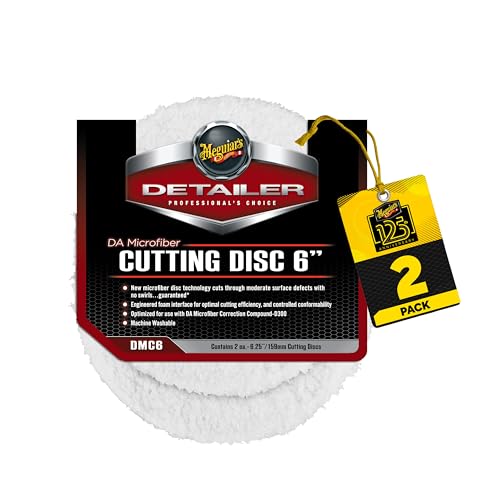 |
Meguiar's DA Microfiber Finishing Discs Best Microfiber Pad Microfiber face cutting and finishing discs for DA polishers |
8.8 | 🛒 Check Price |
 |
Rupes D-A Fine Foam Polishing Pads Best for Premium Finishing Yellow fine foam, tapered profile for Rupes random orbital polishers |
8.6 | 🛒 Check Price |
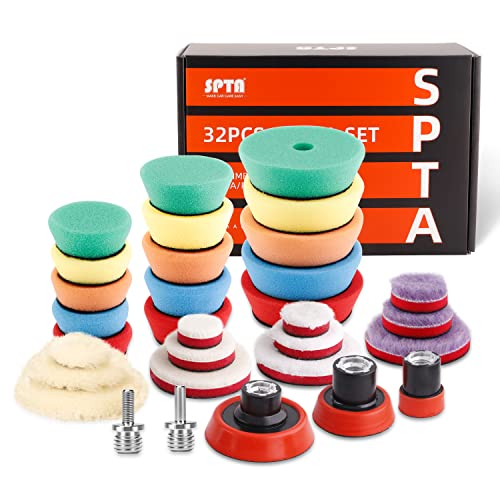 |
SPTA Buffing and Polishing Pad Kit Best Starter Kit Multi pad foam and wool kit with backing plate, hook and loop |
8.2 | 🛒 Check Price |
1. Lake Country CCS Smart Pads (White Polishing): Best Overall
The Lake Country CCS line is the pad most veteran detailers reach for when they want a result they can trust panel after panel. The white medium foam sits right in the sweet spot for one step polishing, lifting light swirls and oxidation while leaving paint clear enough to skip a dedicated finishing pass on many cars. The signature CCS dimples aren’t a gimmick. They store excess product so you aren’t flooding the surface, and they let air move through the foam to keep heat down during forced rotation work.
The honest weakness here’s maintenance. This foam rewards detailers who clean on the fly and wash the pad properly afterward. If you let dried compound cake into the cells, the face hardens and you lose that smooth, even cut. Treat it well and a single pad survives many full corrections, which is why it earns the top spot.
- Collapsed Cell Structure dimples that hold compound and aid cooling
- Color coded white foam for medium polishing and light correction
- Beveled edge that resists chunking on curved panels
Pros: Extremely predictable cut that finishes down cleanly; Dimpled face keeps the pad cool and reduces product sling; Holds shape and stays balanced through long sessions
Cons: Foam can stiffen if you don’t clean it promptly after use
2. Chemical Guys Hex-Logic Polishing Pad: Best for Beginners
If you’re new to machine polishing, the Hex-Logic system removes most of the guesswork. Each color maps to a clear job, from heavy cutting orange to gentle finishing black, so you can build a kit without a chemistry degree. The hexagonal grooves do real work, breaking up heat buildup and giving excess polish somewhere to go instead of caking on the paint. On a dual action polisher the pad stays planted and predictable, which is exactly what a first timer needs.
The trade off for that approachable feel is durability. The foam is on the softer, more forgiving side, and the pad edges fray faster than the firmer pads in this guide if you lean into tight panel gaps. For occasional weekend detailing that lifespan is plenty, but a high volume detailer will cycle through them quicker.
- Hexagonal groove pattern that channels heat and excess product
- Wide color coded range so you can match cut to your paint
- Optimized foam profile for both rotary and dual action polishers
Pros: Easy color system makes choosing the right cut foolproof; Grooves keep the surface cool and reduce hopping; Widely stocked so replacements are simple to find
Cons: Edges show wear sooner than denser pads; Softer foam can flex on aggressive correction
3. Griot's Garage BOSS Foam Polishing Pads: Best for Long Throw Polishers
Griot’s built the BOSS pads specifically around long throw dual action polishers, and the synergy shows. The thinner foam profile transfers the wider orbit straight into the paint instead of soaking it up, so you cut faster and generate less wasted heat. On a long throw machine these pads correct moderate swirls with surprising speed while staying composed and balanced. The orange and yellow combination covers most one and two step jobs comfortably.
The catch is right there in the design intent. Run these on a short throw or entry level polisher and you lose a chunk of what makes them special, since they’re tuned for that bigger orbit. They also come in a narrower lineup than some competitors, so if you want exotic cut levels you may need to look elsewhere. Matched to the right machine, though, they’re excellent.
- Thin profile tuned to transfer energy on long throw polishers
- Open cell foam structure for smooth correction and cool running
- Color coded orange and yellow for correcting and polishing
Pros: Pairs perfectly with long throw DA machines for fast correction; Thin design reduces flex and improves control on edges; Finishes cleaner than its cutting ability suggests
Cons: Best results really do require a long throw polisher; Smaller pad selection than some rival brands
4. Buff and Shine Uro-Tec Foam Pads: Best Value
The Uro-Tec pads punch well above what you expect for a pad in this tier. The crowned face is the standout feature, curving slightly so the center of the pad makes firm contact and the energy concentrates rather than spreading thin. The result is efficient correction with very little product sling, and the Euro foam finishes down cleanly enough that hazing is rarely an issue even on softer paint. Across the full color range you can assemble a complete correction kit that holds up well.
The only adjustment period is that crowned profile itself. Detailers used to a perfectly flat pad may need a panel or two to dial in pressure, since the contact patch behaves a little differently. Once that clicks, these become a pad you keep reaching for because they deliver serious performance and real longevity.
- Crowned face design that focuses contact and reduces sling
- Euro foam formulation that finishes down with minimal hazing
- Broad color coded range from heavy cut to ultra finishing
Pros: Crowned shape concentrates the cut where you need it; Finishes remarkably clean for the correction it delivers; Strong durability that stretches a detailing budget
Cons: Crowned profile takes a session to get used to
5. Meguiar's DA Microfiber Finishing Discs: Best Microfiber Pad
When foam alone isn’t removing the defects fast enough, microfiber bridges the gap. The Meguiar’s DA microfiber discs cut harder than foam at equivalent settings, which makes them a smart choice for tackling moderate swirls and water spots on harder clear coats without jumping to a wool pad or rotary. The finishing disc then refines the surface so you’re left with paint that’s ready for your wax or sealant. As part of the broader Meguiar’s DA system, they slot neatly into a structured correction process.
Microfiber does demand more attention than foam. The face loads with spent product quickly, so you need to clean it on the fly to keep the cut consistent, and on very soft paint it can be more aggressive than you intend. Use them where the extra bite is warranted and they shine, but they aren’t the set and forget option a foam pad is.
- Microfiber face that cuts faster than foam at the same speed
- Designed for dual action polishers to reduce holograms
- Pairs with the Meguiar's DA correction and finishing system
Pros: Cuts noticeably quicker than foam for stubborn defects; Finishing disc leaves a clean surface ready for protection; Cleans up well between sections with a quick brush
Cons: Microfiber loads up faster and needs frequent cleaning; Less forgiving than foam on very soft clear coats
6. Rupes D-A Fine Foam Polishing Pads: Best for Premium Finishing
For the last refinement pass, the Rupes D-A Fine pads are about as good as foam gets. The yellow fine foam is built for jeweling, that final stage where you chase maximum gloss and depth rather than removing defects. The tapered edge matches the orbital geometry of Rupes polishers so the pad stays balanced and runs cool, letting you work a panel long enough to bring out genuine clarity. On dark paint the difference in final depth is easy to see.
This is a specialist tool, and the score reflects that focus rather than any flaw. It’s a finishing pad, so it won’t do your correction work, and it’s clearly designed to live within the Rupes system in both sizing and value positioning. If you already run a Rupes machine and care about that last few percent of shine, it belongs in your kit.
- Tapered edge profile engineered for Rupes orbital geometry
- Fine yellow foam tuned for jeweling and final clarity
- Open cell structure that runs cool over long buffing runs
Pros: Produces a deep, defect free final finish; Tapered design keeps the pad balanced and smooth; Excellent heat management for extended polishing
Cons: Priced and sized around the Rupes ecosystem; Fine foam is for finishing, not heavy correction
7. SPTA Buffing and Polishing Pad Kit: Best Starter Kit
If you’re assembling a polishing setup from scratch, a complete kit removes a lot of friction, and the SPTA assortment delivers exactly that. You get a spread of foam pads from cutting to finishing plus wool options and the backing plate hardware to mount them, so you can start correcting paint the day it arrives. The color coding keeps the stages clear, and for learning the fundamentals of machine polishing it’s a sensible, low commitment way in.
Quality control is where a multi pad budget kit shows its limits. Individual pads aren’t as consistent as a dedicated premium line, and the wool pads tend to shed a little during their first uses, so a quick prime and pick is wise. For a beginner finding their feet or someone who only details occasionally, though, the breadth and value make it an easy recommendation.
- Assorted foam and wool pads covering cut to finish
- Includes a backing plate and drill or polisher adapter
- Color coded foam so each stage is easy to identify
Pros: Complete grab and go kit for a first machine polish; Covers cutting, polishing, and finishing in one box; Strong value for anyone building a detailing setup
Cons: Pad consistency varies more than premium single brands; Wool pads shed a little on first few uses
Frequently Asked Questions
What is the difference between a cutting pad and a polishing pad?
A cutting pad uses firmer, more aggressive foam or wool to remove deeper defects like heavy swirls, scratches, and oxidation, and it leaves micro marring behind that you then refine. A polishing pad is softer and designed to remove lighter defects while restoring clarity and gloss, often as a second step after cutting. For most everyday cars with light swirling, a medium polishing pad on a dual action polisher does the job in a single step. Match the pad to the severity of the paint defects rather than just grabbing the most aggressive option.
Should I use foam, microfiber, or wool pads for polishing my car?
Foam pads are the most all-around and forgiving choice and cover the majority of correction and finishing work, which is why most detailers build their kit around them. Microfiber pads cut faster than foam at the same machine speed, making them useful on harder clear coats or when you want quicker correction without moving to a rotary. Wool pads are the most aggressive and are reserved for heavy defect removal, usually on a rotary polisher in experienced hands. If you only buy one type, start with a good set of foam pads.
What size polishing pad should I use?
Pad size should be matched to your backing plate and the panels you work on most. A 5 to 5.5 inch pad is the all rounder for full size panels and pairs well with common 5 inch backing plates and most dual action polishers. Smaller 3 to 4 inch pads excel on mirrors, pillars, bumpers, and tight contours where a big pad can’t sit flat. A good rule is to keep your pad slightly larger than the backing plate to protect the plate edge, and to keep a few small pads on hand for detail areas.
How do I clean and maintain my polishing pads?
Clean on the fly during your session by brushing or wiping spent product off the pad face every panel or two so the cut stays consistent. After the job, wash pads promptly before the compound dries, either by hand with a dedicated pad cleaner and warm water or in a machine on a gentle cycle, then let them air dry fully face up. Avoid high heat in a dryer, which can damage the hook and loop backing and break down the foam. Well maintained pads last through many corrections, while neglected ones harden and lose performance fast.
How long does a polishing pad last?
Lifespan depends on the pad quality, how hard you work it, and how well you clean it. A premium foam pad that’s cleaned promptly and stored properly can survive many full vehicle corrections before the foam breaks down or the edges chunk. Budget pads and microfiber faces tend to wear faster, especially around the edges and on aggressive work. Replace any pad once the foam tears, the face hardens and won’t clean up, or the hook and loop backing stops gripping the plate, since a failing pad risks uneven correction and paint damage.
Our Verdict
For most people polishing their own car, the Lake Country CCS Smart Pads are our top pick thanks to a predictable medium cut that finishes clean, smart heat management, and the durability to outlast many lesser pads. If you’re just getting started and want the choice made simple, the Chemical Guys Hex-Logic system is our runner up, with a color coded range and cool running grooves that make confident machine polishing easy from your very first panel.