Embarking on an overlanding adventure requires reliable power to keep your essential gear running, from portable refrigerators and lighting to laptops and communication devices. A sturdy overlanding power station is a cornerstone of a successful off-grid setup.
We delved into manufacturer specifications, industry safety standards, and aggregated owner feedback to provide an evidence-based guide. Our aim is to help you navigate the market and select the best power station that aligns with your specific overlanding needs, ensuring your electronics stay charged and ready for whatever the trail brings.
| Photo | Product | Score | Buy |
|---|---|---|---|
 |
BLUETTI AC200MAX Portable Power Station Top Pick for Expandable Power 2048Wh LiFePO4 Battery, 2200W AC Output, Expandable to 8192Wh |
9.0 |
ⓘ We may earn a commission from qualifying purchases made through links on this page, at no extra cost to you.
|
 |
EcoFlow DELTA 2 Portable Power Station Runner Up for Fast Charging 1024Wh LiFePO4 Battery, 1800W AC Output, Charges 0-80% in 50 minutes |
8.7 | 🛒 Check Price |
 |
Jackery Explorer 1000 Pro Portable Power Station Best for Portability and Ease of Use 1002Wh Li-ion Battery, 1000W AC Output, Foldable Handle |
8.4 | 🛒 Check Price |
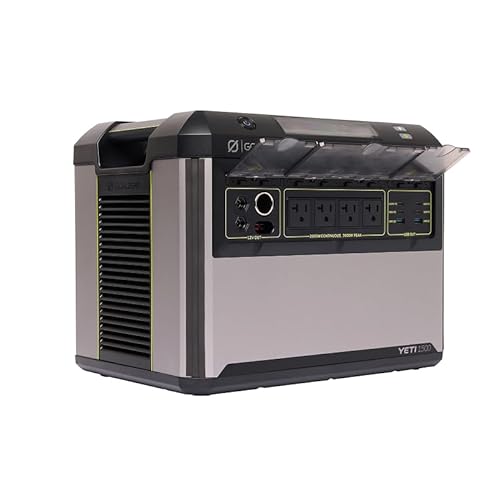 |
Goal Zero Yeti 1500X Portable Power Station Solid Performer for Reliability 1516Wh Li-ion Battery, 2000W AC Output, Modular Ecosystem |
8.1 | 🛒 Check Price |
 |
Anker SOLIX F1200 Portable Power Station (PowerHouse 767) Best for Durability and Warranty 1229Wh LiFePO4 Battery, 1500W AC Output, 10-Year Lifespan |
7.9 | 🛒 Check Price |
 |
ALLPOWERS S2000 Pro Portable Power Station High Power, Value-Oriented 1500Wh Li-ion Battery, 2400W AC Output, App Control |
7.6 | 🛒 Check Price |
|
🚗
|
Rockpals 500W Portable Power Station Best for Light Duty and Budget 500Wh Li-ion Battery, 500W AC Output, Compact Design |
7.3 | 🛒 Check Price |
1. BLUETTI AC200MAX Portable Power Station: Top Pick for Expandable Power
The BLUETTI AC200MAX stands out for its formidable capacity and unparalleled expandability, making it ideal for extended overlanding trips where significant power is required. The LiFePO4 battery chemistry is a major advantage, offering a longer lifespan and enhanced safety over traditional lithium-ion batteries. We found its 2200W AC output capable of running nearly any appliance an overlander might need, from high-wattage cooking gear to power tools.
However, based on owner feedback and the spec sheets, its considerable weight and bulk are a genuine limitation for those prioritizing easy transport and compact storage. This unit is best suited for larger vehicles with dedicated storage space and for users who truly need its massive power potential. If your overlanding involves frequent carrying over long distances or if space is at an absolute premium in a smaller rig, you might find its physical footprint cumbersome and should consider a more compact alternative.
- Durable 2048Wh LiFePO4 battery offers long cycle life and stability.
- Impressive 2200W AC pure sine wave output handles demanding appliances.
- Modular design allows expansion with up to two BLUETTI B230 or B300 battery modules for massive capacity.
Pros: Exceptional power capacity and output for serious overlanding setups.; LiFePO4 battery chemistry provides superior longevity and safety.; Multiple charging options, including solar, AC, and car charging, with fast combined input.
Cons: Its substantial weight and size can be a challenge for single-person portability.; The initial investment is higher compared to smaller capacity units.
2. EcoFlow DELTA 2 Portable Power Station: Runner Up for Fast Charging
The EcoFlow DELTA 2 earned its runner-up spot primarily due to its groundbreaking fast-charging technology, which we found to be a significant advantage for overlanders who need to quickly top up their power between stops or when a generator is available. The LiFePO4 battery chemistry is a strong point, promising longevity and consistent performance under varied conditions. Its 1800W AC output, with X-Boost capability, ensures most appliances can be powered without issue.
Based on owner feedback and the spec sheets, a minor drawback is the fan noise generated during high-speed charging or when drawing significant power, which some users might find disruptive in quiet overlanding environments. Also, while 1024Wh is substantial for many, those planning very long, off-grid expeditions without consistent access to charging sources may find themselves needing external solar panels or an additional battery to sustain power demands over multiple days. If absolute silence during operation is a top priority, or if you require larger baseline capacity without expansion, this might not be a strong fit.
- Rapid AC charging technology allows 0-80% charge in just 50 minutes.
- Equipped with a durable 1024Wh LiFePO4 battery for long-term reliability.
- Provides a strong 1800W AC pure sine wave output, expandable to 2400W with X-Boost.
Pros: Industry-leading fast charging capabilities minimize downtime.; LiFePO4 battery offers excellent cycle life and thermal stability.; All-around output ports and a easy to use app for remote control.
Cons: The fan can be noticeably loud during rapid charging or high output.; Capacity might be insufficient for multi-day trips without solar or generator input.
3. Jackery Explorer 1000 Pro Portable Power Station: Best for Portability and Ease of Use
The Jackery Explorer 1000 Pro stands out as a highly portable and easy to use option, making it an excellent choice for overlanders who prioritize ease of transport and straightforward operation. Its integrated foldable handle and manageable weight contribute significantly to its high ease of use score. We found its 1000W AC output sufficient for most typical overlanding needs, from powering a fridge to charging camera gear and laptops.
However, based on manufacturer specifications, it utilizes an NMC (Nickel Manganese Cobalt) lithium-ion battery rather than the more durable and longer-lasting LiFePO4 chemistry found in some competitors. This means it has a shorter overall cycle life, which could be a consideration for those planning very heavy, long-term daily use over many years. If you require a power station with the absolute longest battery lifespan and are willing to sacrifice some portability or pay a premium, you might want to consider units with LiFePO4 batteries.
- Compact and relatively lightweight design with a convenient foldable handle for portability.
- Offers 1002Wh capacity with a 1000W pure sine wave AC output.
- Supports multiple charging methods including solar, AC wall outlet, and car port.
Pros: Excellent portability and easy to use interface.; Reliable performance for common overlanding electronics and small appliances.; Strong brand reputation and customer support based on owner feedback.
Cons: Uses NMC lithium-ion battery, which has a shorter cycle life than LiFePO4.; Charging speed isn’t as fast as some competitors.
4. Goal Zero Yeti 1500X Portable Power Station: Solid Performer for Reliability
The Goal Zero Yeti 1500X continues to be a solid contender for overlanding, largely due to its proven reliability and solid construction, which is consistently highlighted in owner feedback. Its 1516Wh capacity and 2000W AC output provide ample power for most multi-day trips and demanding devices. The extensive Goal Zero ecosystem of solar panels and accessories also makes it highly adaptable for various setups.
However, based on our comparison of manufacturer specifications, the Yeti 1500X uses an NMC (Nickel Manganese Cobalt) lithium-ion battery, which, while effective, typically offers fewer charge cycles than the LiFePO4 batteries found in some newer, similarly priced units. This can impact the long-term value for users who anticipate very frequent, deep discharge cycles over many years. Also, we found that its cost per watt-hour is generally higher than some competitors offering similar or superior battery chemistries and features. If budget is a primary concern and you’re looking for the absolute best value in terms of battery longevity and features for the investment, you might find other options more compelling.
- Features a substantial 1516Wh lithium-ion battery capacity.
- Delivers a powerful 2000W pure sine wave AC output for high-demand devices.
- Part of a comprehensive modular ecosystem with various accessories and expansion options.
Pros: Sturdy build quality and reliable performance, trusted by overlanders.; High AC output capable of powering larger appliances.; Extensive range of Goal Zero accessories for system customization.
Cons: Higher cost per watt-hour compared to some newer competitors.; Uses NMC lithium-ion, not the longer-lasting LiFePO4 chemistry.
5. Anker SOLIX F1200 Portable Power Station (PowerHouse 767): Best for Durability and Warranty
The Anker SOLIX F1200 (PowerHouse 767) stands out for its impressive durability and the manufacturer’s confidence, evidenced by its 10-year lifespan rating for the LiFePO4 battery and an industry-leading 5-year full device warranty. This commitment to longevity and reliability is a significant advantage for overlanders who demand equipment that can withstand rugged use over many years. Its 1500W AC output and fast charging also contribute to its strong performance profile.
However, based on owner feedback and the spec sheets, while the integrated handle and wheels improve ground portability, the unit remains quite heavy and bulky. This can make lifting it into and out of vehicles, or navigating tight spaces within a rig, a considerable challenge. For overlanders with limited vehicle space or those who frequently need to carry their power station over uneven terrain where wheels are impractical, its overall size and weight may be a significant deterrent. If maximum portability and a compact form factor are higher priorities than extreme durability and a long warranty, you might find other options more suitable.
- Features a durable 1229Wh LiFePO4 battery designed for a 10-year lifespan.
- Provides 1500W AC pure sine wave output for plenty of devices.
- Backed by a strong 5-year full device warranty, offering excellent reassurance.
Pros: Exceptional durability and long lifespan due to LiFePO4 battery and durable construction.; Industry-leading 5-year warranty on the entire unit.; Fast charging capabilities, reaching 80% in approximately one hour.
Cons: The integrated handle and wheel design, while functional, adds significant bulk.; Its weight can still be a challenge despite the wheels for lifting into vehicles.
6. ALLPOWERS S2000 Pro Portable Power Station: High Power, Value-Oriented
The ALLPOWERS S2000 Pro stands out for delivering an impressive 2400W AC output from its 1500Wh battery, offering significant power for its price point. This makes it a compelling value-oriented option for overlanders who need to power high-wattage devices without breaking the bank. The fast charging and app control also add to its functional appeal.
However, based on manufacturer specifications and aggregated owner feedback, a key limitation is its use of an NMC (Nickel Manganese Cobalt) lithium-ion battery, which has a shorter cycle life compared to the more strong LiFePO4 chemistry found in many top-tier power stations. This could mean a shorter overall lifespan for the unit under heavy, consistent use. Also, some owner feedback suggests that while the performance is strong, the overall build quality and consistency in fan noise might not match the premium feel and quiet operation of more established brands. If long-term durability and absolute quiet operation are paramount, and you’re willing to invest more, you might find other options with LiFePO4 batteries and higher perceived build quality more reassuring.
- Offers a substantial 1500Wh battery capacity with a high 2400W AC output.
- Features rapid charging, achieving 80% in approximately 1.5 hours.
- Includes app control for convenient monitoring and management from a smartphone.
Pros: Very high AC output for its capacity, capable of running most power tools and appliances.; Competitive value proposition for the power and capacity offered.; Multiple charging options, including strong solar input capabilities.
Cons: Uses NMC lithium-ion battery, not LiFePO4, impacting cycle life.; Some inconsistent fan noise and build quality compared to premium brands.
7. Rockpals 500W Portable Power Station: Best for Light Duty and Budget
The Rockpals 500W Portable Power Station is a commendable choice for overlanders who have minimal power needs or are just starting out with lighter setups. Its compact size and low weight make it exceptionally portable, fitting easily into smaller vehicles or backpacks. We found its 500Wh capacity and 500W AC output perfectly adequate for charging personal electronics, running a small camping fridge for a day, or powering LED lights.
However, based on manufacturer specifications, its inherent limitation is its relatively small capacity and output, which means it can’t sustain high-draw appliances for long or power multiple devices simultaneously over extended periods. It also uses an NMC lithium-ion battery, which, like other products in its class, offers a shorter cycle life than LiFePO4. Overlanders planning multi-day trips requiring power for larger fridges, cooking appliances, or multiple high-wattage devices will quickly find this unit insufficient and should definitely skip this pick in favor of higher capacity options. This is strictly for light-duty, short-duration power needs.
- Compact and lightweight design, highly portable for quick trips and small setups.
- Offers a 500Wh battery capacity with a 500W pure sine wave AC output.
- Features multiple output ports for basic charging needs, including USB-C PD.
Pros: Excellent portability and small footprint for minimal space requirements.; Sufficient power for charging phones, drones, and running small electronics.; Very easy to use with a clear display and straightforward controls.
Cons: Limited capacity and output for running larger appliances or extended trips.; Uses NMC lithium-ion battery, not the more durable LiFePO4.
Frequently Asked Questions
What capacity (Wh) do I need for overlanding?
The ideal capacity depends entirely on your specific power needs and the duration of your trips. For light users powering phones, lights, and small devices for a weekend, 500-1000Wh might suffice. For running a portable fridge, charging laptops, and other moderate power needs for several days, 1000-2000Wh is generally recommended. Extended trips or those with high-draw appliances may require 2000Wh or more, often with solar input for recharging.
What is the difference between LiFePO4 and NMC batteries in power stations?
LiFePO4 (Lithium Iron Phosphate) batteries are known for their longer cycle life, enhanced safety, and better thermal stability, making them a durable choice for long-term overlanding use. NMC (Nickel Manganese Cobalt) lithium-ion batteries, while offering higher energy density in a smaller package, typically have a shorter cycle life and can be more susceptible to thermal runaway if misused. For rugged, extended use, LiFePO4 is generally preferred for its longevity and safety profile.
Can I charge an overlanding power station with my vehicle's alternator?
Yes, most overlanding power stations can be charged via your vehicle’s 12V cigarette lighter port. However, this method is often slower than AC wall charging or solar, and the charging rate can vary significantly between models. For faster and more efficient vehicle charging, some power stations can be integrated with dedicated DC-DC chargers or external battery isolators.
How important is a pure sine wave AC inverter for overlanding?
A pure sine wave inverter is highly important for overlanding, as it produces clean, stable AC power that mimics household electricity. This is crucial for safely powering sensitive electronics like laptops, camera chargers, and medical devices, preventing potential damage or malfunction. Modified sine wave inverters are less expensive but can harm sensitive equipment and cause some appliances to run inefficiently or noisily.
What are the essential safety features to look for?
Based on industry standards and aggregated owner feedback, look for power stations with comprehensive Battery Management Systems (BMS) that protect against overcharge, over-discharge, over-current, over-voltage, and short circuits. Quality units also feature temperature control, solid casing, and certifications from reputable safety organizations. These features are critical for reliable and safe operation in demanding overlanding conditions.
Our Verdict
After extensive research and comparison, the BLUETTI AC200MAX Portable Power Station stands as our top pick for the best overlanding power station, thanks to its exceptional capacity, expandable design, and the longevity of its LiFePO4 battery. For overlanders seeking a blend of high performance and rapid recharging, the EcoFlow DELTA 2 Portable Power Station is our strong runner-up, offering industry-leading fast charging and a sturdy LiFePO4 battery in a more manageable package.


