When you’re camped three days deep on a forest service road, your fridge, lights, and devices live or die by what your solar setup pulls in. Overland solar panels aren’t the same as the cheap window-trickle chargers you see at the auto parts counter. They need to charge a real lithium battery or power station fast, survive dust, vibration, and the occasional hard knock, and pack down small enough to fit behind a seat or strap to a rack.
We looked at foldable suitcase kits, rigid briefcase panels, and flexible roof-mount sheets, then judged them on real charging output under partial cloud, build toughness, weight, and how painless they’re to deploy at camp. These seven panels are the ones we would actually bolt to a rig or toss in the bed before a long weekend off the grid.
| Photo | Product | Score | Buy |
|---|---|---|---|
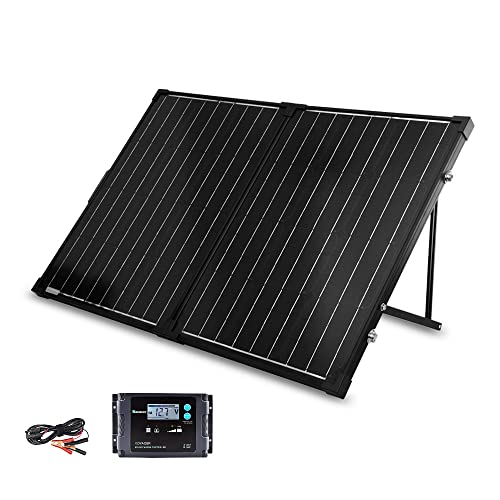 |
Renogy 100W 12V Monocrystalline Foldable Solar Suitcase Best Overall 100W monocrystalline foldable suitcase with built-in 20A charge controller |
9.5 |
ⓘ We may earn a commission from qualifying purchases made through links on this page, at no extra cost to you.
|
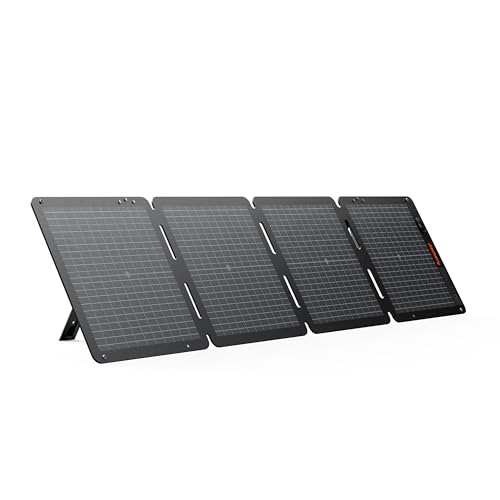 |
Jackery SolarSaga 100W Portable Solar Panel Best for Power Stations 100W foldable panel with USB-A and USB-C outputs and DC8mm plug |
9.3 | 🛒 Check Price |
 |
BougeRV 200W 9BB Monocrystalline Solar Panel Best High Output 200W rigid 9-busbar monocrystalline panel for roof or ground mount |
9.2 | 🛒 Check Price |
 |
Goal Zero Boulder 100 Briefcase Solar Panel Most Rugged 100W rigid monocrystalline briefcase with aluminum frame and kickstand |
9.0 | 🛒 Check Price |
 |
EcoFlow 110W Portable Solar Panel Best Foldable Kit 110W foldable monocrystalline panel with integrated stand case |
8.8 | 🛒 Check Price |
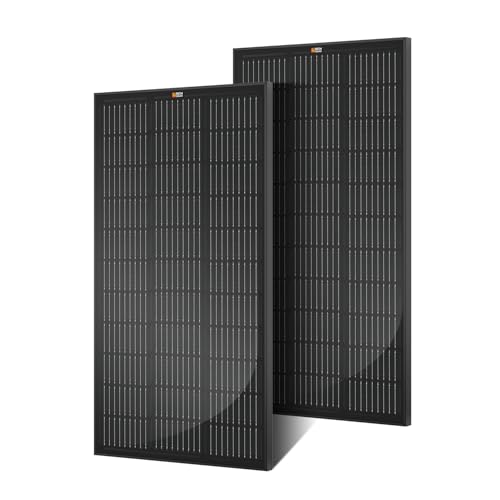 |
Rich Solar 100W Flexible Monocrystalline Solar Panel Best Flexible Roof Panel 100W flexible monocrystalline panel that flexes up to 30 degrees |
8.5 | 🛒 Check Price |
 |
DOKIO 110W 18V Portable Foldable Solar Panel Best Lightweight Value 110W foldable monocrystalline panel weighing around 6 pounds |
8.2 | 🛒 Check Price |
1. Renogy 100W 12V Monocrystalline Foldable Solar Suitcase: Best Overall
The Renogy 100W suitcase is the panel we reach for first because it does the one thing most overlanders actually need: it charges a 12V battery hard and reliably without a science project. The folding aluminum frame and adjustable legs let you angle it straight at the sun, and in our partly cloudy testing it still pushed meaningful amps into a depleted lithium battery when cheaper panels stalled. The included 20A waterproof Voyager controller means you can clip it to a battery and walk away, which is exactly what you want at camp.
The honest weakness is weight and bulk. At roughly 26 pounds folded, it’s the heaviest deploy-and-stow option here, and the built-in controller is matched to a single panel, so if you later want to chain two or three together you’ll outgrow it and need a larger external controller. For a single-panel overland kit, though, it’s the most trustworthy all-rounder we researched.
- 100W monocrystalline cells with roughly 22 percent conversion efficiency
- Built-in 20A Voyager waterproof charge controller
- Corrosion-resistant aluminum stand and protective canvas case
Pros: Includes a charge controller so it works straight out of the box; Heavy-gauge aluminum frame shrugs off trail vibration; Adjustable kickstand lets you chase the sun all day
Cons: Heavier than flexible panels at around 26 pounds; Controller is sized for one panel, not a large array
2. Jackery SolarSaga 100W Portable Solar Panel: Best for Power Stations
If your overland power setup is built around a portable power station rather than a hardwired battery, the Jackery SolarSaga 100W is the smoothest match, especially if you already run a Jackery Explorer. The magnetic-fold design and pop-out kickstands make setup almost thoughtless, and the ETFE lamination held up to a dusty weekend without complaint. The two onboard USB ports are a genuinely useful touch, letting you top off a phone or headlamp straight from the panel while the station charges from the DC plug.
The catch is the DC8mm connector. Out of the box it talks to Jackery stations natively, but pairing it with another brand or a bare 12V battery means tracking down adapters and a separate controller. It also has no built-in regulation of its own, so it’s a power-station companion rather than a standalone battery charger. Within that lane, it’s excellent.
- Foldable design with integrated kickstands that pop out in seconds
- USB-A and USB-C ports built into the panel itself
- ETFE-laminated cells rated for sun and light weather exposure
Pros: Plug-and-play with Jackery Explorer power stations; Folds flat and slides behind a seat easily; On-panel USB ports charge phones with no power station needed
Cons: DC8mm plug needs an adapter for non-Jackery gear; No charge controller, so it pairs with a station, not a bare battery
3. BougeRV 200W 9BB Monocrystalline Solar Panel: Best High Output
When a single foldable panel can’t keep up with a fridge, a maxxfan, and a starlink running off your house battery, the BougeRV 200W rigid panel is how you add serious daily harvest. The 9-busbar mono cells noticeably outperformed older 5-busbar designs in our dappled-shade testing, recovering quicker when a cloud passed. Bolted to a roof rack with a decent MPPT controller, it turns a parked rig into a steady charging platform that tops your bank by mid-afternoon.
This is a build-it-in panel, not a grab-and-go one. It’s large, heavy, and made of tempered glass over an aluminum frame, so there’s no folding it behind a seat. You also have to supply your own controller and mounting feet, which makes it a project rather than an unboxing. If you want a permanent overland charging system rather than a camp accessory, that tradeoff is well worth it.
- 200W output from 9-busbar mono cells for strong low-light pickup
- Rigid tempered glass and aluminum frame for permanent mounting
- Pre-drilled holes and bypass diodes for easy rack installation
Pros: High wattage charges large battery banks in a single day; 9-busbar cells perform better under partial shade; Strong frame suited to permanent roof rack mounting
Cons: Rigid and large, so it isn’t a pack-and-stow option; Needs a separate MPPT controller and mounting hardware
4. Goal Zero Boulder 100 Briefcase Solar Panel: Most Rugged
The Goal Zero Boulder 100 Briefcase is the panel you buy when you abuse your gear and want something that won’t flinch. Instead of a fabric-backed folding sheet, this is two rigid tempered-glass panels hinged into a briefcase with an aluminum frame and protected corners. On a washboard trail and a dusty camp it felt like the most durable unit in the test, and the built-in kickstand makes aiming it at the sun a one-handed job. For Goal Zero Yeti owners it plugs in with no fuss.
That ruggedness has a price in portability. The glass-and-metal construction makes it heavy and somewhat awkward to lug from the truck to a sunny spot, and it doesn’t pack down nearly as small as the fabric foldables. If your priority is bombproof longevity over featherweight packing, this is the one, but lighter rigs that count every pound may prefer a softer suitcase.
- Tempered glass over rigid monocrystalline cells
- Aluminum frame with corner protection and a folding kickstand
- Integrated handle and latch for briefcase-style carry
Pros: Tough tempered glass and metal frame take abuse well; Folding briefcase design with a built-in stand; Pairs cleanly with Goal Zero Yeti power stations
Cons: Glass and metal make it heavy and bulky to carry; More expensive feel than plastic-backed foldables
5. EcoFlow 110W Portable Solar Panel: Best Foldable Kit
EcoFlow’s 110W foldable hits a sweet spot for overlanders who want a clean, fast deploy without committing to a roof install. The carrying case unfolds into an angled stand, so you go from stowed to charging in under a minute, and the IP68-rated cells mean a surprise shower at camp is no emergency. With a standard MC4 output it plays nicely with EcoFlow stations and third-party controllers alike, which gives it more flexibility than some brand-locked rivals.
The compromises are small but real. The Velcro and fabric case picks up sand and grit on dusty trips and can lose some of its crisp fold over time, and like all foldables it rewards you for fussing with the angle rather than just dropping it flat. Treat it well and aim it properly and it returns strong, steady output for its size.
- 110W monocrystalline cells with around 22 percent efficiency
- Foldable case doubles as an adjustable kickstand
- IP68 rated cells for dust and water resistance
Pros: Case-stand combo deploys in under a minute; IP68 cells handle dust and rain without worry; Universal MC4 output works with many controllers
Cons: Velcro case can collect grit over time; Best output needs careful angle adjustment
6. Rich Solar 100W Flexible Monocrystalline Solar Panel: Best Flexible Roof Panel
For low-profile builds, camper shells, and curved cab roofs where a rigid panel won’t sit flush, the Rich Solar 100W flexible panel is the answer. At roughly four pounds and only a few millimeters thick, it disappears onto a roof without adding wind noise or height, and the up-to-30-degree flex lets it follow the contour of a canopy or van top. The ETFE surface stands up to sun and weather, and the pre-drilled holes give you the option of grommet mounting rather than only adhesive.
Flexible panels carry an inherent tradeoff that buyers should go in knowing. Bonded flat to a roof with no air gap, they run hotter than framed glass panels, and heat costs efficiency, so real-world output tends to trail an equivalent rigid panel. They’re also much harder to remove or service once glued down. As a stealthy, weight-saving addition to an overland roof, though, nothing rigid comes close on packaging.
- Flexible sheet bends up to 30 degrees for curved roofs
- Ultra-thin and light at roughly 4 pounds
- Pre-drilled mounting holes and ETFE surface coating
Pros: Extremely light and low profile on a roof or camper top; Flexes to fit curved cab and canopy surfaces; Adds charging without raising your vehicle height
Cons: Adhesive-mounted panels can run hot and lose some efficiency; Harder to repair or remove once bonded down
7. DOKIO 110W 18V Portable Foldable Solar Panel: Best Lightweight Value
The DOKIO 110W foldable is the panel for overlanders who want usable solar without lugging glass or paying for a premium badge. It folds to a thin briefcase, weighs about six pounds, and comes with the cables, alligator clips, and USB ports you need to start charging a 12V battery or a phone right away. For a second panel, a backup, or a minimalist setup in a tightly packed truck, the low weight and small folded footprint make it genuinely easy to live with.
You do feel the value engineering. The fabric backing and lighter construction aren’t as tough as a framed or briefcase panel, so it wants more careful handling on rough trails, and its output sags more than the premium panels here once heavy cloud rolls in. For fair-weather trips and as an easy-to-stow extra, it punches above its weight, but it isn’t the one to rely on as your sole charger deep in the backcountry.
- 110W foldable mono panel that weighs roughly 6 pounds
- Folds to a slim briefcase with a carry handle
- Includes USB outputs and alligator clips for 12V batteries
Pros: Very light and packs down thin for tight rigs; Comes with cables, clips, and USB outputs included; Easy one-person setup and quick stow
Cons: Fabric backing is less durable than framed panels; Output drops off noticeably in heavy cloud
Frequently Asked Questions
What size solar panel do I need for overlanding?
For most overland rigs, 100W to 200W of solar is the practical sweet spot. A single 100W foldable panel comfortably keeps a 12V fridge, lights, and phone charging topped up for a weekend if you have a decent lithium battery to buffer it. If you also run a roof fan, a laptop, or starlink, step up to 200W or pair two panels. Bigger battery banks and longer stays without driving call for more wattage, since driving alternator charging is what usually refills the bank between camps.
Are flexible or rigid solar panels better for off-road trucks?
It depends on whether you want permanent low profile or maximum output. Flexible panels are light, thin, and bond to curved roofs without adding height or wind noise, which is great for stealth and clearance. Rigid framed panels run cooler thanks to the air gap behind them, so they generally produce more usable power and last longer, but they sit taller and weigh more. Many overlanders run rigid panels on a roof rack for daily harvest and keep a foldable suitcase for aiming at the sun while parked.
Do overland solar panels work while driving?
Roof-mounted rigid or flexible panels do generate power while you drive, but it’s usually a small bonus rather than your main charging source on the move. While driving, your vehicle alternator and a DC-to-DC charger refill the house battery far faster than solar can. Solar earns its keep when you’re parked at camp for hours or days with the engine off. Foldable suitcase panels aren’t designed to be used while driving, since they need to be deployed and aimed.
Do I need a charge controller with an overland solar panel?
Yes, if you’re charging a bare 12V battery you need a charge controller to regulate voltage and protect the battery, and an MPPT controller is worth it for the extra harvest. Some panels, like the Renogy suitcase here, include a controller in the box. If you’re charging a portable power station such as a Jackery, EcoFlow, or Goal Zero unit, the station has its own controller built in, so you plug the panel straight into the station and skip the external controller entirely.
How do I keep solar panels safe on rough trails?
Vibration and impacts are the real enemies off-road. For roof-mounted panels, use proper mounting feet with thread locker and check the hardware after hard trails. Rigid glass panels need protected corners and a frame that can take a knock, which is why briefcase-style panels travel well. Foldable fabric panels should be stowed in their case and padded so the cells aren’t flexing against gear in the bed. Keep connectors clean and dry, and route cables so they can’t chafe through against a sharp edge.
Our Verdict
For the widest range of overland setups, the Renogy 100W Foldable Solar Suitcase is our top pick because it charges a real battery hard, includes its own controller, and survives trail abuse with no fuss. If your power lives in a portable station, the Jackery SolarSaga 100W is the runner up, deploying in seconds and pairing flawlessly with an Explorer. Want serious permanent output instead? Bolt on the BougeRV 200W and let your rig refill its bank every afternoon.


