An orbital polisher is the single fastest way to bring tired, swirled paint back to a deep, wet shine without the burn risk of an old-school rotary. The dual action motion spins and oscillates at the same time, which spreads heat and keeps a beginner from cutting straight through clear coat. The hard part is choosing one, because the market runs from tiny cordless palm units to long-throw 21mm machines that eat heavy oxidation for breakfast.
I have spent years correcting paint on everything from soft Japanese clear coats to rock-hard German finishes, and the polisher matters more than the pad or compound people obsess over. Below are seven orbital polishers that actually earn their place, ranked by how well they balance correction power, paint safety, comfort over a full day, and how forgiving they’re if you’re still learning. No fluff, real weaknesses included.
| Photo | Product | Score | Buy |
|---|---|---|---|
 |
Rupes BigFoot LHR 15 Mark III Best Overall 15mm orbit, 500W brushless-grade motor, progressive speed dial 1-6 |
9.5 |
ⓘ We may earn a commission from qualifying purchases made through links on this page, at no extra cost to you.
|
 |
Griot's Garage G9 Random Orbital Polisher Best for Most People 15mm orbit, 900W motor, 8mm hex spindle, variable speed 1-6 |
9.3 | 🛒 Check Price |
 |
Rupes BigFoot Nano iBrid Long Neck Best for Tight Spots 12mm and 3mm interchangeable orbit heads, cordless or corded power |
9.2 | 🛒 Check Price |
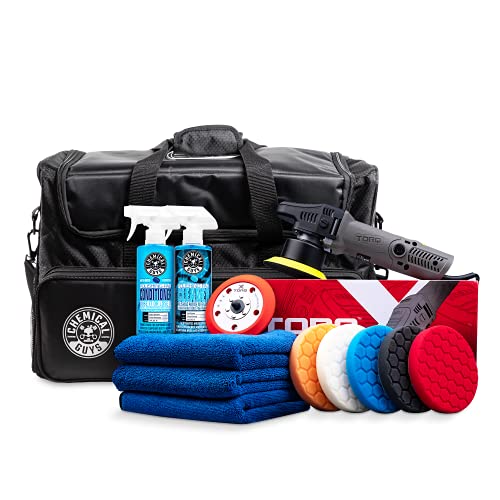 |
TORQ TORQX Random Orbital Polisher Kit Best Starter Kit 8mm orbit, 700W motor, includes pads and backing plate kit |
9.0 | 🛒 Check Price |
 |
Adam's Polishes SW15 Swirl Killer Polisher Best Value Pick 15mm orbit, 900W motor, digital speed display, 1-6 settings |
8.8 | 🛒 Check Price |
 |
DEWALT DWP849X Variable Speed Polisher Best for Heavy Correction 12 amp motor, 0-600 to 3500 RPM variable speed, rotary action |
8.6 | 🛒 Check Price |
 |
AVID POWER Cordless Buffer Polisher Best Cordless 20V battery, variable speed, includes two batteries and pads |
8.2 | 🛒 Check Price |
1. Rupes BigFoot LHR 15 Mark III: Best Overall
The Rupes LHR 15 Mark III is the polisher I reach for when the job actually matters. The 15mm orbit is the sweet spot for cars, big enough to cover a panel quickly and remove moderate swirls in one pass, yet small enough to stay controllable on curves and edges. What sets it apart is refinement. The motor pulls through hard spots without bogging, the head stays planted, and vibration is so low that a full day of correction doesn’t leave your hands buzzing. The progressive speed dial lets you feather in power on a vertical panel instead of slamming straight to full tilt.
The honest weakness is size and reach. The head is taller and heavier than a compact palm polisher, so getting into door handle recesses, mirror bases, and tight bumper sections means switching to a smaller tool or going by hand. It also rewards the matching Rupes pad and liquid system, and straying to random pads can dull its famous finishing quality. If you want one machine that does almost everything beautifully, this is it.
- True 15mm random orbit throw for fast, even one-step correction
- Front-mounted ergonomic grip and low vibration over long sessions
- Wide compatibility with Rupes blue and yellow foam system
Pros: Smoothest balance and lowest vibration in the test; Genuinely paint-safe yet corrects fast; Build quality holds up to daily pro use
Cons: Heavier head than palm-style units; Bulky in tight panel gaps and mirror areas
2. Griot's Garage G9 Random Orbital Polisher: Best for Most People
The Griot’s Garage G9 is the polisher I recommend to the largest share of people because it gives you near-professional results without demanding professional technique. The 900W motor is the headline. Lean into a panel with real pressure and the pad keeps rotating instead of stalling, which is exactly where cheaper machines quit. Paired with the 15mm orbit, it clears swirls and light oxidation quickly, and the soft-start means the pad never jumps and slings compound across your fender on power-up.
Where it gives up ground to the Rupes is refinement. There’s a touch more vibration through the body over a long session, and the cord is on the stiff side, which you notice when you’re working around the roof and trunk. Those are small complaints against how much capability you get and how forgiving it’s for a newer detailer. For a do-it-yourself owner who wants results that look professional, the G9 is the smart default.
- Powerful 900W motor resists bogging under pad pressure
- 15mm throw corrects efficiently while staying beginner-friendly
- Soft-start and trigger lock for steady, fatigue-free passes
Pros: Torque to spare for heavier correction; Comfortable grip and predictable handling; Backed by a strong lifetime support reputation
Cons: Slightly more vibration than the Rupes; Cord can feel stiff in cold garages
3. Rupes BigFoot Nano iBrid Long Neck: Best for Tight Spots
The Rupes iBrid Nano is the specialist that earns its keep the moment you hit the parts a big machine can’t reach. The long neck and small head slip behind door handles, onto A and B pillars, around mirror caps, and into bumper creases where a full-size polisher just bumps and skips. Swapping between the 12mm head for slightly larger sections and the 3mm head for pinpoint spot correction means you can finish an entire car to a uniform shine instead of leaving dull patches in the hard-to-reach zones.
The flip side is obvious. This isn’t the tool for correcting a hood or roof. The small head and shorter throw make wide flat panels slow and tedious, so it works best as a second machine alongside a 15mm unit rather than a standalone. Battery life under polishing load is also modest, so for longer jobs you’ll want it plugged in. As a dedicated detail polisher, though, nothing else here matches its reach.
- Swappable 12mm and 3mm heads for panels and pillars alike
- Long neck reaches mirrors, handles, and B-pillars with ease
- Runs corded for endurance or on battery for full mobility
Pros: Unmatched access to tight and curved areas; Two orbit sizes cover spot and detail work; Light and easy to control one-handed
Cons: Not built for correcting large flat panels fast; Battery runtime is limited under load
4. TORQ TORQX Random Orbital Polisher Kit: Best Starter Kit
The TORQ TORQX is built for the person buying their very first polisher, and it does that job well. Because it ships as a kit with pads and a backing plate, there’s no guesswork about what to add, and the forced rotation design keeps the pad spinning even on tighter curves where a free-spinning orbital might stall. That stall prevention is genuinely useful for a beginner, since a stalled pad just smears product instead of cutting it. The 8mm orbit is short and gentle, which makes this among the most paint-safe machines on the list.
That safety is also the limitation. The short 8mm throw means correction is slower, so heavier swirls and oxidation take more passes than they would on a 15mm machine. The body also feels a little heavier than you expect for such a modest orbit. If your goal is mostly applying wax and sealant and tackling light defects, it’s an easy and confidence-building first tool. Serious correction will eventually have you wanting more reach.
- Forced rotation design prevents pad stalling on curves
- Complete kit ships with pads and backing plate ready to use
- Simple six-speed dial that’s easy to learn on
Pros: Everything needed to start in one box; Forced rotation keeps the pad turning consistently; Very hard to damage paint with it
Cons: 8mm orbit corrects slower than long-throw units; Heavier feel than its small throw suggests
5. Adam's Polishes SW15 Swirl Killer Polisher: Best Value Pick
The Adam’s SW15 Swirl Killer delivers the long-throw 15mm experience that does the heavy lifting on swirl removal, and it does so as one of the better all-round packages you can hand a keen amateur. The 900W motor has the muscle to keep the pad rotating under correction pressure, and the digital speed display is more useful than it sounds. Being able to see and repeat an exact speed setting helps you stay consistent across panels, which is half the battle when you’re chasing an even finish.
The drawbacks are practical rather than performance-based. The stock backing plate is sized around larger pads, so if you like running smaller five-inch pads for control on curves you’ll want to add a smaller plate. After-sale support has also been hit or miss for some owners, which is worth knowing before you buy. None of that changes the core truth: as a 15mm long-throw machine that corrects quickly and feels good in hand, it offers a lot of capability for the money.
- Long-throw 15mm orbit for fast swirl removal
- Digital display shows the exact selected speed
- Strong motor handles pressure without bogging down
Pros: Long-throw performance that punches above its class; Digital speed readout aids consistency; Comfortable grip for extended use
Cons: Customer support response can be slow; Stock backing plate suits larger pads best
6. DEWALT DWP849X Variable Speed Polisher: Best for Heavy Correction
The DEWALT DWP849X is the outlier here, and I include it on purpose. It’s a rotary polisher rather than a dual action orbital, which means the pad spins on a single axis with enormous torque. For badly neglected paint, deep scratches, and stubborn oxidation that a gentle orbital would chew on for an hour, this machine cuts it in a fraction of the time. The 12 amp motor simply doesn’t bog, and the broad variable speed range lets a skilled user dial in everything from aggressive cutting to careful refining.
The serious caveat is right there in the action. Because all that energy concentrates on one spinning axis, a rotary generates heat fast and can strike through clear coat or burn an edge in seconds if you linger or tilt it wrong. This isn’t a beginner tool, and it’s the opposite of the forgiving orbitals above. If you understand pad pressure and panel mapping and you face genuinely heavy correction work, it’s unbeatable. If you’re still learning, choose one of the dual action machines and come back to this later.
- High-torque 12 amp motor for severe oxidation and deep defects
- Wide variable speed range from gentle to aggressive cutting
- Rugged build aimed at long professional shifts
Pros: Cuts heavy defects faster than any dual action here; Tremendous torque that never bogs; Durable, serviceable, proven workhorse
Cons: Rotary action can burn paint if misused; Steeper learning curve, not beginner-safe
7. AVID POWER Cordless Buffer Polisher: Best Cordless
The AVID POWER cordless polisher answers a real need, which is polishing where dragging a cord is a hassle, like a driveway with no nearby outlet, an RV roof, or a quick touch-up away from the garage. It ships with two 20V batteries so you can keep one charging while the other works, the body is light enough to run one-handed for long stretches, and the variable speed makes it easy to apply wax, sealant, and spray products evenly. For maintenance polishing and protection work, it’s a genuinely convenient tool.
Be clear-eyed about what it isn’t. Under actual correction load the battery runs down quickly, so big jobs mean frequent swaps and a lot of waiting on the charger. The throw and torque also fall short of the corded 15mm machines, so it struggles with anything beyond light swirls and hazing. Treat it as a convenience and finishing tool rather than a correction machine, and it earns its spot. Ask it to do heavy paint correction and it’ll frustrate you.
- Fully cordless freedom with two included batteries
- Variable speed control for waxing and light defect work
- Lightweight body that’s easy to maneuver one-handed
Pros: Total cord-free mobility around the whole car; Includes two batteries and a pad set; Light and approachable for casual use
Cons: Battery drains quickly under correction load; Lacks the throw and torque for serious swirl removal
Frequently Asked Questions
What is the difference between an orbital polisher and a rotary polisher?
An orbital polisher, usually called a dual action or DA, both spins and wobbles the pad in a random orbit, which spreads heat across the paint and makes it very hard to burn through clear coat. A rotary spins the pad on one fixed axis with far more torque, so it cuts heavy defects faster but builds heat quickly and can strike through paint if you linger. For almost every car owner and most enthusiasts, a dual action orbital is the safer and smarter choice. Reach for a rotary only when you have severe oxidation and the experience to control the heat.
Can a beginner safely use an orbital polisher on car paint?
Yes, and that’s exactly what dual action orbitals are designed for. The random orbit motion is inherently forgiving, so even if you pause too long in one spot the machine is very unlikely to damage the clear coat. Start at a lower speed, keep the pad flat against the panel, use light to moderate pressure, and keep the machine moving in overlapping passes. Practice on a less visible panel like a lower door first. The biggest beginner mistakes are running the machine too dry on product and tilting it on an edge, both of which are easy to avoid once you know to watch for them.
What orbit or throw size is best for polishing a car?
For general car polishing, a 15mm orbit is the sweet spot. It moves enough product across the panel to correct swirls quickly while staying controllable on curves and panel edges. An 8mm or 12mm throw is gentler and more controllable, which suits tight areas and nervous beginners but corrects more slowly. A 21mm throw covers ground fastest and suits large flat panels but feels less precise near edges and mirrors. Many serious detailers own a 15mm machine for the bulk of the car and a small-throw tool for the tight spots.
Do I need special pads and compound, or just the polisher?
You need pads and a polishing liquid as well as the machine, because the polisher only provides motion. The pad and the compound or polish do the actual correcting. A typical setup uses a cutting pad with a heavier compound to remove defects, then a softer finishing pad with a fine polish to refine the gloss. Match the backing plate size to your pads, and replace pads when they clog or harden. Some machines on this list ship as kits with pads included, which removes the guesswork for a first-time buyer.
How long does it take to polish a whole car with an orbital polisher?
For a single-stage polish on a car in fair condition, plan on roughly three to six hours including the wash, clay, and taping. A full two-stage correction with a separate cutting pass and finishing pass on neglected paint can take a full day or more. Long-throw 15mm machines speed things up considerably compared to short 8mm orbitals, and a more powerful motor that doesn’t bog under pressure also saves time. Don’t rush the prep, since clean, decontaminated paint is what lets the polisher actually cut evenly instead of dragging grit around.
Our Verdict
For most car owners the Rupes BigFoot LHR 15 Mark III is the top pick, delivering the lowest vibration, the most refined finish, and genuine paint-safe correction power in one polished package. If you want nearly the same capability with even more low-end torque and a more forgiving price-to-performance balance, the Griot’s Garage G9 is the runner up and the machine I steer most do-it-yourself detailers toward. Pair either with a small-throw tool like the Rupes iBrid Nano for tight areas, and you can correct an entire car to a swirl-free, wet-looking shine.