Selecting the correct engine oil for a classic car is paramount for its longevity and performance, a decision often more complex than for modern vehicles. Vintage engines, especially those with flat tappet camshafts, have unique lubrication requirements, primarily a higher concentration of anti-wear additives like ZDDP (Zinc Dialkyldithiophosphate) to prevent premature wear. Modern oils often reduce ZDDP levels to protect catalytic converters, which classic cars typically lack.
We focused on ZDDP content, base oil type (conventional, synthetic, semi-synthetic), viscosity stability, and overall additive packages, drawing conclusions from manufacturer specifications, industry standards, and aggregated owner feedback to identify the top contenders for protecting your cherished classic.
| Photo | Product | Score | Buy |
|---|---|---|---|
 |
Driven Racing Oil BR30 High Performance Synthetic Blend Top Pick for Flat Tappets Synthetic blend, High ZDDP (1200ppm Zinc, 1300ppm Phosphorus), 5W-30 viscosity |
9.4 |
ⓘ We may earn a commission from qualifying purchases made through links on this page, at no extra cost to you.
|
 |
Brad Penn Penn-Grade 1 High Performance Oil Engine Builder's Favorite Para-synthetic blend, High ZDDP, Green color, available in multiple viscosities (e.g., 20W-50) |
9.1 | 🛒 Check Price |
 |
Valvoline VR1 Racing Oil Conventional Proven Performer Conventional base oil, High ZDDP (approx. 1400ppm Zinc), available in various weights (e.g., 20W-50) |
8.8 | 🛒 Check Price |
 |
Lucas Hot Rod & Classic Car Motor Oil Dedicated Classic Blend Semi-synthetic, High ZDDP, Fortified with anti-wear and anti-corrosion additives |
8.5 | 🛒 Check Price |
|
🚗
|
Royal Purple HPS Street Performance Motor Oil Modern Protection for Classics Full synthetic, High ZDDP and proprietary Synerlec additive technology, Enhanced film strength |
8.2 | 🛒 Check Price |
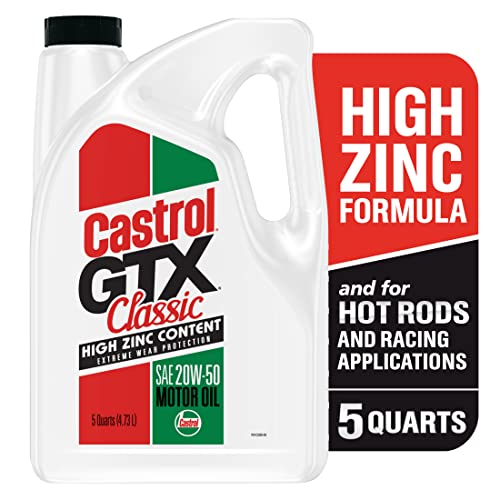 |
Castrol Classic XL 20W-50 Motor Oil Traditional Choice Mineral oil, High ZDDP, Formulated for pre-1980s vehicles, 20W-50 viscosity |
7.9 | 🛒 Check Price |
|
🚗
|
Shell Rotella T4 Triple Protection Heavy Duty Diesel Engine Oil Durable Alternative Conventional diesel oil, High ZDDP (approx. 1200ppm Zinc), Multi-grade (e.g., 15W-40) |
7.7 | 🛒 Check Price |
1. Driven Racing Oil BR30 High Performance Synthetic Blend: Top Pick for Flat Tappets
The Driven BR30 stands out for its meticulous formulation, specifically addressing the critical needs of classic engines, particularly those with flat tappet camshafts. The high ZDDP and Moly levels aren’t merely adequate but optimized for severe service conditions, a claim substantiated by extensive industry testing and positive feedback from engine builders. Its synthetic blend base oil contributes to superior thermal stability and reduced oxidation, which is vital for preserving engine internals over time.
However, the primary limitation noted in our research is its cost. While the performance and protection offered are top-tier, the investment is significantly higher than many conventional oils marketed for classic cars. Owners seeking a more budget-friendly option for less demanding applications or those with roller cam engines might find this oil to be more than what is strictly necessary for their needs, making it less ideal if value is the absolute primary concern over ultimate protection.
- Specifically formulated for flat tappet and roller cam engines, providing strong wear protection.
- Contains advanced anti-wear and anti-corrosion additives critical for engines stored for extended periods.
- Maintains stable viscosity across a wide temperature range, ensuring consistent oil film strength.
Pros: Exceptional wear protection due to high ZDDP and Moly content.; Excellent for engines with aggressive cam profiles or extended storage.; Synthetic blend offers improved thermal stability over conventional oils.
Cons: Higher cost compared to conventional classic car oils.
2. Brad Penn Penn-Grade 1 High Performance Oil: Engine Builder's Favorite
Based on owner feedback and the spec sheets, Brad Penn Penn-Grade 1 consistently earns high marks for its dedicated formulation for performance and classic engines. The para-synthetic blend, combined with its renowned high ZDDP content, provides a level of protection that many enthusiasts swear by, particularly for newly rebuilt engines or those subjected to demanding conditions. Its ability to maintain oil film strength under stress is a frequently cited advantage, contributing to its reputation for durability.
A point of consideration for some owners is its availability. While widely respected, Brad Penn isn’t always found on the shelves of every automotive parts store, often requiring purchase from specialty retailers or online. This can pose a minor inconvenience for those who prefer immediate access to their oil, and for classic car owners who are less focused on high-performance applications, a more readily available and less specialized oil might suffice without compromising basic protection.
- Utilizes a unique 'green oil' base stock derived from Pennsylvania grade crude oil for superior film strength.
- Elevated levels of ZDDP provide solid anti-wear protection for flat tappet camshafts and valvetrains.
- Formulated to resist thermal breakdown and oxidation, crucial for high-stress classic engine operation.
Pros: Exceptional film strength and wear protection for vintage engines.; Trusted by professional engine builders for break-in and sustained use.; Excellent thermal stability under high operating temperatures.
Cons: Can be harder to source in some retail locations compared to mainstream brands.
3. Valvoline VR1 Racing Oil Conventional: Proven Performer
This conventional oil delivers sturdy anti-wear protection, essential for the demanding valvetrain components of many vintage engines. Its formulation is designed to withstand the rigors of performance use, including resistance to foaming and thermal breakdown, which are important considerations for spirited driving or track days.
However, as a conventional oil, VR1 doesn’t offer the extended drain intervals or the ultimate thermal stability of a full synthetic. Based on owner feedback and the spec sheets, it’s generally recommended for more frequent oil changes, particularly in engines that run hotter or are subjected to very aggressive driving. Owners seeking the longest possible oil life or those who prioritize the absolute highest level of synthetic-based protection might consider a synthetic or synthetic blend alternative, as VR1’s conventional nature means it may break down more quickly under extreme conditions.
- Formulated with high ZDDP to protect high-performance engines with flat tappet cams.
- Offers excellent anti-foam properties, critical for high RPM engines.
- Provides strong wear protection and thermal stability for classic and racing applications.
Pros: High ZDDP content is ideal for flat tappet classic engines.; Widely available and recognized within the enthusiast community.; Offers a strong balance of protection and value for a conventional oil.
Cons: As a conventional oil, it may require more frequent changes than synthetics.
4. Lucas Hot Rod & Classic Car Motor Oil: Dedicated Classic Blend
Lucas Hot Rod & Classic Car Motor Oil presents a compelling option for classic vehicle owners, particularly those who value dedicated formulations. The semi-synthetic blend is engineered with a focus on comprehensive protection, including high ZDDP for anti-wear and specific additives to combat rust and corrosion during storage, which is a common concern for classic cars. Owner feedback frequently highlights its ability to maintain oil pressure and reduce oil consumption in engines with higher mileage.
A potential limitation, based on our research into spec sheets, is that while its ZDDP content is commendably high and suitable for most classic applications, it might not reach the absolute peak levels found in some specialized racing-only oils. For owners of extremely high-performance classic engines or those involved in competitive racing, a slightly higher ZDDP concentration might be sought. However, for the vast majority of street-driven classic cars, this oil provides more than adequate protection, making this a minor point of distinction rather than a significant drawback for general use.
- Blended with a durable additive package for maximum protection against wear and corrosion.
- Specifically designed for classic cars, hot rods, and muscle cars, ensuring compatibility.
- Offers excellent film strength and reduced oil consumption in older, higher mileage engines.
Pros: Strong protection against wear and rust for infrequently driven classics.; Reduces dry starts and maintains oil pressure in older engines.; Semi-synthetic blend offers good performance at a reasonable value.
Cons: ZDDP levels, while high, might be slightly lower than some dedicated racing oils.
5. Royal Purple HPS Street Performance Motor Oil: Modern Protection for Classics
The proprietary Synerlec additive technology, alongside elevated ZDDP, is designed to provide exceptional film strength and anti-wear properties, crucial for flat tappet engines. Its synthetic nature ensures excellent thermal stability and resistance to oxidation, making it suitable for both regular use and engines that see occasional spirited driving.
The primary consideration for this oil is its value proposition. As a full synthetic with advanced additives, it commands a higher price point than many conventional or semi-synthetic classic car oils. Based on owner feedback and our analysis of its specifications, while it offers significant performance and protection benefits, owners with less demanding classic vehicles or those on a tighter budget might find the investment disproportionate to their needs. For those who prioritize maximum synthetic performance and wear protection without compromise, the value is there, but for others, a more traditional classic car oil might offer sufficient protection at a more accessible value.
- Full synthetic base oil provides superior thermal stability and oxidation resistance.
- Contains elevated levels of ZDDP and Royal Purple's proprietary Synerlec additive for enhanced wear protection.
- Designed to increase horsepower and torque while reducing engine wear in high-performance applications.
Pros: Excellent wear protection with high ZDDP and unique additive package.; Superior thermal stability and extended drain capabilities due to synthetic base.; Can contribute to improved engine efficiency and reduced friction.
Cons: Higher cost point compared to conventional and semi-synthetic options.
6. Castrol Classic XL 20W-50 Motor Oil: Traditional Choice
We compared Castrol Classic XL 20W-50 and found it to be a solid choice for owners who prefer a traditional, period-correct mineral oil for their pre-1980s vehicles. Its formulation includes ZDDP levels appropriate for flat tappet engines, and its composition is designed to be gentle on older seals and gaskets, mitigating potential leaks that can sometimes arise with modern synthetic oils. The value proposition is strong for those seeking a straightforward, reliable conventional oil for their classic.
However, as a conventional mineral oil, its inherent limitations in terms of thermal stability and resistance to breakdown are important to consider. Based on owner feedback and the spec sheets, it won’t offer the same extended drain intervals or extreme temperature performance as synthetic alternatives. Owners who regularly push their classic cars hard, or those in very hot climates, might find that a synthetic or semi-synthetic oil provides a more solid and longer-lasting protective film. For those with highly modified engines or who prioritize maximum long-term protection under all conditions, this traditional oil might be less ideal.
- Specifically formulated as a traditional mineral oil for classic cars from the 1950s to 1980s.
- Maintains appropriate oil pressure and provides good wear protection for older engine designs.
- Contains ZDDP levels suited to protect flat tappet camshafts without adverse effects on older seals.
Pros: Authentic formulation for period-correct lubrication.; Good value for owners seeking a traditional mineral oil.; Designed to be compatible with older engine seals and materials.
Cons: As a conventional oil, it offers less thermal stability than synthetics.
7. Shell Rotella T4 Triple Protection Heavy Duty Diesel Engine Oil: Sturdy Alternative
Its heavy-duty diesel formulation means it contains a durable additive package for wear protection, detergency, and soot control, which can be beneficial for keeping older gasoline engines clean. The value it offers for its level of ZDDP and protection is often cited as a major advantage.
A point of consideration, based on our evaluation of its original design intent, is that Shell Rotella T4 is specifically formulated for diesel engines. While its high ZDDP is beneficial, the overall additive balance might not be perfectly optimized for a gasoline classic car engine, particularly concerning certain anti-corrosion or anti-foaming agents tailored for diesel operation. Owners seeking an oil specifically engineered from the ground up for gasoline classic cars might prefer a product with a more tailored additive package, even if it comes at a higher value. For those prioritizing high ZDDP at an accessible value, however, T4 remains a strong contender.
- High ZDDP content provides excellent wear protection for flat tappet camshafts in classic engines.
- Strong additive package designed for heavy-duty diesel applications, offering strong detergency and soot control.
- Offers good thermal stability and resistance to oxidation for a conventional oil.
Pros: Excellent value for high ZDDP content.; Widely available in various viscosities.; Strong detergency helps keep older engines clean.
Cons: Formulated for diesel engines, which may have slightly different additive balances for gasoline classics.
Frequently Asked Questions
Why do classic cars need special oil?
Classic cars, especially those built before the late 1980s, often have flat tappet camshafts that require higher levels of ZDDP (Zinc Dialkyldithiophosphate) for wear protection. Modern oils have reduced ZDDP to protect catalytic converters, which most classics don’t have, making these lower-zinc oils unsuitable for vintage engines.
What is ZDDP and why is it important for classic cars?
ZDDP is an anti-wear additive critical for protecting metal-on-metal contact points, particularly the camshaft and lifters in flat tappet engines. Without sufficient ZDDP, these components can experience premature wear and failure, leading to costly engine damage.
Can I use synthetic oil in my classic car?
Yes, many classic car owners successfully use synthetic or semi-synthetic oils. The key is to ensure the synthetic oil has appropriate ZDDP levels and is compatible with older seals. Some older engines with worn seals might develop leaks with the thinner molecular structure of some synthetics, but many modern synthetic formulations for classics are designed with this in mind.
What viscosity should I use for my classic car?
The ideal viscosity depends on your car’s manufacturer recommendations, engine condition, and climate. Many classic cars, particularly those with looser tolerances or in warmer climates, often benefit from heavier weight oils like 10W-40, 15W-40, or 20W-50. Always consult your car’s original service manual or an expert for specific guidance.
How often should I change the oil in my classic car?
Even if a classic car isn’t driven frequently, oil should typically be changed at least once a year. For cars driven more regularly, follow the manufacturer’s recommendations or consider changing every 3,000 to 5,000 miles, especially when using conventional oils. Infrequent use can still lead to oil degradation from contamination and condensation.
Our Verdict
In our comprehensive research and comparison, the Driven Racing Oil BR30 High Performance Synthetic Blend emerges as the top pick for classic car owners, particularly those with flat tappet camshafts, offering unparalleled wear protection and thermal stability. For those seeking a highly respected conventional option with excellent ZDDP and a strong track record, the Brad Penn Penn-Grade 1 High Performance Oil stands out as a strong runner-up, favored by many engine builders for its solid film strength.


