The 5th gen 4Runner, built from 2010 through 2024, runs Toyota’s tough 1GR-FE 4.0L V6, an engine that happily clears 250,000 miles when it’s fed the right oil. Toyota calls for 0W-20 full synthetic on 2011 and newer trucks and 5W-30 on the 2010 model, and that grade matters: too thin in a heavy, off-road, towing rig and you lose protection, too thick and you fight the variable valve timing system that the 1GR-FE depends on.
We dug into the oils 4Runner owners actually run, the ones that hold up to trail crawling in the heat, freeway towing, and long Texas summers. Every pick below is a true full synthetic that meets the API SP and ILSAC GF-6 specs this engine needs. We ranked them on shear stability, cold-start flow, deposit control, and how well they handle stretched drain intervals. No fluff, just what protects this V6.
| Photo | Product | Score | Buy |
|---|---|---|---|
 |
Mobil 1 Extended Performance 0W-20 Full Synthetic Best Overall 0W-20 full synthetic, API SP, ILSAC GF-6, rated up to 20,000 mile drains |
9.5 |
ⓘ We may earn a commission from qualifying purchases made through links on this page, at no extra cost to you.
|
 |
Toyota Genuine Motor Oil 0W-20 Full Synthetic Best OEM Match 0W-20 full synthetic, meets Toyota factory spec for 2011 plus 1GR-FE |
9.3 | 🛒 Check Price |
 |
Pennzoil Platinum 0W-20 Full Synthetic Best for Clean Pistons 0W-20 full synthetic from natural gas, API SP, ILSAC GF-6A |
9.2 | 🛒 Check Price |
 |
Castrol EDGE 0W-20 Full Synthetic Best Film Strength 0W-20 full synthetic with fluid titanium technology, API SP |
9.0 | 🛒 Check Price |
 |
Valvoline Advanced Full Synthetic 0W-20 Best Value 0W-20 full synthetic, API SP, ILSAC GF-6A, added anti-wear additives |
8.8 | 🛒 Check Price |
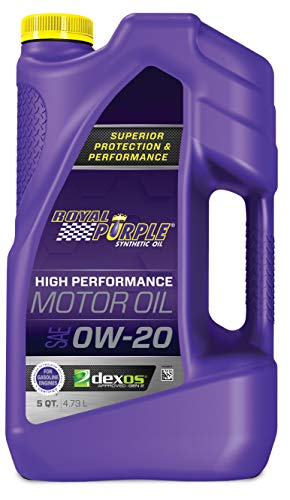 |
Royal Purple HMX 0W-20 High Mileage Full Synthetic Best High Mileage 0W-20 high-mileage full synthetic with Synerlec additive and seal conditioners |
8.6 | 🛒 Check Price |
 |
Amsoil Signature Series 0W-20 Full Synthetic Best for Long Drains 0W-20 full synthetic, API SP, rated up to 25,000 miles or one year |
8.4 | 🛒 Check Price |
1. Mobil 1 Extended Performance 0W-20 Full Synthetic: Best Overall
For the 1GR-FE in a 5th gen 4Runner, Mobil 1 Extended Performance 0W-20 is the pick we keep coming back to. The 4.0L V6 isn’t a high-stress turbo motor, but it lives a hard life in these trucks: low-speed crawling that builds heat with little airflow, plus highway towing that shears thinner oils. This formula resists that shear and keeps a stable film on the cam lobes and timing chain, which is exactly where the 1GR-FE shows wear when it’s run on weaker oil. Owners pulling valve covers at 150,000 plus miles consistently report clean, varnish-free internals.
The honest weakness is that you’re paying for headroom you may not use. If you’re a strict 5,000 mile, dealer-interval owner, a standard synthetic protects you just as well and the extended-drain chemistry is wasted. This oil earns its keep when you stretch intervals toward 8,000 to 10,000 miles or run the truck hard in heat. Stick to the factory 0W-20 grade unless you’re in extreme sustained heat, where a step to 5W-30 can make sense.
- Reinforced anti-wear additive system for high-mileage 1GR-FE protection
- Strong cold-crank flow for fast oil pressure on winter starts
- Holds viscosity through extended towing and trail heat cycles
Pros: Excellent shear stability under towing load; Very clean teardowns reported by high-mile 4Runner owners; Widely stocked, easy to find the correct 0W-20 grade
Cons: Premium tier oil, you pay for the extended drain rating; Overkill if you change oil every 5,000 miles anyway
2. Toyota Genuine Motor Oil 0W-20 Full Synthetic: Best OEM Match
If you want the safest, most boring correct answer for a 5th gen 4Runner, it’s the oil Toyota itself uses. Toyota Genuine 0W-20 is built to the precise specification this engine was engineered around, which means the variable valve timing actuators get the exact viscosity they expect at every temperature. That matters more than people think on the 1GR-FE, where the wrong oil weight is a common cause of cold-start rattle and rough VVT-i response. For owners still under powertrain warranty or who simply want their service history to read clean, this removes all doubt.
The trade-off is that it’s a conservative oil with a conservative drain rating. It isn’t chasing 20,000 mile intervals and it isn’t loaded with boutique additives. It just does the factory job reliably. Sourcing can also be a minor hassle since it’s most commonly found at dealer parts departments or in jug-and-filter kits rather than every auto store shelf. For a stock truck on factory intervals, that’s a small price to pay for total confidence on the road.
- Blended to the exact specification Toyota fills at the factory
- Keeps warranty and dealer service records perfectly aligned
- Tuned for the 1GR-FE variable valve timing system
Pros: Guaranteed correct spec, zero guesswork; Ideal for owners who want bone-stock maintenance; Reliable VVT-i operation, no lifter tick complaints
Cons: Not rated for the longest extended drains; Often only sold in bulk or at dealer parts counters
3. Pennzoil Platinum 0W-20 Full Synthetic: Best for Clean Pistons
Pennzoil Platinum’s signature is cleanliness, and that plays well with the 1GR-FE. The 4.0L V6 isn’t prone to sludge, but it does accumulate carbon over high mileage like any port-injected and direct-injected V6 of its era. The gas-to-liquid PurePlus base oil burns cleaner than many conventional synthetic bases, so ring lands and the top end stay noticeably tidy over the life of the truck. In cold climates the 0W-20 flows fast on startup, getting pressure to the cam towers quickly, which is when most wear actually happens.
Where it sits a notch below the top picks is extended-drain confidence. Pennzoil Platinum is a superb oil for normal and moderately stretched intervals, but if your goal is genuine 15,000 to 20,000 mile drains with oil analysis to back it, the Extended Performance and boutique tiers have more proven headroom. For a 4Runner owner changing oil on a sensible 6,000 to 8,000 mile schedule, this is a smart, clean-running, well-priced choice.
- PurePlus gas-to-liquid base oil for very low deposit formation
- Strong detergency keeps ring lands and intake clean
- Excellent cold flow for sub-zero winter starts
Pros: Outstanding piston and ring cleanliness; Smooth cold starts in freezing climates; Good value for a top-tier full synthetic
Cons: Slightly thinner feel at the top of its grade; Less marketed for extreme extended drains
4. Castrol EDGE 0W-20 Full Synthetic: Best Film Strength
Castrol EDGE leans on its Fluid Titanium technology, and the value for a 4Runner is most obvious when the truck is working. If you tow a trailer, load the roof rack, or climb long grades in the heat, oil film strength is what stands between metal and metal at the bearings and cam lobes. EDGE holds that film well under pressure and resists the thinning that thinner 0W-20s can show when the 1GR-FE is run hard for hours. For a truck that earns its keep rather than just commuting, that load resistance is genuinely useful.
The flip side is that the same strong formula can feel a touch firmer on extremely cold winter mornings compared to the lightest-flowing 0W-20s, though it still meets the cold-crank spec the engine needs. And for an owner who only does gentle around-town driving, the titanium additive story is more marketing than measurable benefit. Match this oil to how you use the truck: if you tow and load it, EDGE makes a lot of sense; if it’s a grocery-getter, a thinner pick serves you fine.
- Fluid Titanium additive resists film breakdown under load
- Holds pressure during heavy towing and grade climbs
- Maintains viscosity in sustained high-heat operation
Pros: Strong protection under towing and load; Resists thinning when the engine runs hot; Easy to source in the correct grade
Cons: Can feel firmer on very cold starts than the thinnest 0W-20s; Additive marketing outpaces real-world gains for light users
5. Valvoline Advanced Full Synthetic 0W-20: Best Value
Valvoline Advanced is the sensible workhorse for an owner who changes oil on a normal schedule and doesn’t want to overthink it. Valvoline loads this formula with extra anti-wear additives beyond what the spec demands, which is exactly the protection a high-mileage 1GR-FE benefits from at startup and during stop-and-go heat soak. It hits the API SP and ILSAC GF-6A targets the engine needs, controls deposits well, and is available at essentially every store, so you’re never stuck hunting for the right grade before an oil change.
It isn’t trying to be a 20,000 mile boutique oil, and that’s the honest limit. The base stock is good but not the natural-gas or PAO-heavy chemistry of the premium tier, so if you’re chasing very long analysis-backed drains, look higher up this list. For the large majority of 4Runner owners doing 5,000 to 7,500 mile changes, this delivers real full-synthetic protection without paying for headroom you won’t use, which is why it earns the value spot.
- 50 percent more anti-wear additives than required by spec, per Valvoline
- Reliable deposit and wear control for daily driving
- Consistent quality and easy availability everywhere
Pros: Strong protection for the value; Stocked at nearly every parts store; Solid choice for normal change intervals
Cons: Not positioned for the longest extended drains; Less premium base oil than the boutique tier
6. Royal Purple HMX 0W-20 High Mileage Full Synthetic: Best High Mileage
Once a 5th gen 4Runner crosses six figures, a high-mileage formula starts to make sense, and Royal Purple HMX is built for exactly that stage. Its Synerlec additive forms a stubborn film that clings to bearing and cam surfaces even after shutdown, which helps an older 1GR-FE survive the dry-start moment that does most of the cumulative wear. The added seal conditioners gently swell aging seals and gaskets, which can quiet a minor front-cover or valve-cover weep that older 4.0L engines sometimes develop. For a high-mile trail truck, that combination is reassuring.
The honest caveat is that all of that’s aimed at worn engines. On a low-mileage or nearly new 4Runner, the high-mileage chemistry and seal conditioners are simply not needed, and you’d be paying a premium for benefits the engine can’t use yet. It also sits above mainstream synthetics in cost. Save this one for the truck that has earned its miles, where the seal care and extra film strength actually pay off.
- Synerlec additive technology for tenacious film on worn surfaces
- Seal conditioners help quiet leaks on older 1GR-FE engines
- Strong wear protection for trucks past 100,000 miles
Pros: Excellent for high-mileage and slightly worn engines; Seal conditioners can reduce minor weeping; Very strong anti-wear film
Cons: Pricier than mainstream synthetics; Benefits are smaller on a low-mileage engine
7. Amsoil Signature Series 0W-20 Full Synthetic: Best for Long Drains
Amsoil Signature Series is the pick for the owner who wants to stretch oil changes far and back it with oil analysis. It carries a heavy-duty additive package and a solid synthetic base that resists oxidation through sustained heat, which is the failure mode that kills lesser oils on long intervals. For a 4Runner that tows regularly or sees severe service, or simply for an owner who hates frequent changes, the up-to-25,000-mile rating is real and well documented in used-oil reports. It protects the 1GR-FE as well as anything on this list while letting you change it far less often.
The catch is that you only capture its value if you actually run long intervals. Buy Signature Series and then dump it at 5,000 miles and you have spent boutique money on protection you threw away. It’s also a specialty oil, usually bought direct or through a dealer rather than grabbed off a shelf, so it takes a little planning. For the right high-interval, tow-heavy use case it’s excellent; for a frequent-change owner, a mainstream synthetic is the smarter buy.
- Heavy-duty additive package for very long drain intervals
- Excellent oxidation resistance in sustained heat
- Strong protection for towing and severe-service use
Pros: Best-in-class extended drain capability; Holds up superbly under towing and heat; Consistently strong oil analysis results
Cons: Premium boutique oil, sold mostly direct or by dealers; Wasteful if you still change oil every 5,000 miles
Frequently Asked Questions
What oil does a 5th gen 4Runner take?
The 5th gen 4Runner uses the 1GR-FE 4.0L V6, and Toyota specifies 0W-20 full synthetic for the 2011 through 2024 model years. The 2010 model, the first year of this generation, was originally specified for 5W-30. The crankcase holds roughly 6.3 quarts with a filter change, so a standard five-quart jug plus a single quart covers it. Always confirm the grade printed on your oil cap and in your owner’s manual, since that’s the spec the variable valve timing system was designed around.
Can I run 5W-30 instead of 0W-20 in my 4Runner?
On 2011 and newer 4Runners, 0W-20 is the factory grade and is what keeps the VVT-i system and warranty happy, so stick with it for normal use. Still, many owners in extreme sustained heat or those who tow heavy step up to 5W-30 for a thicker high-temperature film, and the 1GR-FE tolerates that well. It’s a common and safe choice in hot climates or for hard-working trucks. If you’re in moderate temperatures or want to keep things by the book, stay with 0W-20.
How often should I change the oil in a 5th gen 4Runner?
Toyota’s maintenance schedule calls for oil changes every 10,000 miles or 12 months under normal conditions when using full synthetic, with a tire rotation and inspection at the 5,000 mile mark. However, if you do a lot of short trips, trail crawling, dusty off-road driving, or towing, that counts as severe service and a 5,000 mile interval is the safer call. Many careful owners split the difference at 7,500 miles. The right interval depends on how hard you use the truck, not just the calendar.
Does the 1GR-FE engine burn or consume oil?
The 1GR-FE 4.0L V6 is known as one of Toyota’s more durable and low-consumption engines, and most stay full between changes well past 150,000 miles. Some higher-mileage examples begin to use a little oil, which is normal for any aging engine. If yours consumes more than you like, a high-mileage formula with seal conditioners can help, and checking the level at each fuel stop is a good habit on an older truck. Persistent heavy consumption is worth a closer mechanical look rather than just adding oil.
Is full synthetic worth it for the 4Runner, or is a blend fine?
Full synthetic is the right call for this engine and is what Toyota specifies for the 0W-20 grade. It flows faster on cold starts, resists the heat buildup that low-speed off-road driving creates, and holds its viscosity far better than a blend under towing load. The 1GR-FE protects best and lasts longest on a true full synthetic, and it also unlocks the longer drain intervals that offset the slightly higher up-front outlay. For a truck you plan to keep for the long haul, full synthetic is the sensible choice.
Our Verdict
For the vast majority of 5th gen 4Runner owners, Mobil 1 Extended Performance 0W-20 is our top pick: it nails the factory grade, shrugs off towing and trail heat, and keeps the 1GR-FE clean over the long haul with proven extended-drain headroom. If you’d rather run the exact oil Toyota fills at the factory for total warranty and VVT-i confidence on the road, Toyota Genuine 0W-20 is the runner up and an outstanding stock choice. Match either one to how you actually drive your truck and the 4.0L V6 will reward you with the kind of mileage these 4Runners are famous for.


