Watching your oil pressure gauge sag at idle or seeing the warning light flicker at a stop sign is among the most stressful moments for any car owner. On a high-mileage engine, low oil pressure usually means worn bearing clearances, a tired oil pump, or oil that has sheared down too thin to hold pressure. A good oil additive won’t rebuild a dying engine, but the right one can raise readings several points, quiet a noisy lifter, and buy you real time while you plan a proper fix.
We focused on additives that actually move the needle for pressure, not just engine cleaners or fuel treatments. That means viscosity stabilizers, high-pressure film boosters, and seal conditioners that reduce internal leak-down. Below are seven products that real owners turn to when the gauge starts dropping, ranked best first, with honest notes on where each one falls short.
| Photo | Product | Score | Buy |
|---|---|---|---|
 |
Lucas Oil Heavy Duty Oil Stabilizer Best Overall Petroleum-based viscosity stabilizer, mixes up to 20 percent with motor oil |
9.5 |
ⓘ We may earn a commission from qualifying purchases made through links on this page, at no extra cost to you.
|
 |
Liqui Moly Motor Oil Saver Best Seal Conditioner Seal-swelling additive, one 300 ml can treats up to 5 to 6 liters of oil |
9.2 | 🛒 Check Price |
 |
Archoil AR9100 Friction Modifier Best Friction Reducer Nanoborate friction modifier, 16 oz treats up to 10 quarts of oil |
9.0 | 🛒 Check Price |
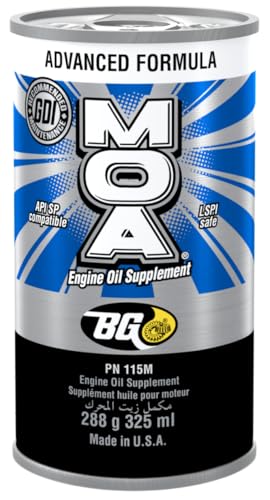 |
BG MOA Motor Oil Additive Best Protective Additive 11 oz can, fortifies oil with anti-wear and anti-oxidant additives |
8.8 | 🛒 Check Price |
 |
Sea Foam Motor Treatment SF16 Best for Sludge Cleanup 16 oz multi-use treatment, safe in oil, fuel, and crankcase |
8.6 | 🛒 Check Price |
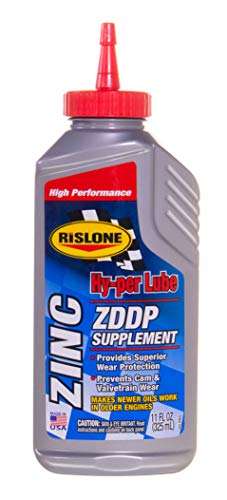 |
Rislone Engine Oil Supplement with Zinc Best for Older Engines 11 oz bottle, adds zinc and phosphorus anti-wear protection |
8.4 | 🛒 Check Price |
 |
STP High Mileage Oil Treatment Best Value Pick Viscosity-boosting treatment formulated for engines over 75,000 miles |
8.0 | 🛒 Check Price |
1. Lucas Oil Heavy Duty Oil Stabilizer: Best Overall
Lucas Heavy Duty Oil Stabilizer is the additive most people reach for first when oil pressure starts dropping, and for good reason. Its heavy polymer base raises the effective viscosity of your oil, which directly translates to a stronger film across worn bearing clearances. In a tired engine that bleeds pressure at hot idle, adding roughly a quart in place of a quart of oil often pushes the gauge back up a few points and calms a ticking lifter within a drive cycle or two. It blends with conventional and synthetic oils without fuss, which makes it easy to use at your next change or as a top-off.
The honest weakness is that this stuff is genuinely thick, almost like honey, and that cuts both ways. In hot weather and on a worn motor it’s a hero, but in a cold northern winter an overdose can make cold cranking harder and slow oil flow on startup when your engine is most vulnerable. Stick to the recommended ratio, lean toward a smaller dose in cold climates, and remember it masks symptoms rather than fixing worn parts.
- Thick polymer formula clings to bearings and cam lobes to hold a stronger oil film
- Raises hot idle oil pressure on worn engines by stabilizing viscosity
- Compatible with petroleum, synthetic, and blended motor oils
Pros: Noticeably lifts gauge readings on high-mileage engines, especially when hot; Quiets lifter tick and reduces dry-start clatter; Widely available and trusted by mechanics for decades
Cons: Very thick, so it can over-thicken oil in cold climates if overdosed; Doesn’t clean or address sludge buildup
2. Liqui Moly Motor Oil Saver: Best Seal Conditioner
Liqui Moly Motor Oil Saver takes a different and smarter angle than the thickeners. Instead of just bulking up viscosity, it conditions and gently swells the rubber seals inside your engine. When oil pressure drops because seals have hardened and shrunk with age, oil leaks past them internally and the gauge reflects it. By restoring seal flexibility, this additive cuts that leak-down so more pressure stays in the system where it belongs. It’s a precise, well-engineered product from a brand with a strong reputation, and the single-can dose makes it almost foolproof.
The catch is that it only helps when seals are the actual culprit. If your low pressure comes from sloppy bearing clearances or a worn oil pump, swelling seals won’t rescue you and you may see little change. It also works slowly, so don’t expect an overnight jump on the gauge. Give it several hundred miles, ideally paired with a viscosity stabilizer if your engine has multiple issues, and judge results over a tank or two rather than a single drive.
- Regenerates and softens hardened seals to cut internal oil leak-down
- Reduces pressure loss caused by shrunken valve stem and crank seals
- German formula compatible with all common motor oils
Pros: Restores seal elasticity, which can recover lost pressure on older engines; Helps slow oil consumption and external weeping at the same time; Precise single-can dose, hard to over-apply
Cons: Works on seal-related loss, not on worn bearing clearances; Effect builds gradually over hundreds of miles rather than instantly
3. Archoil AR9100 Friction Modifier: Best Friction Reducer
Archoil AR9100 is a favorite in the diesel and heavy-duty world, and it earns a spot here because friction and heat are silent enemies of oil pressure. Its nanoborate chemistry plates onto metal surfaces, smoothing the microscopic peaks where parts grind against each other. Less friction means lower operating temperatures, and cooler oil holds its viscosity better, which helps the gauge stay stable rather than sagging as the engine heats up. Owners frequently report quieter operation and smoother cold starts after treating with it.
Where AR9100 is honest about its limits is that it isn’t a thickener. If your pressure is low purely because worn clearances are dumping oil, a friction modifier alone won’t bulk the film up the way a stabilizer does. It shines most as part of a strategy, reducing wear and heat so your base oil performs as it should. Dose it correctly to your oil capacity, because under-dosing wastes the benefit and over-dosing doesn’t help any further.
- Nanoborate technology coats metal to reduce friction and wear
- Lowers operating temperature, which helps oil hold viscosity and pressure
- Treats engine oil, and also works in fuel and gear systems
Pros: Reduces metal-on-metal friction that drags pressure and accelerates wear; Helps engines run cooler and quieter under load; A little goes a long way, so one bottle covers multiple changes
Cons: Not a viscosity thickener, so the pressure gain is indirect; Premium product that demands correct dosing to see value
4. BG MOA Motor Oil Additive: Best Protective Additive
BG MOA is the additive your dealership service writer probably recommends, and it’s built around protection rather than band-aids. As oil ages and shears, it loses the anti-wear and anti-oxidant additives that keep viscosity stable, and that thinning is a common reason a previously healthy gauge starts creeping down between changes. MOA reloads those additives, helping your oil resist breakdown and hold its grade longer. On an engine where pressure loss is driven by tired oil rather than tired metal, that stability shows up as a steadier reading.
The honest limitation is that MOA is a guardian, not a rescuer. If you’re already deep into worn-bearing territory, fortifying the oil will help it last but it won’t bulk up the film the way a heavy stabilizer does. It’s also distributed largely through professional channels, so you may have to hunt a bit compared to shelf brands. Treat it as the smart move at every oil change to prevent pressure decline rather than a dramatic one-shot cure.
- Replenishes anti-wear additives that deplete in aging oil
- Stabilizes oil against thermal breakdown and viscosity loss
- Trusted shop-grade formula used in professional service bays
Pros: Protects against the oil thinning that causes pressure to fall; Keeps the engine cleaner so pickup screens stay clear; Professional reputation backed by service-shop use
Cons: Sold mainly through shops, so availability can vary; More preventive than a dramatic instant pressure fix
5. Sea Foam Motor Treatment SF16: Best for Sludge Cleanup
Sometimes low oil pressure isn’t about worn metal at all but about gunk. Sludge and varnish from years of neglected changes can coat the oil pickup screen and narrow internal passages, which starves the pump and drops your reading. Sea Foam earns its place as the cleanup specialist here. Added to the crankcase for a few hundred miles before an oil change, it dissolves deposits, frees sticky lifters, and reopens flow paths so the pump can actually deliver pressure. On a neglected engine, that cleanup alone can recover readings you assumed were lost to wear.
The weakness to respect is that Sea Foam is a solvent-style cleaner, so it slightly thins the oil while it works, which is the opposite of what you want long term for pressure. Use it as a short pre-change treatment, then drop fresh oil and a stabilizer afterward. There’s also a small risk on very dirty engines that loosened sludge can briefly clog a passage, so on a badly neglected motor, change the oil and filter promptly after the cleaning run.
- Dissolves sludge and varnish that can clog oil passages and pickup screens
- Frees sticky lifters and rings that restrict oil flow
- Petroleum-based, safe with all motor oils
Pros: Clears flow restrictions that can starve the pump and drop pressure; Quiets lifters by cleaning gummed-up valvetrain components; All-around across oil, fuel, and intake systems
Cons: Thins the oil slightly, so it’s a pre-change cleaner not a long-term thickener; Loosened sludge can briefly stress an already dirty engine
6. Rislone Engine Oil Supplement with Zinc: Best for Older Engines
Modern oils have steadily reduced their zinc and phosphorus content to protect catalytic converters, which is a problem for older flat-tappet engines that were designed around higher ZDDP levels. When those anti-wear additives run short, cam lobes and lifters wear faster, clearances open up, and oil pressure suffers as a result. Rislone Engine Oil Supplement with Zinc puts that protection back, strengthening the film at high-load contact points and slowing the wear that quietly erodes pressure on a classic or high-mileage motor.
Be clear-eyed about what zinc does and doesn’t do. It’s a wear preventer, so its contribution to pressure is about stopping further decline rather than instantly raising the gauge today. If your engine already has loose clearances, pair it with a viscosity stabilizer for an immediate effect. And because excess zinc can shorten catalytic converter life, this is best reserved for older engines that genuinely need it rather than dumped into a modern daily driver.
- Boosts ZDDP zinc and phosphorus for flat-tappet and older engines
- Strengthens the oil film at high-load contact points
- Reduces lifter and cam wear that contributes to pressure loss
Pros: Ideal for classic and high-mileage engines that need extra zinc; Adds anti-wear protection modern low-zinc oils lack; Helps preserve cam and lifter surfaces over time
Cons: Zinc protects against wear but doesn’t directly thicken oil for pressure; Overuse of zinc additives can be hard on catalytic converters
7. STP High Mileage Oil Treatment: Best Value Pick
STP High Mileage Oil Treatment is the accessible, no-fuss option for an owner who just wants to nudge the gauge up without overthinking it. Built for engines past the 75,000 mile mark, it blends a viscosity booster with seal conditioners, so it both thickens the oil to hold pressure and softens aging seals to cut leak-down. You pour one bottle into the oil fill at a change and let it work. For a daily driver that’s showing the first signs of pressure sag, it’s an easy, sensible first step that you can pick up almost anywhere.
What you trade for that convenience is intensity. STP won’t lift readings as aggressively as a thick dedicated stabilizer on a badly worn engine, and the thickening effect isn’t permanent, so you reapply it at each oil change to keep the benefit. On a moderately worn engine it does a respectable job, but if your pressure is seriously low, treat it as a maintenance helper rather than the heavy-duty answer and step up to a stronger stabilizer instead.
- Thickens oil to help worn engines hold pressure between changes
- Includes seal conditioners to reduce leaks and oil burn-off
- Easy single-bottle dose poured straight into the oil fill
Pros: Simple, widely stocked option for raising pressure on worn engines; Combines thickening and seal conditioning in one bottle; Reliable choice that’s easy to find anywhere
Cons: Less dramatic pressure gain than a dedicated heavy stabilizer; Thickening effect fades and needs reapplying each oil change
Frequently Asked Questions
Can an oil additive really fix low oil pressure?
An additive can raise low oil pressure, but it doesn’t truly fix the underlying cause. Most low pressure on older engines comes from worn bearing clearances, a tired oil pump, or oil that has sheared too thin. A viscosity stabilizer thickens the oil so it holds a stronger film across those worn clearances, which often lifts the gauge several points. A seal conditioner reduces internal leak-down, and a cleaner reopens clogged passages. These are real, useful gains that can buy you time, but they treat the symptom. If the engine has serious bearing or pump wear, the proper fix is mechanical repair, and an additive is best viewed as a stopgap.
Which additive raises oil pressure the most?
For the biggest immediate jump on the gauge, a heavy viscosity stabilizer like Lucas Heavy Duty Oil Stabilizer is usually the strongest choice. Its thick polymer base directly increases the effective viscosity of your oil, which builds a stronger film across worn clearances where oil was bleeding off pressure. The effect is most noticeable at hot idle, exactly when worn engines tend to drop their reading. Seal conditioners and friction modifiers help in their own ways, but they work indirectly and more slowly. If your goal is the largest visible bump on the gauge, start with a dedicated stabilizer and dose it according to your oil capacity.
Will a thicker oil additive harm my engine in cold weather?
It can if you overdose it. Thick stabilizers raise viscosity, which is great for holding pressure on a worn engine when it’s hot, but cold oil is already thick, and adding too much heavy stabilizer can slow flow on a freezing morning. That matters because dry-start moments are when engines wear most. In cold climates, lean toward the lower end of the recommended ratio, or choose a seal conditioner or high-mileage treatment that doesn’t thicken as aggressively. Always follow the dosing instructions on the bottle, and if you live somewhere with hard winters, consider matching a slightly thinner base oil grade to keep cold cranking healthy.
How long does it take for an oil additive to work?
It depends on the type. A viscosity stabilizer acts fast, often showing a higher reading within a drive cycle or two once the oil is fully circulated and up to temperature. Friction modifiers and seal conditioners work gradually, building their effect over several hundred miles as they plate onto metal or restore seal elasticity. Cleaners like Sea Foam need a few hundred miles of run time to dissolve deposits before an oil change. As a rule, judge a thickener within a tank of fuel and judge a conditioner or cleaner over a few hundred miles before deciding whether it helped.
Should I see a mechanic if my oil pressure is low?
Yes, especially if the warning light comes on or the gauge reads very low while driving rather than just at idle. Genuinely low pressure can starve bearings of oil and cause rapid, expensive damage in minutes. Before assuming the worst, have a mechanic verify the reading with a mechanical gauge, because a faulty sending unit or sensor often shows false low pressure when the engine is actually fine. If the pressure is truly low, an additive can help in the short term, but you should diagnose the cause, whether it’s a worn pump, loose clearances, or the wrong oil grade, and plan the proper repair.
Our Verdict
For most drivers facing a sagging gauge, our top pick is the Lucas Oil Heavy Duty Oil Stabilizer, because its thick viscosity-boosting formula delivers the clearest, fastest lift in pressure on a worn high-mileage engine while quieting noisy lifters. Our runner up is the Liqui Moly Motor Oil Saver, the smarter choice when your pressure loss comes from hardened, shrunken seals rather than worn metal. Pick the one that matches your engine’s actual problem, dose it correctly, and treat any additive as time bought toward a proper diagnosis rather than a permanent cure.
