A 383 stroker is a very popular small block Chevy builds ever, and for good reason. It makes a big leap in torque over a stock 350 while still fitting in almost any GM chassis. But that extra cubic inch potential only shows up at the carburetor if the intake manifold can feed it. Pick the wrong runner design and you either choke off the top end or kill the low-rpm grunt that makes a stroker so fun to drive.
We pulled together the seven intakes that real 383 builders trust most, from torque-focused dual planes for street cruisers to single-plane race manifolds for high-rpm combinations. Each one below is matched to a specific kind of build, with honest notes on hood clearance, carburetor flange, and where it actually shines on the dyno. Use the rpm range and runner style as your guide, not just the brand name on the casting.
| Photo | Product | Score | Buy |
|---|---|---|---|
 |
Edelbrock Performer RPM Air-Gap 7501 Best Overall Dual-plane air-gap, square-bore 4150, idle to 6500 rpm, fits standard SBC heads |
9.5 |
ⓘ We may earn a commission from qualifying purchases made through links on this page, at no extra cost to you.
|
 |
Weiand Stealth 8501 Best Value Dual-plane air-gap, square-bore 4150, 1500 to 6500 rpm, standard-deck SBC |
9.2 | 🛒 Check Price |
 |
Edelbrock Performer EPS 2701 Best for Daily Drivers Dual-plane, square-bore 4150, idle to 5500 rpm, EGR and A/C friendly, low profile |
9.0 | 🛒 Check Price |
 |
Holley 300-260 Mid-Rise Best Throttle Response Dual-plane mid-rise, square-bore 4150, 1500 to 6800 rpm, standard SBC |
8.8 | 🛒 Check Price |
|
🚗
|
Professional Products 52028 Hurricane Best Budget Dual-Plane Dual-plane, square-bore 4150, idle to 6000 rpm, standard SBC, satin finish |
8.6 | 🛒 Check Price |
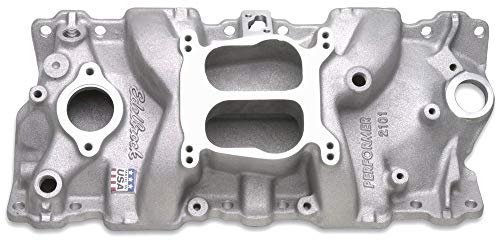 |
Edelbrock Performer 2101 Best Low-End Torque Dual-plane, square-bore 4150, idle to 5500 rpm, low profile, EGR ready |
8.4 | 🛒 Check Price |
 |
Edelbrock Victor Jr. 2975 Best for High RPM Single-plane, square-bore 4150, 3500 to 7500 rpm, race intake, standard SBC |
8.2 | 🛒 Check Price |
1. Edelbrock Performer RPM Air-Gap 7501: Best Overall
If we had to bolt one intake to a typical 383 stroker and walk away confident, this is it. The Performer RPM Air-Gap was practically designed for the rpm window a 383 lives in, pulling hard from down low and carrying clean through the mid range to around 6500 rpm. The dual-plane design keeps low-speed torque and throttle response sharp, which is exactly what you want in a heavy street car, while the air-gap floor keeps the incoming charge cooler than a solid-bottom manifold. On a street build with a hydraulic roller cam and a 750 carb, it’s hard to beat for all-around streetability.
The honest weakness is packaging. Those tall, separated runners sit higher and the open underside means you lose a little of the manifold heat that helps a stone-cold engine fire and idle smoothly on the first cold morning. In a low-hood muscle car you may need to check carburetor and air cleaner clearance before you commit, and you’ll want your choke and idle circuit dialed in. Get past those two points and it rewards you with the broadest, most usable power of anything here.
- Air-gap design separates runners from the lifter valley to keep the incoming charge cool
- Dual-plane runners build strong torque from just off idle through the mid range
- Accepts a standard square-bore Holley or Edelbrock carburetor without an adapter
Pros: Excellent broad torque curve that suits a 383 street and strip combo; Cooler intake charge helps power and detonation resistance; Wide rpm range covers most cam choices
Cons: The raised air-gap runners can crowd hood and distributor clearance in tight engine bays; Open plenum runs a touch cooler at idle, so cold-start drivability needs a tuned choke
2. Weiand Stealth 8501: Best Value
The Weiand Stealth is the intake we point budget-minded 383 builders toward when they want air-gap performance without stepping up to the top-tier price tier. It uses the same basic dual-plane air-gap recipe, runners lifted off the lifter valley to hold a cooler charge, and on back-to-back pulls it lands within a hair of the more expensive manifolds across the meat of the curve. For a street cruiser or a weekend bracket car, the difference on the dyno is small enough that most drivers will never feel it from the seat.
Where it gives ground is in the details. The casting isn’t as crisp as the Edelbrock pieces, and you may find the runner finish and flange a bit rougher, which matters if you plan to port or want a perfect cosmetic show finish. It also shares the tall air-gap height, so the same hood and distributor clearance homework applies. Accept a slightly less polished part and you get most of the performance for noticeably less outlay, which is why it earns our value pick.
- Air-gap dual-plane layout that mirrors the premium torque manifolds at a friendlier value
- Runs strong low and mid-range torque ideal for a street-driven 383
- Standard carburetor flange and bolt pattern for an easy swap
Pros: Strong torque numbers very close to the pricier air-gap intakes; Great value for a street 383 that still wants to rev; Familiar dual-plane manners and easy tuning
Cons: Casting finish is rougher than the Edelbrock units out of the box; Tall air-gap profile needs a hood and distributor clearance check
3. Edelbrock Performer EPS 2701: Best for Daily Drivers
For a 383 that actually gets driven, runs air conditioning, and has to fit under a stock or mildly cowled hood, the Performer EPS is the smart, no-drama choice. It’s a low-profile dual plane with a solid floor, so it keeps useful manifold heat and gives you crisp, immediate throttle response and fat low-end torque right where a street stroker spends its life. It bolts up with room for stock accessories and clears hoods that the taller air-gap manifolds simply won’t, which makes it a favorite for clean, reliable street builds.
The trade-off is honest and predictable. Because the EPS is tuned for low and mid-range manners, it runs out of breath earlier than the air-gap units, signing off near 5500 rpm. If your 383 is built around a big cam and you plan to spin it past six grand, you’ll leave top-end power on the table here. Keep the combo mild to moderate, though, and it delivers the most pleasant street personality of any intake on this list.
- Low-profile solid-bottom dual plane that clears low hoods and stock accessories
- Strong off-idle and low-rpm torque tuned for daily street driving
- Retains good manifold heat for smooth cold starts and steady idle
Pros: Excellent low-end torque and drivability for a street 383; Low height fits tight engine bays and keeps A/C brackets in place; Smooth cold-start and idle behavior
Cons: Tops out earlier than the air-gap intakes, signing off around 5500 rpm; Not the pick for a high-rpm or aggressive cam combination
4. Holley 300-260 Mid-Rise: Best Throttle Response
Holley’s mid-rise dual plane is the intake for the builder who wants the snappy throttle response of a more aggressive manifold but isn’t ready to give up street manners. The plenum sits a bit taller than a standard dual plane, which lets the 383 keep pulling cleanly toward 6800 rpm while the dual-plane runners hold onto enough mid-range torque to feel strong around town. The casting is modern and clean, and it accepts the same square-bore carbs most builders already own, so it slots easily into a typical street-strip combination.
The compromise sits in the middle of the curve. To gain that extra top-end reach, it trades away a small slice of the deep low-end grunt you’d get from a dedicated low-profile dual plane like the EPS. You also need to account for the mid-rise height when picking an air cleaner and closing the hood. For a 383 that sees track days and spirited street driving in equal measure, that balance is exactly the point, and few intakes split the difference this cleanly.
- Modern dual-plane casting designed to blend mid-range torque with top-end pull
- Mid-rise plenum sharpens throttle response without going full single plane
- Square-bore flange accepts common 600 to 750 carburetors
Pros: Crisp throttle response and a wide usable rpm band; Modern runner design carries power higher than a basic dual plane; Clean casting and good fit and finish
Cons: Mid-rise height still needs an air cleaner and hood clearance check; Gives up a little bottom-end grunt versus a low-profile dual plane
5. Professional Products 52028 Hurricane: Best Budget Dual-Plane
When the goal is a running, torquey 383 without spending big on the intake, the Professional Products Hurricane gets the job done. It’s a conventional dual plane with a broad torque curve that pulls from idle out to about 6000 rpm, which covers the needs of most mild to moderate street strokers. It bolts on with the same square-bore carb and gaskets you’d use on any standard SBC manifold, so there are no surprises during the install, and the satin finish looks tidy under the hood.
This is a value part, and you should set expectations accordingly. It won’t match the cooler charge or top-end reach of an air-gap intake, and the casting tolerances are a step below the premium brands, so a careful gasket match and port check at install pays off. But for a stroker that lives on the street and never sees the far side of six grand, the Hurricane delivers honest dual-plane performance for a fraction of the outlay, and that makes it a sensible starting point for a budget build.
- Affordable dual-plane manifold aimed at street 383 and 350 builds
- Broad torque curve from idle to roughly 6000 rpm
- Satin cast finish and standard carburetor flange for a simple bolt-on
Pros: Strong value for a complete street dual plane; Solid all-around torque for a daily-driven stroker; Easy, familiar installation with common carbs
Cons: Top-end power falls short of the premium air-gap intakes; Casting tolerances aren’t as tight as the name-brand units
6. Edelbrock Performer 2101: Best Low-End Torque
The original Performer is the intake for the 383 owner who cares about grunt, not screaming rpm. This low-profile dual plane is tuned to make its best work down low, so a heavy cruiser, a truck, or anything that has to pull a load off idle feels noticeably stronger and more responsive at part throttle. Its short stature clears nearly any hood and plays nicely with factory accessories, and it has been the default street SBC manifold for decades because it’s forgiving, easy to tune, and simply works.
The flip side is that it’s the mildest performer on this list at the top. Power tapers off around 5500 rpm, so if your stroker is built to rev or wears an aggressive cam, this intake will hold it back. Think of it as the torque specialist rather than the all-rounder. For a stock-ish or towing-focused 383 where low-speed pull and easy drivability matter more than a high horsepower peak, it’s exactly the right tool, and it’s hard to install incorrectly.
- Classic low-profile dual plane built for low-rpm torque and drivability
- Excellent off-idle response for heavy street cars and towing duty
- Low height clears tight hoods and works with stock accessories
Pros: Outstanding bottom-end torque and tip-in response; Low profile fits almost any engine bay; Proven, easy-to-tune street manifold
Cons: Runs out of top-end well before the air-gap intakes; Not suited to high-rpm or big-cam combinations
7. Edelbrock Victor Jr. 2975: Best for High RPM
If your 383 is built to make power up top and live at the track, the Victor Jr. Is the intake that lets it breathe. This single-plane race manifold opens up a large common plenum that feeds all eight runners, which trades the low-speed crispness of a dual plane for serious flow at high rpm. On a stroker with good heads, a healthy cam, and a big carburetor, it keeps making power past seven grand where every dual plane here has already given up, and that top-end reach is exactly why racers reach for it.
Be clear-eyed about what it’s, though. Down low it feels soft and lazy compared to a dual plane, with a rougher idle and weaker tip-in, so it’s a frustrating choice for a street-driven or stop-and-go car. It really wants supporting parts, a higher stall converter, steeper gears, and a cam that lives up high, to come alive. Match it to a real high-rpm combination and it’s the most powerful intake on this list, but bolt it to a mild street stroker and you’ll miss the torque you gave up.
- Single-plane open plenum tuned for high-rpm horsepower
- Targets the 3500 to 7500 rpm band of a built race 383
- Equal-length style runners for strong top-end flow
Pros: Big top-end power for a high-rpm stroker combination; Open plenum supports large carburetors and aggressive cams; Race-proven casting on serious SBC builds
Cons: Soft, lazy low-rpm torque and idle make it a poor daily driver; Needs a big cam, good heads, and a stall converter to wake up
Frequently Asked Questions
Should I run a single-plane or dual-plane intake on a 383 stroker?
For the vast majority of 383 stroker builds, a dual-plane intake is the right answer. A 383 makes its best torque in the low and mid rpm range, and a dual plane keeps that torque strong while giving you crisp throttle response and good street manners. A single-plane intake like the Victor Jr. Only makes sense if your engine is built for high rpm with a big cam, good heads, a high stall converter, and steep gears. If your car sees street duty, a dual plane such as the Performer RPM Air-Gap will feel faster in real driving even though a single plane may show a higher peak number on paper.
What carburetor size works best with these intakes on a 383?
Most street 383 strokers are happy with a 650 to 750 cfm square-bore carburetor, and every intake on this list uses the standard square-bore 4150 flange to accept one. A 750 is the common sweet spot for a healthy street build with a dual-plane intake. If you step up to a single-plane race manifold and a high-rpm combination, you can go larger, but oversizing the carb on a street car hurts low-speed response and drivability. Match the carb to your actual rpm range and intake design rather than just buying the biggest one you can fit.
Will an air-gap intake clear my hood and air conditioning?
Not always, so measure before you buy. Air-gap intakes like the Performer RPM Air-Gap and Weiand Stealth sit taller because the runners are lifted off the lifter valley, and that extra height plus the carburetor and air cleaner can crowd a low or stock hood. They can also interfere with some A/C brackets and distributor clearance. If you have a tight engine bay or want to keep air conditioning, a low-profile dual plane like the Performer EPS is the safer fit. Check your hood clearance with the carb and air cleaner mocked up before committing to a tall intake.
Do I need a Vortec or standard-port intake for my 383 heads?
This depends entirely on the cylinder heads you’re running, and it’s the single most important fit detail to get right. Older or aftermarket standard-port small block Chevy heads use the common 12-bolt intake pattern that all the manifolds here are built for. GM Vortec heads use a different port shape and an eight-bolt intake pattern, so they require a Vortec-specific intake instead. Always confirm your head casting and bolt pattern before ordering, because a standard intake won’t seal correctly on Vortec heads and the reverse is also true.
Which intake makes the most low-end torque for a street 383?
For pure low-end torque and the strongest off-idle pull, the low-profile dual planes lead, with the Edelbrock Performer 2101 and Performer EPS being the standouts. Their solid floors retain manifold heat and their runner tuning is biased toward low rpm, which is ideal for a heavy cruiser, a truck, or a towing setup. The air-gap intakes like the RPM Air-Gap give up a small amount of the very bottom end in exchange for a cooler charge and more top-end reach, so they’re the better all-around choice. If low-speed grunt is your only priority, start with a low-profile dual plane.
Our Verdict
For most 383 stroker builds, the Edelbrock Performer RPM Air-Gap 7501 is our top pick because it delivers the broadest, most usable torque curve, a cooler intake charge, and street manners that suit the way these engines are actually driven. If you want nearly the same air-gap performance for less outlay, the Weiand Stealth 8501 is the runner up and an outstanding value. Daily drivers with low hoods should look at the Performer EPS, while a true high-rpm race 383 is the only place the single-plane Victor Jr. Makes sense. Match the runner design to your rpm range and confirm head pattern and hood clearance, and any of these will wake up your stroker.
More Performance Guides
- Turbocharger vs Supercharger: Choose Your Boost
- Cat-Back or Axle-Back: Which Exhaust Fits Your Goals
- Signs It’s Time to Clean Your Engine Throttle Body
- Cold Air Intake: What It Does and Real Horsepower Gains
- Catalytic Converter Failure: Signs and What It Does
- Best Aluminum Intakes for Small Block Chevy Engines


