Once an engine crosses 75,000 miles, the rubber seals and gaskets that hold oil in start to shrink, harden, and crack. The result is the slow drip on your driveway, the burning smell off the exhaust manifold, and the low-oil light that comes on sooner than it used to. The good news is that the right high mileage oil can quietly reverse a lot of that. These oils carry seal conditioners that soak into worn rubber, swell it back toward its original shape, and close the tiny gaps that let oil escape.
We focused this guide specifically on the leak-fighting side of high mileage oil rather than just wear protection. We looked at how aggressively each formula treats seals, how it behaves in older engines that may also be burning a little oil, and whether it actually holds up to heat without thinning out. Below are the seven we trust most for an engine that has started to seep, weep, or leave a mark on the garage floor.
| Photo | Product | Score | Buy |
|---|---|---|---|
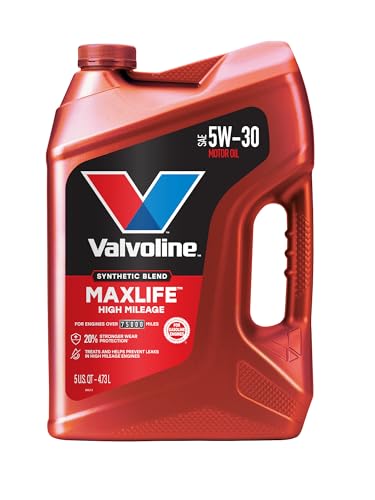 |
Valvoline High Mileage with MaxLife Technology Full Synthetic 5W-30 Best Overall Full synthetic, 5W-30, added seal conditioners, API SP / GF-6 |
9.5 |
ⓘ We may earn a commission from qualifying purchases made through links on this page, at no extra cost to you.
|
 |
Castrol GTX High Mileage 5W-30 Synthetic Blend Best for Burn-Off Control Synthetic blend, 5W-30, seal conditioners, phosphorus-replacement tech |
9.2 | 🛒 Check Price |
 |
Mobil 1 High Mileage Full Synthetic 5W-30 Best Long-Drain Protection Full synthetic, 5W-30, seal conditioners, rated up to 10,000 mile drains |
9.0 | 🛒 Check Price |
 |
Pennzoil High Mileage Synthetic Blend 5W-30 Best for Sludge Cleanup Synthetic blend, 5W-30, seal conditioners, active cleaning agents |
8.8 | 🛒 Check Price |
 |
Royal Purple HMX High Mileage Synthetic 5W-30 Best Premium Seal Treatment Full synthetic, 5W-30, synthetic seal conditioners, Synerlec additive tech |
8.6 | 🛒 Check Price |
 |
Quaker State High Mileage Synthetic Blend 5W-30 Best Everyday Value Synthetic blend, 5W-30, seal conditioners, deposit-control additives |
8.3 | 🛒 Check Price |
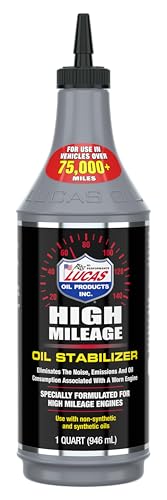 |
Lucas High Mileage Oil Stabilizer Best Leak-Stop Additive Oil additive, swells seals, thickens oil film, mixes with any motor oil |
8.0 | 🛒 Check Price |
1. Valvoline High Mileage with MaxLife Technology Full Synthetic 5W-30: Best Overall
Valvoline built MaxLife from the ground up for high mileage engines, and it shows in how it handles leaks. The seal conditioners in this full synthetic are some of the most active we have come across, and they work by penetrating the rubber of valve cover gaskets, crank seals, and o-rings to restore flexibility. On an engine with a light seep, switching to this oil and running it for a few hundred miles often slows or stops the drip without any further work. That makes it our top pick for anyone whose leak is more of a nuisance than an emergency.
It isn’t magic, and that’s the honest weakness. If a seal has hardened to the point of cracking, no oil can swell it back into a seal, and you’ll still need a wrench. We also found that in engines already burning oil between changes, the 5W-30 grade can disappear a little faster than a heavier oil would. For the vast majority of high mileage cars with a weeping gasket, though, this is the first thing we reach for, and the cleaning power is a genuine bonus.
- MaxLife seal conditioners swell and recondition shrunken gaskets
- Extra detergents clean sludge that builds up in older engines
- Anti-wear additives tuned for engines past 75,000 miles
Pros: Among the most aggressive seal-swelling formulas we researched; Noticeably reduces minor seeps within a few hundred miles; Strong cleaning ability without being harsh on old gaskets
Cons: Won’t fix a gasket that’s already cracked through; Burns slightly faster than a thicker oil in heavy oil-burners
2. Castrol GTX High Mileage 5W-30 Synthetic Blend: Best for Burn-Off Control
Castrol GTX High Mileage earns its spot because it tackles the two problems older engines usually face at the same time, leaking and burning. The seal conditioners do the expected job of softening hardened gaskets to close up seeps, but where this oil stands out is its anti-burn-off chemistry. If your low-oil light has been coming on because the engine is consuming oil through worn valve seals as much as leaking it, this formula loses less to the combustion chamber than most. That dual action makes it a smart choice for a high-mileage daily driver.
The trade-off is that the seal-swelling action is a touch gentler than what you get from the most aggressive leak-stoppers, so a stubborn weep may take a little longer to respond. It’s also a synthetic blend rather than a full synthetic, which is fine for most older engines but worth knowing if you want the absolute best cold-start flow. For controlling overall oil loss while still treating leaks, though, it’s among the most balanced options here.
- Seal conditioners restore flexibility to brittle gaskets
- Anti-burn-off formula reduces oil loss between changes
- Premium additives fight sludge and deposit buildup
Pros: Excellent at cutting down the oil an old engine burns off; Strong, reliable seal treatment from a trusted brand; Holds viscosity well under sustained heat
Cons: Seal swelling is slightly less aggressive than MaxLife; Synthetic blend rather than full synthetic
3. Mobil 1 High Mileage Full Synthetic 5W-30: Best Long-Drain Protection
Mobil 1 High Mileage is the choice for the owner who wants top-tier protection and leak prevention in one bottle. As a true full synthetic, it shrugs off the heat that breaks lesser oils down, which matters in a tired engine running hotter than it did when new. Its seal conditioners keep gaskets pliable so leaks are less likely to start in the first place, and the extended-drain rating means you can confidently go longer between changes, a real benefit if you’re babying an older car along.
The honest caveat is that this oil leans preventive rather than corrective. It’s outstanding at keeping a sound engine from developing leaks, but if you already have an active weep, the gentler seal package here may not swell a worn gasket as quickly as MaxLife or Royal Purple will. Think of it as the oil you switch to before the leaks start, or alongside a minor seal repair, rather than the emergency fix for a steady drip.
- Full synthetic base resists thermal breakdown in worn engines
- Seal conditioners help reduce and prevent oil leaks
- Extended-drain capability up to 10,000 miles
Pros: Excellent high-heat and long-drain stability; Reliable seal conditioning for leak prevention; Strong wear protection for engines with miles on them
Cons: Leak treatment is more preventive than corrective; Less aggressive on active seeps than dedicated leak formulas
4. Pennzoil High Mileage Synthetic Blend 5W-30: Best for Sludge Cleanup
Pennzoil High Mileage is the one we recommend when an engine has been neglected and is both leaking and carrying a load of sludge. Its cleaning agents are genuinely effective, lifting deposits that can clog passages and contribute to pressure problems in older motors. At the same time, the seal conditioners go to work on the rubber, swelling gaskets to close up the kind of light leaks that show up on high mileage cars. For an engine that has missed a few oil changes in its life, this combination of cleanup and seal care is hard to beat.
There’s a quirk worth flagging. In a very dirty engine, that strong cleaning action can sometimes loosen the sludge that was actually plugging a tiny gap, which can make a leak look slightly worse for a short while before the seal conditioners catch up. It’s also a synthetic blend rather than full synthetic. For most owners these are minor points, and the payoff of a cleaner internal engine plus reduced leaking makes it a strong all-rounder.
- Seal conditioners help stop and prevent leaks in worn engines
- Active cleaning agents remove up to 40 percent of existing sludge
- Formulated for engines over 75,000 miles
Pros: Outstanding at cleaning sludge from neglected engines; Solid seal treatment that addresses minor leaks; Good value for the protection it delivers
Cons: Aggressive cleaning can briefly worsen a leak in a very dirty engine; Synthetic blend, not full synthetic
5. Royal Purple HMX High Mileage Synthetic 5W-30: Best Premium Seal Treatment
Royal Purple HMX is the enthusiast pick, a full synthetic built with a high-mileage owner in mind who is willing to invest in the best chemistry. The synthetic seal conditioners are designed to rejuvenate aged seals rather than just keep good ones soft, so they go after the worn gaskets that cause leaks. Layered on top of that’s Royal Purple’s Synerlec additive, which builds an unusually tough protective film on metal surfaces, and elevated zinc and phosphorus levels that older engines with flat-tappet cams especially appreciate.
The weakness here’s patience and value. This is a premium oil, and the leak improvement tends to build over a full change interval rather than showing up in a few hundred miles, so it rewards owners who plan to keep running it. If you want a quick verdict on whether your seep is responding, a faster-acting formula will tell you sooner. For someone committed to long-term protection of a cherished high mileage engine, though, the overall package is excellent.
- Synthetic seal conditioners rejuvenate aged engine seals
- Synerlec additive forms a tough protective film on parts
- Higher zinc and phosphorus for older engine wear protection
Pros: Premium full synthetic with strong seal rejuvenation; Excellent film strength and wear protection; Higher anti-wear additive levels suit older engines
Cons: Sits at a premium tier in terms of value; Improvement on leaks can take a full change interval to show
6. Quaker State High Mileage Synthetic Blend 5W-30: Best Everyday Value
Quaker State High Mileage is the practical, no-drama choice for an older daily driver that has started to seep a little. The seal conditioners do a solid job of softening worn gaskets to cut down minor leaks, and the deposit-control additives keep the inside of the engine clean enough to run reliably for years to come. It doesn’t try to be the most aggressive or the most premium oil on this list, and that restraint is part of its appeal for owners who just want consistent, trustworthy protection without overthinking it.
Where it gives ground to the leaders is in the intensity of its seal treatment. If you have a stubborn weep, you may find that MaxLife or Royal Purple close it up more decisively. As a synthetic blend it also isn’t the oil for stretching drain intervals to the extreme. But for the everyday high mileage commuter with a light leak and a desire for dependable value, it covers the basics well and rarely disappoints.
- Seal conditioners help reduce leaks in high mileage engines
- Deposit-control additives keep internal parts clean
- Wear protection formulated for engines past 75,000 miles
Pros: Dependable leak reduction at strong value; Good deposit and wear control for the everyday driver; Widely available and easy to source
Cons: Seal conditioning is competent rather than standout; Synthetic blend limits extreme long-drain use
7. Lucas High Mileage Oil Stabilizer: Best Leak-Stop Additive
Lucas High Mileage Oil Stabilizer is the odd one out on this list because it’s an additive rather than a standalone oil, but it earns its place because it attacks leaks directly. You pour it into the crankcase alongside your existing high mileage oil, and its seal-swelling chemistry goes after worn gaskets and seals more aggressively than the conditioners blended into most oils. As a bonus, it thickens the oil film, which helps reduce the oil an old engine burns and often quiets down noisy lifters and valve train chatter in the process.
The catch is built into what it’s. Because it’s a stabilizer and not a full oil, it relies on the base oil you pair it with for cleaning and the full additive package, so you can’t simply run it on its own. It’s also thick, and adding too much can push your oil’s viscosity higher than you want, which is hard on cold starts. Used in moderation as a targeted leak treatment on top of a good high mileage oil, though, it’s a very effective ways to chase down a persistent seep without opening up the engine.
- Designed to swell and revive worn engine seals to stop leaks
- Thickens the oil film to reduce burning and consumption
- Blends with any conventional or synthetic motor oil
Pros: Targets active leaks more aggressively than oil alone; Also cuts down oil burning and quiets noisy lifters; Works with whatever oil you already run
Cons: It’s an additive, not a complete oil on its own; Can over-thicken oil if you add too much
Frequently Asked Questions
Can high mileage oil really stop an oil leak?
It can stop or slow many minor leaks, but not all of them. High mileage oils contain seal conditioners that soak into the rubber gaskets and seals in your engine, swelling them back toward their original shape and restoring some flexibility. When a leak is caused by a seal that has simply shrunk or hardened with age, this swelling action often closes the tiny gap and stops the seep within a few hundred miles. What it can’t do is repair a seal that has physically cracked, torn, or blown out, or fix a leak from a loose part or damaged casting. Those still need a mechanical repair. So high mileage oil is an excellent first step for a light, slow leak, and it’s worth trying before you spend on gasket work, but a steady drip that doesn’t respond is telling you the seal needs to be replaced.
How long does it take for high mileage oil to fix a leak?
Most owners who see results notice them within 500 to 1,000 miles of switching, though some formulas work faster than others. The seal conditioners need time to penetrate the rubber and swell it, and that happens gradually as the oil circulates and heats up over normal driving. Aggressive leak-focused oils like Valvoline MaxLife or a dedicated additive such as Lucas High Mileage Oil Stabilizer tend to show improvement on the quicker end, while premium long-term oils like Royal Purple HMX may take a full oil change interval to reach their full effect. If you have run an oil for a couple thousand miles and the leak hasn’t improved at all, that’s a strong sign the problem is mechanical rather than a shrunken seal, and no oil will resolve it.
Should I use a thicker oil to stop my engine from leaking?
Going slightly thicker can reduce a leak, but it should be done carefully and within reason. A heavier oil flows a little more slowly through worn clearances and can lose less past tired seals, which is why some owners step from a 5W-20 up to a 5W-30, or from 5W-30 to a high mileage 10W-30, to slow a seep. The risk is going too far. Oil that’s too thick struggles to flow on cold starts, reaches the top of the engine more slowly, and can actually increase wear during those critical first seconds. Always stay within the range your owner’s manual allows or only one step heavier, and prefer a purpose-built high mileage oil with seal conditioners over simply jumping to a much thicker grade, since the conditioners address the cause of the leak rather than just masking it.
Is high mileage oil worth it, or is it just marketing?
For an engine over roughly 75,000 miles, it’s genuinely worth it and not just a label. High mileage oils differ from standard oils in measurable ways, including added seal conditioners that target leaks, extra detergents to clean the sludge that builds up over years, and anti-wear additive levels tuned for engines with worn clearances. For a newer engine with tight, healthy seals you won’t notice much difference, which is where the marketing skepticism comes from. But on an older engine that has started to seep, burn a little oil, or run dirtier, the formula does real work. If your car has the miles and the symptoms, switching to a high mileage oil is one of the lowest-effort, highest-value things you can do to extend its life.
Can I switch back to regular oil after using high mileage oil?
You can, but if you switched specifically to stop a leak, going back may bring the leak right back. The seal conditioners in high mileage oil keep your gaskets swollen and pliable only while you continue running the oil. If you return to a standard oil without those conditioners, the seals can gradually shrink and harden again, and a leak that the high mileage oil had quieted can return over the following weeks. There’s no harm in switching back in terms of engine damage, and the two oil types mix fine, but for an older engine that benefited from the conditioners there’s little reason to go back. Most owners who solve a leak this way simply stay on high mileage oil for the rest of the car’s life.
Our Verdict
For most drivers chasing a leak, Valvoline High Mileage with MaxLife Technology is our top pick. Its seal conditioners are among the most active we researched, it cleans well, and it tends to slow or stop a light seep faster than the rest, all while protecting an engine with real miles on it. Our runner up is Castrol GTX High Mileage, which treats seals reliably and pairs that with standout anti-burn-off chemistry, making it the smart choice if your old engine is losing oil to both leaking and burning. If you have a stubborn seep that oil alone hasn’t closed, adding Lucas High Mileage Oil Stabilizer to whichever oil you choose is the most aggressive way to chase it down before reaching for a wrench.