A heavy cut compound is the tool you reach for when polish alone won’t do the job. We’re talking deep swirls, wet-sanding marks, heavy oxidation, and scratches you can feel with a fingernail. The right compound removes a thin, controlled layer of clear coat and levels the defect, leaving a surface ready for a finishing polish. The wrong one either does nothing or leaves so much haze you fight to bring the gloss back.
We put the most popular heavy cut compounds through real correction work on oxidized single-stage paint, modern hard clear coats, and faded plastic-rich panels. We judged each one on cutting power, how well it finishes down, how long it stays workable on the pad, and how easy the residue is to wipe off. Below are the seven that earned a place in our detailing cabinet, ranked best first.
| Photo | Product | Score | Buy |
|---|---|---|---|
 |
Meguiar's M105 Ultra-Cut Compound Best Overall Cutting power: very high | Pad: cutting pad or wool | Use: rotary or dual action |
9.5 |
ⓘ We may earn a commission from qualifying purchases made through links on this page, at no extra cost to you.
|
 |
3D ACA 510 Heavy Cut Compound Best for Dual Action Polishers Cutting power: high | Body-shop safe, water based | Use: DA or rotary |
9.3 | 🛒 Check Price |
 |
Chemical Guys V32 Optical Grade Compound Best Finish After Cutting Cutting power: high | Optical grade abrasives | Use: DA or rotary |
9.1 | 🛒 Check Price |
 |
Griot's Garage Complete Compound Best One-Step Correction Cutting power: medium to high | Diminishing abrasives | Use: DA, rotary, or hand |
8.9 | 🛒 Check Price |
 |
Sonax Profiline Cut and Finish 05-05 Best for Hard German Clear Coats Cutting power: high | Hybrid cut and finish abrasives | Use: DA or rotary |
8.7 | 🛒 Check Price |
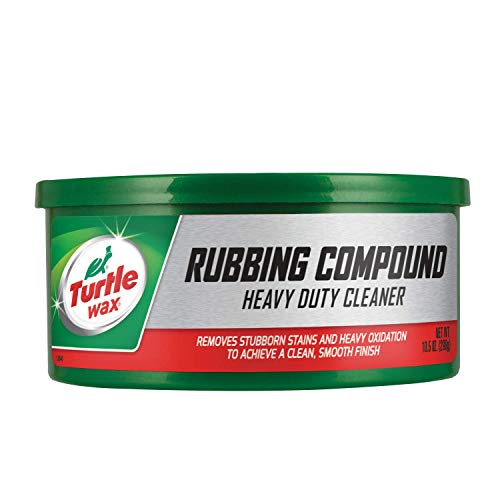 |
Turtle Wax Rubbing Compound (Heavy Duty) Best for Beginners Cutting power: medium | Hand or machine | Use: heavy oxidation and scratches |
8.4 | 🛒 Check Price |
 |
Adam's Polishes Heavy Correcting Compound Best Low-Dust Formula Cutting power: high | Low dust, body-shop safe | Use: DA or rotary |
8.2 | 🛒 Check Price |
1. Meguiar's M105 Ultra-Cut Compound: Best Overall
Meguiar’s M105 is the benchmark serious detailers measure everything else against. Its super micro abrasive technology means the particles don’t break down as you work, so the cut stays strong and even instead of fading halfway through a pass. On a heavily oxidized hood we cleared dull, chalky single-stage paint in two passes, and on a clear-coated fender it leveled deep swirls that a one-step product would only soften. It pairs naturally with M205 as the finishing step, and that combo is the closest thing to a foolproof correction system in the detailing world.
The honest weakness is work time. M105 flashes fast, especially in warm conditions or under a halogen light, and if you load too much product or chase too big a section it can grab and leave you wiping hard. The fix is small sections, a misting of water or detail spray to extend the working window, and a primed pad. Once you learn its rhythm it becomes second nature, but a first-time user should expect a short learning curve. Value is excellent because a single bottle corrects a lot of cars.
- Non-diminishing SMAT abrasives cut hard and consistent from start to finish
- Body-shop formula designed to remove 1200 to 1500 grit sanding marks
- Works on both rotary and dual action polishers with the right pad
Pros: Aggressive cut that still finishes surprisingly clean for a heavy compound; Tiny amount goes a long way per panel; Trusted in professional body shops for years
Cons: Dries fast and can flash before you finish if you work too large an area; Best results need good technique and proper pad priming
2. 3D ACA 510 Heavy Cut Compound: Best for Dual Action Polishers
If M105’s fast flash time intimidates you, 3D ACA 510 is the heavy cutter built for forgiveness. The ACA, or advanced ceramic alumina, abrasive technology gives you strong initial bite that then refines as you work, so a single product can both correct and partly finish. That long, wet work time is the headline. On a hot day under a single LED light we still had plenty of working window per section, which makes this our top pick for anyone correcting paint with a dual action polisher rather than a rotary. It also contains no fillers, so what you see after a wipe-down is the true result, not a temporary mask.
The trade-off for that easy to use behavior is a touch less raw cutting muscle than the most aggressive compounds on this list. On very hard ceramic clear coats with deep defects you may need an extra pass or a more aggressive pad to fully level a scratch, where M105 might clear it in one. For the vast majority of correction jobs, though, the ease of use and clean finish make it a joy, and the value is strong given how far a bottle stretches.
- Advanced ceramic alumina abrasives that break down for a cleaner finish
- Long work time that resists flashing under lights and heat
- Body-shop safe with no fillers, silicones, or waxes to hide defects
Pros: Stays wet and workable far longer than most heavy compounds; Wipes off easily with very little dust; Finishes down clean enough to skip a polish on some softer paints
Cons: Raw cut is a small step below the most aggressive compounds; Needs a true cutting pad to reach its full correction potential
3. Chemical Guys V32 Optical Grade Compound: Best Finish After Cutting
Chemical Guys V32 sits in the sweet spot between a true heavy cutter and a polish. Its optical grade abrasives are engineered to knock out severe defects while still leaving a surface with real clarity, which means less work on the finishing step that follows. In testing it pulled deep wash swirls and moderate scratches out of a neglected clear coat, and the wipe-down revealed a glossier base than we expected from something this aggressive. If your goal is heavy correction but you hate the haze that hardcore compounds can leave behind, this is the one that saves you a stage.
The flip side is that the refined finish comes from abrasives that are a hair gentler than the most brutal wool-pad compounds. Truly savage damage, like deep keyed scratches or coarse sanding marks, may still call for M105 first. Used within its intended range, though, V32 is a clean, dust-light, body-shop-safe compound that plays beautifully with the rest of the Chemical Guys line. Value is fair given how it reduces the number of steps a typical correction requires.
- Optical grade abrasive technology for heavy correction with a refined result
- Removes severe swirls, scratches, and oxidation in fewer steps
- Dust free, body-shop safe formula with no hidden fillers
Pros: Leaves a clearer, higher-gloss surface than most aggressive compounds; Low dust and easy residue removal; Part of a well-supported V-line system for follow-up polishing
Cons: Slightly less cut than dedicated wool-pad compounds; Needs a firm pad to hit its rated correction level
4. Griot's Garage Complete Compound: Best One-Step Correction
Griot’s Garage Complete Compound earns its name by trying to do two jobs at once: cut the defect and leave a finish you can wax over. Its diminishing abrasives start with real bite and then break down to refine the surface, so on medium to soft paints a single application can remove swirls and bring back gloss without a separate polish. We liked it for the weekend detailer who wants results without buying a three-bottle correction system, and the fact that it works by hand makes it genuinely useful for fixing a scratch on a door edge without dragging out the polisher.
Because it’s built to be multi-purpose, it doesn’t have the brute cutting force of a true heavy compound paired with a wool pad. On a very hard clear coat with deep damage it’ll improve things but may not fully level the worst scratches in one go. Think of it as the most powerful all-in-one rather than the most powerful cutter. For its intended audience the value is excellent, since one bottle handles wash, correct, and refine duties on most cars.
- Cuts heavy defects and refines in a single application on softer paint
- Smart diminishing abrasives that finish down as you work
- Usable by machine or by hand for spot repairs
Pros: Excellent one-step result on medium to soft clear coats; Very low dust and a clean, easy wipe-off; Flexible enough for hand work on small areas
Cons: Not as aggressive as a true wool-pad heavy cutter; Hard ceramic clears may need a dedicated compound first
5. Sonax Profiline Cut and Finish 05-05: Best for Hard German Clear Coats
Some clear coats simply laugh at ordinary compounds, and that’s where Sonax Profiline Cut and Finish 05-05 belongs. It’s built for the hard German clears found on many European cars, the kind of paint where a softer compound just smears the defect around without removing it. The hybrid abrasive design cuts heavy and then refines, so on the dense clear of a German sedan we corrected medium swirls and a few deeper scratches in one product and were left with a finish that needed only a light polish. For anyone who details European metal, this is a specialist worth owning.
That hardness-focused formula is also its limitation. On soft Japanese paint the same aggression that conquers a German clear can be more than you need, and you risk hazing a panel that a gentler compound would have handled cleanly. It’s also less common on shelves than the big mainstream names, so availability can vary. Matched to the right hard paint, though, it’s a very effective cutters here, and the cut-and-finish behavior gives it solid value.
- Engineered for hard European clear coats that resist correction
- Hybrid abrasive system cuts heavy and finishes in one product
- Silicone free and labeling safe for repaint environments
Pros: Bites into stubborn hard clears that defeat softer compounds; One product cut and finish saves a step on the right paint; Clean, low-dust application
Cons: Can be slightly too aggressive on very soft Japanese paints; Less widely stocked than mainstream brands
6. Turtle Wax Rubbing Compound (Heavy Duty): Best for Beginners
Turtle Wax Rubbing Compound is the product most people meet first, and for good reason. It’s on the shelf of nearly every parts store, it costs little in effort to use, and it does a genuinely useful job on oxidation, water spots, and light to moderate scratches. We restored a chalky, faded older hood by hand with it and the improvement was immediate. For a new detailer who wants to learn correction without risking an expensive panel, this is a low-stress place to start, and it works either by hand with a cloth or on a machine for bigger jobs.
Its limits show up on serious damage. This is a medium-duty compound at heart, so deep clear coat scratches and wet-sanding marks are beyond it, and it leans on a little filler action that can make a defect look better without fully removing it. A defect hidden rather than corrected can return after a few washes. For oxidation and surface-level work it’s a strong, accessible choice with great everyday value, but a true heavy correction job calls for one of the body-shop compounds above.
- Heavy duty rubbing compound for oxidation, stains, and surface scratches
- Works by hand with a cloth or by machine for larger areas
- Widely available and simple to use for first timers
Pros: Very easy to find and beginner friendly; Handles oxidation and light scratches well by hand; Forgiving and low risk for new detailers
Cons: Not strong enough for deep clear coat scratches or sanding marks; Contains some fillers that can mask rather than fully remove defects
7. Adam's Polishes Heavy Correcting Compound: Best Low-Dust Formula
Adam’s Polishes Heavy Correcting Compound is the cleanest heavy cutter to work with that we researched. Anyone who has compounded a full car knows the misery of dust coating everything in the garage, and this formula keeps that to a minimum while still delivering a real heavy cut. On a swirled daily driver it pulled out the defects in a couple of passes and the panel and pad stayed remarkably tidy. Adam’s also names its products in a way that makes building a logical correction set easy, so you always know which step comes next, which is a genuine help for people newer to multi-stage paint work.
The cut is strong, but the work time is on the shorter side compared with something like 3D ACA 510, so you’ll want to keep your sections small and your pace steady. It’s also clearly designed to be followed by the matching finishing polish, so treating it as a true one-step on its own can leave a little haze on harder paint. Used as intended within the Adam’s system, it’s an effective, clean, satisfying compound, and the value is reasonable given how pleasant it’s to use.
- Heavy correcting compound aimed at deep swirls and scratches
- Low-dust, low-sling formula that keeps the work area clean
- Part of a clearly labeled correction system for easy step selection
Pros: Noticeably low dust and sling during machine work; Strong cut on swirls and moderate scratches; Clear product naming makes building a correction set simple
Cons: Shorter work time than the longest-lasting compounds here; Best results need pairing with the matching finishing polish
Frequently Asked Questions
What is the difference between a heavy cut compound and a polish?
A heavy cut compound uses larger, more aggressive abrasives to physically remove a thin layer of clear coat and level deep defects like scratches, sanding marks, and heavy oxidation. A polish uses much finer abrasives to remove the light haze and micro-marring that a compound can leave behind, restoring full gloss and clarity. Think of the compound as the rough sanding stage and the polish as the fine finishing stage. On most correction jobs you use the compound first to remove the damage, then follow with a polish to perfect the shine. Some modern compounds finish clean enough to skip the polish on softer paint, but on hard clears you almost always want both steps.
Can I use a heavy cut compound by hand or do I need a machine?
You can use many heavy cut compounds by hand for small areas like a single scratch on a door edge, and products such as Turtle Wax Rubbing Compound and Griot’s Garage Complete Compound are designed to work that way. However, a machine polisher, either a dual action or rotary, generates the consistent speed and pressure needed to break the abrasives down properly and correct a full panel evenly. By hand you’ll get a usable result on oxidation and light defects, but for deep scratches across a large surface a machine does the job faster, more evenly, and with far less effort. If you correct cars regularly, a dual action polisher is the single best upgrade you can make.
Will a heavy cut compound damage my clear coat?
Used correctly, no, but it does remove a measured amount of clear coat, so it should be used only when the defect actually needs that level of cut. Always start with the least aggressive combination that will do the job, test a small section first, and avoid hammering the same spot over and over, especially on edges and ridges where clear coat is thinnest. The risk is going too far and thinning the clear, which can lead to failure down the road. A paint thickness gauge helps on valuable cars. For most people the bigger danger is using too aggressive a pad or too much pressure rather than the compound itself.
How do I know if my paint needs a heavy cut compound or just a polish?
Run a fingernail lightly across the scratch. If your nail catches in it, the defect is usually too deep for a polish alone and you likely need a compound to level it, though very deep scratches that reach the base coat can’t be safely compounded out at all. Heavy, chalky oxidation, dense swirl marks visible in direct sun, and wet-sanding marks also call for a compound. Light swirls, fine haze, and water spots that don’t catch a nail can often be handled by a polish or an all-in-one. When in doubt, always test with the lighter product first, because you can step up to a compound if needed but you can’t un-remove clear coat.
What pad should I use with a heavy cut compound?
Match the pad aggressiveness to the compound and the defect. For heavy correction, a dedicated cutting pad, whether a firm foam cutting pad, a microfiber cutting pad, or a wool pad, gives the compound the bite it needs to level deep defects. A wool pad with a strong compound like Meguiar’s M105 is the classic combination for the most serious damage. Softer polishing pads will blunt a heavy compound and leave you working much harder for less correction. Always prime a new pad with a few small dabs of product spread across the face before your first pass, and keep several pads on hand so you can swap to a clean one as they load up.
Our Verdict
For the strongest, most reliable heavy correction, Meguiar’s M105 Ultra-Cut Compound is our top pick. Its non-diminishing abrasives cut hard and consistent, it’s trusted in professional body shops, and paired with a finishing polish it handles almost any defect short of paint that needs a respray. The only price you pay is a short learning curve around its fast flash time. If you want nearly the same cutting power with far more forgiving, beginner-friendly behavior, our runner up is the 3D ACA 510 Heavy Cut Compound, which stays wet on the pad longer, wipes off cleanly, and finishes well enough to save you a step on softer paint. Choose M105 for maximum cut and the 3D for ease of use, and you’ll be ready for serious paint correction either way.