Fuel lines sitting near headers, turbos, or the exhaust manifold take a beating from radiant heat, and that heat soak is a classic cause of vapor lock, rough idle, and frustrating hot starts. A good heat shield or sleeve wraps the line, reflects that energy away, and keeps the fuel cooler so the system delivers consistent pressure. The trick is choosing one rated for the actual temperatures under your hood, not just a generic wrap that frays after a season.
We looked at reflective sleeving, fiberglass barriers, and silicone-coated braided products to see which ones really hold up against header glow and engine bay heat soak. Below are the seven heat shields and sleeves we rank highest for protecting fuel lines, with honest notes on fitment, temperature ratings, and the weaknesses each one has so you can match the right product to your build.
| Photo | Product | Score | Buy |
|---|---|---|---|
 |
DEI Design Engineering Heat Shroud Sleeve Best Overall Aluminized glass fiber sleeve, hook-and-loop closure, rated to roughly 1100F radiant |
9.5 |
ⓘ We may earn a commission from qualifying purchases made through links on this page, at no extra cost to you.
|
 |
Heatshield Products Thermaflect Sleeve Best Reflective Sleeve Glass fiber sleeve with reflective aluminized facing, radiant rating near 1100F, sewn seam |
9.3 | 🛒 Check Price |
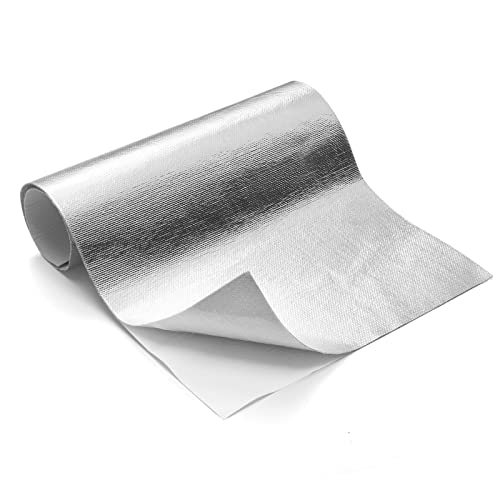 |
Design Engineering Reflect-A-Cool Heat Shield Sheet Best Adhesive Barrier Aluminized fiberglass sheet with self-adhesive backing, rated to roughly 2000F radiant |
9.1 | 🛒 Check Price |
 |
Heatshield Products Hot Rod Sleeve Best for Direct Contact Braided fiberglass sleeve, continuous rating near 500F with higher intermittent spikes |
8.9 | 🛒 Check Price |
 |
Mishimoto Heat Shielding Sleeve Best Braided Build Quality Aluminized fiberglass braided sleeve, radiant rating near 1200F, slip-on fit |
8.7 | 🛒 Check Price |
 |
Thermo-Tec Aluminized Heat Sleeve Best Value Wrap Aluminized fiberglass sleeve with hook-and-loop closure, radiant rating around 1000F |
8.4 | 🛒 Check Price |
 |
Onirii Aluminized Fiberglass Heat Shield Sleeve Best Length Value Aluminized fiberglass sleeve, hook-and-loop closure, sold in long continuous rolls |
8.1 | 🛒 Check Price |
1. DEI Design Engineering Heat Shroud Sleeve: Best Overall
The DEI Heat Shroud earns our top spot because it solves the most common install headache. You wrap it around fuel lines that are already bolted in place and secure the hook-and-loop seam, so there’s no draining, no disconnecting, and no fighting a slip-on sleeve over a fitting. The aluminized glass fiber construction reflects radiant heat from headers and turbo housings, which is exactly the energy source that cooks fuel lines and triggers vapor lock on a hot restart.
In practice it noticeably calmed the heat soak on a tightly packed engine bay, and the closure stayed put through plenty of heat cycles. The honest weakness is bulk. Because it has a real insulation core plus the reflective face, it’s thicker than plain sleeving, so if your line runs through a narrow channel near the firewall you may need to plan the routing. The reflective surface also shows scuffs where it brushes a bracket, which is cosmetic but worth noting on a show build.
- Aluminized outer layer reflects radiant header and turbo heat away from the fuel line
- Hook-and-loop closure wraps over lines and fittings already installed, no disconnect needed
- Fiberglass insulation core handles sustained high underhood temperatures
Pros: Installs over assembled fuel lines without removing fittings; High radiant temperature rating suits headers and turbo plumbing; Reusable closure makes maintenance and removal simple
Cons: The aluminized face can scuff if it rubs a sharp bracket edge; Wider than bare sleeving so tight routing near the firewall gets snug
2. Heatshield Products Thermaflect Sleeve: Best Reflective Sleeve
Heatshield Products built the Thermaflect sleeve around radiant heat rejection, and that focus shows. The aluminized facing bounces heat from headers and exhaust crossovers before it can soak into the fuel line, and the sewn seam construction means the edges don’t unravel the way some cheaper braided sleeves do after a few heat cycles. If your main problem is a line running parallel to a hot pipe, this is a smart, purpose-built answer.
The trade off is installation. This is a slip-on style sleeve, so for a closed loop fuel line you may have to disconnect a fitting to thread it on, which adds time and means dealing with residual fuel. It’s also designed for radiant protection rather than direct flame contact, so don’t treat it as a substitute for proper line routing away from a glowing collector. Get the sizing right and it’s among the most effective reflective options we tried.
- Aluminized reflective face targets radiant heat from nearby exhaust components
- Sewn construction resists fraying better than many slip-on sleeves
- Available in multiple diameters to match common fuel line sizes
Pros: Strong radiant heat rejection for the money; Cleaner sewn edges hold up over time; Multiple sizes make a snug fit easy to find
Cons: Slip-on design means you may need to disconnect a line to fit it; Reflective coating is best kept away from constant direct flame contact
3. Design Engineering Reflect-A-Cool Heat Shield Sheet: Best Adhesive Barrier
The Reflect-A-Cool sheet takes a different approach. Instead of wrapping the fuel line, you stick this aluminized fiberglass sheet to the surface between the heat source and the line, creating a reflective barrier. Its very high radiant rating means you can place it right next to aggressive heat, such as a turbo dump pipe or a header collector, and shield everything behind it including fuel and brake lines. For builders fighting a localized hot spot, this is the most flexible tool because you cut it to whatever shape the gap demands.
The catch is that it only works where you can mount a barrier. If a fuel line is fully surrounded by heat with nowhere to place a panel, a wrap-style product serves you better. Adhesion is the other consideration. The peel-and-stick backing holds well, but only on a clean, degreased, dry surface, so prep matters. Skip the cleanup and you’ll find a corner lifting after a few heat cycles.
- Self-adhesive sheet sticks to surfaces near the fuel line to block radiant heat
- Very high radiant rating makes it suitable next to extreme heat sources
- Cut to any shape to build a custom barrier between exhaust and fuel plumbing
Pros: Extremely high radiant temperature rating; Cut to shape for a fully custom heat barrier; Sticks to firewalls, panels, and brackets without fasteners
Cons: Protects by blocking a heat source, not by wrapping the line itself; Adhesive needs a clean, properly prepped surface to stay stuck
4. Heatshield Products Hot Rod Sleeve: Best for Direct Contact
The Hot Rod Sleeve is the one we reach for when the fuel line actually touches or rubs against something hot, rather than just sitting near radiant heat. The braided fiberglass weave is far more abrasion resistant than a thin foil-faced sleeve, and it flexes easily around tight bends, so it tucks neatly along a line that snakes through a busy engine bay. It’s genuinely all-around and works just as well over wiring or other rubber hoses that need contact protection.
Be honest about its limits, though. Its continuous temperature rating is lower than the aluminized DEI and Thermaflect products, and it has no reflective face, so it manages conductive and contact heat well but does less to bounce radiant energy from a glowing header. If your fuel line is baking from a nearby pipe rather than touching one, an aluminized sleeve will serve you better. For contact and abrasion, this braided sleeve is excellent.
- Braided fiberglass handles direct contact and abrasion better than foil-faced sleeves
- Flexible weave follows bends and curves in tight fuel line routing
- Slips over lines, wires, and hoses for multi-use protection
Pros: Tough braided weave resists abrasion and direct contact; Very flexible for routing around tight bends; Works on fuel lines, wiring, and other hoses too
Cons: Lower continuous temperature rating than aluminized options; No reflective face, so radiant rejection is weaker
5. Mishimoto Heat Shielding Sleeve: Best Braided Build Quality
Mishimoto blends the two main approaches into one product. The aluminized braided sleeve gives you a reflective face to reject radiant heat plus a woven structure that resists abrasion and direct contact, so it’s a strong all-rounder for fuel lines running near a turbo or headers. The high radiant rating puts it in the same tier as the dedicated reflective sleeves, and the finish looks clean enough that builders who care about a tidy bay tend to like it.
Like other slip-on sleeves, the install can mean disconnecting a fitting to thread it onto a closed fuel loop, so factor that into your plan. The other practical note is length. It tends to come in shorter cut lengths, so a long fuel line run from tank to rail may need more than one section, and you’ll want to overlap the joins to avoid an exposed gap. Within those limits it’s one of the better built sleeves we handled.
- Aluminized braided weave combines reflective and abrasion resistance
- High radiant rating handles header and turbo bay temperatures
- Clean finish suits engine bays where appearance matters
Pros: Combines a reflective surface with a durable braided weave; High radiant rating for header and turbo plumbing; Tidy appearance for a finished engine bay
Cons: Slip-on style can require disconnecting a fuel line to fit; Sold in shorter lengths, so long runs may need more than one piece
6. Thermo-Tec Aluminized Heat Sleeve: Best Value Wrap
Thermo-Tec has been making heat management products for a long time, and this aluminized sleeve is a sensible value pick that doesn’t skimp on the important part. The hook-and-loop closure lets you wrap a fuel line that’s already installed, the same convenience that put the DEI Shroud at the top, and the aluminized fiberglass reflects radiant heat while adding a layer of insulation against general engine bay heat soak. For most street builds dealing with ordinary underhood temperatures, it covers the job well.
It sits a little lower in our ranking for two reasons. The aluminized facing is thinner than the premium sleeves, so it’s slightly less rugged over years of heat cycling, and on applications with heavy vibration the closure can work loose if you don’t add a zip tie or two at the ends. Secure the ends properly and it holds fine. If you want effective radiant protection without paying for the top tier, this is a smart choice.
- Hook-and-loop closure wraps assembled fuel lines without disconnecting
- Aluminized layer reflects radiant heat from nearby exhaust parts
- Fiberglass core adds insulation against sustained engine bay heat
Pros: Wraps installed lines, no disassembly needed; Solid radiant protection at strong value; Closure lets you remove and reinstall easily
Cons: Closure can loosen on vibration-heavy applications if not secured; Aluminized face is thinner than premium options
7. Onirii Aluminized Fiberglass Heat Shield Sleeve: Best Length Value
The Onirii sleeve makes the list because of practicality. It ships in a long continuous roll with a hook-and-loop seam, so you can wrap an entire fuel line run, tank to rail, from a single piece rather than joining multiple short sections. The aluminized fiberglass construction reflects radiant heat the same way the name brands do, and the wrap-around closure means you don’t have to disconnect anything to install it. For a long run on a budget-conscious build, that length advantage is genuinely useful.
The honest caveat is consistency. As a lower-cost option the quality control isn’t as tight as the established heat specialists, so it pays to inspect the seam stitching and the coating when it arrives and to secure the ends with zip ties. The finish is also a touch less polished than the premium brands. None of that stops it doing the core job, but it’s why it sits at the foot of an otherwise strong list rather than higher up.
- Long continuous roll covers an entire fuel line run from one piece
- Hook-and-loop seam wraps over installed lines and fittings
- Aluminized fiberglass reflects radiant heat from exhaust components
Pros: Generous length covers long runs in one piece; Wraps assembled lines without disconnecting fittings; Reflective face for solid radiant heat rejection
Cons: Quality control varies, so check the seam and coating on arrival; Not as refined a finish as the established heat brands
Frequently Asked Questions
Do fuel lines really need a heat shield?
Many factory fuel lines are routed and clipped to stay away from heat, so a bone-stock car often doesn’t need one. The picture changes the moment you add aftermarket headers, a turbo, a hotter cam, or relocate the line closer to the exhaust. Radiant heat soaking into the fuel can cause vapor lock, hard hot starts, rough idle, and inconsistent fuel pressure, especially in a tightly packed engine bay. If you have any of those symptoms after a heat soak, or your line runs near a glowing exhaust component, a heat shield or sleeve is cheap insurance against frustrating, hard-to-diagnose driveability problems.
What is the difference between a reflective sleeve and a braided fiberglass sleeve?
Reflective sleeves have an aluminized outer face that bounces radiant heat away, which is ideal when a fuel line sits near, but not touching, a hot exhaust component. Braided fiberglass sleeves have no reflective layer but offer a tougher woven surface that resists abrasion and handles direct contact and conductive heat better. The simple rule is to use a reflective aluminized sleeve when the threat is radiant heat from a nearby pipe, and a braided sleeve when the line actually rubs or contacts something hot. Some products, like the aluminized braided sleeves, combine both for the best of each.
How do I install a heat sleeve on a fuel line that’s already connected?
Choose a wrap-style sleeve with a hook-and-loop closure rather than a slip-on tube. Wrap-around designs, like the DEI Heat Shroud or the Thermo-Tec sleeve, open along their length so you can lay them over an installed line and press the seam shut without disconnecting any fittings or draining fuel. Slip-on sleeves require you to thread the line through, which usually means disconnecting one end. After wrapping, secure both ends with a stainless zip tie or clamp so the sleeve can’t slide or work loose under vibration, and make sure no edge sits against a sharp bracket that could chafe it.
What temperature rating do I need for a fuel line heat shield?
Match the rating to your actual heat source. Look closely at whether the number is a continuous rating or an intermittent radiant rating, because they’re very different. General engine bay heat soak is well within the range of most quality sleeves, but if the line runs close to headers or a turbo, you want an aluminized product rated for radiant heat in the four-figure Fahrenheit range to give yourself margin. It’s always safer to over-spec the rating than to run a sleeve at its limit. When in doubt, pick a higher-rated aluminized sleeve, since the heat near exhaust components is easy to underestimate.
Can a heat shield prevent vapor lock and hard hot starts?
It can help significantly, and it’s a very common fixes for those exact symptoms. Vapor lock and heat-related hard starts happen when fuel in the line gets hot enough to vaporize, disrupting the steady liquid flow and pressure the engine needs. By reflecting and insulating against heat, a good sleeve keeps the fuel cooler and the pressure more stable, especially during the heat soak right after you shut a hot engine off. Still, a sleeve is one part of the solution. Proper line routing away from heat, an adequate fuel pump, and good system design all matter too, so treat the shield as an important layer rather than a single cure-all.
Our Verdict
For most builds, the DEI Design Engineering Heat Shroud Sleeve is our top pick because it pairs a high radiant temperature rating with a wrap-around closure that installs over fuel lines already bolted in place, so you get serious protection without draining or disconnecting anything. Our runner up is the Heatshield Products Thermaflect Sleeve, which delivers excellent reflective heat rejection and clean sewn construction, making it the one to choose when a fuel line runs parallel to a hot pipe and you’re willing to slip it on. Match the temperature rating to your real heat source, secure the ends well, and either of these will keep your fuel cooler and your hot starts trouble free.