Polishing a car by hand is among the most satisfying jobs in detailing, but it lives or dies on the product you choose. A good hand polish should grab light swirls and water spots, break down smoothly so you aren’t fighting dry, dusty residue, and leave paint with real depth rather than a greasy fake shine. The wrong one either does nothing or hazes the clear coat and makes you wonder why you bothered.
We worked these polishes across black, silver, and metallic panels by hand using foam applicators and microfiber, paying attention to how long each one stayed workable, how much arm effort it actually took, and whether the gloss survived a wash. Below are seven that earned their spot, ranked best first, with honest notes on where each one falls short so you can match the polish to your paint and your patience.
| Photo | Product | Score | Buy |
|---|---|---|---|
 |
Meguiar's Ultimate Compound Best Overall Type: cutting polish and swirl remover, clear-coat safe, 15.2 oz bottle |
9.5 |
ⓘ We may earn a commission from qualifying purchases made through links on this page, at no extra cost to you.
|
 |
Chemical Guys VSS Scratch and Swirl Remover Best for Swirl Removal Type: one-step scratch and swirl polish, 16 oz, hand or machine |
9.2 | 🛒 Check Price |
 |
3D Speed All-in-One Polish and Wax Best All-in-One Type: polish, glaze, and wax in one, 16 oz, hand or dual-action |
9.0 | 🛒 Check Price |
 |
Mothers California Gold Pure Polish Best for Gloss and Depth Type: non-abrasive pure polish, 16 oz, prep before wax |
8.8 | 🛒 Check Price |
 |
Turtle Wax Polishing Compound and Scratch Remover Best Value Type: medium-cut rubbing compound, 10.5 oz, hand or buffer |
8.5 | 🛒 Check Price |
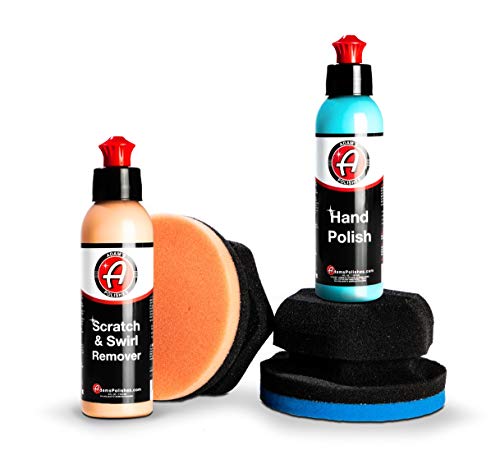 |
Adam's Polishes Hand Polish Best for Beginners Type: light finishing polish, 16 oz, designed for hand use |
8.3 | 🛒 Check Price |
 |
Griot's Garage Complete Polish 3-in-1 Best for Maintenance Type: cleaner, polish, and sealant in one, 16 oz, hand or machine |
8.0 | 🛒 Check Price |
1. Meguiar's Ultimate Compound: Best Overall
Meguiar’s Ultimate Compound is the polish we reach for first when a panel has real damage and not just dullness. By hand it cuts harder than almost anything else here, lifting oxidation, light scratches, and stubborn water spots that finishing polishes simply ride over. The micro-abrasives keep diminishing as you work the product, so a panel that starts out hazy slowly clears to a clean gloss instead of leaving a chalky film. For a single bottle that can rescue a tired daily driver, it’s hard to beat.
The honest weakness is that this is a compound first and a polish second. On black and other dark clear coats you can see very fine marring under bright light once you wipe it off, which means a second pass with a gentler finishing polish or at least a quality wax is needed to get true mirror depth. Use a little product on a clean applicator, work small sections, and don’t let it dry to dust, or you’ll spend more time buffing off residue than polishing.
- Micro-abrasive technology that breaks down as you work for a finer finish
- Removes below-surface defects, oxidation, and water spots by hand
- Body-shop safe and works as a one-step on neglected paint
Pros: Strong cutting power for a hand-applied product; Restores faded and oxidized paint impressively fast; Widely stocked and easy to find replacements
Cons: Aggressive enough that you should follow with a finishing polish or wax on dark colors; Can sling and dust if you apply too much at once
2. Chemical Guys VSS Scratch and Swirl Remover: Best for Swirl Removal
VSS sits in the sweet spot most weekend detailers actually need. It’s built to chase swirls and the fine spiderwebbing you see on a sunny day, and it does that while leaving its own glossing oils behind so the panel looks finished rather than merely corrected. Worked by hand on metallic silver and black, it cleaned out light swirls in one or two passes and left a noticeably wetter reflection than a pure compound would. The extended working time is a genuine advantage for hand use because you aren’t racing the product before it dries.
Where it disappoints is depth of correction. If your clear coat has serious oxidation, sanding marks, or scratches you can feel with a fingernail, VSS will reduce them but won’t erase them by hand, and you may convince yourself the haze is gone only to see it return after the oils wash off. Treat it as a swirl-and-gloss product rather than a heavy corrector, and pair it with a dedicated compound first on rough paint.
- Targets swirls, light scratches, and holograms in a single step
- Glossing oils leave a wet-look shine after the cut
- Safe on all paint types and gel coats
Pros: Balances cutting and finishing so dark paint looks deep in one pass; Long working time means it doesn’t flash off quickly by hand; Pleasant scent and easy wipe-off
Cons: Not aggressive enough for deep oxidation or heavy defects; Needs firm hand pressure to get the most correction
3. 3D Speed All-in-One Polish and Wax: Best All-in-One
3D Speed is the polish to hand someone who wants results without learning a full multi-step routine. It blends a mild abrasive polish with a carnauba-style wax, so a single application cleans up light haze, adds gloss, and lays down protection in one wipe-on, wipe-off motion. For a driver that just needs to look sharp before the weekend, it delivers a genuinely impressive shine with very little arm work and almost no dusting, which is a relief when you’re doing the whole car by hand.
The compromise is built into the concept. Because it’s doing three jobs at once, it masters none of them. The cut is mild, so it hides fine swirls more than it removes them, and the wax component is thinner than a standalone wax, so the protection fades faster, often within a few weeks of weather. Think of it as a fast refresh between proper details rather than your deep-correction or long-term protection product.
- Combines light cutting polish with a wax in a single product
- Fills and hides fine swirls while leaving protection behind
- No dusting formula that wipes off cleanly
Pros: Saves a full step by polishing and protecting at once; Very forgiving and beginner friendly with little dusting; Great gloss for the small amount of effort required
Cons: Protection doesn’t last as long as a dedicated sealant or wax; Light correction only, so deeper defects remain
4. Mothers California Gold Pure Polish: Best for Gloss and Depth
Mothers California Gold Pure Polish is a true polish in the old-school sense, meaning it conditions and brightens the paint rather than abrading it. There’s no wax in the bottle, which is exactly the point. Used as the step between washing and waxing, it pulls a surprising amount of depth and clarity out of paint, cleans up light staining and dullness, and leaves a slick surface that lets a following wax bond and look its best. On a dark metallic the warmth it adds is genuinely noticeable.
Its limitation is that it isn’t a corrector at all. If you’re hoping a pure polish will erase swirls or scratches, this is the wrong tool, because without abrasives it can only clean and enhance what is already there. It also only reaches its full potential when you top it with a wax or sealant, so anyone wanting a one-and-done product will feel like they’re only halfway finished. Buy it as a depth-building prep step, not a fix-it.
- Pure polish with no wax to deepen color and clarity
- Removes light stains and prepares paint for sealing
- Safe for frequent use and all paint colors
Pros: Brings out rich depth and warmth, especially on dark paint; Ideal prep step under a wax or sealant; Non-abrasive so it won’t thin clear coat with regular use
Cons: Does almost no defect correction on its own; Best results require following with a separate wax
5. Turtle Wax Polishing Compound and Scratch Remover: Best Value
Turtle Wax Polishing Compound is the no-fuss option for someone who wants real correction without overthinking it. It carries a medium cut that pulls out scratches, stains, and oxidation that finishing polishes can’t touch, and it does it by hand with reasonable effort. For reviving a neglected hood or cleaning up a rough panel before paint protection, it punches well above what you might expect, and the bottle lasts because you only need a small amount per section.
The trade-off is finish quality. Like most compounds in this class it leaves micro-marring behind that shows up under direct light, so dark cars in particular need a finer polish afterward to remove the faint haze. It can also smear and stain plastic trim and rubber seals if it dries there, so you have to be tidy with where it goes. As a corrective first step it’s excellent, but it isn’t the product that gives you the final shine on its own.
- Removes scratches, blemishes, and stubborn stains by hand
- Restores color and gloss to faded single-stage and clear coat
- Works as a hand application or with a polishing pad
Pros: Strong correction for the modest effort it asks; Easy to find and a great entry into paint correction; A little goes a long way per panel
Cons: Coarser finish that needs a follow-up polish on dark colors; Can stain trim and rubber if it dries on them
6. Adam's Polishes Hand Polish: Best for Beginners
Many polishes are really machine products that you can use by hand, but Adam’s Hand Polish is engineered for the way most people actually work, with a foam pad and elbow grease. That focus shows in how easy it’s to control. The cut is deliberately light, so beginners are unlikely to do any harm, and it lifts the fine swirls and dull haze that ruin a reflection while wiping off cleanly without caking up the applicator. The resulting gloss looks honest, not greased over, which makes it a friendly first polish to learn on.
That gentle nature is also its ceiling. Because the abrasives are mild, anything past light marring leaves it overmatched, and on weathered or oxidized panels you’ll be doing pass after pass for limited gain. Set against a true compound it simply doesn’t have the bite to correct serious defects. If your paint is in fair shape and you want a safe, repeatable way to add clarity by hand, it fits, but rough paint needs something stronger first.
- Formulated specifically for application by hand, not just machine
- Light cut that removes fine swirls and haze
- Leaves a clean surface ready for wax or sealant
Pros: Forgiving and easy to control for first-time polishers; Wipes off cleanly with minimal dust; Good gloss without an oily, fake-looking finish
Cons: Light cut means it struggles with anything beyond minor defects; Several passes needed on more weathered paint
7. Griot's Garage Complete Polish 3-in-1: Best for Maintenance
Griot’s Garage Complete Polish is the maintenance product in this lineup, built for the person who keeps a car in good shape and just wants to refresh it on a Saturday. It cleans light contamination, polishes out minor swirls, and lays down a synthetic sealant in one wipe-on step, so a car that already looks decent comes out slick, glossy, and beading water without a multi-stage process. Worked by hand it stays controllable and wipes off streak-free, which is exactly what you want for routine upkeep.
As with every all-in-one, the convenience costs you depth in each function. The abrasives are too mild to call this a correction polish, so existing swirls get softened rather than removed, and the sealant, while real, is thinner and shorter-lived than a standalone ceramic or polymer coating. It shines as a top-up between proper details, but if your goal is to actually fix damaged paint or get months of protection, you’ll want dedicated products instead.
- Cleans, polishes, and seals paint in a single application
- Light abrasives remove swirls while a sealant adds protection
- Streak-free wipe-off on all paint colors
Pros: One bottle handles cleanup, gloss, and protection; Convenient for regular upkeep between full details; Leaves a slick, protected feel that beads water
Cons: Jack-of-all-trades cut is too light for real correction; Sealant layer is thinner than a dedicated coating
Frequently Asked Questions
What is the difference between hand polish and compound for cars?
A compound contains heavier abrasives meant to cut through oxidation, scratches, and deep defects, while a polish uses finer abrasives to refine the finish, remove light swirls, and bring out gloss. On rough paint you usually compound first to do the heavy correction, then follow with a polish to clear the haze the compound leaves behind. Many products today blur the line by combining a moderate cut with glossing oils, but as a rule, reach for a compound when paint is damaged and a polish when it’s merely dull or lightly swirled.
Can you really polish a car by hand without a machine?
Yes, and for light and moderate defects hand polishing works well, especially on small or curved areas a machine struggles to reach. The main differences are effort and consistency. A dual-action polisher applies even pressure and speed that no arm can match, so it corrects faster and finishes more uniformly, but a good hand polish on a quality foam applicator will still remove fine swirls, restore gloss, and prep paint for wax. The trade-off is that deep correction by hand takes many more passes and may never fully match machine results.
Do I need to wax after polishing a car by hand?
In most cases yes, unless you used an all-in-one product that already contains a wax or sealant. Pure polishes and compounds clean and correct the paint but leave little or no protection, so the freshly polished surface is exposed to UV, water spots, and contamination. Applying a wax or sealant afterward locks in the gloss you just created and shields the clear coat. If you used a polish-and-wax combination or a three-in-one, you can skip the separate step, though a dedicated wax will always protect longer.
How often should I polish my car by hand?
Polishing removes a tiny amount of clear coat each time, so it isn’t a job for every wash. For most cars, a full correction polish once or twice a year is plenty, timed around when swirls and dullness build up. Light finishing polishes and all-in-one products are gentler and can be used more often, every couple of months if you like, since they remove very little material. Between polishes, stick to proper washing and a quick spray sealant to keep the finish looking fresh without thinning the clear coat.
What applicator works best for hand polishing a car?
A firm foam applicator pad is the standard choice because it holds product evenly and lets you apply consistent pressure in small circular or back-and-forth motions. Microfiber applicators can carry a bit more cut for stubborn spots, while softer foam suits finishing polishes and delicate dark paint. Whatever you use, work one small section at a time, use only a few small dabs of product, and buff off with a clean, plush microfiber towel before the polish fully dries so you don’t fight dusty residue.
Our Verdict
For the best all-around hand polish, Meguiar’s Ultimate Compound is our top pick because it delivers serious correction power by hand and can rescue tired paint that gentler products only mask, as long as you finish dark colors with a wax. If your paint is in decent shape and you mainly want to chase swirls and add a deep, wet gloss in one forgiving step, the Chemical Guys VSS Scratch and Swirl Remover is the runner up worth grabbing. Match the polish to your paint condition, work small sections, and always protect the finish afterward.


