A travel trailer is one of the easiest big-ticket items for a thief to hook up and tow away, and it usually sits parked and unattended for weeks at a storage lot or in your driveway. A dedicated GPS tracker is the single best deterrent and recovery tool you can add, giving you live location, geofence alerts when the trailer moves, and a trail you can hand straight to police. We focused this guide on trackers that survive long parking gaps, hide well inside a frame or storage bay, and ping reliably from rural campgrounds where cell signal is thin.
We compared real-time versus passive logging, internal versus wired battery options, app quality, and how each unit handles being left dormant for months. Below are the seven trackers that earned their spot, ranked best first, with an honest look at where each one falls short so you can match the right device to how you actually camp and store your rig.
| Photo | Product | Score | Buy |
|---|---|---|---|
 |
LandAirSea 54 GPS Tracker Best Overall Real-time 4G LTE, waterproof, magnet mount, 1 to 2 week battery per charge |
9.5 |
ⓘ We may earn a commission from qualifying purchases made through links on this page, at no extra cost to you.
|
 |
Vyncs GPS Tracker (4G LTE, OBD) Best Hardwired OBD or hardwired 4G LTE, no monthly fee on first year, 30 second updates |
9.2 | 🛒 Check Price |
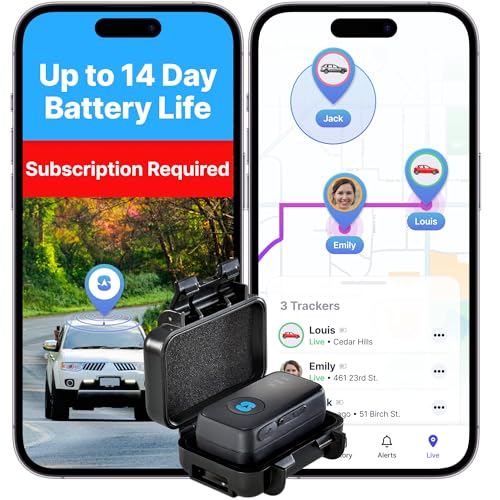 |
Spytec GL300 GPS Tracker Best for Stealth Compact 4G LTE, internal battery up to 2 weeks, optional weatherproof case |
9.0 | 🛒 Check Price |
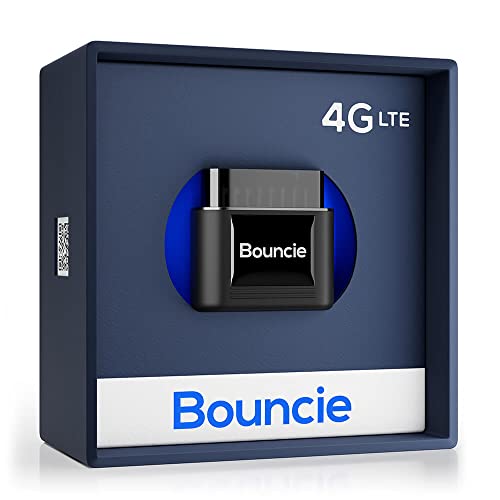 |
Bouncie GPS Tracker Best App Experience OBD-powered 4G LTE, 15 second updates, low flat monthly plan |
8.8 | 🛒 Check Price |
 |
Tracki GPS Tracker (2024 Model) Best Compact Value Worldwide 4G LTE, tiny form factor, magnetic and waterproof case options |
8.6 | 🛒 Check Price |
 |
Optimus 2.0 GPS Tracker Best Battery Flexibility Real-time 4G LTE, optional extended battery pack, waterproof magnetic case |
8.4 | 🛒 Check Price |
|
MOTOsafety OBD GPS Tracker Best for Simple Setup OBD-powered 4G LTE, daily route mapping, low flat monthly plan |
8.0 | 🛒 Check Price |
1. LandAirSea 54 GPS Tracker: Best Overall
The LandAirSea 54 is the tracker we kept reaching for because it nails the basics a trailer owner actually needs. The waterproof, magnetic puck clamps onto any steel frame member or tucks inside a sealed storage bay, and the app delivers genuinely real-time location with update intervals you can dial down to a few seconds when the trailer is on the move. Geofencing is reliable, so the instant your rig leaves the storage lot you get an alert, and the historical trail is detailed enough to give recovery teams a precise route.
Its real weakness is battery management. On the fastest update setting you may only get a week or two before a recharge, which is fine for a trailer you tow often but annoying for one that sits in long-term storage. You can stretch life by lowering the ping rate, and many owners hardwire it to trailer power for set-and-forget use, but out of the box you should plan on pulling it for a charge regularly. The required subscription is also unavoidable, though the coverage and app quality justify it.
- Waterproof IPX7 housing with a strong internal magnet for hidden frame mounting
- Real-time tracking with update intervals as fast as every 3 seconds
- SilenCild stealth mode hides the device from bug detectors
Pros: Genuinely waterproof and built for outdoor undercarriage mounting; Fast, reliable update rate with solid nationwide 4G coverage; Compact magnetic puck installs in seconds with no wiring
Cons: Requires an ongoing data subscription to function; One to two week battery life means frequent recharges for stored trailers
2. Vyncs GPS Tracker (4G LTE, OBD): Best Hardwired
Vyncs solves the single biggest frustration of trailer tracking, which is dead batteries during long storage. Because it pulls power from a wired connection or a 7-pin to OBD style feed, it can run indefinitely without you ever touching it. For an owner who hardwires the unit into the trailer’s 12V system, this is a true install-once device, and the bundled first year of service means you aren’t signing up for a recurring charge on day one. The app covers geofencing, trip history, and movement alerts competently.
The trade-off is flexibility. This isn’t a tracker you toss in a storage bay and forget, it expects a power source, so installation takes more planning than a magnetic puck. The default update cadence is also slower than the premium real-time units, which matters less for theft alerts, which still fire quickly, but means the live map lags during active towing. If you’re comfortable running a wire and want zero recharge anxiety, Vyncs is hard to beat.
- Draws power directly from the trailer or tow vehicle for unlimited runtime
- First year of service is bundled, lowering ongoing commitment
- Trip history, geofences, and roadside SOS built into the app
Pros: Never needs recharging when wired to constant power; Bundled first year of data reduces long-term subscription friction; Strong trip logging and alerting feature set
Cons: Designed around a power source, so it isn’t a grab-and-go internal battery unit; Update interval is slower than the premium real-time pucks
3. Spytec GL300 GPS Tracker: Best for Stealth
The Spytec GL300 is the choice when concealment is your priority. It’s small enough to disappear inside a cabinet, behind a panel, or down a frame channel, so a thief who finds and dumps the trailer is unlikely to spot it. The app is one of the better ones in this group, with crisp geofencing and dependable movement alerts, and update rates are quick enough to follow an active tow in close to real time. For drivers who want a tracker no one will ever notice, it’s an easy recommendation.
Its limitation is that the bare unit isn’t built for the elements. To mount it under the trailer or anywhere exposed you really need the optional magnetic weatherproof case, which adds bulk and another item to buy. Battery life sits in the one to two week range like most internal-battery pucks, so stored trailers still need a recharge routine. Treat it as an indoor-concealment tracker first and an undercarriage tracker only with the case, and it performs very well.
- Very small footprint that hides easily inside cabinets or frame channels
- Real-time updates with customizable geofence zones
- Optional magnetic weatherproof case for exterior mounting
Pros: One of the smallest real-time trackers, ideal for concealment; Clean, well-rated app with reliable alerting; Add-on cases extend it to outdoor and magnetic mounting
Cons: Needs the extra case to survive outdoor mounting; Subscription required and battery needs periodic recharging
4. Bouncie GPS Tracker: Best App Experience
Bouncie earns its place on app quality and update speed. The 15 second refresh keeps the live map smooth while towing, and the app layers in geofences, trip history, and notifications that are genuinely pleasant to use compared to the clunky interfaces some trackers ship with. The flat, low monthly plan with no contract makes it painless to keep active year round, and setup is plug-and-play wherever you have a powered port to feed it.
The catch for trailer owners is that Bouncie was designed primarily around a vehicle’s OBD port. A travel trailer has no diagnostic socket, so you’ll need to wire it into the trailer’s 12V system or run it from the tow vehicle, which limits the standalone theft-watch use case while the trailer sits unhooked in storage. There’s no internal battery to fall back on, so this is best for owners who plan to power it permanently. Within that role, the experience is excellent.
- Fast 15 second update rate for smooth live tracking
- Highly rated app with geofencing, trip history, and accident alerts
- Simple flat monthly plan with no long contract
Pros: Excellent, polished app with fast refresh and clear alerts; Straightforward month-to-month plan with no lock-in; Easy plug-in setup when a compatible power port is available
Cons: Built around an OBD or wired port, less ideal for a bare trailer with no diagnostic socket; No standalone internal battery for grab-and-go use
5. Tracki GPS Tracker (2024 Model): Best Compact Value
The Tracki 2024 model packs real-time tracking into one of the smallest bodies in this roundup, which makes it superb for hiding inside a trailer where a thief would never think to look. It hops across multiple cellular networks for broad coverage, including rural and cross-border travel, and the app handles geofencing and movement alerts well. The deep catalog of magnetic and waterproof cases lets you adapt it to almost any mounting spot you can imagine.
Where it shows its limits is endurance and weatherproofing in stock form. The tiny battery doesn’t last long on fast update intervals, so for a stored trailer you’ll either recharge often or wire it to power, and the bare unit needs an accessory case before it can ride exposed under the frame. It also leans on a subscription. As a concealable, flexible, well-supported tracker it’s strong value, just go in expecting to manage the battery.
- Pocket-sized unit with worldwide multi-network coverage
- Unlimited distance real-time tracking with movement alerts
- Wide range of mounting accessories including magnet and waterproof cases
Pros: Among the smallest trackers available for deep concealment; Worldwide coverage across multiple cellular networks; Large accessory ecosystem for flexible mounting
Cons: Short internal battery life on frequent updates; Subscription is required and add-on cases are needed for outdoor use
6. Optimus 2.0 GPS Tracker: Best Battery Flexibility
Optimus 2.0 stands out for owners whose biggest worry is a tracker dying while the trailer sits in storage for a season. The optional extended battery case dramatically lengthens runtime, and combined with adjustable update intervals you can tune it to ping just often enough to stay useful for weeks at a time without a recharge. The waterproof magnetic case is properly rated for undercarriage mounting, and the app handles geofencing and movement alerts cleanly with dependable coverage.
The honest weakness is that the headline endurance depends on add-ons. The base unit’s battery is ordinary, so getting the long runtime you want means buying the extended case, which adds bulk. Coverage is also tuned for the US, so cross-border or international travelers should look at a worldwide-network unit instead. For a domestic owner who stores a trailer for long stretches and wants to minimize recharges, the Optimus battery flexibility is its standout strength.
- Optional extended battery case stretches runtime dramatically
- Configurable update rates from real-time down to power saving
- Waterproof magnetic case rated for undercarriage mounting
Pros: Extended battery option solves long-storage runtime better than most; Flexible update intervals to balance speed against battery life; Reliable US-based coverage and dependable app alerts
Cons: Best runtime requires buying the add-on extended battery case; Coverage is focused on the US rather than worldwide
7. MOTOsafety OBD GPS Tracker: Best for Simple Setup
MOTOsafety is the pick for owners who just want something that works without fiddling. It plugs into a powered port and starts reporting, delivering daily route maps and geofence alerts that cover the core theft-deterrent job. The plan is flat, cheap to keep active, and contract-free, and the interface is simple enough that less tech-comfortable owners won’t feel lost. For a trailer that’s wired to power and used on a regular schedule, it quietly does what it should.
Its weakness is speed and flexibility. Update intervals are slower than the real-time pucks, so the live map is more of a periodic check-in than a second-by-second feed, which is fine for catching a theft but less satisfying for active towing. Like the other OBD-based units, it needs a powered feed and offers no internal battery, so a bare trailer means running a wire. Within those limits it’s a dependable, no-drama choice that doesn’t overcomplicate things.
- Plugs straight into a powered OBD or wired feed for no-fuss install
- Daily route reports and geofence boundary alerts
- Affordable flat monthly plan with no contract
Pros: Extremely simple plug-in installation; Clear daily route summaries and boundary alerts; Low, straightforward monthly plan
Cons: Slower update cadence than premium real-time trackers; Needs a powered port, so a bare trailer requires wiring
Frequently Asked Questions
Where is the best place to hide a GPS tracker on a travel trailer?
The strongest hiding spots combine concealment with a clear path to the sky for the cellular and GPS signal. Inside a sealed storage bay, tucked into a frame channel, behind a removable interior panel, or magnetically clamped to a hidden section of the steel frame all work well. Avoid burying the unit under heavy metal or deep inside the chassis where signal gets blocked. If you mount it externally under the trailer, use a waterproof magnetic case so road spray and weather don’t kill it. The goal is a spot a thief wouldn’t casually find but where the antenna can still reach a tower.
Do GPS trackers for travel trailers need a monthly subscription?
Almost all real-time cellular trackers require a data plan because they use a SIM card to send location over the 4G LTE network, just like a phone. Plans are typically a small flat monthly or yearly fee, and some units like Vyncs bundle the first year so you don’t pay separately at first. A few trackers offer no-contract month-to-month options, which is handy if you only camp seasonally and want to pause service in the off months. Budget for the subscription as part of the device, since a tracker without an active plan simply can’t report its location.
How long does the battery last on a trailer GPS tracker?
It depends heavily on how often the device reports. Internal-battery pucks set to fast real-time updates often last only one to two weeks per charge, while the same unit on a slower power-saving interval can stretch to a month or more. For a trailer that sits in long-term storage, the smarter move is either a lower update rate, an extended battery accessory like the one Optimus offers, or hardwiring the tracker to the trailer’s 12V system so it never runs out. If you tow frequently and recharge between trips, a standard internal battery is usually fine.
Will a GPS tracker work at remote campgrounds with weak cell signal?
Coverage comes down to the cellular network the tracker uses, not the GPS itself. GPS positioning works almost everywhere, but the device still needs a cell signal to send that position to your app. Trackers that roam across multiple carriers, such as worldwide units, are more likely to find a usable tower in rural areas than a single-network device. Even where signal is spotty, most trackers cache the location and upload it once they reconnect, so you still get a trail. For frequent backcountry camping, prioritize a multi-network tracker with strong rural coverage.
Can a thief detect or disable my trailer GPS tracker?
A determined thief with a signal scanner can sometimes detect a transmitting tracker, which is why some units like the LandAirSea 54 include a stealth mode that minimizes detectable emissions. The best defense is concealment and redundancy. Hide the main tracker well, and consider a second inexpensive unit in a different location so that even if one is found and removed, the other keeps reporting. Hardwired trackers can be cut if the wiring is found, while internal-battery units keep running once disconnected from the trailer, so a mix of both types gives you the most resilient setup.
Our Verdict
For most travel trailer owners, the LandAirSea 54 is the best overall pick, combining genuine waterproofing, fast real-time updates, strong nationwide coverage, and a magnetic puck that hides and installs in seconds, with battery recharges being its only real chore. If you’d rather never think about charging at all, the Vyncs GPS Tracker is the standout runner up, running indefinitely on wired power with a bundled first year of service, making it ideal for a trailer you hardwire once and forget. Choose the LandAirSea for flexible grab-and-go protection, and the Vyncs for set-and-forget confidence.
