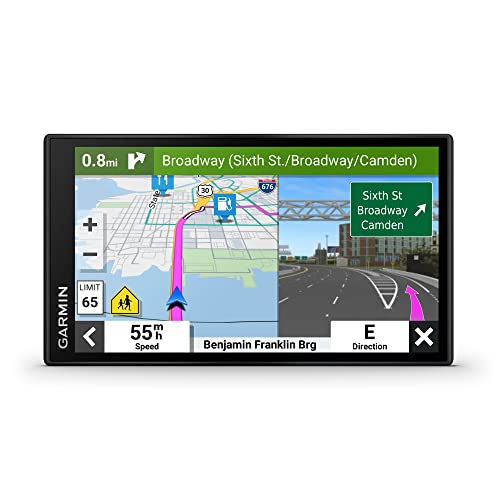
Towing a travel trailer changes everything about how you navigate. A standard car GPS doesn’t know your rig is taller than the underpass ahead, heavier than the bridge ahead, or too long for the hairpin switchback it just routed you onto. The right travel trailer GPS asks for your height, length, and weight, then keeps you on roads your setup can actually handle. That single difference can save you from a peeled-back roof, a low-clearance dead end, or a white-knuckle backup on a mountain pass.
We looked at the GPS units RV owners actually rely on, focusing on RV-specific routing, bridge and tunnel clearance warnings, screen size you can read at highway speed, and how well each one handles campgrounds, propane restrictions, and long-trip planning. Below are seven units worth your dashboard, ranked best first, with an honest weakness called out for each one so you know exactly what you’re getting before you tow.
| Photo | Product | Score | Buy |
|---|---|---|---|
 |
Garmin RV 1095 Best Overall 10-inch HD touchscreen, custom RV routing, built-in dash cam |
9.5 |
ⓘ We may earn a commission from qualifying purchases made through links on this page, at no extra cost to you.
|
|
🚗
|
Garmin RV 890 Best Big Screen Value 8-inch edge-to-edge display, RV routing, Wi-Fi map updates |
9.3 | 🛒 Check Price |
 |
Garmin RV 795 Best Balanced Pick 7-inch display, RV routing, Garmin Drive app pairing |
9.1 | 🛒 Check Price |
|
Garmin RV 1090 Best Large Display 10-inch display, RV routing, no dash cam |
8.9 | 🛒 Check Price |
 |
Rand McNally OverDryve 8 RV Best Trip Planner 8-inch tablet-style unit, RV routing, dash cam ready |
8.7 | 🛒 Check Price |
 |
Rand McNally RVND 7730 LM Best for RV Tools 7-inch RV GPS, lifetime maps, RV-specific points of interest |
8.4 | 🛒 Check Price |
|
Garmin RV 780 Best Compact Choice 7-inch display, RV routing, voice-activated navigation |
8.2 | 🛒 Check Price |
1. Garmin RV 1095: Best Overall
The Garmin RV 1095 is the unit we would hand to a first-time trailer owner without hesitation. You enter your rig profile once, height, length, and gross weight, and it builds routes that respect low bridges, weight-limited roads, and tight turns instead of pretending you’re in a sedan. The 10-inch screen is the real story here. At highway speed you can read the next turn and lane guidance with a quick glance instead of squinting, which matters far more than spec sheets suggest when you’re managing a long rig in traffic.
The bundled dash cam is a genuinely useful extra, recording the road ahead so you have footage if something happens while towing. The honest weakness is bulk and feeding the camera. That gorgeous 10-inch panel eats a lot of glass, and on a smaller windshield it can crowd your view. The dash cam also chews through storage, so the modest included recording space fills fast and you’ll want a generous high-endurance card to get full coverage on long travel days.
- Large 10-inch glass display readable in direct sunlight
- Custom RV routing based on your trailer height, weight, and length
- Integrated dash cam that records the road as you tow
Pros: Huge, crisp screen is easy to read while towing; Built-in dash cam adds incident protection without a second device; Detailed RV park and service directory from Tread and partners
Cons: The large unit takes up significant windshield real estate; On-board dash cam storage fills quickly without a roomy card
2. Garmin RV 890: Best Big Screen Value
The Garmin RV 890 hits a sweet spot that many trailer owners land on after shopping. You still get a large, sharp 8-inch display and the same RV routing brain that warns you about low bridges, sharp curves, and roads that ban trailers, but in a package that mounts more easily on an average windshield. Entering your trailer dimensions takes a minute and pays off every mile, because the unit actively steers you away from clearance traps a car GPS would happily send you into.
Wireless map updates over Wi-Fi are a quiet but real convenience, since you’re never hunting for a laptop to keep your maps fresh before a big trip. The weakness is the magnetic mount. It’s convenient for popping the unit on and off, but on washboard gravel campground access roads it can shimmy more than a screw-down mount, so check it before you pull out. There’s also no dash cam at this level, which is fine if you already run one but worth knowing before you buy.
- 8-inch high-resolution display with slim bezels
- RV-specific routing with bridge height and weight alerts
- Wi-Fi map and software updates without a computer
Pros: Excellent screen size without the bulk of a 10-inch unit; Wireless updates keep maps current with no cables; Smart Detour reroutes around traffic and closures while towing
Cons: No built-in dash cam at this tier; Magnetic mount can feel less secure on very rough roads
3. Garmin RV 795: Best Balanced Pick
The Garmin RV 795 is the model we point people to when they want full RV routing without a screen that dominates the cab. The 7-inch display is the size most drivers are used to, so it slots onto nearly any windshield, yet it still runs the complete trailer-aware navigation set. You get bridge height alerts, sharp-curve warnings, and steep-grade notices that genuinely change how confidently you approach mountain descents with weight pushing behind you.
Paired with the Garmin Drive app on your phone, it pulls in live traffic and weather, which is a meaningful help when you’re deciding whether to push through a pass or wait out a storm. The honest tradeoff is that the smaller screen shows less map context at a glance than the 890, so busy interchanges can feel tighter to read. A few of the connected features also lean on your phone holding signal, so in deep backcountry you fall back to the core offline navigation, which thankfully remains solid.
- Compact 7-inch touchscreen that fits most windshields
- Custom RV routing with elevation and curve warnings
- Pairs with the Garmin Drive app for live traffic and weather
Pros: Right-sized screen for sedans and trucks alike; Live traffic and weather through your phone connection; Pilots a long trailer through curves with advance warnings
Cons: Smaller screen than the 890 and 1095; Some app features depend on a steady phone signal
4. Garmin RV 1090: Best Large Display
The Garmin RV 1090 is for the driver who wants the biggest, clearest map possible and doesn’t need a built-in camera. The 10-inch screen makes a real difference on long highway runs and tangled urban interchanges, letting you see what is coming several moves ahead so you can position a long rig calmly instead of reacting late. It runs the same RV routing engine, so your height, weight, and length still shape every route it builds.
The point-of-interest directory is a highlight for trailer travel, with campgrounds, dump stations, and propane stops baked in so trip planning happens on the device rather than across three phone apps. The weakness is simply size and an aging feature set next to the 1095. On a compact windshield the unit blocks more of your view than some drivers like, and unlike the newer 1095 it has no dash cam, so if you want recording you’ll mount a separate device.
- Massive 10-inch screen for clear long-range route reading
- Full RV routing tuned to your trailer profile
- Detailed campground and service points of interest
Pros: Best-in-class screen real estate for the money it asks; Easy to read complex junctions far in advance; Strong directory of RV parks, dump stations, and services
Cons: Large footprint can block part of the windshield; No integrated dash cam unlike the newer 1095
5. Rand McNally OverDryve 8 RV: Best Trip Planner
The Rand McNally OverDryve 8 RV takes a different path by building RV navigation on top of an Android tablet, and for planning-heavy travelers that pays off. You get genuine RV-safe routing keyed to your trailer dimensions, plus a trip-planning suite that lets you string together stops, campgrounds, and fuel along a multi-day itinerary in a way that feels more like a travel app than a turn-by-turn box. The 8-inch screen is bright and the tablet interface is familiar to anyone who owns a phone.
That tablet foundation is also the source of its weakness. The Android layer occasionally feels slower to wake and respond than a purpose-built Garmin, especially when juggling navigation and media at once. We also caught a few map data quirks on remote rural roads, so it pays to sanity-check a route against your map before committing on backcountry stretches. For drivers who love planning and want an all-in-one device, those tradeoffs are easy to live with.
- 8-inch Android-based tablet with RV-safe routing
- Trip planning tools with campground and fuel layers
- Optional dash cam and Bluetooth media integration
Pros: Doubles as an Android tablet for apps and media; Strong RV trip-planning and itinerary features; Bright screen with intuitive tablet-style interface
Cons: Android layer can feel slower than dedicated Garmin units; Occasional map data quirks on rural routes
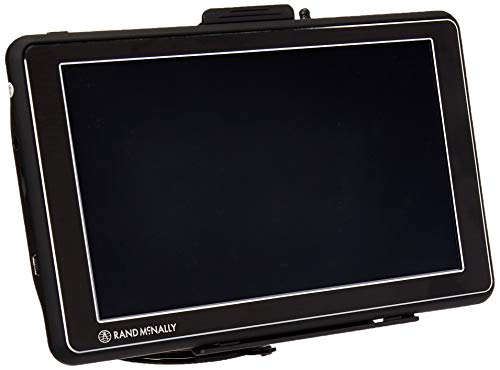
6. Rand McNally RVND 7730 LM: Best for RV Tools
The Rand McNally RVND 7730 LM is a workhorse aimed purely at RV and trailer owners. You enter your rig profile and it routes around clearance and weight problems while surfacing an unusually deep set of RV resources, from campground listings to RV-friendly service stops and reference tools that veteran travelers appreciate. Lifetime map updates are included, which keeps the ongoing maintenance burden low over years of trips.
This is the budget-conscious choice in the lineup, and it shows in the experience. The interface looks and feels older than the glossy Garmin and OverDryve units, and the touchscreen is less responsive, so menu taps sometimes need a firmer or second press. None of that affects routing accuracy, which is what matters most, but if you’re used to a smartphone you’ll notice the lag. For a no-frills, RV-first navigator with strong tools, it still earns its spot.
- RV routing tailored to length, height, and weight
- Lifetime map updates included
- Deep RV point-of-interest and tools database
Pros: Rich set of RV-focused tools and resources; Lifetime maps reduce long-term upkeep; Clear, simple menus aimed squarely at RVers
Cons: Interface feels dated next to newer touchscreens; Touch response is less crisp than premium models
7. Garmin RV 780: Best Compact Choice
The Garmin RV 780 remains a solid compact option for trailer owners who want proven RV routing without paying for the latest screen. It carries the core trailer-aware navigation, taking your height, weight, and length into account, and adds voice-activated control so you can change destinations or check arrival time without taking your hands off the wheel while managing a long rig. Bluetooth calling and phone notifications round out a genuinely useful feature set in a small, windshield-friendly package.
The catch is that it’s an earlier generation now sitting beneath the 795 in Garmin’s lineup. You miss some of the newest live-service polish and the interface is a step behind the current models, so if you’re buying for the long haul the 795 is the more future-proof pick. Still, the 780 still navigates trailers safely and reliably, which is why it earns a place here for anyone who finds it and wants dependable RV routing in a compact form.
- Compact 7-inch unit with full RV routing
- Voice-activated navigation for hands-free control
- Bluetooth calling and smartphone notifications
Pros: Hands-free voice control keeps eyes on the road; Reliable RV routing in a small, easy-to-mount body; Bluetooth calling and alerts reduce phone fumbling
Cons: An older model now overshadowed by the 795; Lacks the newest live-service features
Frequently Asked Questions
Do I really need an RV-specific GPS for a travel trailer?
Yes, and the reason is safety, not convenience. A standard car or phone GPS has no idea your rig is tall, long, and heavy, so it’ll happily route you under a low bridge, onto a weight-limited road, or into a tight turn that’s miserable or impossible with a trailer behind you. An RV GPS asks for your height, length, and weight up front, then builds routes that respect those limits and warns you about clearance, sharp curves, and steep grades. One avoided low-clearance underpass pays for the device many times over.
What trailer measurements should I enter into the GPS?
Enter the height of your tallest point including any rooftop air conditioner, vent, or antenna, the total length of your tow vehicle plus trailer combined, and your gross combined weight when loaded for travel. Measure rather than guess, because a few inches of roof hardware is exactly what gets clipped on a marginal bridge. It’s smart to round height up slightly for a safety buffer. Once entered, the GPS uses that profile to filter out roads your setup can’t safely use.
What screen size is best for a travel trailer GPS?
Bigger screens genuinely help when you’re towing, because you can read the next turn and lane guidance with a single glance instead of staring while managing a long rig. A 7-inch screen is the comfortable minimum and fits almost any windshield. An 8-inch unit gives you more map context without much added bulk, and a 10-inch display is fantastic for reading complex interchanges early, though it blocks more glass and can crowd a smaller windshield. Match the size to your windshield space and how much detail you like to see ahead.
Will an RV GPS show me campgrounds and dump stations?
Most dedicated RV units do, and it’s one of the best reasons to buy one over a car GPS. The better models include directories of RV parks, campgrounds, dump stations, propane refills, and RV-friendly service stops, so you can plan stops directly on the device instead of bouncing between phone apps. Coverage and accuracy vary, so it’s still wise to confirm hours and availability before you arrive, but having these points of interest built into your routing makes multi-day trip planning far smoother.
Do these GPS units need a cell signal or monthly subscription?
Core navigation works fully offline, which is essential since trailer travel often takes you out of cell range. The maps live on the device, so turn-by-turn routing, clearance warnings, and points of interest all function with no signal. Live features like real-time traffic and weather usually come through a paired phone or built-in connectivity and do need a signal to update. Map updates themselves are typically free, often delivered over Wi-Fi, so you generally aren’t locked into a recurring subscription just to navigate.
Our Verdict
For most travel trailer owners, the Garmin RV 1095 is our top pick thanks to its huge, easy-to-read 10-inch screen, trustworthy trailer-aware routing, and a built-in dash cam that adds real protection while you tow. If that large footprint is more than your windshield wants, the Garmin RV 890 is the runner up and the smarter buy for many, delivering the same RV routing brain and a generous 8-inch display in an easier-to-mount package. Whichever you choose, set your trailer profile carefully before the first trip and let the GPS keep you on roads your rig can actually handle.