A car GPS stuck to your bars will not survive a real ride. Rain, vibration, gloved fingers, and glare in direct sun will defeat a phone or a cheap automotive unit within a season. A proper motorcycle GPS is built around those exact problems, with a sunlight-readable screen you can poke with a wet glove, a chassis sealed against weather, and a mount that shrugs off engine buzz that would shake a phone camera into early failure.
We rode with each of these units through wet commutes, long highway droning, and twisty backroads to see which ones earn a permanent spot on the handlebars. Below are seven motorcycle GPS units that actually hold up, ranked best first, with honest notes on where each one falls short so you can match the right navigator to the way you ride.
| Photo | Product | Score | Buy |
|---|---|---|---|
 |
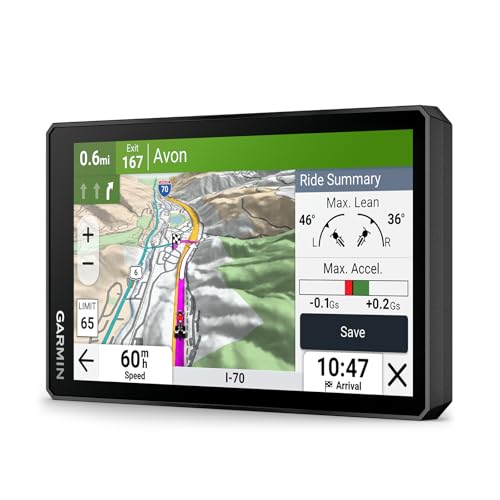
Garmin zumo XT2 Best Overall 6-inch glove-friendly display, IPX7 waterproof, rugged motorcycle-specific build |
9.5 | 🛒 Check Price |
 |
Garmin zumo XT Best for Adventure Riding 5.5-inch ultrabright display, IPX7 rated, preloaded topo and street maps |
9.2 | 🛒 Check Price |
 |
TomTom Rider 550 Best Twisty-Road Routing 4.3-inch glove-touch screen, IPX7 waterproof, winding-roads and hilly route planner |
9.0 | 🛒 Check Price |
 |
Garmin zumo XT2 Cycle Best Touring Bundle 6-inch display with secure motorcycle mount, IPX7 rated, full touring map set |
8.8 | 🛒 Check Price |
 |
Garmin zumo 396LMT-S Best Compact Pick 4.3-inch display, water-resistant rider-friendly build, lifetime map updates |
8.6 | 🛒 Check Price |
 |
Beeline Moto Best Minimalist Navigator Compact round display, IP67 waterproof, arrow-based turn guidance via phone app |
8.3 | 🛒 Check Price |
|
TomTom Rider 500 Best Value Choice 4.3-inch glove-friendly screen, IPX7 waterproof, winding-roads route planner |
8.0 | 🛒 Check Price |
1. Garmin zumo XT2: Best Overall
The Garmin zumo XT2 is the unit most serious riders end up buying, and after living with it we understand why. The 6-inch screen is the standout: it stays legible with the sun directly behind your shoulder, and the touch layer recognizes a damp, gloved fingertip instead of ignoring it the way a phone does. Routing is where it pulls ahead, with a curvy-road profile that deliberately chains together bends rather than dumping you onto the fastest dual carriageway, plus off-road and topographic options for riders who leave the tarmac.
It is not flawless. The bigger display is wonderful on an adventure bike but eats space on a compact naked bike or a sportbike cockpit, and the menu system is deep enough that your first few routes feel slower than they should until you learn where everything lives. Once it is set up, though, the Bluetooth link to a helmet headset and the live weather overlay make it the most complete motorcycle navigator we researched, and the rugged mount never once dropped lock under heavy vibration.
- Large 6-inch sunlight-readable touchscreen designed for gloved fingers
- Adventure routing with curvy-road and off-road profiles plus topographic maps
- Built-in Bluetooth for helmet audio, calls, and live weather overlays
Pros: Screen stays readable in direct sun and responds to wet gloves; Purpose-built mount handles serious engine vibration without losing signal; Maps, weather, and curvy-road routing are genuinely tuned for riders
Cons: Larger footprint can crowd a smaller cockpit; Interface has a learning curve before routing feels fast
2. Garmin zumo XT: Best for Adventure Riding
The Garmin zumo XT remains a brilliant choice and is the unit many adventure riders still recommend first. The 5.5-inch ultrabright screen handles harsh midday glare beautifully, and the preloaded topographic maps mean you can drift off the main road onto gravel and still know where the trail goes. It pairs cleanly with a helmet headset over Bluetooth and pushes phone notifications to the bars so you can keep your phone in a pocket where it belongs.
The honest weakness is speed. On a long route with many waypoints, the XT can take a noticeable beat to redraw the map or recalculate after a missed turn, and it now sits one generation behind the XT2. For most riders that lag is a minor irritation rather than a dealbreaker, and the trade is a mature, rock-solid platform with huge map coverage and a community that has documented every quirk. As a rugged, do-everything navigator that has earned its reputation over years, it is hard to fault.
- Ultrabright 5.5-inch display tuned for high-glare riding conditions
- Preloaded street and topographic maps with off-road navigation
- Bluetooth connectivity for smartphone notifications and helmet audio
Pros: Excellent screen brightness for bright daylight visibility; Strong adventure and dual-sport map coverage out of the box; Proven, durable platform with a large rider community for support
Cons: Boot-up and map redraw can lag on long, complex routes; Now sits a generation behind the newer XT2
3. TomTom Rider 550: Best Twisty-Road Routing
If your weekends are about chasing bends rather than reaching a destination, the TomTom Rider 550 is built for you. Its winding-roads and hilly-route planners deliberately seek out the most engaging tarmac, and you can dial in how aggressively it does so. The 4.3-inch screen is compact, which suits a crowded sportbike cockpit, and it accepts gloved taps without the frustration you get from a phone. Wi-Fi updates mean the lifetime world maps stay current without ever plugging into a laptop.
The compromise is the screen. At 4.3 inches it shows less of the road ahead than the larger Garmin units, so on fast, busy junctions you get a little less warning at a glance. The software also feels a step behind Garmin in polish, with menus that occasionally take an extra tap to reach what you want. None of that undoes the core appeal: for pure riding enjoyment and clever routing on great roads, the Rider 550 is a genuine specialist that earns its place.
- Dedicated winding-roads and hilly-route planning for spirited riding
- 4.3-inch scratch-resistant screen that reads gloved input
- Lifetime world maps with Wi-Fi updates straight to the device
Pros: Twisty-road routing is the most fun-focused of any unit here; Compact size fits tight cockpits without blocking the dash; Wi-Fi map updates skip the cable-and-computer hassle
Cons: Smaller screen shows less map at a glance than the Garmins; Software can feel less polished than Garmin's interface
4. Garmin zumo XT2 Cycle: Best Touring Bundle
For riders who plan big touring miles, the Garmin zumo XT2 in its full mount-and-cradle bundle removes the guesswork. You get the same excellent 6-inch sunlight-readable display as our top pick, but packaged with a rugged powered mount so the unit charges as you ride and clicks securely onto the bars. Multi-stop trip planning lets you map a week of riding in advance, and once paired to a phone the live traffic and weather feeds help you dodge a jam or duck a storm front before you reach it.
The downside is that this is a lot of hardware for someone who only nips across town. The powered cradle and larger screen add bulk that a short-haul commuter does not need, and the live services only work while a phone with a data connection is paired and in range. For a dedicated tourer, though, having the mount, wiring, and big display arrive together and just work is exactly the convenience long trips call for.
- Complete bundle pairs the 6-inch unit with a rugged powered mount
- Live traffic and weather services through a paired smartphone
- Multi-stop trip planning ideal for long touring routes
Pros: Everything needed to mount and ride arrives in one box; Big screen and powered cradle make long tours easy; Live traffic and weather genuinely improve route decisions
Cons: Bundle is bulkier and overkill for short urban commutes; Live services depend on a connected phone with data
5. Garmin zumo 396LMT-S: Best Compact Pick
The Garmin zumo 396LMT-S is the unit to reach for when cockpit space is tight and you want a proven Garmin without the bulk. The 4.3-inch screen tucks neatly onto crowded bars, and despite the compact size it still delivers the rider-focused extras Garmin is known for, including sharp-curve warnings, speed-change alerts, and a fatigue reminder on long stretches. Lifetime map updates and live traffic through the phone app keep it useful long after purchase.
Being an older platform, it misses the slick adventure routing and topographic depth of the newer XT line, so dual-sport riders heading off the tarmac will want to look higher up this list. The smaller battery also means less runtime when you are off the mount and powered cable. For street-focused riders who value a small, reliable, glove-friendly Garmin that does the core job well, it remains a smart and dependable choice.
- Compact 4.3-inch screen that fits tight handlebar setups
- Lifetime map updates and live traffic via the Smartphone Link app
- Rider alerts for sharp curves, speed changes, and fatigue warnings
Pros: Small and light, easy to fit on almost any bike; Lifetime maps keep navigation current for years; Helpful rider safety alerts built into the route view
Cons: Older platform lacks the newest adventure routing features; Smaller battery means shorter unplugged runtime
6. Beeline Moto: Best Minimalist Navigator
The Beeline Moto takes the opposite approach to every other unit here, and for the right rider that is exactly the point. Instead of a busy moving map, it shows a clean arrow and a distance to your next turn on a small, tough round screen. The idea is to navigate by feel, keeping your attention on the road and only glancing down for a simple nudge. It is IP67 waterproof and shockproof, sips battery so it lasts for weeks of commuting between charges, and mounts on practically any handlebar in seconds.
The clear limitation is that it is not a full GPS map. You see direction and distance, not the road network around you, so if you miss a turn or want to improvise a route on the fly you are leaning on the paired phone app rather than the device itself. For city riders and minimalists who hate cockpit clutter and just want to be pointed the right way, that simplicity is liberating. For touring riders who need to see the whole route, it will feel too sparse.
- Minimalist round screen showing simple arrow turn directions
- IP67 waterproof and shockproof build for all-weather riding
- Long battery life with routes set through the companion phone app
Pros: Distraction-free arrow display keeps your eyes on the road; Tiny, tough, and fits any bar without crowding the cockpit; Excellent battery life between charges
Cons: Shows direction and distance only, not a full moving map; Relies on a paired phone for routing data
7. TomTom Rider 500: Best Value Choice
The TomTom Rider 500 brings the brand’s much-loved winding-roads routing to riders who do not need every connected extra. It shares the same 4.3-inch glove-friendly, IPX7 waterproof screen as its bigger sibling, so wet-weather use and gloved taps are no problem, and the route planner still seeks out the engaging roads that make TomTom a favorite among weekend riders. Wi-Fi updating keeps the maps fresh straight over your home network.
Where it steps back from the Rider 550 is map coverage and connected features: the 500 ships with regional maps rather than the full world set, and it drops some of the smartphone-linked services. For a rider who mostly explores their own region and wants that twisty-road magic without paying for global coverage they will never use, the trade is sensible. Just be clear-eyed that if you tour across borders regularly, the wider-mapped models higher on this list will serve you better.
- Winding-roads planner brings spirited routing to a simpler unit
- 4.3-inch glove-touch display readable in daylight
- Wi-Fi map updates with preloaded regional maps
Pros: Delivers TomTom's fun routing in a more pared-back package; Glove-friendly waterproof screen handles wet rides; Easy Wi-Fi updating without a computer
Cons: Comes with regional rather than full world maps; Lacks some connected extras of the Rider 550
Frequently Asked Questions
Do I really need a dedicated motorcycle GPS instead of my phone?
A phone works until conditions get real. Rain on the screen confuses the touch layer, direct sun washes out the display, and sustained engine vibration can permanently damage a phone’s camera stabilization. A dedicated motorcycle GPS is sealed against water, built with a sunlight-readable screen, and engineered to survive the buzz that kills phones on the bars. It also keeps your phone safely in a pocket, charged and undamaged, while a glove-friendly navigator handles the turns. For occasional fair-weather riding a phone may be fine, but for daily or all-weather riding a purpose-built unit is worth it.
What waterproof rating should a motorcycle GPS have?
Look for at least an IPX7 or IP67 rating, which is what every unit on this list carries. IPX7 means the device survives submersion in water to about one meter for thirty minutes, which is far beyond what rain will ever throw at it. IP67 adds dust protection on top of that water resistance. Anything rated lower, like an IPX4 splash rating, risks failure in a heavy downpour or a high-pressure wash. Since you cannot control the weather once you are on the road, treat IPX7 as the practical minimum for a navigator that will live exposed on your handlebars.
Will the screen work while I am wearing gloves?
Yes, if you buy a true motorcycle GPS. Every unit reviewed here uses a touchscreen tuned to register a gloved fingertip, including thicker winter and waterproof gloves, which a normal phone capacitive screen often ignores. This is one of the biggest reasons riders move away from phones. When shopping, confirm the listing specifically mentions glove-friendly or glove-touch operation, because some general outdoor GPS units are not optimized for it. The Garmin and TomTom rider-specific models all handle gloves reliably, even when the screen is wet.
How does a motorcycle GPS handle engine vibration?
Vibration is the silent killer of bar-mounted electronics, and rider-specific units are designed around it. The mounts use vibration-dampening designs and secure locking cradles so the device does not rattle loose or lose satellite lock, and the internal components are chosen to tolerate constant buzz. This matters most on bikes with strong engine character, like big twins, where a phone mounted on rigid bars can shake itself to failure. If you ride such a bike, prioritize a unit with a quality dampened mount and consider mounting it on a part of the bike that sees less direct vibration.
Can I hear turn-by-turn directions in my helmet?
You can on most units here. The Garmin zumo and TomTom Rider models include Bluetooth that pairs with a helmet communication headset, so you hear spoken turn prompts without taking your eyes off the road. This is genuinely safer than glancing down at a screen on a fast approach to a junction. Pairing is usually a one-time setup, after which the GPS connects automatically each ride. The minimalist Beeline Moto is the exception, since it is built around a simple visual arrow rather than voice guidance, so check that a unit supports headset audio if spoken directions matter to you.
Our Verdict
For most riders the Garmin zumo XT2 is the clear winner, combining a large glove-friendly sunlight-readable screen, genuine waterproofing, rider-tuned curvy-road and off-road routing, and a mount that laughs off engine vibration. Our runner up is the Garmin zumo XT, a slightly older but battle-proven adventure navigator that still delivers superb daylight visibility and topographic mapping for less complexity. If your riding is all about chasing bends, the TomTom Rider 550 is the specialist worth a serious look, while the Beeline Moto suits minimalists who just want a clean arrow pointing the way.
More GPS Navigation Guides
Video Guide
Video: Related tutorial from YouTube