A weeping valve cover gasket is a very common oil leaks on any engine, and the right sealer makes the difference between a repair that lasts years and one that fails after a few heat cycles. Valve covers see constant oil splash, high temperatures, and engine vibration, so the sealer you choose has to stay flexible, resist oil, and tolerate heat without hardening into a brittle line that cracks and leaks again.
We looked at the gasket sealers and RTV silicones that mechanics actually reach for when reinstalling valve covers, judging each on oil resistance, temperature rating, cure behavior, and how forgiving they’re during assembly. Whether you’re bedding a cork or rubber gasket, filling corner gaps where the gasket meets the head, or forming a gasket from scratch, one of these seven will keep your valve cover dry.
| Photo | Product | Score | Buy |
|---|---|---|---|
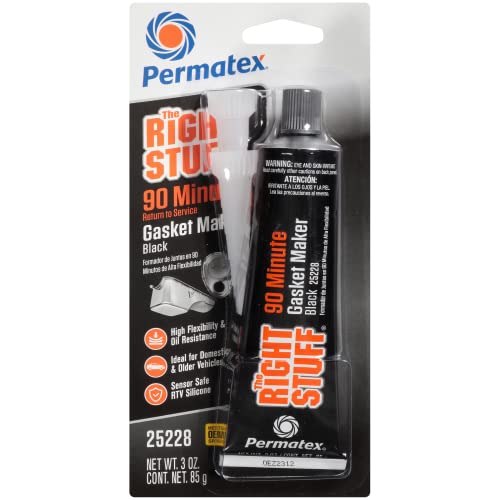 |
Permatex 81160 The Right Stuff Gasket Maker Best Overall Black RTV gasket maker, sensor-safe, instant rubber gasket, resists oil and coolant |
9.5 |
ⓘ We may earn a commission from qualifying purchases made through links on this page, at no extra cost to you.
|
 |
Permatex 82194 Ultra Black Maximum Oil Resistance RTV Silicone Best for Oil Resistance Black RTV, maximum oil resistance, sensor-safe, rated to about 500F intermittent |
9.3 | 🛒 Check Price |
 |
Permatex 82180 Ultra Grey Rigid High-Torque RTV Silicone Best for High-Torque Covers Gray RTV, rigid high-torque formula, sensor-safe, rated to about 500F |
9.1 | 🛒 Check Price |
 |
Permatex 81158 The Right Stuff Gray Gasket Maker Best Fast-Cure Tube Gray gasket maker in tube, instant seal, sensor-safe, high oil and coolant resistance |
8.9 | 🛒 Check Price |
 |
Loctite SI 587 Blue High-Performance RTV Silicone Gasket Best High-Temp Pick Blue RTV silicone, high-temp rated, oil and coolant resistant, sensor-safe |
8.7 | 🛒 Check Price |
 |
Permatex 22071 High-Temp Red RTV Silicone Gasket Maker Most Heat Resistant Red RTV, high-temp rated to about 650F intermittent, oil and coolant resistant |
8.4 | 🛒 Check Price |
 |
Permatex 80019 High-Tack Gasket Sealant Best Gasket Dressing Brush-top tacky gasket dressing, oil resistant, slow-drying, holds gaskets in place |
8.1 | 🛒 Check Price |
1. Permatex 81160 The Right Stuff Gasket Maker: Best Overall
The Right Stuff has earned its reputation as the sealer mechanics trust when a valve cover absolutely can’t leak. Unlike standard RTV that needs hours to skin over, this black gasket maker forms a flexible rubber gasket the moment the surfaces meet, which means you can torque the valve cover and even run the engine without a long wait. For corners where a rubber gasket lifts off the head, or for valve covers you reuse without a fresh gasket, it fills and seals beautifully and holds up to the constant oil splash inside the head.
The honest weakness is the dispensing. The pressurized can throws out a lot of material quickly, so first-time users tend to lay down far more than needed and end up with squeeze-out that can break loose and circulate in the oil. Practice your bead on a scrap surface first and keep it thin. Get the application right and this is as close to a permanent valve cover seal as you can buy, which is why it sits at the top of our list.
- Forms an instant flexible rubber gasket that seals on contact, so you can torque down right away
- Sensor-safe low-odor formula that won’t damage oxygen sensors or engine electronics
- Strong oil and coolant resistance rated for high-vibration valve cover applications
Pros: Seals instantly and lets you run the engine sooner than standard RTV; Excellent oil resistance keeps valve cover corners dry long term; Stays flexible through heat cycles without cracking
Cons: The aerosol-style can dispenses fast and is easy to over-apply; Thick paste needs a steady hand to lay a clean even bead
2. Permatex 82194 Ultra Black Maximum Oil Resistance RTV Silicone: Best for Oil Resistance
When the spec sheet says maximum oil resistance, this is the Permatex formula they mean, and that makes it a natural fit for valve covers that live in a constant bath of hot oil. Ultra Black cures into a tough, flexible seal that grips both the cover and the head, and the sensor-safe chemistry means you aren’t risking your oxygen sensors when some of the curing vapor reaches the exhaust. It works as a standalone gasket maker or as a thin assembly aid alongside a rubber or cork gasket.
The trade-off compared with The Right Stuff is cure time. You need to leave it roughly a full day before adding oil and starting the engine, so it isn’t the choice when you’re racing the clock. It also pays to apply it in a thin, even bead, since the black color makes interior squeeze-up hard to spot. For a planned job where you can let the car sit overnight, this is among the most dependable valve cover sealers you can run.
- Engineered specifically for maximum oil resistance on oil pans and valve covers
- Sensor-safe formula that protects oxygen sensors and onboard electronics
- Flexible cure that absorbs engine vibration and movement without cracking
Pros: Purpose-built oil resistance is ideal for valve covers; Long tooling time gives you room to position the cover; Tube applicator lays a controllable bead
Cons: Needs roughly 24 hours for a full cure before running; Black color hides squeeze-out that you may want to wipe
3. Permatex 82180 Ultra Grey Rigid High-Torque RTV Silicone: Best for High-Torque Covers
Ultra Grey is the formula Permatex tuned for joints that get torqued down hard, which makes it well suited to rigid aluminum valve covers and any cover bolted to a stiff head surface. It resists the shrinking and tearing that can happen when a clamped seal is squeezed thin, and it brings the same strong oil resistance you want anywhere oil splashes. The gray finish is also less conspicuous than black if you care about how the engine bay looks after the repair.
The reason it isn’t our top valve cover pick is flexibility. Because it’s formulated to be more rigid, it’s slightly less forgiving on joints that flex or vibrate a lot, where the more elastic Ultra Black shines. On a solid, high-torque valve cover that doesn’t move much relative to the head, Ultra Grey is excellent, and many builders keep both grey and black on the shelf for exactly this reason.
- Rigid high-torque formula built for surfaces that get clamped hard
- Strong oil resistance for valve covers, oil pans, and timing covers
- Sensor-safe and low odor so it’s safe around modern engines
Pros: Holds well on aluminum valve covers with high bolt torque; Resists shrinking and tearing under clamping load; Familiar gray color blends with most engine surfaces
Cons: Less flexible than the Ultra Black, so movement-heavy joints favor black; Full cure takes about 24 hours
4. Permatex 81158 The Right Stuff Gray Gasket Maker: Best Fast-Cure Tube
This is The Right Stuff in a hand-squeezed tube and a gray color, and for many valve cover jobs that makes it the more practical version. You get the same fast-cure chemistry that forms a flexible gasket on contact and lets you torque and run almost immediately, but the tube gives you far better control over bead size than the pressurized can. For tight valve cover sealing surfaces and small corner fills, that control matters more than raw output.
The honest limitation is volume and effort. A tube holds less than the can and the paste is genuinely stiff, so squeezing a long continuous bead is a workout and a big multi-cover job can drain it fast. For a single valve cover where precision beats speed of coverage, though, this is one of the easiest premium sealers to apply cleanly, and the gray color helps you see exactly where the bead is landing.
- Same instant rubber gasket performance as the original in a gray squeeze tube
- Sensor-safe formula compatible with modern engine sensors
- Resists oil, coolant, and the vibration found on valve covers
Pros: Tube format gives finer bead control than the aerosol can; Instant seal lets you assemble and run quickly; Gray color is easy to see against dark gaskets while applying
Cons: Tube delivers less material, so large jobs use it quickly; Paste is thick and stiff to dispense by hand
5. Loctite SI 587 Blue High-Performance RTV Silicone Gasket: Best High-Temp Pick
Loctite is a heavyweight in industrial sealing, and the SI 587 blue RTV brings that pedigree to engine work. It’s a high-performance silicone with strong heat tolerance and solid oil and coolant resistance, which covers everything a valve cover throws at a sealer. The blue color is genuinely useful during assembly because it stands out against most gaskets and machined surfaces, so you can confirm your bead is continuous before the cover goes on.
Its main drawback is simply availability and familiarity. Many DIYers default to Permatex because it’s on every shelf, and the Loctite naming can be confusing across its product range. Performance-wise it has nothing to apologize for, but like the other RTVs here it wants a proper cure before you fill the engine with oil, so plan to let the car rest. For hot-running engines where heat is the main concern, it’s a strong choice.
- High-performance blue RTV rated for elevated temperatures around the engine
- Resists oil and coolant for durable valve cover and timing cover seals
- Sensor-safe low-odor cure that’s gentle on engine electronics
Pros: Strong heat tolerance for hot-running engines; Flexible cure handles vibration well; Easy-to-see blue bead during application
Cons: Less common on parts shelves than Permatex; Needs a full cure before exposure to oil
6. Permatex 22071 High-Temp Red RTV Silicone Gasket Maker: Most Heat Resistant
When heat is the dominant worry, the classic high-temp red RTV earns its place. Rated for higher intermittent temperatures than the standard silicones, it’s the formula people reach for on hot-running performance engines and around components that get extra warm. On a valve cover it delivers the flexible, oil-resistant seal you need and tolerates the constant expansion and contraction of an engine that heats and cools all day.
The catch is that this traditional red formula isn’t the sensor-safe version, so you have to be mindful on modern engines with sensitive oxygen sensors nearby, and Permatex sells dedicated sensor-safe options for exactly that reason. For older engines, or jobs where you can keep it clear of sensor zones, it’s a proven and easy-to-find sealer. Just apply a thin bead, because the bright red squeeze-out is impossible to miss if you get heavy-handed.
- High-temperature red formula rated higher than standard RTV silicones
- Resists oil, water, and antifreeze for engine sealing duty
- Flexible cure that tolerates thermal expansion and vibration
Pros: Highest heat rating in our lineup for very hot engines; Widely available and trusted formula; Stays flexible under thermal cycling
Cons: Not labeled sensor-safe, so keep it away from sensor areas; Red squeeze-out is very visible if you over-apply
7. Permatex 80019 High-Tack Gasket Sealant: Best Gasket Dressing
This one plays a different role from the RTVs above, and on a valve cover that uses a cork or rubber gasket it’s exactly what you want. High-Tack is a brush-on tacky sealant that grips the gasket and the valve cover so the gasket doesn’t slide out of place while you fiddle the cover into position and start the bolts. It also seals the small surface imperfections that let oil weep past an otherwise good gasket, and because it stays pliable the gasket can be peeled off later if you need to service the cover.
The important thing to understand is what it isn’t. High-Tack is a gasket dressing, not a gasket maker, so it improves a physical gasket rather than forming one from scratch. If your valve cover has no gasket and you need to bridge a gap, you want one of the RTVs instead. Used for its intended job, holding and dressing a real gasket, it’s the cleanest and most foolproof product in this guide, which is why it rounds out our list.
- Tacky brush-on dressing that grips and holds cork or rubber gaskets during assembly
- Slow-drying formula stays pliable so gaskets can be removed and reused
- Oil and water resistant to seal minor surface imperfections under the gasket
Pros: Keeps the gasket from slipping while you set the valve cover; Improves the seal on a physical gasket rather than replacing it; Brush-top cap makes application clean and easy
Cons: It’s a gasket dressing, not a standalone gasket maker; Stays tacky and can attract dust before assembly
Frequently Asked Questions
Do I need RTV sealer if my valve cover already has a rubber gasket?
For many modern valve covers with a molded rubber gasket, the gasket alone seals fine and the manufacturer may even advise against smearing sealer all over it. The exception is the corners and step areas where the gasket meets a curved or stepped surface on the head, since those spots are where leaks usually start. A small dab of RTV in just those corner transitions, or a thin coat of a tacky gasket dressing like Permatex High-Tack to hold the gasket in place, is the right amount. Don’t bury the whole gasket in silicone, because excess squeeze-out can break off and clog oil passages.
How long should gasket sealer cure before I add oil and start the engine?
It depends on the product. Standard RTV silicones such as Ultra Black, Ultra Grey, the red high-temp formula, and Loctite 587 generally want around 24 hours for a full cure before they see oil, even though they skin over in well under an hour. Fast-cure gasket makers like Permatex The Right Stuff are the exception and form a usable rubber gasket almost instantly, so you can torque the cover and run the engine much sooner. When in doubt, give any RTV overnight to cure fully, since rushing it’s the most common reason a fresh seal still leaks.
What does sensor-safe mean and why does it matter for valve covers?
As some RTV silicones cure they release a small amount of acid or solvent vapor, and on engines that vapor can reach and damage sensitive components like the oxygen sensor. Sensor-safe formulas, including Permatex Ultra Black, Ultra Grey, and both versions of The Right Stuff, use a low-odor chemistry that doesn’t give off those harmful vapors, so they’re safe to use near modern engine electronics. The classic high-temp red RTV isn’t labeled sensor-safe, so if your engine has oxygen sensors close to the work area, choose a sensor-safe product or keep the non-safe one well clear of the sensor.
Why does my valve cover keep leaking even after I replaced the gasket?
Repeat leaks almost always trace back to one of three things. First, the sealing surfaces weren’t cleaned to bare, dry metal, so old oil film kept the sealer or gasket from bonding. Second, the bolts were either over-torqued, which crushes and distorts the gasket, or under-torqued, which leaves it loose. Always tighten valve cover bolts in a crosswise pattern to the specified torque, and never just crank them down hard. Third, the leak may not be the gasket at all but the spark plug tube seals or the PCV system building crankcase pressure. Confirm the real source before blaming the sealer.
Can I reuse a valve cover gasket if I use sealer on it?
You can often reuse a rubber valve cover gasket that’s still soft, intact, and not flattened, and a tacky gasket dressing like Permatex High-Tack actually helps because it holds the reused gasket in place and seals minor imperfections while staying peelable for next time. Cork gaskets are far less forgiving and tend to compress, crack, and shrink, so replacement is the safer call there. Whatever you reuse, inspect it carefully for hardening or tears, clean both surfaces thoroughly, and if the gasket looks tired at all, the small effort of fitting a new one is cheaper insurance than chasing the same leak again.
Our Verdict
For the best all-around valve cover seal, Permatex 81160 The Right Stuff is our top pick because it forms an instant flexible rubber gasket, shrugs off oil, and lets you get the engine running without a long cure wait, which is exactly what you want on a leak-prone joint. Our runner up is Permatex 82194 Ultra Black, the maximum oil resistance RTV that’s purpose-built for the oily, vibrating environment of a valve cover and the smarter choice when you can let the car cure overnight. If you’re bedding a physical cork or rubber gasket instead of forming one, add Permatex High-Tack to hold it in place, and you’ll have a valve cover that stays dry for the long haul.