An oil pan that weeps onto your driveway is more than an annoyance. It drops your level over time, bakes onto the exhaust, and can leave you chasing a leak you thought you already fixed. The sealer you choose matters just as much as the gasket itself, because the oil pan lives in a punishing zone of heat, vibration, and constant oil contact. Pick the wrong product and you’ll be back under the car in a month.
We put the most trusted oil-pan sealers through real installs on stamped steel and cast aluminum pans, watching how they tooled, how long they took to cure, and whether they held after heat cycling. Below are the seven that earned their place, ranked best first, with honest notes on where each one shines and where it falls short.
| Photo | Product | Score | Buy |
|---|---|---|---|
 |
Permatex 81158 Ultra Black Maximum Oil Resistance RTV Silicone Gasket Maker Best Overall Oil-resistant RTV silicone, sensor-safe, rated to roughly 500F continuous |
9.5 |
ⓘ We may earn a commission from qualifying purchases made through links on this page, at no extra cost to you.
|
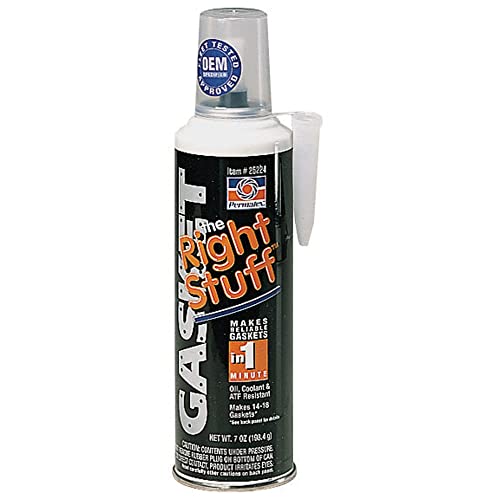 |
Permatex 24205 The Right Stuff Gasket Maker Best for Fast Jobs Instant rubber gasket, ready to run in about an hour, brush-top aerosol can |
9.3 | 🛒 Check Price |
 |
Permatex 81160 Ultra Grey Rigid High-Torque RTV Silicone Gasket Maker Best for Aluminum Pans Rigid high-torque RTV, sensor-safe, rated to roughly 500F continuous |
9.1 | 🛒 Check Price |
 |
Permatex 81409 High-Temp Red RTV Silicone Gasket Maker Best Heat Resistance High-temp RTV silicone, intermittent rating to roughly 650F |
8.8 | 🛒 Check Price |
 |
ATP AT-205 Re-Seal Stops Leaks Best No-Disassembly Fix Pour-in seal conditioner, treats up to roughly 6 quarts of oil |
8.5 | 🛒 Check Price |
 |
Permatex 80008 High Tack Gasket Sealant Best Gasket Dressing Brush-top tacky gasket dressing, stays pliable, oil and fuel resistant |
8.3 | 🛒 Check Price |
 |
Loctite 587 Blue High Performance RTV Silicone Gasket Maker Best Sensor-Safe Pick Low-odor neutral-cure RTV, oil and coolant resistant, sensor-safe |
8.1 | 🛒 Check Price |
1. Permatex 81158 Ultra Black Maximum Oil Resistance RTV Silicone Gasket Maker: Best Overall
Permatex Ultra Black is the sealer we reach for first on any oil pan, and the testing backed that up. It’s engineered around oil resistance, which is exactly what the bottom of an engine demands, and on both a stamped steel pan and a cast aluminum pan it tooled into a clean, even bead that stayed put while we positioned the pan. After heat cycling it stayed flexible rather than going brittle, which is the quality that keeps a pan dry once vibration sets in. The low-odor, sensor-safe cure also means you aren’t filling the garage with vinegar fumes while you work.
The one discipline it demands is patience. This is a moisture-cure RTV, so you need to torque the pan promptly after assembly and then let it cure properly before you refill with oil. Rush that step and you risk a weep at the corners. Treat the cure time with respect and it simply doesn’t leak, which is why it earns the top spot for value and reliability on oil pans specifically.
- Maximum oil resistance formula built specifically for oil pans and timing covers
- Low-odor, non-corrosive cure that’s safe for oxygen sensors
- Flexible bead handles vibration and flange flex without cracking
Pros: Outstanding resistance to hot motor oil; Stays flexible so it survives engine vibration; Sensor-safe and low odor compared to acid-cure silicones
Cons: Needs a proper full cure before adding oil, so it isn’t a rush job; Black color shows clearly if you over-apply and squeeze out
2. Permatex 24205 The Right Stuff Gasket Maker: Best for Fast Jobs
When the car has to be back on the road the same day, The Right Stuff is the answer. Its claim to fame is an instant rubber gphasket that lets you torque, refill, and run in roughly an hour rather than waiting overnight. On a steel oil pan with a slightly tweaked flange it filled the low spots confidently and sealed first time, which is something thinner sealers struggle with. The brush-top aerosol delivery is genuinely clever for laying a consistent bead quickly.
The trade-off is control. Because the can is pressurized, it lays material down fast, and it’s very easy to put down far more than an oil pan flange needs, leading to internal squeeze-out and wasted product. If you’re doing a single careful pan, you’ll use a fraction of the can. Used with a steady hand and a job that values speed, though, nothing else here gets you driving sooner.
- Forms an instant rubber gasket that lets you run the engine in roughly one hour
- Aerosol can with built-in brush nozzle for fast, controlled application
- Fills gaps up to a quarter inch and resists blow-out
Pros: Dramatically faster turnaround than standard RTV; Excellent gap-filling on warped or pitted flanges; Strong resistance to oil and high heat
Cons: Pressurized can dispenses fast and is easy to over-apply; Higher waste if you only need a thin bead on one pan
3. Permatex 81160 Ultra Grey Rigid High-Torque RTV Silicone Gasket Maker: Best for Aluminum Pans
Ultra Grey is the choice when the pan and block flanges are stiff and machined, as they’re on many cast aluminum setups. The rigid, high-torque formula is designed to seal joints that clamp down hard and stay put, and that’s exactly how it behaved on an aluminum pan during testing. Beyond oil, it shrugs off coolant and common shop fluids, so it’s a confident pick for components that see more than one chemical. The neutral, sensor-safe cure keeps it friendly to modern engines.
Where you want to think twice is on a thin stamped steel pan that flexes. The same rigidity that makes Ultra Grey excellent on aluminum makes it a touch less ideal where the flange moves a lot under vibration, since a more flexible product like Ultra Black tracks that movement better. Match it to a rigid flange and it’s hard to beat, but it isn’t the universal answer for every pan.
- Rigid, high-torque formula built for stiff machined flanges
- Superb resistance to oil, coolant, and shop chemicals
- Sensor-safe, low-odor neutral cure
Pros: Holds up beautifully on torque-to-spec aluminum flanges; Broad chemical resistance beyond just oil; Clean grey bead that’s easy to inspect
Cons: Rigid cure is less forgiving on thin, flexy stamped pans; Full cure takes time before refilling oil
4. Permatex 81409 High-Temp Red RTV Silicone Gasket Maker: Best Heat Resistance
High-Temp Red is the old reliable, and it earns its reputation on any pan that lives near a lot of heat. The high intermittent temperature rating gives you headroom on engines that run hot, and it stays flexible enough to follow normal flange movement without cracking. On a steel oil pan it tooled easily and sealed without drama, and its sheer availability means you can usually find it on a shelf when you need it in a hurry.
The honest weakness is its cure chemistry. As a more traditional acetoxy silicone it gives off a noticeable vinegar smell as it sets, which is unpleasant in a closed garage, and it isn’t engineered around oil resistance the way Ultra Black is. For raw heat tolerance it’s excellent, but if your priority is purely the best possible oil seal, one of the dedicated oil-resistant formulas edges it out.
- Handles high intermittent temperatures up to around 650F
- Reliable resistance to oil and other automotive fluids
- Long-proven formula trusted across countless engine builds
Pros: Excellent heat tolerance for hot-running engines; Flexible enough to absorb normal flange movement; Widely available and easy to source
Cons: Acetoxy cure has a stronger vinegar odor; Not the dedicated maximum-oil formula that Ultra Black is
5. ATP AT-205 Re-Seal Stops Leaks: Best No-Disassembly Fix
Not every oil pan leak justifies pulling the pan, and that’s where ATP Re-Seal fits. It isn’t a paste sealer at all but a pour-in conditioner that swells and softens a hardened, shrunken gasket from the inside. For an older engine with a gasket that has simply dried out, adding it to the oil can quietly stop a seep with zero disassembly, and because it’s safe across multiple oil systems you can use the rest of the bottle elsewhere. As a first, low-effort attempt on a weeping pan it makes a lot of sense.
Its limits need to be clear, though. Re-Seal reconditions a gasket that has shrunk; it can’t rebuild one that’s crushed, torn, or missing, and it’ll do nothing for a cracked pan or a leak coming from the drain bolt. Think of it as the right tool for an early-stage seep, not a rescue for a pan that genuinely needs a new gasket and a proper RTV seal.
- Pours into the oil to recondition a hardened, shrunken gasket
- Safe for engine, transmission, and other oil systems
- No teardown required to stop a minor seep
Pros: Stops minor seeps without dropping the pan; Works across multiple oil systems, not just the engine; Genuinely simple to use
Cons: Only addresses gasket shrinkage, not a failed or crushed gasket; Won’t fix a cracked pan or a major leak
6. Permatex 80008 High Tack Gasket Sealant: Best Gasket Dressing
High Tack is a dressing rather than a gasket maker, and on an oil pan that uses a cork or composite gasket it does a job nothing else here does. Brushed onto the flange it grips the gasket so firmly that it stays put while you wrestle the pan into position and run the bolts down, which removes among the most frustrating parts of an oil pan job. Because it stays pliable instead of curing rock hard, the next person to drop the pan can do so without chiseling, and it resists oil and fuel well in service.
The catch is that it’s a partner, not a solution. It’s meant to dress and retain a real gasket, so if you were hoping for a single product that forms its own seal on a bare flange, this isn’t it. It’s also genuinely sticky, the kind of tack that ends up on your fingers and your sockets. Used for its intended role alongside a gasket, though, it makes the install cleaner and the next service easier.
- Aggressive tack holds a paper or cork gasket in place during assembly
- Stays pliable and doesn’t fully harden, allowing future service
- Resists oil, gasoline, and many shop fluids
Pros: Keeps a separate gasket from slipping while you torque; Allows easier teardown later than a hard RTV bond; Brush-top can makes application tidy
Cons: Not a standalone sealer, it dresses a gasket rather than replacing one; Tackiness can get messy on hands and tools
7. Loctite 587 Blue High Performance RTV Silicone Gasket Maker: Best Sensor-Safe Pick
Loctite 587 is the pick for anyone who hates the smell of curing silicone or is working close to sensors and electronics. Its neutral cure keeps odor very low and stays sensor-safe, and during testing it adhered cleanly to both a steel and an aluminum flange while remaining flexible enough to handle vibration. It resists oil and coolant, so like the better Permatex products it’s happy in the demanding environment under the engine, and the blue bead is easy to inspect for coverage.
It performs well, so why does it sit lower here? Mostly availability and familiarity. The Permatex oil-pan formulas are easier to find on a shelf and have a deeper track record specifically on oil pans, so reaching for them is the safer default. The 587 also wants a proper full cure before you add oil, same as the other quality RTVs. As a sensor-safe, low-odor alternative it’s a strong option, just not the first one most people will grab.
- Neutral, low-odor cure that’s friendly to oxygen sensors
- Resists oil and coolant for flexible flange sealing
- High-performance silicone with strong adhesion
Pros: Very low odor compared to acid-cure silicones; Sensor-safe and flexible for vibration-prone flanges; Good adhesion on both steel and aluminum
Cons: Less commonly stocked than the Permatex range; Needs a full cure before refilling oil
Frequently Asked Questions
Do I even need sealer if my oil pan already has a gasket?
It depends on the gasket type and what your engine maker specifies. Many modern oil pans are designed to seal with RTV silicone alone and no separate gasket at all, in which case the sealer is the gasket. Pans that use a rubber, cork, or composite gasket often seal best with just a clean dry flange or a thin gasket dressing like High Tack to hold the gasket in place. Always follow the factory procedure for your engine, because adding a thick bead of RTV on top of a gasket that was meant to seal dry can actually cause leaks rather than prevent them.
How long should I wait before adding oil after sealing the pan?
For standard moisture-cure RTV silicones like Ultra Black or Ultra Grey, the safe approach is to torque the pan promptly, then let the sealer cure before you refill with oil and run the engine. Most makers recommend giving it a full cure, often around 24 hours for a thicker bead, to be confident it has set all the way through. Fast-cure products like The Right Stuff are the exception and let you run in roughly an hour. Rushing the cure is the single most common cause of a fresh seal weeping at the corners, so when in time allows, wait longer rather than shorter.
What is the most important quality in an oil pan sealer?
Oil resistance comes first, because the seal is in constant contact with hot motor oil that will attack a formula not designed for it. Right behind that’s flexibility, since the oil pan flange flexes and vibrates with the engine and a brittle bead will eventually crack and leak. Heat tolerance matters too, especially near the exhaust. A product engineered specifically for oil pans, like Ultra Black, balances all three. General-purpose silicones may seal at first but can break down or harden faster in this exact environment.
How do I prep the oil pan flange so the sealer actually holds?
Preparation matters more than the brand you choose. Remove every trace of the old gasket and sealer with a plastic scraper so you don’t gouge the flange, then clean both mating surfaces thoroughly with brake cleaner or acetone until they’re bare and dry. Any film of oil left behind will stop even the best RTV from bonding. Check the flange for warping, straighten or replace a tweaked stamped pan if needed, and make sure the bolt holes are clean. A clean, dry, flat flange is what turns a good sealer into a leak-free seal.
Can a pour-in product like ATP Re-Seal fix my oil pan leak without removing the pan?
It can, but only for the right kind of leak. Pour-in conditioners work by reconditioning a gasket that has dried out and shrunk, swelling it back toward its original size so it seals again. If your leak is from an old, hardened gasket that has simply shrunk, it has a real chance of stopping the seep with no teardown. What it can’t do is repair a crushed, torn, or missing gasket, seal a cracked pan, or fix a leak coming from the drain plug. For those, you need to drop the pan and seal it properly.
Our Verdict
For the vast majority of oil pan jobs, Permatex 81158 Ultra Black is the pick we trust most, because it’s built around the exact thing an oil pan needs: maximum oil resistance combined with a flexible, sensor-safe cure that survives heat and vibration. If you need the car back on the road the same day, Permatex 24205 The Right Stuff is the standout runner up, sealing confidently and letting you run the engine in about an hour. Match the sealer to your pan and your timeline, prep the flange properly, and respect the cure, and you can seal that pan once and stop watching your driveway.


