Sealing an intake manifold is one of those jobs where the wrong product turns a one-hour fix into a weekend of chasing vacuum leaks, weeping coolant, and rough idle. Intake manifolds live in a brutal little zone where coolant ports, oil galleries, and air passages all meet, so the sealer you choose has to handle heat cycling, antifreeze, and the constant push-pull of vacuum without shrinking, cracking, or getting sucked into a runner. Not every tube on the shelf can do that.
We put the most popular intake manifold sealers through real garage use on aluminum, cast iron, and plastic composite manifolds, paying close attention to cure time, coolant resistance, gap-filling on warped flanges, and how cleanly they handle a future teardown. Below are the seven we trust, ranked best first, with an honest look at where each one shines and where it falls short so you can match the right chemistry to your engine.
| Photo | Product | Score | Buy |
|---|---|---|---|
 |
Permatex 81160 Ultra Black Maximum Oil Resistance RTV Silicone Gasket Maker Best Overall RTV silicone, sensor-safe, oil resistant, rated to 500F intermittent |
9.5 |
ⓘ We may earn a commission from qualifying purchases made through links on this page, at no extra cost to you.
|
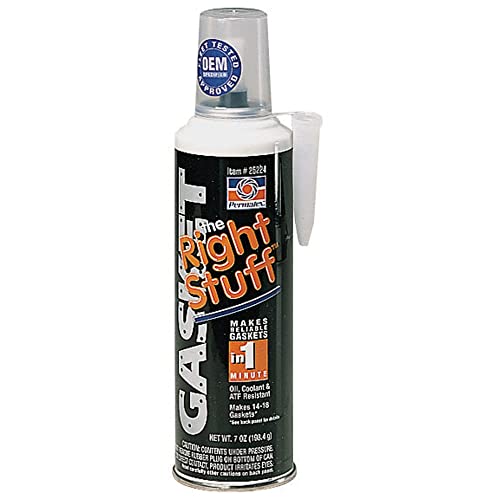 |
Permatex 25224 The Right Stuff 90 Second Gasket Maker Fastest Cure Rubber gasket maker, instant torque-ready seal, sensor-safe, 500F intermittent |
9.3 | 🛒 Check Price |
 |
Permatex 82194 Ultra Copper Maximum Temperature RTV Silicone Gasket Maker Best for High Heat RTV silicone, rated to 700F intermittent, sensor-safe, coolant resistant |
9.1 | 🛒 Check Price |
 |
Loctite 518 Gasket Eliminator Anaerobic Sealant Best for Rigid Flanges Anaerobic gel, cures only between metal flanges, fills up to 0.05 in gap |
8.9 | 🛒 Check Price |
 |
Permatex 81158 Ultra Grey Rigid High-Torque RTV Silicone Gasket Maker Best for Stiff Joints RTV silicone, high-torque rigid formula, sensor-safe, 500F intermittent |
8.7 | 🛒 Check Price |
 |
Permatex 80019 High-Temp Red RTV Silicone Gasket Maker Best Value Pick RTV silicone, rated to 650F intermittent, oil and coolant resistant |
8.4 | 🛒 Check Price |
 |
Permatex 51813 Aviation Form-A-Gasket No. 3 Sealant Best Gasket Dressing Slow-drying liquid sealant, brush-top, for use with cut gaskets |
8.0 | 🛒 Check Price |
1. Permatex 81160 Ultra Black Maximum Oil Resistance RTV Silicone Gasket Maker: Best Overall
Ultra Black is our top pick because it covers the widest range of intake manifold jobs without putting sensors or coolant systems at risk. The sensor-safe, low-odor chemistry means you can use it on engines with downstream oxygen sensors and tight electronics packaging, which is exactly where older high-ammonia silicones used to cause trouble. On the bench it laid down a smooth, controllable bead, wet out nicely on aluminum, and stayed flexible after curing so it absorbs the heat cycling that loosens brittle sealers over time. Oil resistance is genuinely strong, which matters on V6 and V8 manifolds where an oil drain-back or lifter valley sits right next to the air passage.
The honest weakness is cosmetic and practical at the same time. Because it’s jet black, any squeeze-out into a port or onto a visible casting is obvious and tedious to clean, so you have to be disciplined with bead size. It’s also a full RTV, meaning you should respect the 24-hour cure before topping off coolant or running the engine hard. For oil resistance and sensor safety on a typical street engine, though, this is the most forgiving all-rounder we researched.
- Low-odor, non-corrosive formula that’s safe for oxygen sensors and modern engine electronics
- Stays flexible after curing so it survives the heat-cool cycling around intake ports
- Strong resistance to engine oil, transmission fluid, and common shop chemicals
Pros: Sensor-safe and non-corrosive, ideal for late-model engines; Excellent oil and fluid resistance for combined oil-and-air sealing surfaces; Stays flexible long term and resists cracking
Cons: Black color shows on any squeeze-out and is hard to wipe perfectly clean; Needs full 24-hour cure before adding fluids for best results
2. Permatex 25224 The Right Stuff 90 Second Gasket Maker: Fastest Cure
The Right Stuff earns its place for anyone who hates waiting. Where a normal RTV wants you to assemble within a working time window and then cure overnight, this rubber-based gasket maker forms an instant, torque-ready seal, so you can set the manifold, bolt it down, and finish the job in the same session. That speed is a real advantage on intake jobs where you’re fighting to keep coolant ports clean and don’t want parts sitting half-assembled. It also fills gaps confidently, which makes it a strong choice for older manifolds with mild flange distortion.
The trade-off is control. The pressurized dispenser is built for speed, not finesse, so dialing in a thin, neat bead takes practice and you can easily over-apply. It also bonds hard, meaning your next teardown will involve more scraping than with a softer silicone. If you value a clean future service over raw speed, look at the standard RTVs above and below it, but for a fast, leak-free reassembly this is hard to beat.
- Builds a usable seal almost immediately so you can torque the manifold down right away
- Aerosol-style dispenser lays a consistent bead with no air pockets
- Replaces cut gaskets entirely on rigid intake flanges
Pros: Lets you reassemble and torque in minutes instead of hours; Excellent gap-fill on slightly warped or uneven flanges; Very strong, oil and coolant resistant final seal
Cons: Pressurized can is harder to control for thin, precise beads; Once it grabs it’s aggressive to separate at the next teardown
3. Permatex 82194 Ultra Copper Maximum Temperature RTV Silicone Gasket Maker: Best for High Heat
Ultra Copper is the one to reach for when the intake assembly runs hot, such as manifolds with integrated coolant crossovers or builds where the intake sits close to exhaust heat. Its 700F intermittent rating is the highest in the Ultra family, and unlike old-school high-temp silicones it stays sensor-safe and non-corrosive, so you get the heat tolerance without risking your oxygen sensors. Coolant resistance is solid, which is why we like it on cast manifolds that carry both air and antifreeze through the same casting.
The catch is that most modern intake manifolds simply don’t need this much heat headroom. On a cool-running plastic composite plenum, the extra temperature rating buys you nothing, and the copper tint is messier to clean than a clear or grey sealer. Choose it deliberately for genuinely hot applications. For an everyday aluminum or composite intake, a standard Ultra Black or Grey is easier to live with.
- Highest temperature rating in the Permatex Ultra line for hot intake areas
- Sensor-safe and non-corrosive despite the high-heat formula
- Strong coolant and antifreeze resistance for manifolds with water passages
Pros: Handles the hottest intake and crossover areas without breaking down; Good coolant resistance for combined air-and-water manifolds; Sensor-safe so it works on modern engines
Cons: Higher heat spec is overkill for cool plastic intake plenums; Copper tint can stain hands and tools during cleanup
4. Loctite 518 Gasket Eliminator Anaerobic Sealant: Best for Rigid Flanges
Loctite 518 is a different animal from the silicones above, and on the right intake it’s the cleanest solution of all. As an anaerobic gasket eliminator it only cures in the absence of air, meaning it sets between two clamped metal flanges and stays liquid everywhere else. That behavior is perfect for rigid, machined intake flanges because any excess that squeezes toward a port simply wipes off instead of curing into a chunk that can break loose and get ingested. The cured seal is thin, strong, and very resistant to oil and shop chemicals.
Its strength is also its limit. The 518 only works between rigid, flat, metal-to-metal surfaces, so it’s the wrong choice for a flexible plastic composite manifold or any joint that relies on a sealer to bridge a real gap and stay elastic. Surfaces need to be clean and reasonably true for it to do its job. Match it to a precision machined flange and it outperforms silicone for cleanliness, but use it outside that lane and you’ll be disappointed.
- Anaerobic chemistry cures only where metal meets metal, so no skinning in the open
- Won’t clog ports because uncured excess wipes away easily
- Designed for rigid, machined aluminum and cast iron flanges
Pros: Excellent on tight, rigid machined intake flanges; No cure-in-place mess, excess stays liquid until clamped; Strong chemical and oil resistance once cured between surfaces
Cons: Only suits rigid metal-to-metal flanges, not flexible or plastic intakes; Needs reasonably flat, clean surfaces to seal properly
5. Permatex 81158 Ultra Grey Rigid High-Torque RTV Silicone Gasket Maker: Best for Stiff Joints
Ultra Grey is the high-torque member of the Permatex Ultra family, formulated to be more rigid so it holds up on stiff, heavily clamped flange joints. On a thick, well-supported intake flange that gets torqued down hard, that rigidity resists the squeeze-out and bead deformation you can get from softer silicones. It keeps the sensor-safe, non-corrosive chemistry of the rest of the line and resists oil and coolant well, and the neutral grey color blends into aluminum and cast castings better than black or copper.
Because it’s the rigid option, it isn’t the one to use on thin flanges that flex or on joints that need the sealer to move with them, where a more elastic product like Ultra Black is the safer pick. It also follows normal RTV cure timing, so plan for the overnight set before topping off coolant. For a stiff, high-clamp intake joint, though, the extra rigidity is a genuine benefit rather than a marketing line.
- Rigid, high-torque formula built for stiff, low-flex flange joints
- Sensor-safe and non-corrosive for modern engine use
- Strong resistance to engine oil and coolant
Pros: Holds up under high clamping load and stiff joints; Sensor-safe and oil resistant; Neutral grey color blends with most castings
Cons: Less flexible than Ultra Black, so not ideal for thin flexing flanges; Standard RTV cure time before adding fluids
6. Permatex 80019 High-Temp Red RTV Silicone Gasket Maker: Best Value Pick
High-Temp Red is the classic, do-it-all RTV that has sealed countless intakes, valve covers, and water outlets. It offers a strong 650F intermittent rating and good resistance to oil and coolant, and it’s about as easy to find and apply as any sealer gets. For an older engine or a manifold without nearby oxygen sensors, it lays down a dependable, flexible seal and represents real value for how much ground a single tube covers.
The reason it sits in the middle of our list rather than the top is the chemistry. This is an older acetic-cure formula, so it has a sharper odor and, more importantly, it isn’t labeled sensor-safe the way the Ultra products are. On modern engines you want to keep it well clear of oxygen sensors and sensitive electronics. Treat it as a great general-purpose sealer for the right application, and step up to a sensor-safe option when your engine demands it.
- Proven general-purpose high-temp red RTV for a broad selection of jobs
- Good heat resistance to 650F intermittent for warm intake areas
- Resists oil, coolant, and common automotive fluids
Pros: Multi-purpose and widely available for many sealing tasks; Solid heat and fluid resistance for the category; Easy to find and simple to apply
Cons: Not labeled sensor-safe, so keep it away from oxygen sensors; Higher odor and acetic cure than the Ultra line
7. Permatex 51813 Aviation Form-A-Gasket No. 3 Sealant: Best Gasket Dressing
Form-A-Gasket No. 3 is a throwback that still earns its spot because it does one job extremely well: dressing a pre-cut intake gasket. Brushed thinly onto both faces of a paper or fiber gasket, it seals microscopic surface imperfections, helps the gasket grip, and resists gasoline, oil, and solvents. The brush-top cap makes even application simple, and because it stays slightly tacky as it sets you can reposition a fussy manifold gasket before final torque, which is a real help on multi-bolt intakes.
The important thing to understand is that this is a gasket dressing, not a gasket maker, so it only works alongside an actual cut gasket and can’t bridge a bare flange the way an RTV can. It also dries slowly and has a lower heat ceiling than the silicones above. If your rebuild uses a proper intake gasket and you want to guarantee a seal, this is the right supporting product. If you’re sealing metal to metal with no gasket, choose an RTV or anaerobic instead.
- Brush-on liquid that dresses and seals pre-cut intake gaskets
- Stays slightly tacky and pliable so gaskets can be repositioned
- Resists gasoline, oil, and many solvents
Pros: Excellent as a dressing over paper and fiber intake gaskets; Brush-top makes thin, even application easy; Allows gasket repositioning before it fully sets
Cons: Not a standalone gasket maker, it needs an actual gasket; Slow drying and lower heat range than RTV silicones
Frequently Asked Questions
Do I even need gasket sealer on an intake manifold gasket?
It depends on the gasket and the manifold. Many modern intake gaskets, especially molded rubber or silicone-beaded composite gaskets, are designed to seal dry and the manufacturer specifically tells you not to add sealer. Adding RTV to those can actually cause leaks. On the other hand, paper or fiber gaskets, bare machined flanges, and the corners where multiple surfaces meet often benefit from a thin bead or a gasket dressing. Always check the gasket maker’s instructions first, then use sealer only where it’s called for, typically at port corners, coolant passages, and end seals.
What is the difference between RTV silicone and anaerobic sealer for an intake?
RTV silicone cures when it’s exposed to moisture in the air, stays flexible, and can bridge small gaps, which makes it forgiving on slightly uneven or flexible flanges. Anaerobic sealer like Loctite 518 cures only in the absence of air, meaning it sets between two clamped metal surfaces and wipes away anywhere else. Anaerobic is cleaner and won’t clog ports, but it only works on rigid, flat, machined metal flanges. For most plastic composite or flexible intakes, choose a sensor-safe RTV. For precision metal-to-metal flanges, anaerobic is the cleaner option.
Will gasket sealer hold up to coolant in the intake manifold?
Yes, if you pick a coolant-rated product and apply it correctly. Many intake manifolds carry coolant through integrated passages, so you want a sealer specifically rated for antifreeze resistance, which the Permatex Ultra silicones and the high-temp formulas all are. The bigger factors are surface prep and cure time. Clean both flanges down to bare, oil-free metal or plastic, lay a continuous bead with no breaks around coolant ports, and let the sealer cure fully, usually 24 hours for RTV, before topping off the cooling system and running the engine. Skipping the cure is the most common cause of weeping coolant.
How long should intake manifold sealer cure before I start the engine?
For standard RTV silicones, allow a full 24 hours before adding fluids and starting the engine for the strongest, most leak-resistant seal. The surface skins over in under an hour, but the bead cures from the outside in, so it needs time to set all the way through, especially on thicker beads at port corners. Fast-cure products like The Right Stuff are the exception and form a torque-ready seal almost immediately, which is their main selling point. When in doubt, follow the cure time printed on the tube, and never rush coolant or oil into a joint that hasn’t set.
How do I remove old gasket sealer before applying new sealer?
Thorough cleanup is what separates a leak-free job from a comeback. Mechanically scrape off the old material with a plastic or brass scraper to avoid gouging soft aluminum, then remove the film and residue with a dedicated gasket remover or a solvent like brake cleaner. Wipe the flange until a clean rag comes away spotless, because any oil, coolant film, or leftover silicone will stop the new sealer from bonding. On plastic composite manifolds be extra gentle and avoid metal blades entirely. A perfectly clean, dry, oil-free surface is the single biggest factor in whether your new seal holds.
Our Verdict
For most intake manifold jobs the Permatex 81160 Ultra Black is our top pick because it combines sensor safety, strong oil and fluid resistance, and long-term flexibility, making it the most forgiving choice on modern engines. If you want to reassemble and torque the manifold in the same session without waiting overnight, the Permatex 25224 The Right Stuff is the standout runner up thanks to its instant, torque-ready seal. Beyond those two, match the chemistry to the job: Ultra Copper for genuinely hot areas, Loctite 518 for precision metal flanges, and Aviation Form-A-Gasket as a dressing over a cut gasket. Whatever you choose, clean the flanges to bare, oil-free surfaces and respect the cure time, because prep and patience matter more than any single tube.


