A weeping valve cover gasket is a very common oil leaks on any engine, and the sealant you reach for makes the difference between a clean repair and a comeback job. The right gasket maker has to resist hot engine oil, survive the constant heat cycling under the cover, and stay flexible enough to live with a stamped steel or aluminum cover that flexes and expands every time you drive. The wrong one cracks, shrinks, or simply lets oil seep past within a few months.
We looked at the gasket makers that professional techs and serious DIYers actually trust for valve cover service, focusing on oil resistance, temperature rating, cure behavior, and how forgiving each one is to apply. Every product below is a real, widely available formula you can buy today. Here are the seven best gasket makers for sealing a valve cover, ranked best first.
| Photo | Product | Score | Buy |
|---|---|---|---|
 |
Permatex Ultra Black Maximum Oil Resistance RTV Silicone Gasket Maker Best Overall Sensor-safe RTV silicone, oil resistant to 500F, stays flexible |
9.5 |
ⓘ We may earn a commission from qualifying purchases made through links on this page, at no extra cost to you.
|
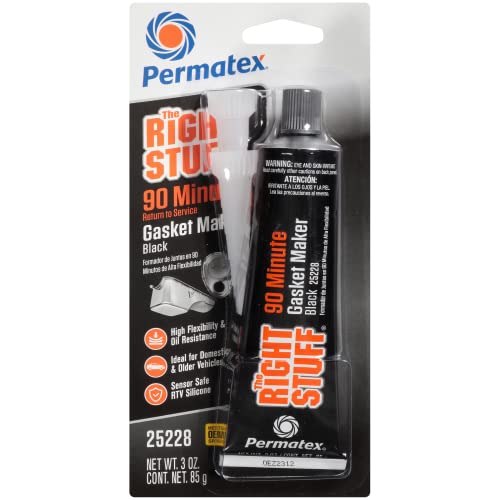 |
Permatex The Right Stuff Gasket Maker Best for Instant Sealing Rubber-based, torque in 15 minutes, leak-free on assembly |
9.3 | 🛒 Check Price |
 |
Permatex Ultra Grey Rigid High-Torque RTV Silicone Gasket Maker Best for Rigid Covers High-torque RTV, sensor-safe, oil resistant, 500F continuous |
9.1 | 🛒 Check Price |
 |
Permatex Ultra Copper Maximum Temperature RTV Silicone Gasket Maker Best High-Temperature Copper RTV, rated to 700F intermittent, max heat resistance |
8.9 | 🛒 Check Price |
 |
Loctite SI 5910 Black Maximum Flexibility Gasket Maker Best Flexibility Flange sealant, maximum flex RTV, oil and temperature resistant |
8.7 | 🛒 Check Price |
 |
ThreeBond 1184 Liquid Gasket Maker Best for Japanese Engines FIPG liquid gasket, semi-drying, OEM-spec for many imports |
8.4 | 🛒 Check Price |
 |
Permatex High-Temp Red RTV Silicone Gasket Maker Best Value Pick Red RTV, rated to 600F intermittent, general purpose sealing |
8.0 | 🛒 Check Price |
1. Permatex Ultra Black Maximum Oil Resistance RTV Silicone Gasket Maker: Best Overall
If you only buy one gasket maker for valve cover work, this is the one. Permatex Ultra Black is purpose-built for high oil-resistance applications, which is exactly what a valve cover demands since the sealant lives in a bath of hot oil mist. It cures to a flexible rubber that moves with a stamped steel or aluminum cover instead of fighting it, so you don’t get the brittle cracking that causes a slow weep a few months down the road. It’s also sensor-safe and low odor, meaning you can use it freely around oxygen sensors and electronics without worry.
The honest weakness is patience. Ultra Black is a moisture-cure RTV, so it wants close to a full day to reach its best strength before you fire the engine and put oil to it. Rush it and you can disturb the seal before it has set. Plan the job for the end of the day and let it sit overnight, and you get a clean, durable seal that genuinely lasts. For all-around valve cover sealing, it’s the easy top pick and the best blend of oil resistance, flexibility, and ease of use.
- Maximum oil resistance formula built for engine oil exposure
- Sensor-safe and low odor, won’t damage oxygen sensors
- Flexible cure that handles valve cover flex and vibration
Pros: Outstanding resistance to hot engine oil; Stays flexible so it won’t crack on a flexing cover; Sensor-safe, so it’s engine-friendly across the board
Cons: Needs about 24 hours for a full cure before running the engine
2. Permatex The Right Stuff Gasket Maker: Best for Instant Sealing
When you can’t leave a car sitting overnight, The Right Stuff is the answer. This is Permatex’s premium rubber-based gasket maker, and its claim to fame is that it seals on contact. You apply your bead, set the valve cover, torque it to spec, and the seal is leak-free immediately. That’s a huge advantage in a busy garage or when you simply need the vehicle back in service the same afternoon. The cured rubber is tough, flexible, and resists the shrinking and cracking that plague cheaper sealants over heat cycles.
The tradeoff is that it rewards good technique and punishes hesitation. Because it grabs so fast, you don’t get much working time to reposition the cover, so your bead placement and alignment need to be right the first time. The dispensing format can also lay down more material than you want if you aren’t careful, so a steady hand matters. If you know what you’re doing and value speed, The Right Stuff is the most convenient strong sealer here.
- Seals instantly so you can torque the cover down right away
- Elastomeric rubber stays flexible and resists shrinking
- Replaces the cut gasket entirely in form-in-place use
Pros: No overnight wait, seals the moment you assemble; Extremely durable rubber that resists cracking and shrink; Great for getting a vehicle back on the road fast
Cons: Aerosol or squeeze format can be tricky to dispense neatly; Cures fast, so you must work quickly and accurately
3. Permatex Ultra Grey Rigid High-Torque RTV Silicone Gasket Maker: Best for Rigid Covers
Ultra Grey is the high-torque sibling to Ultra Black, and it shines on rigid valve covers, especially heavier cast aluminum or thicker flanges that clamp down hard. The gray RTV cures firmer and handles high torque loads well, which is why it’s a factory-style choice on many import and domestic engines. Like the rest of the Permatex Ultra line, it’s sensor-safe, low odor, and highly resistant to engine oil, so it ticks every box for a valve cover that runs hot and oily.
The catch is the flip side of its strength. Because it cures more rigid, it isn’t the ideal choice for thin, flexible stamped steel covers that move a lot, where a more elastic sealant like Ultra Black copes better with constant flexing. Match Ultra Grey to a stiff cover and a clean flange and it seals beautifully, but on a flimsy cover it can be less forgiving. It also wants a full day to reach maximum hold, so plan accordingly.
- High-torque formula designed for rigid metal flanges
- Sensor-safe and low odor for engine-wide use
- Excellent resistance to engine oil and coolant
Pros: Stronger, more rigid cure for stiff cast covers; Sensor-safe and oil resistant; Trusted OEM-style gray formula
Cons: Less flexibility than Ultra Black on thin flexing covers; Full strength still needs roughly 24 hours
4. Permatex Ultra Copper Maximum Temperature RTV Silicone Gasket Maker: Best High-Temperature
If your valve cover sits on a high-output, turbocharged, or hard-worked engine, Ultra Copper gives you the most heat headroom of any Permatex RTV. The copper-filled formula carries the highest temperature rating in the line, making it the smart pick where underhood heat is extreme and a standard silicone might struggle over time. It still keeps the oil resistance and sensor-safe behavior you need for valve cover duty, so you aren’t trading away the basics to get the heat protection.
Honestly, for a stock daily driver this is more sealant than the job needs, and that’s its main weakness, you’re paying for temperature capability your engine may never use. The very high heat rating matters most on performance builds and severe-duty applications. As with the other RTV options, it cures with moisture and wants a full day before you run oil past it. For hot engines, though, it’s the most reassuring choice in the lineup.
- Highest temperature rating in the Permatex RTV line
- Copper formula built for severe heat and high output engines
- Sensor-safe and resistant to oil and coolant
Pros: Best heat tolerance for performance and turbo engines; Strong oil and coolant resistance; Sensor-safe like the rest of the line
Cons: Overkill for a mild, stock daily driver valve cover; Needs a 24 hour cure for full strength
5. Loctite SI 5910 Black Maximum Flexibility Gasket Maker: Best Flexibility
Loctite’s SI 5910 is built around flexibility, which is exactly what you want when a valve cover is thin, slightly warped, or known to flex hard in service. The black RTV cures to a very elastic seal that absorbs vibration and movement without cracking, and it does a respectable job bridging small surface imperfections on a flange that isn’t perfectly flat. It resists oil and underhood conditions well, so it holds up to valve cover duty rather than just looking good on assembly day.
The downside is mostly practical. Loctite gasket makers aren’t always stocked as widely as the Permatex equivalents, so you may have to hunt a little to get the exact SI 5910 formula rather than a similar Loctite product. Performance-wise it’s a moisture-cure RTV like the others here, so it still wants its cure window before you put oil to it. If your cover flexes and you want the most forgiving, elastic seal, this is a strong choice.
- Maximum flexibility formula for covers that move and vibrate
- Strong resistance to oil, weather, and vibration
- Bridges minor gaps and uneven flange surfaces
Pros: Excellent flexibility for thin or warped covers; Good gap-filling on slightly imperfect flanges; Reliable oil resistance for valve cover service
Cons: Brand availability can vary by retailer; Standard RTV cure time before running the engine
6. ThreeBond 1184 Liquid Gasket Maker: Best for Japanese Engines
ThreeBond 1184 is a form-in-place liquid gasket that has earned its reputation on Japanese engines, where many manufacturers specify a ThreeBond product from the factory. If you’re sealing a valve cover on an import and want to match the OEM approach, this is the kind of sealant the factory had in mind. It lays a thin, controllable bead and cures to a semi-drying seal that handles oil exposure on a clean metal flange very well, giving you a tidy, professional-looking repair.
Its strength is also its limitation. Because the bead is on the thinner side, it’s less forgiving than a thick RTV when a flange is pitted or you’re trying to bridge a noticeable gap, so surface prep matters more here. It’s also simply harder to find on a typical parts store shelf than the mainstream Permatex options, so you may be ordering it online. For matching factory spec on an import valve cover, though, it’s a quietly excellent choice.
- Form-in-place liquid gasket used by many Japanese OEMs
- Semi-drying formula designed for metal flange sealing
- Thin, controllable bead for precise application
Pros: OEM-grade choice for many import engines; Lays down a thin, neat, controllable bead; Proven on factory valve cover applications
Cons: Less common on store shelves than Permatex; Thinner consistency is less forgiving on big gaps
7. Permatex High-Temp Red RTV Silicone Gasket Maker: Best Value Pick
The classic red RTV is the gasket maker most people picture, and it still gets a valve cover sealed for a basic, no-frills repair. It carries a strong high-temperature rating, resists oil and water, and is about as easy to apply as gasket makers get, which makes it a sensible starting point for a first-timer doing a straightforward valve cover gasket. It’s stocked virtually everywhere, so you can grab it on the way to the job without a special trip.
Where it falls behind the leaders is specialization. The original red formula is a general purpose sealant rather than a maximum oil-resistance one, and it isn’t labeled sensor-safe, so you need to keep it clear of oxygen sensors and sensitive electronics. For a clean, simple cover with no sensors nearby, it does the job. But if oil resistance and sensor safety matter, the Ultra Black formula is worth stepping up to. As a dependable, widely available option, red RTV still earns its place.
- Reliable general purpose RTV rated for high heat
- Resists oil, water, and weather on flange seals
- Widely available and easy to apply for beginners
Pros: Dependable, beginner-friendly RTV; Solid high-temperature rating; Found at nearly every parts store
Cons: Not labeled sensor-safe, keep it away from sensors; Less oil-optimized than the Ultra Black formula
Frequently Asked Questions
Do I need a gasket maker or a rubber valve cover gasket?
It depends on your engine. Many modern engines, especially imports, are designed to seal with a form-in-place gasket maker applied directly to the flange, and they never used a rubber gasket from the factory. Others use a molded rubber or cork valve cover gasket, and on those you should fit the proper replacement gasket and use only a thin dab of sealant at the corners or where two surfaces meet, such as where the head meets a timing cover. Using a thick smear of gasket maker in place of a rubber gasket that the engine was designed for can actually cause leaks, so check what your engine calls for before you start.
How long should a valve cover gasket maker cure before I start the engine?
For most RTV silicone gasket makers you should wait about 24 hours for a full cure before running the engine and exposing the seal to hot oil. The surface may feel dry to the touch within an hour or two, but the material is still curing underneath, and pressurizing it too early can break the seal. The exception is a fast-grab rubber sealant like Permatex The Right Stuff, which is engineered to seal on contact so you can torque the cover and drive almost immediately. Always check the instructions on your specific product, since cure times vary with temperature and humidity.
Why does it matter if a gasket maker is sensor-safe?
As RTV silicone cures it can release small amounts of acetic acid, the vinegar-like smell you notice on cheaper formulas, and those vapors can contaminate oxygen sensors and other engine sensors over time. A sensor-safe, low-odor gasket maker is formulated to cure without releasing those harmful vapors, so it’s safe to use anywhere around the engine, including near sensors. Since a valve cover sits right in the middle of the engine bay, choosing a sensor-safe formula like the Permatex Ultra line removes any worry about damaging electronics, which is why we favor them for this job.
How much gasket maker should I apply to a valve cover?
Less is more. You want a continuous, even bead, usually about an eighth of an inch thick, run all the way around the sealing surface and looped around the inside of each bolt hole. A bead that’s too thick squeezes out when you torque the cover, and the excess can break off inside the engine and circulate in the oil, which you absolutely don’t want. Make sure both surfaces are spotlessly clean and free of old sealant and oil first, lay a neat bead, then assemble and torque to spec promptly so the sealant sets in its final position.
Can I reuse a valve cover after using gasket maker, and how do I remove the old sealant?
Yes, valve covers are reusable as long as the flange isn’t cracked or badly warped, but you must remove every trace of the old sealant before resealing. Scrape off the bulk with a plastic scraper or a gasket scraper, being careful not to gouge a soft aluminum flange, then clean the surface thoroughly with a suitable solvent such as brake cleaner so it’s dry and oil-free. A clean, flat sealing surface is the single biggest factor in whether your new seal holds, so don’t rush this step. Any old residue or oil film left behind will keep the fresh gasket maker from bonding properly.
Our Verdict
For sealing a valve cover, our top pick is the Permatex Ultra Black Maximum Oil Resistance RTV Silicone Gasket Maker, which combines outstanding hot-oil resistance, a flexible cure that lives happily on a flexing cover, and sensor-safe added security, making it the right choice for the vast majority of engines. If you can’t wait overnight for a cure, our runner up is Permatex The Right Stuff, which seals on contact so you can torque the cover and drive the same afternoon without sacrificing durability. Match either one to a spotlessly clean flange and a correctly torqued cover, and your oil leak stays fixed for the long haul.

