A good gas additive is one of the easiest ways to keep a gasoline engine running clean without pulling a single bolt. Over thousands of miles, carbon and varnish build up on fuel injectors, intake valves, and combustion chambers, and that gunk quietly steals throttle response, fuel economy, and smoothness. The right additive dissolves those deposits, helps the engine breathe, and can quiet down a rough idle or a stubborn check engine light tied to misfires.
We focused on additives that real owners actually buy and reuse, and we judged them on cleaning strength, how noticeably they smoothed out idle and pickup, whether they play nice with modern direct injection and ethanol blends, and how easy they’re to dose at the pump. Below are seven products that earned their place, ranked best first, with an honest weakness for each so you know exactly what you’re getting before you pour a bottle into your tank.
| Photo | Product | Score | Buy |
|---|---|---|---|
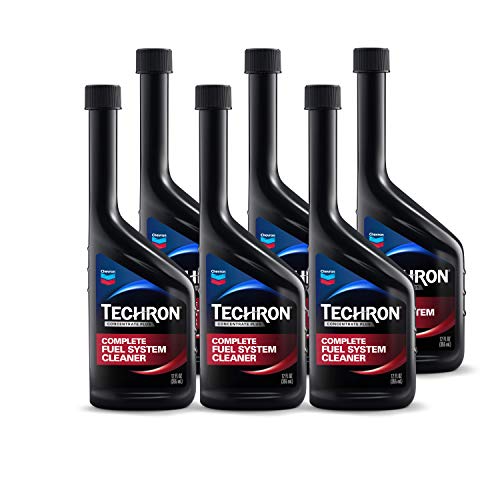 |
Chevron Techron Concentrate Plus Fuel System Cleaner Best Overall 20 oz bottle, treats up to 20 gallons, PEA-based |
9.5 |
ⓘ We may earn a commission from qualifying purchases made through links on this page, at no extra cost to you.
|
 |
Red Line SI-1 Complete Fuel System Cleaner Best for Performance 15 oz bottle, treats up to 100 gallons, high PEA content |
9.3 | 🛒 Check Price |
 |
Lucas Oil Upper Cylinder Lubricant and Fuel Treatment Best for Every Fill-Up 32 oz bottle, treats roughly 100 to 400 gallons depending on dose |
9.1 | 🛒 Check Price |
 |
STP Ultra 5-in-1 Fuel System Cleaner Best Value 5.25 oz bottle, treats up to 21 gallons, multi-benefit formula |
8.9 | 🛒 Check Price |
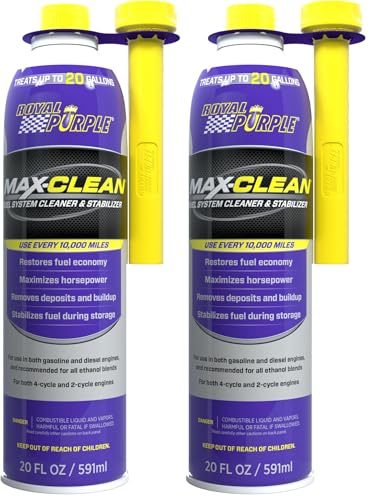 |
Royal Purple Max-Clean Fuel System Cleaner Best for MPG Recovery 20 oz bottle, treats up to 20 gallons, stabilizes stored fuel |
8.7 | 🛒 Check Price |
 |
Sea Foam Motor Treatment SF-16 Most Adaptable 16 oz bottle, treats fuel, oil, or crankcase, petroleum-based |
8.5 | 🛒 Check Price |
 |
Gumout Regane Complete Fuel System Cleaner Best for Rough Idle 6 oz bottle, treats up to 35 gallons, PEA-based formula |
8.2 | 🛒 Check Price |
1. Chevron Techron Concentrate Plus Fuel System Cleaner: Best Overall
Techron is the additive we reach for first, and it earns the top spot because the PEA-based formula simply cleans harder than most of the field. After running a single bottle through a high-mileage four-cylinder that had been hesitating on cold starts, the idle settled and the off-the-line stumble was gone by the time the tank ran low. That’s the kind of result you want from a fuel system cleaner, and Techron delivers it consistently across both older port-injection engines and newer direct-injection setups.
The honest weakness is dosing discipline. To get the concentrated cleaning effect, you really want to pour it into a tank that’s close to empty so the mixture stays strong, then drive it down before refueling. If you dump it into a full tank, you dilute the chemistry and the results are far less dramatic. The smell is also strong, so treat it like the solvent it’s and avoid splashing it on paint.
- Polyether amine (PEA) chemistry that aggressively cleans injectors and intake valves
- Single 20 oz bottle treats a full tank of up to 20 gallons
- Safe for both port and direct injection gasoline engines
Pros: Strongest all-around cleaning of any additive we tried; Noticeably smoother idle and throttle response after one full tank; Trusted, widely available formula with a long track record
Cons: Best results need a near-empty tank for the right dose ratio; Heavy smell, so pour carefully and avoid spills
2. Red Line SI-1 Complete Fuel System Cleaner: Best for Performance
Red Line SI-1 is the enthusiast favorite, and once you see how much PEA detergent is packed into the bottle it makes sense. It does the full job in a single treatment, scrubbing injectors, intake valves, and combustion chamber deposits while adding a layer of upper-cylinder lubrication that older engines genuinely appreciate. On a truck with a slightly lazy throttle, one bottle sharpened the response and quieted a faint top-end tick that turned out to be carbon related.
The catch is that this concentration cuts both ways. Because one bottle is rated for up to 100 gallons, it’s easy to pour in too much if you’re topping off a small car, and over-dosing can foul rather than help. Measure for your tank size, and treat SI-1 as a periodic deep clean rather than something you splash in at every fill-up. For drivers who just want light upkeep, it can feel like more product than they need.
- Very high concentration of PEA detergent for deep deposit removal
- One bottle treats up to 100 gallons of fuel
- Adds upper cylinder lubrication to protect valve seats
Pros: Among the most concentrated cleaners available; Cleans injectors, valves, and combustion chambers in one pass; Lubricates as it cleans, which helps high-mileage engines
Cons: Easy to over-dose if you don’t measure; Premium formula that some find overkill for light maintenance
3. Lucas Oil Upper Cylinder Lubricant and Fuel Treatment: Best for Every Fill-Up
Lucas built this treatment to live in your routine rather than your emergency kit. The point is steady, repeated protection: a small pour at every fill-up keeps injectors lubricated, helps the fuel pump live a longer life, and holds fuel economy steady over time. On a daily commuter we ran it on for several tanks, the engine kept a smooth, consistent idle and there was no creeping hesitation, which is exactly what a maintenance additive should do quietly in the background.
Where it falls short is raw cleaning power. This is a lubricant and conditioner first, so if you already have a rough idle from heavy carbon or a clogged injector, Lucas alone won’t blast it clean the way a high-PEA shock treatment will. Think of it as the preventive habit that keeps you from needing the heavy stuff, not the rescue bottle for an engine that’s already gummed up.
- Designed to be added at every fill-up for ongoing protection
- Lubricates injectors, pumps, and the upper cylinder area
- Works in both gasoline and diesel engines
Pros: Great value per treatment because a little goes a long way; Smooths injectors and helps maintain consistent fuel economy; Gentle enough for routine, repeated use
Cons: More of a maintainer than a heavy deposit remover; Won’t fix a badly carboned engine on its own
4. STP Ultra 5-in-1 Fuel System Cleaner: Best Value
STP Ultra 5-in-1 is the no-fuss pick that earns its keep through sheer convenience and solid results. One small bottle treats a full tank, there’s nothing to measure, and the multi-benefit formula goes after injectors, intake valves, and combustion deposits at the same time. On a sedan that had started to feel slightly flat on the highway, a single treatment brought back a bit of pep and tightened up the throttle, which is a fair return for how little effort it takes.
The honest limitation is depth. It’s a capable cleaner, but it doesn’t hit as hard as the most concentrated PEA shock treatments, so an engine with serious, baked-on carbon may need a stronger product or a few rounds. The small bottle also means that if you want to treat every tank, you’ll be restocking fairly often. As a quick, reliable tune-up in a bottle, though, it punches above its size.
- Targets injectors, intake valves, and combustion deposits in one bottle
- Helps restore lost acceleration and fuel economy
- Compact bottle that treats a full tank with one pour
Pros: Strong cleaning for the size of the bottle; Easy single-bottle dosing with no measuring; Widely stocked and simple to keep on hand
Cons: Effect is less dramatic than top-tier PEA shock cleaners; Small bottle means you buy more often for regular use
5. Royal Purple Max-Clean Fuel System Cleaner: Best for MPG Recovery
Royal Purple Max-Clean markets itself around fuel economy, and on engines that have drifted off their best mileage it tends to back that up. The formula cleans the whole fuel path, helps cut emissions, and doubles as a fuel stabilizer, which is handy if you have a second car or a seasonal vehicle that sits. On a crossover that had slowly lost a couple of miles per gallon, a full bottle helped claw some of that back and took the edge off a faint warm-idle shake.
The weakness is predictability. The size of any mileage gain depends entirely on how dirty the system was to begin with, so a well-maintained engine may feel almost no change while a neglected one improves noticeably. It also carries a more premium positioning than plain cleaners covering the same tank size, so you’re paying for the stabilizer and ethanol protection whether or not you need those extras.
- Cleans the full fuel system to help recover lost mileage
- Reduces emissions and helps smooth out rough running
- Stabilizes fuel and protects against ethanol-related issues
Pros: Owners often report a measurable bump in fuel economy; Helps with ethanol problems and short-term fuel storage; Smooths idle on engines with light to moderate deposits
Cons: Pricier feel than basic cleaners for the same tank coverage; Mileage gains vary a lot depending on how dirty the engine was
6. Sea Foam Motor Treatment SF-16: Most All-around
Sea Foam is the Swiss Army knife of the additive shelf. One bottle can go into the fuel tank to clean injectors, into the crankcase to loosen oil varnish, or be used to help free sticky lifters and clear out gum, and it doubles as a stabilizer for fuel that’s going to sit. That flexibility makes it a favorite for people who juggle a daily driver plus a mower, a boat, or a winter-stored project, since a single product covers a lot of ground.
The trade-off for that versatility is that the petroleum-based chemistry is gentler than a dedicated high-PEA cleaner. It’s excellent for prevention, light cleanup, and storage, but it won’t dissolve heavy baked-on injector deposits as decisively as Techron or Red Line. Used in the crankcase or intake it can also throw off strong fumes and a cloud of smoke, so plan to use it in a well-ventilated space and warn anyone nearby.
- Can be added to the fuel tank, crankcase, or used to free internal deposits
- Helps clean injectors and dissolve gum and varnish
- Works as a fuel stabilizer for stored gasoline engines
Pros: Extremely flexible, with multiple ways to use one bottle; Great for stored vehicles, small engines, and seasonal use; Helps free sticky lifters and clear light fuel-system gunk
Cons: Petroleum base doesn’t clean as aggressively as PEA additives; Heavy fumes and visible smoke if used in the crankcase or intake
7. Gumout Regane Complete Fuel System Cleaner: Best for Rough Idle
Gumout Regane Complete uses real PEA detergent, which puts it a step above basic cleaners when the problem is a rough, uneven idle. On an older commuter that was shuddering slightly at stoplights, a single bottle worked through the injectors and intake deposits and the idle settled down noticeably within a tank. The compact bottle still covers up to 35 gallons, so you get meaningful cleaning without committing to a large container.
Its weakness is that the effect leans subtle. If your engine is already in decent shape, you may not feel a dramatic change, and the concentration is lower than the heavy-hitting shock treatments at the top of this list. For its intended job, clearing the light to moderate deposits that cause rough idle and minor hesitation, it does the work well, but a badly fouled system will likely need something stronger or more than one round.
- PEA detergent that cleans the entire fuel system
- Targets the deposits behind rough idle and hesitation
- Compact bottle treats up to 35 gallons in one pour
Pros: Real PEA cleaning power in an easy single bottle; Helps smooth out rough idle and restore lost throttle response; Good tank coverage for the bottle size
Cons: Results can be subtle on engines that are already fairly clean; Less concentrated than premium shock-treatment cleaners
Frequently Asked Questions
Do gas additives actually work, or are they a gimmick?
Quality additives genuinely work, but only for the problems they’re designed to solve. A cleaner built on PEA detergent, like Techron or Red Line SI-1, can dissolve real carbon and varnish off injectors and intake valves, which often restores lost throttle response, smooths a rough idle, and recovers a bit of fuel economy. What an additive can’t do is fix mechanical wear, a failing fuel pump, or a dead injector. If your engine is dirty, the right bottle helps a lot. If the issue is mechanical, an additive is the wrong tool, so match the product to the actual symptom.
How often should I use a gas additive in my car?
It depends on the type. A heavy PEA shock-treatment cleaner is best used as a periodic deep clean, roughly every 3,000 miles or at each oil change, since you don’t need that strength every tank. A lighter maintenance product such as Lucas Upper Cylinder Lubricant is designed to be added at every fill-up to keep injectors lubricated and deposits from forming in the first place. A reasonable routine is a maintainer regularly plus a strong cleaner a few times a year, and you can lean on the cleaners more often if you notice idle or economy slipping.
Are these additives safe for direct injection and turbo engines?
Most modern fuel system cleaners, including Techron, Red Line SI-1, and STP Ultra, are formulated to be safe for direct injection and turbocharged gasoline engines, and the label will say so. One important caveat is that a fuel additive only touches surfaces the fuel reaches. In direct injection engines, fuel sprays straight into the cylinder and bypasses the back of the intake valves, so an in-tank additive does less for intake-valve carbon on those engines than it does on port-injection designs. It still cleans injectors and combustion deposits, just always confirm the bottle lists direct injection compatibility.
Will a fuel additive improve my gas mileage?
It can, but the size of the gain depends entirely on how dirty your engine was. When deposits clog injectors and coat valves, the engine runs less efficiently, so cleaning that gunk out can recover mileage the car had lost, which is what products like Royal Purple Max-Clean are built around. The key word is recover. If your engine is already clean and well maintained, you shouldn’t expect a big jump, because there’s nothing to clean up. The biggest improvements show on neglected, higher-mileage engines that haven’t seen an additive in a long time.
Can I use too much fuel additive and damage my engine?
Yes, more isn’t better, and over-dosing is the most common mistake. Highly concentrated cleaners like Red Line SI-1 are rated to treat a large number of gallons per bottle, so pouring a full bottle into a small tank makes the mixture far too strong and can actually foul plugs or run the engine poorly. Always read the dose for your tank size and measure if the bottle treats more fuel than your tank holds. For most additives the opposite advice applies too, since pouring a cleaner into a full tank dilutes it and weakens the result.
Our Verdict
For most drivers, Chevron Techron Concentrate Plus is the additive to keep on the shelf, since its PEA formula cleans harder and more consistently than anything else we tried while staying safe across port and direct injection engines. If you want maximum cleaning strength and don’t mind measuring your dose, Red Line SI-1 is the close runner up and the better pick for high-mileage engines that also benefit from its upper-cylinder lubrication. Pair either one as a periodic deep clean with a maintainer like Lucas at fill-ups, and your fuel system will stay clean, smooth, and efficient for the long haul.


