Water sneaks into a gas tank in more ways than most drivers realize. Condensation forms overnight when a tank sits half empty, ethanol blends pull moisture straight out of humid air, and a leaky cap or a bad batch from the pump can leave you with rough idle, hard starts, hesitation, and that gut feeling that something is wrong. Left alone, water settles to the bottom of the tank where the fuel pickup sits, so it gets drawn into the lines first and can freeze in winter or corrode injectors over time.
A good water-removing fuel treatment works by either bonding the water into the fuel so it burns off harmlessly through the engine, or by helping it pass through the system before it can pool and cause damage. We looked at how well each product disperses moisture, whether it protects against ethanol corrosion, how it behaves in cold weather, and whether it plays nicely with both gasoline and diesel. Below are the seven we trust most for getting water out of your gas.
| Photo | Product | Score | Buy |
|---|---|---|---|
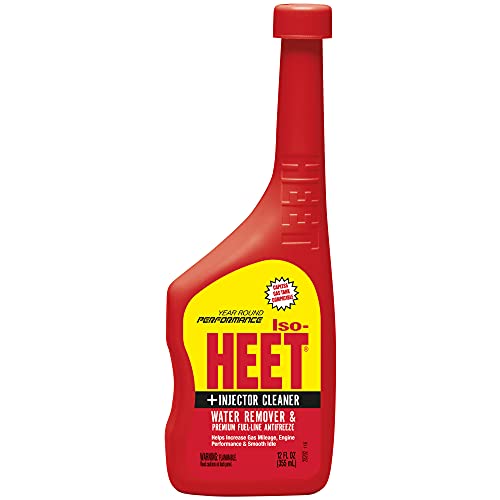 |
HEET Gas-Line Antifreeze and Water Remover Best Overall Isopropyl-based, 12 oz bottle treats up to 20 gallons, gasoline engines |
9.5 |
ⓘ We may earn a commission from qualifying purchases made through links on this page, at no extra cost to you.
|
 |
STA-BIL 360 Protection Ethanol Treatment Best for Ethanol Gas Vapor-phase corrosion protection, treats ethanol blends up to E85 |
9.3 | 🛒 Check Price |
 |
Sea Foam Motor Treatment SF-16 Best Multi-Purpose 16 oz, works in gas and diesel, fuel system and crankcase |
9.1 | 🛒 Check Price |
|
ISO-HEET Premium Fuel-Line Antifreeze and Water Remover Best for Heavy Water 100% isopropyl, removes 5x the water of regular gas dryers, gas and diesel |
9.0 | 🛒 Check Price |
 |
Star Tron Enzyme Fuel Treatment Gas Formula Best for Marine and Stored Fuel Enzyme formula, treats ethanol fuel, 1 oz treats 6 gallons |
8.8 | 🛒 Check Price |
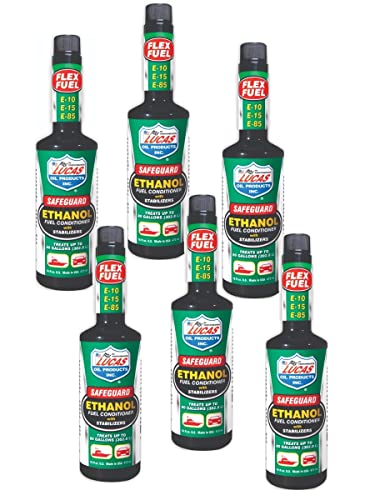 |
Lucas Oil Safeguard Ethanol Fuel Conditioner Best Ethanol Conditioner Treats ethanol blends, gas and diesel, removes and prevents water buildup |
8.5 | 🛒 Check Price |
 |
Gumout Multi-System Tune-Up Fuel System Cleaner Best Cleaner with Water Removal 6 oz concentrate, removes water and cleans the full fuel system |
8.2 | 🛒 Check Price |
1. HEET Gas-Line Antifreeze and Water Remover: Best Overall
The red bottle of HEET is the one most people reach for when they suspect water in the tank, and it earns that reputation. The isopropyl alcohol formula chemically bonds with water so the two can pass through the fuel system and burn off in the combustion chamber instead of sitting at the bottom of the tank. In practice that means a car that was stumbling on cold mornings or hesitating under throttle usually clears up within a tank or two, and the winter freeze protection is genuinely useful in cold climates where a frozen fuel line leaves you stranded.
Where HEET shows its limits is scope. It’s laser focused on removing water and preventing line freeze, and it doesn’t pretend to be an injector cleaner or a broad fuel-system treatment. If your only problem is moisture, that focus is a strength. If you also want carbon cleanup and lubrication, you’ll want to pair it with something else or step up to a multi-function product. Also note the red HEET is for gasoline, so diesel owners need the dedicated diesel formula instead.
- Absorbs water and carries it safely through the fuel system to burn off
- Prevents fuel-line freeze-up in cold weather, rated for very low temperatures
- Single bottle treats a full tank, simple pour-in application
Pros: Proven track record that mechanics and drivers have trusted for decades; Works fast on rough idle and hard starts caused by water; Available almost everywhere and easy to keep a spare in the trunk
Cons: Isopropyl formula is meant for gasoline, not the diesel version of HEET; Aggressive on water but offers little injector cleaning on its own
2. STA-BIL 360 Protection Ethanol Treatment: Best for Ethanol Gas
Modern pump gas with ethanol is one of the biggest reasons water ends up in a tank, because ethanol attracts moisture out of the air and holds it. STA-BIL 360 Protection is built specifically for that problem. It disperses the absorbed water so it burns off cleanly, and its standout feature is a vapor-phase corrosion inhibitor that coats metal surfaces in the upper part of the tank and fuel system that liquid additives never touch. That’s meaningful protection for anyone running E10 or E85 in a vehicle that sits for stretches.
The flip side is that this is really a full ethanol-defense and storage product, not a single-shot water flush. If you just want to knock out moisture in a daily driver and move on, you’re paying for stabilizer and long-term protection you may not use. It also requires dosing to your tank size with the measured cap, so it takes a few more seconds than a one-bottle product. For ethanol-heavy fuel and stored equipment, though, it’s hard to beat.
- Removes water and prevents corrosion above and below the fuel line
- Patented vapor technology protects metal parts not touching the fuel
- Keeps fuel fresh and stable for up to 12 months of storage
Pros: Excellent at fighting the corrosion that ethanol and water cause together; Doubles as a storage stabilizer for seasonal and stored vehicles; Safe for all gasoline engines including small engines and marine
Cons: Stabilizer features are overkill if you only need quick water removal; Needs to be measured to tank size rather than a simple whole-bottle pour
3. Sea Foam Motor Treatment SF-16: Best Multi-Purpose
Sea Foam is the Swiss army knife of this list. Its petroleum-based formula disperses water throughout the fuel so it passes through and burns off, while at the same time dissolving the gum, varnish, and carbon that build up around injectors and intake valves. Because the same can can go in the fuel tank, the crankcase, or be fed through the intake, it’s the product to keep on the shelf when you aren’t certain whether the problem is water, dirty injectors, or stale fuel. It works in gas and diesel, which adds to the versatility.
The trade-off for that flexibility is that it’s a generalist. For pure cold-weather water and fuel-line freeze, a dedicated isopropyl antifreeze will out-protect it in deep cold. And because Sea Foam actively loosens deposits, a strong dose in a neglected engine can briefly make idle rougher or push a puff of smoke as gunk clears the system. That’s normal, but it surprises people who expect an instant smooth-out. Treat it as a do-everything maintenance tool rather than a single-purpose water remover.
- Controls moisture by dispersing water through the fuel for safe burn-off
- Cleans injectors, carbon deposits, and intake passages as it treats
- Usable in fuel tank, crankcase, or directly through the intake
Pros: One can handles water, cleaning, and lubrication in a single product; Works in both gasoline and diesel engines, including small engines; Stabilizes stored fuel and helps with rough running from old gas
Cons: Not as specialized at deep freeze protection as a dedicated antifreeze; Heavy doses can temporarily roughen idle as deposits break loose
4. ISO-HEET Premium Fuel-Line Antifreeze and Water Remover: Best for Heavy Water
When you know you have a real slug of water in the tank, not just overnight condensation, ISO-HEET is the step up. The 100 percent isopropyl formula is marketed as removing up to five times more water than a standard gas dryer, and that extra capacity matters when you have taken on a bad batch of fuel or let a tank sit through a humid season. Unlike the red gasoline-only HEET, ISO-HEET is rated for both gasoline and diesel, and it adds a measure of injector cleaning while it pulls the moisture out.
The honest caveat is that this is a strong solution for a serious problem. For a daily driver with light seasonal condensation, regular HEET or a maintenance dose of something gentler is plenty, and you don’t need the heavy water-removal capacity here every fill-up. The packaging also looks very similar to standard HEET, so it’s genuinely easy to grab the wrong blue versus red bottle at the store. Match the formula to how much water you’re actually dealing with.
- Pure isopropyl formula removes up to five times more water than standard dryers
- Safe for both gasoline and diesel fuel systems
- Adds injector cleaning and water removal in one bottle
Pros: Stronger water-removal capacity than the standard red HEET; Works in diesel as well as gas, so one bottle covers more vehicles; Helps with cold-weather starting and fuel-line freeze prevention
Cons: Stronger formula is more than light condensation cases require; Easy to confuse with regular red HEET on the shelf
5. Star Tron Enzyme Fuel Treatment Gas Formula: Best for Marine and Stored Fuel
Star Tron takes a different route to the same goal. Instead of alcohol, it uses an enzyme formula that breaks water down into tiny submicron droplets dispersed evenly through the fuel, so they pass through and burn off rather than pooling at the bottom. That gentler chemistry makes it a favorite for boats, generators, and small engines, exactly the equipment that suffers most from ethanol pulling water into the tank during long idle periods. It also stabilizes fuel and keeps the system clean, so it doubles as off-season insurance.
Because it relies on enzymes rather than a fast alcohol bond, it tends to work more gradually than a product like HEET, and it isn’t the right tool when you need immediate fuel-line freeze protection on a frigid morning. Think of Star Tron as the maintenance and prevention choice, especially for marine and stored fuel, rather than the emergency fix when your car is already stalling from water. Used regularly, it keeps moisture from ever becoming a problem in the first place.
- Enzyme technology breaks water into submicron droplets that burn off
- Targets ethanol problems in marine, small engine, and stored fuel
- Stabilizes fuel and cleans the system without harsh solvents
Pros: Gentle enzyme approach handles water without aggressive chemicals; Excellent for boats, generators, and seasonal small engines; Concentrated, so a small amount treats a large volume of fuel
Cons: Works more gradually than an alcohol-based water remover; Less effective as a deep cold-weather fuel-line antifreeze
6. Lucas Oil Safeguard Ethanol Fuel Conditioner: Best Ethanol Conditioner
Lucas Oil Safeguard is aimed squarely at the ethanol-and-water combination that troubles modern fuel. It removes existing water and guards against the corrosion that ethanol blends promote, while adding upper-cylinder and fuel-pump lubrication that helps protect the parts moisture tends to attack. For drivers who run E10 in older vehicles or equipment with metal fuel components, that blend of water control and corrosion defense addresses the root cause rather than just the symptom, and it works in both gas and diesel.
Where it sits behind the leaders is raw water-removal strength. It’s a conditioner first, so it won’t flush a heavy water load the way ISO-HEET will, and its real value comes out over consistent use rather than a single emergency pour. If you’re already fighting a stalling, water-flooded tank, reach for an alcohol-based remover first. If you want ongoing protection for ethanol fuel and the parts it corrodes, Safeguard is a sensible, well-supported choice from a trusted name.
- Removes water and protects against the corrosive effects of ethanol
- Lubricates upper cylinders and fuel pump components
- Compatible with gasoline and diesel fuel systems
Pros: Combines water removal with corrosion protection and lubrication; Helps quiet rough running caused by ethanol and moisture; From a brand with a strong reputation in fuel and oil additives
Cons: Water-removal punch is milder than a pure isopropyl product; Benefits show best with regular use rather than a one-time dose
7. Gumout Multi-System Tune-Up Fuel System Cleaner: Best Cleaner with Water Removal
Gumout Multi-System Tune-Up earns its place for drivers whose rough running is a mix of moisture and grime. It removes water from the fuel system while doing a thorough cleaning pass on injectors, intake valves, and the combustion chamber, so a tank that’s both damp and dirty gets addressed in one shot. People often discover water trouble at the same time they realize the injectors are clogged, and this is the bottle that handles both rather than forcing you to treat twice.
The honest framing is that this is a cleaner that also removes water, not a water remover that also cleans. Its moisture handling is solid but secondary, and it offers no real fuel-line antifreeze protection for hard winters, so cold-climate drivers shouldn’t rely on it for freeze prevention. As a periodic tune-up that clears deposits and pulls out incidental water in the same go, though, it delivers noticeable smoothness and is an easy product to keep in the rotation.
- Removes water from the fuel system while cleaning deposits
- Restores lost power and smooths rough idle from contamination
- Treats injectors, intake valves, and combustion chamber in one pass
Pros: Pairs water removal with a genuine deep-clean of injectors and valves; Useful when water and carbon deposits are both causing rough running; Concentrated formula treats a full tank from a small bottle
Cons: Water removal is secondary to its cleaning role; No dedicated fuel-line freeze protection for deep winter
Frequently Asked Questions
How do I know if there’s water in my gas tank?
The classic signs are a rough or surging idle, hesitation or sputtering when you accelerate, hard starting, and in cold weather a no-start because the fuel line has frozen. You might also notice the engine running fine and then suddenly stumbling as water that settled at the bottom of the tank gets drawn into the pickup. If symptoms appeared after filling up at an unfamiliar station, after heavy rain, or after the car sat with a low tank through a humid stretch, water is a strong suspect. A water-removing treatment is a cheap first step to rule it in or out before deeper diagnosis.
How does a fuel treatment actually remove water from gas?
Most water removers work in one of two ways. Alcohol-based products like HEET and ISO-HEET use isopropyl alcohol that chemically bonds with the water and lets the mixture pass through the fuel system and burn off harmlessly in the combustion chamber. Enzyme and dispersant products like Star Tron instead break the water into microscopic droplets spread evenly through the fuel so they also burn off rather than pooling. Either way, the water leaves through the tailpipe rather than sitting in your tank. Neither approach drains water out physically, so for a very large amount of standing water you may still need the tank dropped and cleaned.
Can I use too much water remover in my tank?
Yes, more isn’t better. Alcohol-based removers in excessive amounts can run the mixture lean and, in very large overdoses, affect some rubber and plastic fuel-system components over time. Always follow the bottle’s dosing for your tank size rather than emptying extra in to be safe. For routine condensation, one treated tank usually clears things up. If symptoms persist after one or two correct doses, the problem is likely a larger water load or something other than water, and it’s time to inspect the tank rather than keep pouring in additive.
Will these treatments work in a diesel engine too?
Some will and some won’t, so read the label carefully. The standard red HEET is formulated for gasoline only, while ISO-HEET, Sea Foam, Lucas Safeguard, and Star Tron offer versions or formulas rated for both gasoline and diesel. Diesel has its own water concerns, including bacterial growth in the fuel and waxing in cold weather, so many diesel owners use a dedicated diesel water remover and anti-gel product. If you run a diesel, confirm the bottle specifically lists diesel compatibility before adding it, and consider a purpose-built diesel formula for best results.
How often should I use a water-removing fuel treatment?
For prevention, adding a maintenance dose every few fill-ups, or seasonally before winter, keeps condensation from ever building into a problem, and it’s especially worthwhile if you run ethanol blends or store a vehicle. Keeping the tank closer to full also reduces the airspace where condensation forms. As a fix, use a treatment when symptoms appear and give it a full tank to work. If you constantly need it just to keep the car running smoothly, that points to an ongoing source of water, such as a bad cap seal, a cracked filler neck, or a contaminated fuel source, which is worth fixing at the root.
Our Verdict
For most drivers dealing with water in the gas, HEET Gas-Line Antifreeze and Water Remover is our top pick. It’s fast, proven, easy to find, and pulls moisture out while protecting against fuel-line freeze, which covers the situation that sends most people looking for a treatment in the first place. Our runner up is STA-BIL 360 Protection Ethanol Treatment, the smarter choice if your fuel is ethanol-heavy or your vehicle sits for stretches, thanks to its corrosion protection and storage stabilizing. If you have taken on a heavy slug of water, step up to ISO-HEET, and for boats, generators, and stored small engines, Star Tron is the gentle maintenance option worth keeping on the shelf.

