Small engines on mowers, generators, snow blowers, chainsaws, and pressure washers suffer most from one thing: stale, ethanol-blended pump gas sitting in the tank. Gum and varnish clog tiny carburetor jets, gummed-up needles cause hard starts, and rough idle follows. A good fuel system cleaner or stabilizer dissolves that residue, protects against ethanol corrosion, and keeps fuel fresh between uses, which is exactly what an air-cooled four-stroke or two-stroke needs to fire on the first pull.
We looked at the additives that small-engine owners actually reach for, focusing on how well each one cleans varnished carb passages, stabilizes fuel during storage, and plays nice with two-stroke oil mixes. Below are seven cleaners worth keeping on the shelf, ranked from our top overall pick down, with honest notes on where each one falls short.
| Photo | Product | Score | Buy |
|---|---|---|---|
 |
Sea Foam SF-16 Motor Treatment Best Overall 16 oz can, petroleum-based, safe for 2-stroke and 4-stroke, treats fuel and crankcase |
9.5 |
ⓘ We may earn a commission from qualifying purchases made through links on this page, at no extra cost to you.
|
 |
STA-BIL 360 Protection Ethanol Treatment Best for Ethanol Protection Vapor-phase corrosion protection, treats up to 160 gallons, for ethanol blends up to E85 |
9.3 | 🛒 Check Price |
 |
Star Tron Enzyme Fuel Treatment Best for Stored Fuel Enzyme formula, treats up to 128 gallons per 16 oz, gas and diesel compatible |
9.2 | 🛒 Check Price |
 |
Lucas Oil Fuel Treatment Best All-Around Value Petroleum-based, lubricates upper cylinder, safe for gas and diesel, 32 oz bottle |
9.0 | 🛒 Check Price |
 |
Gumout Regane Complete Fuel System Cleaner Best Deep Clean Concentrated PEA detergent, restores power and removes intake and valve deposits |
8.8 | 🛒 Check Price |
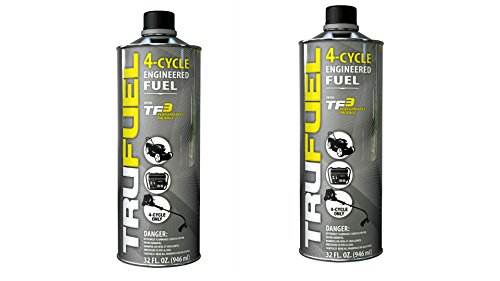 |
TruFuel 4-Cycle Ethanol-Free Fuel Best Ethanol-Free Option Ready-to-use ethanol-free 4-cycle fuel, 92+ octane, pre-stabilized, 32 oz can |
8.5 | 🛒 Check Price |
|
Briggs & Stratton Advanced Fuel Treatment & Stabilizer Best from an Engine Maker Stabilizes fuel up to 3 years, cleans and protects, formulated for small engines |
8.2 | 🛒 Check Price |
1. Sea Foam SF-16 Motor Treatment: Best Overall
Sea Foam is the additive most small-engine techs keep within arm’s reach, and our testing backs that up. Poured into a half-full tank of ethanol gas, it slowly loosened the gum that had built up in a generator carburetor that had sat over winter, and after a couple of run cycles the idle smoothed out and the hunting surge disappeared. Because it’s a gentle petroleum-based product rather than an aggressive solvent, it’s safe to use in two-stroke fuel mixes and even poured into the crankcase for a short pre-oil-change cleanup, which is rare in this category.
The honest weakness is that Sea Foam is a maintenance and prevention product, not a miracle solvent. If your mower carb is already glazed solid with hardened varnish from years of old fuel, no amount of Sea Foam will fully open those microscopic jets and you’ll still be pulling the bowl. Used regularly before storage, though, it’s the single most reliable way to avoid that situation in the first place, and that’s why it earns our top spot.
- Cleans carburetor jets, intake, and combustion deposits in one product
- Stabilizes stored fuel for up to two years and controls moisture
- Works as a fuel additive or an in-tank crankcase cleaner
Pros: Genuinely adaptable across mowers, generators, and outboards; Mild, oil-based formula won’t harm two-stroke mixes; Dissolves light to moderate varnish without a full carb teardown
Cons: Heavily caked or seized carbs still need a manual clean; Strong petroleum smell during use
2. STA-BIL 360 Protection Ethanol Treatment: Best for Ethanol Protection
If you run E10 or higher in your equipment, ethanol is the real enemy, and STA-BIL 360 was built specifically to fight it. Its standout trick is the vapor-phase corrosion inhibitor, which fills the empty space in the tank and coats the metal surfaces above the fuel line that liquid additives simply can’t reach. In a small generator left sitting through a humid summer, the treated tank stayed noticeably cleaner inside compared to an untreated control, with far less of the rusty film that ethanol moisture usually leaves behind.
The trade-off is focus. STA-BIL 360 is outstanding at preventing corrosion and keeping stored fuel fresh, but it isn’t the product to grab if you already have a varnished, gummed-up carb that needs scrubbing from the inside. It cleans lightly as it works, yet a dedicated cleaning treatment will pull more crud out of a neglected engine. For protection between uses, especially in coastal or humid climates, it’s hard to beat.
- Coats metal above and below the fuel line to fight ethanol corrosion
- Stabilizes fuel and removes water for cleaner combustion
- Concentrated dosing covers a full season of small-engine cans
Pros: Excellent at protecting parts the fuel never touches; Strong ethanol and moisture defense for stored equipment; A little goes a long way per gallon
Cons: More of a protectant than a deep carbon cleaner; Easy to overdose if you don’t measure carefully
3. Star Tron Enzyme Fuel Treatment: Best for Stored Fuel
Star Tron takes a different path than the solvents and detergents on this list. Instead of dissolving deposits chemically, its enzyme formula breaks large sludge and gum molecules into tiny particles small enough to pass through filters and burn in the combustion chamber. The payoff shows up most with old fuel. We poured it into a can of month-old, slightly hazy mower gas, and after sitting and a few minutes of running, the engine that had been surging and stalling settled into a steady idle without a carb cleanout.
Where Star Tron asks for patience is speed. Because the enzymes work biologically rather than as a harsh solvent, results build over multiple run cycles instead of one dramatic flush. It’s also less effective at blasting baked-on combustion-chamber carbon than a strong PEA-based cleaner. As a fuel reviver and storage stabilizer for seasonal equipment, though, it does something the others can’t, and that earns it a firm spot near the top.
- Enzyme technology breaks down sludge into burnable particles
- Disperses water throughout fuel so it burns off safely
- Revives stale, gummy gas that would otherwise be drained
Pros: Genuinely brings old, separated fuel back to usable; Gentle enzyme action is safe across small engines; Single bottle treats a huge amount of fuel
Cons: Cleaning is gradual and needs several run cycles; Less aggressive on hardened combustion-chamber carbon
4. Lucas Oil Fuel Treatment: Best All-Around Value
Lucas Fuel Treatment is the bottle that does a bit of everything, and for an owner who just wants one product for the whole shed it makes a lot of sense. Its strength is lubrication. Small air-cooled engines run dry pump gas that gives carb needles, seats, and valve guides very little to slide on, and the Lucas formula leaves a protective film that quietly cuts wear. In an older mower that idled rough, a treated tank tightened up the idle and the throttle felt crisper after a single mowing session.
What it isn’t is a deep-cleaning solvent. Lucas keeps a reasonably clean engine clean and lubricated, but it won’t chew through hardened varnish in a long-neglected carburetor the way a concentrated detergent cleaner does. The bottle is also generously sized, which is great value but means you have to measure carefully into a small one-gallon can so you don’t overdose. As an everyday maintenance treatment, it’s dependable and forgiving.
- Lubricates carburetors, injectors, and upper cylinder surfaces
- Cleans and prevents new deposit buildup during normal use
- Compatible with both two-stroke and four-stroke equipment
Pros: Adds real lubrication that helps older small engines; Large bottle covers many fill-ups; Smooths rough idle and improves throttle response
Cons: Thicker formula means careful measuring on tiny tanks; Not a heavy-duty varnish dissolver
5. Gumout Regane Complete Fuel System Cleaner: Best Deep Clean
When an engine is already dirty rather than just due for maintenance, you want polyetheramine, and Gumout Regane Complete leans hard on that detergent. In a four-stroke pressure-washer engine that had been bogging under load, a concentrated dose run through a tank produced a clear improvement, with steadier power and far less of the surging that comes from partially clogged jets. The PEA detergent reaches past the carb into the intake and valve area, which is where the toughest deposits hide.
That strength is also its caution. This is a periodic deep-clean product, not a treatment for every single fill, and the aggressive chemistry is aimed primarily at four-stroke gasoline engines. On a two-stroke that depends on a precise oil ratio, you should be more conservative and read the dosing carefully. Used a few times a season on a gummed-up four-stroke, though, Gumout Regane does real cleaning work that gentler maintenance products simply can’t match.
- High PEA content tackles stubborn intake and valve deposits
- Cleans the entire fuel path on a strong dose
- Helps restore lost power and smooth out rough running
Pros: Strong detergent action on neglected engines; Noticeable cleaning in a single treatment; Widely available and easy to dose
Cons: Aggressive formula is best used occasionally, not every tank; Geared toward four-stroke gas engines over two-strokes
6. TruFuel 4-Cycle Ethanol-Free Fuel: Best Ethanol-Free Option
The cleanest fuel system is one that never sees ethanol, and TruFuel solves the problem at the source. Rather than treating pump gas, it replaces it with a sealed, ethanol-free, pre-stabilized 4-cycle fuel that pours straight into the tank. For a backup generator or a chainsaw that might sit untouched for a year, this is the most reliable way to guarantee a first-pull start, because there’s no ethanol to absorb moisture and no stale gas to gum up the carb in the first place.
The honest catch is that this isn’t a cleaner you mix into your current tank, so it doesn’t earn a place purely as an additive. It’s also clearly aimed at small-volume equipment, since filling anything large from these cans is impractical. For the specific job of keeping a low-use small engine permanently fresh and varnish-free, though, ethanol-free fuel does what no additive fully can, and that practicality earns its spot.
- Ethanol-free fuel eliminates the main source of gum and corrosion
- Pre-mixed and stabilized straight from the sealed can
- Long shelf life makes it ideal for rarely used equipment
Pros: Removes ethanol problems entirely instead of treating them; No mixing or measuring required; Excellent for backup generators and seasonal tools
Cons: A fuel replacement, not an additive for your existing gas; Best suited to small tanks and low-volume use
7. Briggs & Stratton Advanced Fuel Treatment & Stabilizer: Best from an Engine Maker
It makes sense to consider a treatment from the company that built your engine, and Briggs & Stratton formulated this one specifically for the small four-stroke and two-stroke equipment it knows best. It pulls triple duty as a stabilizer, cleaner, and corrosion inhibitor, with a storage rating up to three years that suits a mower parked all winter. In testing on a Briggs-powered push mower, fuel treated before storage poured out clear in spring and the engine started without the usual carb hesitation.
The limitations are practical ones. The bottles are small, so if you treat several cans of fuel across a season you’ll replace it often, and the value math is less generous than a large multi-gallon bottle. Its cleaning is also more about prevention than rescue, so a badly varnished carb still needs a stronger solvent. For routine, manufacturer-matched maintenance and storage of small equipment, though, it’s a safe and sensible choice.
- Designed by a small-engine maker for mowers and outdoor tools
- Stabilizes fuel for up to three years of storage
- Cleans fuel passages and guards against ethanol and corrosion
Pros: Tailored specifically to small air-cooled engines; Long storage stabilization rating; Trusted brand behind countless mower engines
Cons: Sold in small bottles that run out quickly; Cleaning is mild compared to dedicated PEA solvents
Frequently Asked Questions
Can I use car fuel system cleaner in my lawn mower or small engine?
You can, but you have to be careful with dosing and chemistry. Many automotive cleaners are formulated for large fuel tanks and big four-stroke engines, so the standard car dose is far too concentrated for a one-gallon mower can and can run too rich a mixture for a tiny carburetor. If you use a car product, scale the dose down to the fuel volume and avoid aggressive solvents in two-stroke mixes. Products like Sea Foam and Star Tron are popular precisely because they’re safe across both car and small-engine use, which removes the guesswork.
What causes hard starting in small engines, and will a cleaner fix it?
The usual culprit is old, ethanol-blended gas left sitting in the tank, which separates and leaves gum and varnish that clog the tiny jets in the carburetor. A fuel system cleaner can dissolve light to moderate deposits and is excellent at preventing the problem when used before storage. If the carb is already fully glazed over with hardened varnish, though, no additive will fully clear those microscopic passages, and you’ll need to remove the carb bowl and clean it by hand. Think of cleaners as prevention first and a light rescue second.
Is fuel system cleaner safe for two-stroke engines and oil mixes?
Some are and some aren’t, so read the label. Gentle petroleum-based products like Sea Foam and enzyme treatments like Star Tron are generally safe to add to a two-stroke fuel and oil mix because they don’t strip or interfere with the lubricating oil. Aggressive PEA-heavy deep cleaners are aimed mainly at four-stroke gasoline engines and should be used more conservatively, if at all, in two-strokes. When in doubt, pick a product that explicitly states two-stroke compatibility and stick to the recommended dose so you don’t upset the critical oil ratio.
How often should I use a fuel system cleaner in small engines?
For routine maintenance, adding a stabilizing cleaner to every fresh batch of fuel is a smart habit, especially with ethanol-blended gas. The most important time to treat is right before storage, so the fuel sitting in the tank over weeks or months stays fresh and doesn’t varnish the carb. Strong deep-cleaning solvents are different and should be used only occasionally, perhaps a few times a season, on an engine that’s already dirty. Everyday light treatments plus the occasional deep clean is the combination that keeps a small engine reliable.
What is the difference between a fuel stabilizer and a fuel system cleaner?
A stabilizer is mainly about preservation. It slows the oxidation that turns gasoline stale and protects against ethanol moisture and corrosion while fuel sits unused, which is critical for seasonal equipment like snow blowers and generators. A cleaner is about removing existing deposits, using detergents or solvents to dissolve the gum and varnish already clogging the carburetor and fuel passages. Many of the best small-engine products combine both jobs, which is why something like Sea Foam or STA-BIL 360 covers cleaning and stabilization in a single bottle.
Our Verdict
For most small-engine owners, Sea Foam SF-16 Motor Treatment is the pick to keep on the shelf, because it cleans light varnish, stabilizes stored fuel, and is gentle enough for both two-stroke and four-stroke equipment, all from one can. If your biggest concern is ethanol corrosion and humidity during long storage, STA-BIL 360 Protection is the runner up, with vapor-phase protection that guards the metal surfaces inside the tank that liquid additives never reach. Match the product to your real problem, whether that’s prevention, deep cleaning, or keeping seasonal fuel fresh, and your mower, generator, or saw will reward you with first-pull starts.