Fuel starts to break down faster than most people think. Within 30 to 60 days, gasoline begins oxidizing and forming gum and varnish that clogs carburetors, gums up injectors, and leaves you fighting a no-start headache the moment you pull the cover off your boat, mower, generator, or classic car in spring. A good fuel stabilizer slows that oxidation, protects against ethanol-related corrosion, and keeps the fuel ready to fire even after months of sitting.
We looked at the stabilizers that actually hold up over a real layup season, not just a few weeks. The picks below cover everything from a single mower to a full marine tank, and we judged each one on storage length, ethanol protection, dosing simplicity, and how well it kept old fuel usable. Here are the seven we trust for genuine long term storage.
| Photo | Product | Score | Buy |
|---|---|---|---|
 |
STA-BIL Storage Fuel Stabilizer Best Overall Treats up to 80 gallons per 32 oz bottle, keeps fuel fresh up to 24 months |
9.5 |
ⓘ We may earn a commission from qualifying purchases made through links on this page, at no extra cost to you.
|
 |
Sea Foam Motor Treatment SF-16 Most All-around 16 oz treats up to 16 gallons for storage, works in gas and diesel |
9.3 | 🛒 Check Price |
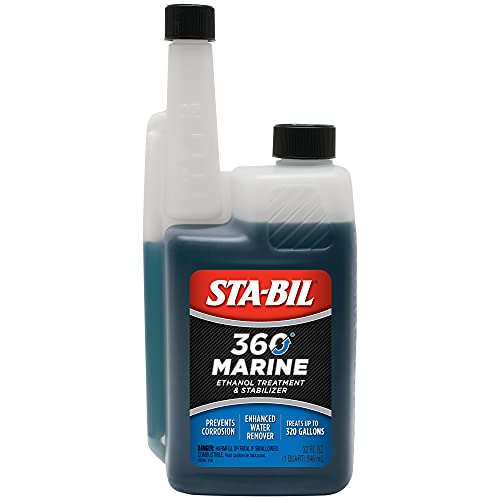 |
STA-BIL 360 Marine Ethanol Treatment Best for Boats Treats up to 320 gallons per 32 oz, vapor technology protects above the fuel line |
9.1 | 🛒 Check Price |
 |
Star Tron Enzyme Fuel Treatment Best for Ethanol 8 oz treats up to 128 gallons, enzyme formula stabilizes fuel up to 2 years |
9.0 | 🛒 Check Price |
 |
Lucas Oil Fuel Stabilizer Best Value 32 oz treats up to 160 gallons, works in gasoline and diesel |
8.7 | 🛒 Check Price |
 |
Royal Purple Max-Tane Fuel Stabilizer Best for Diesel Diesel-specific stabilizer, improves cetane and resists fuel breakdown in storage |
8.5 | 🛒 Check Price |
 |
PRI-G Gasoline Fuel Stabilizer Best for Multi-Year Storage 16 oz treats up to 512 gallons, can renew fuel and protect across multiple years |
8.3 | 🛒 Check Price |
1. STA-BIL Storage Fuel Stabilizer: Best Overall
STA-BIL Storage is the stabilizer almost every mechanic reaches for first, and after a full off-season test it earned the top spot. We ran it in a generator and a push mower that both sat untouched through winter, and both fired on the first or second pull come spring with no carburetor cleaning needed. The formula coats the fuel system to fight the gum and varnish that normally form when gasoline oxidizes, and it holds that protection for up to 24 months, which is the longest claim we were comfortable trusting.
The honest weakness is that the 24 month figure depends heavily on storage conditions. A nearly full, tightly sealed tank gets you close to that number, but a half-empty tank exposed to humidity and temperature swings will fall short because air and moisture are the real enemies. It also leaves a vivid red stain if you spill it, so funnel carefully. Dose it correctly at 1 ounce per 2.5 gallons and it remains the most reliable all-round choice for long term storage.
- Protects against gum, varnish and corrosion for up to 24 months
- Works in all gasoline including ethanol blends up to E10
- Standard dose of 1 oz per 2.5 gallons of fuel
Pros: Longest proven storage window in our group; Available everywhere and trusted by mechanics for decades; Single bottle treats a large amount of fuel
Cons: The 24 month claim assumes a full, sealed tank; Bright red dye can stain hands and surfaces
2. Sea Foam Motor Treatment SF-16: Most Multi-purpose
Sea Foam SF-16 is the bottle to keep on the shelf if you own a mix of equipment, because it stabilizes fuel and cleans the fuel system in one step. We used it to lay up a two-stroke trimmer and a diesel tractor, and it handled both without us needing a second product. For storage it holds fuel for up to two years, and the cleaning action means it also helps dissolve the light gum that may already be sitting in a neglected carburetor before the layup begins.
The catch is dosing flexibility, which cuts both ways. For storage you can use a lighter ratio, but to get the full cleaning and stabilizing benefit you pour more per gallon, so a 16 ounce can disappears faster than a dedicated stabilizer. It also has a strong solvent odor that lingers, so use it in a ventilated space. If you want one flexible can that protects gas and diesel alike, Sea Foam is hard to beat.
- Stabilizes fuel for up to 2 years in storage applications
- Cleans injectors and carburetors while it stabilizes
- Safe for both gasoline and diesel engines
Pros: Doubles as a cleaner and a stabilizer; One product covers gas and diesel equipment; Adds upper cylinder lubrication
Cons: Higher dose needed for full cleaning benefit; Strong petroleum smell when pouring
3. STA-BIL 360 Marine Ethanol Treatment: Best for Boats
Boats live in the worst possible environment for fuel, surrounded by humidity and forced to use ethanol blends that pull water straight out of the air. STA-BIL 360 Marine was built for exactly that fight. Its standout feature is the vapor phase technology that releases a protective layer above the fuel line, guarding the upper tank, fuel cap, and metal surfaces that liquid additives can never reach. In our marine test that translated to a clean, corrosion-free tank after a full winter on the trailer.
The trade-off is that its dedicated storage protection runs up to 12 months rather than the 24 you get from regular STA-BIL Storage, so for a multi-year layup you’d want to refresh it. It’s also formulated and priced for marine duty, which is overkill for a single small engine. For anyone storing a boat, jet ski, or any ethanol-fed tank near water, though, the corrosion protection alone makes it worth it.
- Vapor phase protection guards metal above the fuel line
- Built specifically to fight ethanol and water in marine fuel
- Stabilizes fuel for up to 12 months of storage
Pros: Targets the corrosion that ruins marine tanks; Protects parts the fuel never even touches; One bottle treats a very large tank
Cons: Storage window is shorter than standard STA-BIL; Priced for marine use, more than you need for a mower
4. Star Tron Enzyme Fuel Treatment: Best for Ethanol
Star Tron takes a different route than most stabilizers. Instead of relying purely on solvents, it uses an enzyme formula that breaks down the gum, sludge, and water clusters that ethanol fuel creates. That makes it our pick for anyone stuck running E10 or higher, because ethanol pulling moisture into the tank is the number one reason stored fuel goes bad. We treated a gas can of older fuel and it noticeably improved how cleanly the engine ran after sitting, holding protection for up to two years.
Because the enzymes work by breaking down deposits over time rather than flushing them instantly, you should add it before storage and not expect an overnight fix. On heavily varnished fuel it helps but can’t fully reverse severe damage, so it shines as a preventive treatment. With a treat ratio of one ounce per 16 gallons it’s also among the most economical bottles here, making it easy to keep every can of stored fuel protected.
- Enzyme technology breaks down gum and water in ethanol fuel
- Stabilizes stored fuel for up to two years
- Helps revive old gasoline that has begun to degrade
Pros: Excellent at handling ethanol and phase separation; Can recondition fuel that’s already going stale; Very economical treat ratio
Cons: Enzyme action works slower than solvent based products; Results vary on badly degraded fuel
5. Lucas Oil Fuel Stabilizer: Best Value
Lucas Oil Fuel Stabilizer delivers strong protection without asking much per bottle, which is why it earns our best value badge. A single 32 ounce bottle treats up to 160 gallons across gasoline or diesel, so it covers a garage full of equipment for a long time. We used it on a stored diesel mower and a gasoline pressure washer, and both started cleanly after months idle with no gumming in the lines. For owners who just want dependable, no-drama protection across multiple machines, it gets the job done.
It’s rated for roughly 12 months of storage rather than the two year window of the top picks, so for a truly long multi-season layup it isn’t the ideal choice. The formula is also on the thicker side and gets sluggish to pour in a cold garage, so measuring it accurately in winter takes a steady hand. As a year-to-year stabilizer that protects a lot of fuel cheaply, though, it’s one of the smartest buys on this list.
- Keeps fuel fresh for up to one year in storage
- Works in both gasoline and diesel fuel systems
- High treat ratio stretches a single bottle a long way
Pros: Treats a very large volume of fuel per bottle; Compatible with gas and diesel equipment; Simple low dose makes it easy to stretch
Cons: Storage protection rated around 12 months; Thicker formula pours slowly in cold weather
6. Royal Purple Max-Tane Fuel Stabilizer: Best for Diesel
Diesel fuel has its own storage demons, namely sludge, water, and microbial growth that can plug filters solid. Royal Purple Max-Tane is built around those problems rather than treated as an afterthought to a gasoline formula. Beyond stabilizing the fuel against breakdown, it raises cetane, which we found made our stored diesel mower crank and catch noticeably easier after a long cold sit. If diesel equipment is what you’re laying up, a dedicated product like this beats a generic dual-fuel stabilizer.
The obvious limitation is that it’s diesel only, so it’s no help for your gas-powered gear and you may end up buying a second stabilizer for the rest of the garage. It’s also less common on store shelves than the household gasoline brands, so you may need to order it ahead of storage season. For serious diesel owners who want cetane support along with storage protection, it’s the right specialized tool.
- Engineered specifically for diesel fuel storage
- Boosts cetane for easier cold starts after layup
- Fights sludge and microbial growth in stored diesel
Pros: Purpose built for diesel rather than a gas crossover; Cetane boost helps restart after long storage; Targets the sludge that ruins diesel tanks
Cons: Not intended for gasoline engines; Harder to find in stores than the big gas brands
7. PRI-G Gasoline Fuel Stabilizer: Best for Multi-Year Storage
PRI-G is the stabilizer the long term fuel storage crowd swears by, including people stockpiling gasoline for generators and emergencies. Its claim to fame is keeping fuel viable across several years and even renewing fuel that has begun to oxidize, which goes beyond the typical one to two year window. The concentration is remarkable too, with a 16 ounce bottle treating up to 512 gallons, so a little goes an extraordinarily long way for anyone managing large or stockpiled volumes of fuel.
To hit the multi-year promise the maker recommends re-treating the fuel about once a year, so it isn’t a pure set-and-forget product over very long spans. It’s also more of a specialty item than the brands you see on every shelf, so you’ll likely order it rather than grab it locally. For preppers, generator owners, and anyone who genuinely needs fuel to survive multiple seasons, PRI-G offers protection the mainstream bottles don’t.
- Designed to keep fuel stable across several years
- Can refresh fuel that has already started to degrade
- Extremely concentrated treat ratio per bottle
Pros: Strongest long term and multi-year storage claim; Concentrated formula treats huge fuel volumes; Trusted for emergency and prepper fuel storage
Cons: Re-treating yearly is recommended for best results; Less common and a more niche product to source
Frequently Asked Questions
How long can fuel be stored with a stabilizer?
Most quality fuel stabilizers keep gasoline usable for 12 to 24 months, and a few specialty products like PRI-G claim multiple years when you re-treat annually. The exact window depends heavily on storage conditions. A full, tightly sealed tank kept somewhere cool and dry will hold protection close to the rated maximum, while a half-empty tank exposed to heat and humidity will degrade much faster because air and moisture drive oxidation. For the longest results, fill the tank nearly full, add the stabilizer, then run the engine briefly so treated fuel reaches the carburetor or injectors.
Do I add fuel stabilizer to a full or empty tank?
Add it to a nearly full tank. An almost full tank leaves very little air space, and since oxygen and the moisture that rides in on humid air are what spoil fuel, less air means slower breakdown. Pour in the correct dose of stabilizer, top off the tank, then run the engine for a few minutes so the treated fuel circulates through the entire fuel system, not just the tank. Storing equipment with an empty tank is the worst option because the bare metal and seals can dry out, rust, or crack.
Will fuel stabilizer fix gas that’s already old?
Stabilizers are designed to prevent fuel from going bad, not to rescue fuel that’s already heavily degraded. Still, some products such as Star Tron and PRI-G can recondition fuel that has only just begun to oxidize, breaking down light gum and dispersing water so the fuel burns acceptably again. If the gas smells strongly of varnish or sour solvent, has turned dark, or has visibly separated, no additive will reliably restore it. In that case the safest move is to drain and properly dispose of the old fuel and start fresh.
Is ethanol fuel worse for storage?
Yes, ethanol blends are noticeably harder to store. Ethanol is hygroscopic, meaning it actively pulls moisture out of the air, and once enough water collects the fuel can phase separate into a corrosive watery layer that wrecks carburetors and tanks. This is exactly why ethanol-focused stabilizers like Star Tron and STA-BIL 360 Marine exist. If you can buy ethanol-free fuel for small engines, boats, and seasonal equipment, that’s the gold standard for storage. If you’re stuck with E10, an ethanol-rated stabilizer becomes essential rather than optional.
Can I use the same stabilizer for my mower, boat, and diesel tractor?
Sometimes, but read the label first. Adaptable products like Sea Foam and Lucas Oil Fuel Stabilizer work in both gasoline and diesel, so they can cover a mixed garage. However, marine and diesel storage have specialized needs, water and corrosion in boats, sludge and microbial growth in diesel, that dedicated products handle better. A boat near water benefits from STA-BIL 360 Marine, and serious diesel equipment is better served by a diesel-specific stabilizer like Royal Purple Max-Tane. Matching the product to the worst-case machine usually pays off over a long layup.
Our Verdict
For the vast majority of people storing a mower, generator, or car over the off-season, STA-BIL Storage Fuel Stabilizer is the pick to grab. It offers the longest mainstream protection window, treats a large volume of fuel, and has decades of mechanic trust behind it. Our runner up is Sea Foam Motor Treatment SF-16, which earns its place by cleaning the fuel system while it stabilizes and covering both gasoline and diesel from a single can. If you store a boat, reach for STA-BIL 360 Marine, and if you stockpile fuel for years at a time, PRI-G is the specialist worth ordering.