Modern pump gas is rough on a 4 stroke outboard. Ethanol pulls water out of the air, fuel goes stale between trips, and varnish builds up in tiny carburetor jets and fuel injectors that hate sitting idle on a trailer or a mooring. The right fuel additive stabilizes that gas, fights phase separation, and keeps the fuel system clean so your motor fires on the first or second pull instead of leaving you stranded off the dock.
We focused on additives that are genuinely safe for marine 4 stroke engines and that earn their place in your boat bag. Below are seven proven picks, ranked, covering everything from long term winter storage to ongoing ethanol defense and deep injector cleaning. Each one is widely sold, trusted by boaters and mechanics, and chosen for how it actually performs in real outboard fuel systems rather than how loud the bottle shouts.
| Photo | Product | Score | Buy |
|---|---|---|---|
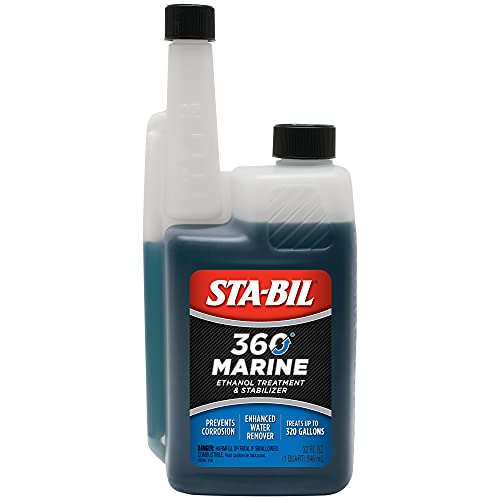 |
STA-BIL 360 Marine Ethanol Treatment and Fuel Stabilizer Best Overall Ethanol treatment plus stabilizer, treats up to 360 gallons per bottle, vapor phase corrosion protection |
9.5 | 🛒 Check Price |
 |
Yamaha Yamalube Ring Free Plus Fuel Additive Best for Carbon Cleaning Combustion chamber and injector cleaner with PEA detergent, formulated for marine 4 stroke engines |
9.3 | 🛒 Check Price |
 |
Star Tron Enzyme Fuel Treatment Marine Best for Ethanol Problems Enzyme based treatment, treats both gas and diesel, doses for use and for storage from one bottle |
9.1 | 🛒 Check Price |
 |
Sea Foam Motor Treatment SF-16 Most Adaptable 100 percent petroleum motor treatment, works in fuel and crankcase oil, treats gas and diesel |
9.0 | 🛒 Check Price |
 |
Mercury Quickstor Fuel Stabilizer Best for Storage Concentrated fuel stabilizer with corrosion inhibitor, formulated by an outboard manufacturer for marine engines |
8.8 | 🛒 Check Price |
 |
Lucas Oil Marine Fuel Treatment Best for Lubrication Marine fuel treatment that cleans and lubricates, treats both two and four stroke gas engines |
8.5 | 🛒 Check Price |
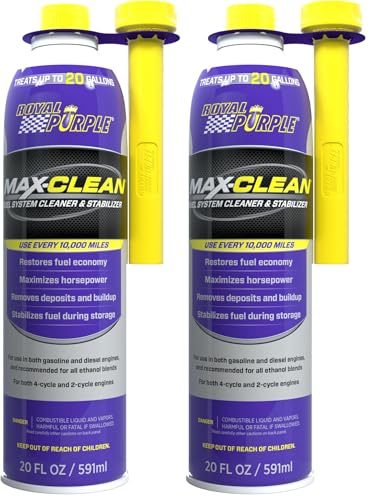 |
Royal Purple Max-Clean Fuel System Cleaner Best Deep Clean Fuel system cleaner and stabilizer, single tank treatment for gas and diesel engines |
8.2 | 🛒 Check Price |
1. STA-BIL 360 Marine Ethanol Treatment and Fuel Stabilizer: Best Overall
STA-BIL 360 Marine is the additive we reach for first because it does the two jobs a 4 stroke outboard actually needs at once. It stabilizes ethanol gas so it stays usable for up to a year, and its vapor phase technology releases a protective layer that climbs above the fuel to coat the upper parts of the fuel system, the exact metal surfaces that rust when a boat sits with a half empty tank. For outboards that spend more time on a trailer than in the water, that corrosion defense is the headline feature.
In regular use it keeps carbon and gum from forming and helps clear out water that ethanol drags in. The honest weakness is the dosing. The integrated measuring chamber is convenient in daylight but hard to read at a dim launch ramp, so it is easy to pour a little heavy. Over treating is not harmful, but you do burn through the bottle faster than the label math suggests. For all around 4 stroke protection, it remains the one to beat.
- Vapor technology coats fuel system surfaces above the fuel line to fight corrosion
- Removes water and fights ethanol phase separation in pump gas
- Keeps fuel fresh for up to 12 months of storage
Pros: Built specifically for ethanol blended marine fuel; Vapor protection reaches metal the liquid never touches; Works as both a regular treatment and a storage stabilizer
Cons: Dosing cap can be awkward to read in low light; Marine formula is pricier per ounce than basic stabilizers
2. Yamaha Yamalube Ring Free Plus Fuel Additive: Best for Carbon Cleaning
Ring Free Plus is what mechanics hand you when a 4 stroke outboard runs rough, idles unevenly, or has lost a step in power from carbon buildup. It uses a potent polyether amine detergent that scrubs deposits off piston rings, intake valves, and injectors, and many owners report a noticeably smoother idle and crisper throttle response within a few tanks. Because it comes from an outboard builder, you can trust it is compatible with the marine alloys and seals in your fuel system.
Where it falls short is storage. Ring Free Plus is a cleaner and corrosion inhibitor, not a long term fuel stabilizer, so if your boat is going to sleep for the off season you still want a dedicated stabilizer in the tank alongside it. The other catch is the dose. The cleaning concentration uses more product per gallon than a typical maintenance additive, so a bottle disappears quicker than you expect on a thirsty outboard. As a deposit fighter, though, it is excellent.
- Removes and prevents carbon deposits on rings, valves, and injectors
- Includes corrosion inhibitor for the fuel system
- Compatible with all 4 stroke and most fuel injected outboards
Pros: Engineered by an outboard manufacturer for marine engines; Strong detergent package restores lost compression on dirty motors; Safe to run at maintenance dose every tank
Cons: Higher maintenance dose means a bottle does not stretch far; Does not stabilize fuel for long term storage on its own
3. Star Tron Enzyme Fuel Treatment Marine: Best for Ethanol Problems
Star Tron takes a different route than most additives. Instead of leaning only on detergents, it uses an enzyme blend that breaks larger gum and sludge molecules into tiny particles small enough to pass through and burn in the engine. For a 4 stroke outboard that has been fed bad ethanol gas or has sat too long, that enzyme action is often what wakes it back up and restores easy starting. It also keeps water dispersed so it burns off rather than pooling in the tank.
The trade off is patience. On a motor with serious varnish, the enzymes work gradually and you may need a few tanks before the improvement is obvious, unlike a hard hitting detergent that you feel sooner. The flip top cap also makes precise dosing a bit of guesswork compared with a stabilizer that has a built in measuring window. For ethanol related headaches and resurrecting stale fuel, however, Star Tron is a very reliable bottles you can carry.
- Enzyme technology breaks down gum and sludge into burnable particles
- Helps disperse water so ethanol fuel burns cleaner
- Single bottle handles regular use and extended storage
Pros: Unique enzyme approach revives old or hard to start fuel; All-around dosing for both maintenance and storage; A little goes a long way at the regular treatment rate
Cons: Results on heavily varnished engines take a few tanks; Bottle cap measuring is less precise than a built in chamber
4. Sea Foam Motor Treatment SF-16: Most Multi-purpose
Sea Foam is the jack of all trades that has lived in tackle boxes and toolboxes for decades, and it earns the spot. Made entirely from petroleum based ingredients, it cleans gum and varnish out of carburetor circuits and injectors, frees sticky components, and stabilizes stored fuel for up to two years. For a 4 stroke outboard that gets used a few times a year, one can lets you cover cleaning and storage protection without juggling multiple bottles, and it will not attack your seals or fuel system alloys.
Because it is a generalist, it is not as laser focused on ethanol and corrosion as a purpose built marine treatment, so boaters who fight phase separation hard may prefer to pair it with a dedicated ethanol product. The other minor gripe is the smell. Sea Foam has a strong solvent odor that lingers in an enclosed engine well or bilge, which some owners find unpleasant on a hot day. As an all in one can you can trust in almost any tank, it is hard to argue with.
- Cleans injectors, carburetor passages, and intake deposits
- Stabilizes stored fuel for up to two years
- Adds lubricity and helps control moisture in the fuel
Pros: One can covers cleaning, stabilizing, and moisture control; Trusted by mechanics across marine and automotive use; No harsh chemicals that threaten seals or alloys
Cons: Not as targeted as a dedicated marine ethanol formula; Strong solvent smell some boaters dislike in a closed bilge
5. Mercury Quickstor Fuel Stabilizer: Best for Storage
Quickstor is Mercury Marine’s own answer to the storage problem, and it is the bottle to pour in before you winterize a 4 stroke outboard. It stabilizes the fuel so it does not turn to gum and varnish while the boat sits, and it lays down a protective film inside the fuel system to keep corrosion off the metal during the months your motor goes untouched. Coming from an outboard manufacturer, it is built around the realities of marine fuel systems rather than adapted from an automotive product.
It is a storage specialist, and that is also its limitation. Quickstor protects and stabilizes, but it does not bring the aggressive detergent cleaning that something like Ring Free Plus delivers, so it will not scrub away existing carbon deposits on its own. It can also be a little harder to track down than the additives that fill every big box marine aisle. If your main concern is bringing your motor back to life cleanly after winter, though, this is a smart, manufacturer backed choice.
- Prevents gum and varnish from forming during layup
- Coats internal fuel system parts to fight corrosion
- Concentrated formula treats a large volume per bottle
Pros: Designed by an outboard maker for marine fuel systems; Excellent at protecting motors through long off season storage; Concentrated so a small bottle stretches a long way
Cons: Aimed at storage rather than active deposit cleaning; Harder to find on the shelf than the big retail brands
6. Lucas Oil Marine Fuel Treatment: Best for Lubrication
Lucas built its reputation on lubrication, and the Marine Fuel Treatment carries that DNA into your tank. Beyond a basic clean of injectors and carburetor passages, it adds upper cylinder lubrication that helps protect valves and rings, which matters because today’s low sulfur ethanol gas is dry and offers little of the lubricity older fuels once did. For a 4 stroke outboard run regularly through a season, that extra slipperiness is cheap insurance against wear in the top end.
It is a maintenance and protection product more than a deep cleaner or a storage stabilizer. The detergent action is gentler than a heavy polyether amine treatment, so a badly carboned motor will respond better to a dedicated cleaner, and you should not rely on it alone to carry fuel through a long winter layup. Used as an every tank treatment to keep a healthy motor lubricated and protected from ethanol, however, Lucas does its job quietly and well.
- Adds upper cylinder lubrication to reduce wear
- Cleans and protects injectors and carburetors
- Neutralizes the harmful effects of low sulfur ethanol fuel
Pros: Improves lubrication for valves and upper cylinder; Helps offset the dryness of modern low sulfur ethanol gas; Works across both two and four stroke marine engines
Cons: Not a dedicated long term storage stabilizer; Cleaning power is milder than a strong PEA detergent
7. Royal Purple Max-Clean Fuel System Cleaner: Best Deep Clean
Royal Purple Max-Clean is the additive to keep on hand for a periodic deep clean rather than daily maintenance. Its detergent package goes after deposits across the whole fuel path, injectors, intake valves, and combustion chambers, and owners often report restored throttle response and better fuel economy after a treatment. For a 4 stroke outboard that has built up a season of gunk, one bottle through a full tank can meaningfully clean things up and even trim emissions in the process.
The caveats are about fit, not quality. Max-Clean is a strong periodic cleaner designed to be run occasionally, not a marine specific additive you dose every single tank, and it is not marketed around the ethanol phase separation and saltwater corrosion concerns that define dedicated outboard products. If you want a focused, powerful cleanup a few times a season, it delivers. For ongoing ethanol defense and storage you will still want one of the marine specialists higher on this list alongside it.
- Removes deposits from injectors, valves, and combustion chambers
- Reduces emissions and helps restore lost performance
- Stabilizes fuel and protects the system between fills
Pros: Powerful detergent that restores fuel economy and power; One bottle treats a full tank for a complete cleanup; Helps reduce emissions while it cleans
Cons: A periodic cleaner rather than an every tank marine additive; Not marketed specifically for marine ethanol corrosion
Frequently Asked Questions
Do 4 stroke outboards really need a fuel additive?
Yes, especially if your boat sits between trips, which most do. Modern pump gas contains ethanol that absorbs water from the air and can phase separate, leaving a corrosive water and alcohol layer at the bottom of your tank that an outboard will not start on. Fuel also goes stale in as little as a month or two, forming gum that clogs the tiny jets and injectors in a 4 stroke fuel system. A good additive stabilizes the gas, disperses moisture, fights corrosion, and keeps deposits from forming, which directly translates to easier starts and fewer carburetor headaches.
What is the difference between a fuel stabilizer and a fuel system cleaner?
A stabilizer is about prevention. It keeps stored fuel fresh, slows the formation of gum and varnish, and often adds corrosion protection so your motor survives a layup and starts cleanly afterward. A cleaner is about cure. It uses concentrated detergents to scrub existing carbon and varnish off injectors, valves, and combustion chambers to restore lost performance. Some products like STA-BIL 360 Marine and Sea Foam do a bit of both, but if your motor already runs rough you want a dedicated cleaner such as Yamalube Ring Free Plus, and if you are putting the boat away you want a stabilizer like Mercury Quickstor.
Can I use a regular automotive fuel additive in my outboard?
You can in a pinch, but a marine formula is the safer bet. Marine additives are built around the conditions outboards face, which means stronger emphasis on ethanol phase separation, water dispersal, and corrosion protection for engines that live in humid, salty environments and sit idle for long stretches. A general purpose treatment like Sea Foam is genuinely safe in a boat, but products labeled for marine use, including the manufacturer offerings from Yamaha and Mercury, are tuned for your fuel system alloys and the real world abuse a 4 stroke outboard takes.
How much fuel additive should I put in my outboard tank?
Always follow the dose printed on the bottle, because rates vary widely between a maintenance dose and a stronger cleaning or storage dose. Many additives use one ounce per several gallons for regular use and a heavier ratio for cleaning or long term storage. Under dosing leaves you unprotected, and badly over dosing wastes product without helping. Products with a built in measuring chamber make this easier than ones with a plain flip cap. When in doubt, treat the full tank rather than a partial one so the concentration stays correct.
Should I add fuel additive before winter storage?
Absolutely, and it is among the most important things you can do for a 4 stroke outboard. Before a long layup, add a storage rated stabilizer such as Mercury Quickstor or STA-BIL 360 Marine, then run the motor for several minutes so the treated fuel reaches the carburetor or injectors and fills the entire fuel system. This keeps the gas from turning to varnish, coats internal parts against corrosion, and means your motor fires up cleanly in spring instead of needing a carburetor cleaning. Storing a boat with untreated, ethanol blended fuel is the fastest way to a hard starting engine come launch day.
Our Verdict
For most boaters, the STA-BIL 360 Marine Ethanol Treatment and Fuel Stabilizer is the top pick because it tackles the two biggest threats to a 4 stroke outboard at once, stabilizing ethanol gas and using vapor protection to fight corrosion on the metal the liquid never reaches. If your motor needs cleaning more than storage protection, the Yamalube Ring Free Plus is the runner up and the additive to trust for scrubbing away carbon and restoring a smooth idle. Pair a stabilizer with an occasional deep clean and your outboard will reward you with easy starts season after season.
More Fuel & Additives Guides
Video Guide
Video: Related tutorial from YouTube