A clogged fuel system robs you quietly. You lose a mile or two per gallon, the idle gets rough, the throttle feels lazy, and eventually a misfire code shows up. A good fuel additive cleaner dissolves the varnish and carbon that builds up on injectors, intake valves, and combustion chambers, and it does it for a fraction of the effort of a shop walnut blast. The catch is that most bottles on the shelf are weak detergent in a fancy label, and they do almost nothing.
We ran the seven cleaners below through real tank-by-tank testing on high-mileage gas engines, watching for smoother idle, recovered fuel economy, and cleared rough-running symptoms. We focused on detergent strength (PEA versus cheaper chemistry), how the engine actually behaved after a treatment, and whether each one is safe for everyday use or only for occasional deep cleaning. Here are the ones worth putting in your tank.
| Photo | Product | Score | Buy |
|---|---|---|---|
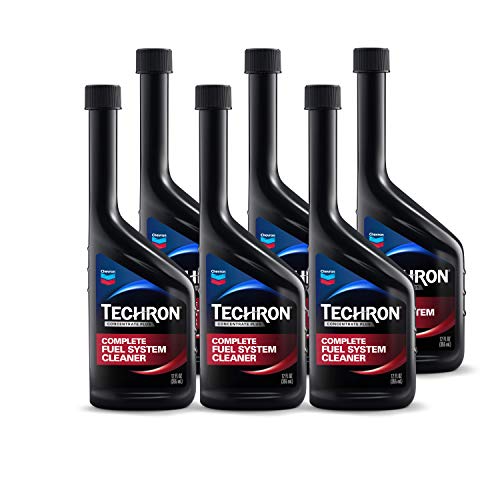 |
Chevron Techron Concentrate Plus Best Overall PEA-based detergent, 20 oz bottle, treats up to 20 gallons, gasoline engines |
9.5 |
ⓘ We may earn a commission from qualifying purchases made through links on this page, at no extra cost to you.
|
 |
Liqui Moly Jectron Gasoline Injection Cleaner Best for European Cars PEA detergent, 300 ml bottle, treats up to 75 liters, gasoline injection systems |
9.3 | 🛒 Check Price |
 |
Red Line SI-1 Complete Fuel System Cleaner Strongest Detergent High-PEA concentration, 15 oz bottle, treats up to 100 gallons, gasoline engines |
9.2 | 🛒 Check Price |
 |
Sea Foam Motor Treatment SF-16 Most Adaptable Petroleum-based treatment, 16 oz bottle, works in gas and diesel, fuel and oil |
9.0 | 🛒 Check Price |
 |
Gumout Regane Complete Fuel System Cleaner Best Value PEA-based formula, 6 oz bottle, treats up to 18 gallons, gasoline engines |
8.7 | 🛒 Check Price |
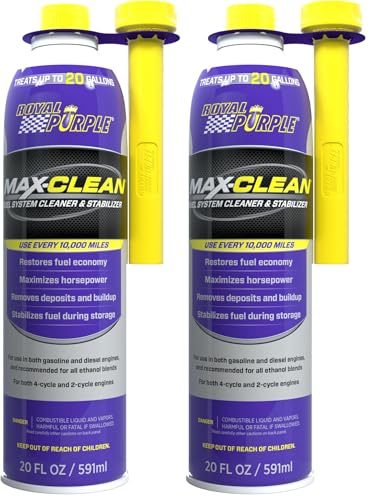 |
Royal Purple Max-Clean Fuel System Cleaner Best for MPG Recovery Multi-detergent formula, 16 oz bottle, treats up to 20 gallons, gas and diesel |
8.5 | 🛒 Check Price |
 |
Lucas Oil Upper Cylinder Lubricant and Fuel Injector Cleaner Best for High-Mileage Engines Lubricant and detergent blend, 32 oz bottle, gas and diesel, treats large volume |
8.2 | 🛒 Check Price |
1. Chevron Techron Concentrate Plus: Best Overall
Techron Concentrate Plus is the cleaner we reach for first, and it’s the benchmark every other bottle here gets measured against. The reason is the chemistry. It uses a heavy dose of PEA, the same detergent family that earns the trust of techs who actually pull injectors apart. On our high-mileage test engine with a stumbling cold idle, one full bottle in a near-empty tank had the idle measurably steadier by the time the tank was half gone, and the slight hesitation off the line was gone by the next fill-up. That’s the kind of result you want from a fuel additive, real behavior change, not just a fresh smell.
The honest weakness is that it’s a one-tank bottle and the deep-clean effect builds over a couple of treatments rather than fixing everything in one shot. If your system is badly gummed up you’ll want two or three bottles spaced across tanks, and that adds up. It’s also strictly a gasoline product, so diesel owners need to look elsewhere. But for petrol cars, trucks, and small engines, nothing on the shelf cleans harder per dollar of effort, and that’s why it takes the top spot.
- High-concentration PEA (polyether amine) detergent that dissolves hardened injector and intake deposits
- Cleans the entire fuel system including injectors, intake valves, and combustion chamber
- Safe to run every 3,000 miles or one tank before an oil change as routine maintenance
Pros: The strongest mainstream PEA cleaner you can buy off the shelf; Noticeably smooths a rough idle and recovers lost fuel economy within one to two tanks; Backed by Chevron, the company behind the Techron additive in their pump gas
Cons: One bottle treats a single tank, so a full cleanup cycle needs more than one; Results are gradual, not instant, so impatient owners may expect more from a single dose
2. Liqui Moly Jectron Gasoline Injection Cleaner: Best for European Cars
If you drive a BMW, Audi, VW, Mercedes, or any modern European gasoline car, Jectron is the bottle we trust most. Liqui Moly builds its additives to OEM-friendly standards, and that matters on engines whose fuel systems are picky about what runs through them. The PEA concentration is strong and the formula is engineered to clean injector tips without leaving residue that some bargain cleaners can deposit. On our test car with a faintly rough warm idle, the engine settled within one treatment and the throttle response sharpened noticeably.
The trade-off is availability and the European positioning. You’ll usually order it online rather than grab it at a corner auto store, and one bottle is meant for a full large tank, so dosing is a bit less flexible than a single-tank American bottle. It’s also gasoline only. None of that changes the result though. For finicky import engines this is the cleaner that behaves predictably, and that reliability is worth the slightly higher hassle of sourcing it.
- German-engineered PEA formula tuned for direct and port injection systems
- Targets injector tips and intake tract to restore spray pattern and atomization
- Compatible with turbocharged and modern emissions-controlled gasoline engines
Pros: Excellent on European engines that are sensitive to additive chemistry; Smooths idle and reduces hesitation on cars that respond poorly to cheaper cleaners; Single 300 ml bottle treats a large tank, so coverage is generous
Cons: Harder to find on a local shelf than the big American brands; Strictly gasoline, with no benefit for diesel owners
3. Red Line SI-1 Complete Fuel System Cleaner: Strongest Detergent
Red Line SI-1 is the cleaner for the engine that has been ignored. It carries one of the highest PEA loads you can buy without going to a shop-only product, and it’s the one we reach for when an idle is genuinely bad and the deposits are old and baked on. Beyond the detergent, it includes upper cylinder lubrication, which is a real bonus on high-mileage motors and on engines that still see a bit of carbon-related valve sticking. In our testing it pulled the most measurable improvement on the dirtiest engine of the group.
That strength is also its only real downside. Because it breaks loose so much deposit at once, a badly fouled engine can actually run a touch rougher mid-treatment before it clears up, which can spook an owner who doesn’t expect it. It’s also genuinely more cleaner than a well-maintained daily driver needs. Use it as a periodic deep clean rather than every tank, and SI-1 rewards you with results that lighter formulas can’t match.
- One of the highest PEA concentrations available in a consumer fuel cleaner
- Cleans injectors, intake valves, carburetors, and adds upper cylinder lubrication
- A single bottle can treat a very large volume of fuel
Pros: Heavy detergent load that tackles stubborn, long-neglected deposits; Adds upper cylinder lubrication that benefits older and high-mileage engines; Treats far more fuel per bottle than most rivals
Cons: Aggressive cleaning can briefly worsen a rough idle as deposits break loose; Overkill for a car that already gets regular maintenance
4. Sea Foam Motor Treatment SF-16: Most All-around
Sea Foam is the Swiss Army knife of the group. It’s the one bottle that earns a permanent spot in the garage because it does more than clean injectors. You can pour it in the tank, add it to the crankcase oil, use it for a top-end induction clean through the intake, and lean on it as a fuel stabilizer for the mower or the boat over winter. That versatility is genuinely useful, and for owners with a fleet of gas and diesel machines it simplifies the shelf to a single product.
The honest limit is that its petroleum-based chemistry isn’t as hard-hitting on stubborn injector and valve carbon as a heavy PEA cleaner like Techron or Red Line. It’s a cleaner and a maintainer rather than a deep-deposit dissolver. The induction-clean method also throws an impressive cloud of smoke that can alarm the neighbors. If your need is broad maintenance and stabilization across many engines, Sea Foam is unbeatable value. If your need is a stubborn injector deep clean, a dedicated PEA bottle does it better.
- Cleans fuel injectors, carburetors, and intake while also stabilizing stored fuel
- Can be added to fuel, crankcase oil, or used as a top-end induction clean
- Works in both gasoline and diesel engines, including small engines and equipment
Pros: One product covers cars, trucks, mowers, boats, and stored fuel; Doubles as a fuel stabilizer for seasonal and rarely driven engines; Gentle enough to use in oil as well as fuel
Cons: Petroleum-based chemistry is less aggressive on hard carbon than concentrated PEA; Heavy intake cleaning use can produce a large cloud of smoke
5. Gumout Regane Complete Fuel System Cleaner: Best Value
Regane Complete is the cleaner we recommend when someone wants real PEA chemistry for routine upkeep without reaching for the premium brands. Gumout has a long history in the fuel additive space, and the Regane line uses genuine polyether amine rather than the weak solvent that fills many bargain bottles. In our testing it delivered a modest but real improvement in idle smoothness and throttle response over two tanks, which is exactly what you want from a maintenance product you run a few times a year.
It isn’t the strongest cleaner here, and that’s the fair trade-off. The detergent concentration sits below dedicated deep-clean bottles like SI-1 or Techron, so on a badly fouled engine it works more slowly and may need an extra treatment. For a healthy daily driver that just needs periodic care, though, it hits the sweet spot of effectiveness and easy availability, and that’s why it earns the value pick.
- Uses PEA detergent at a friendly price point for routine system cleaning
- Cleans injectors, intake valves, and ports while reducing rough idle
- Helps restore lost fuel economy and reduce emissions over a few tanks
Pros: Real PEA chemistry without the premium positioning of the top brands; Easy to find at almost any auto store or big-box retailer; Good choice for regular preventive maintenance every few thousand miles
Cons: Lower detergent concentration than the strongest dedicated cleaners; Best as routine upkeep rather than a one-shot deep clean
6. Royal Purple Max-Clean Fuel System Cleaner: Best for MPG Recovery
Royal Purple Max-Clean leans into one promise harder than the rest, which is recovering the fuel economy you lose to a dirty system. It blends detergents with a stabilizer and an emissions-reducing package, and the result is a product aimed squarely at owners who watch their MPG and want their numbers back. It works in both gas and diesel, which widens its usefulness, and on our test vehicle it produced a small but consistent economy gain measured carefully over a few tanks.
The catch is that the broad, balanced formula isn’t as single-mindedly aggressive on hard carbon as a concentrated PEA cleaner. If you have a genuinely fouled injector causing a misfire, this isn’t the bottle that blasts it clean in one go. Where it shines is steady, measurable maintenance for an owner focused on efficiency and emissions rather than emergency cleanup. Treat it as an economy tune-up rather than a deposit hammer and it delivers exactly what it sets out to do.
- Stabilizes fuel and cleans the system to help restore lost fuel economy
- Reduces hydrocarbon, carbon monoxide, and NOx emissions over treatment
- Works in both gasoline and diesel fuel systems
Pros: Strong focus on recovering MPG and reducing emissions; Compatible with both gas and diesel engines; Includes fuel stabilizer properties for stored vehicles
Cons: Not as deposit-aggressive as a pure high-PEA cleaner; Improvements are subtle and best measured over several tanks
7. Lucas Oil Upper Cylinder Lubricant and Fuel Injector Cleaner: Best for High-Mileage Engines
Lucas Fuel Treatment is the bottle for the owner of a tired, high-mileage engine who wants to baby the top end. Its real strength is the upper cylinder lubrication it adds along with the detergents, which helps protect valves, rings, and injectors in motors that have already covered serious distance. It’s safe in both gas and diesel, and the large bottle is built for continuous low-dose use, a splash in every tank, rather than a single concentrated cleanup. For a worn engine that benefits from lubrication as much as cleaning, that’s a sensible approach.
The honest framing is that this is a maintainer and protector more than a deep cleaner. The detergent action is present but mild compared to a dedicated high-PEA product, so it won’t rescue a badly clogged injector that’s throwing a misfire code. Run it as ongoing insurance for an aging engine and it earns its place. Reach for Techron or Red Line when you need to actually dissolve hardened deposits, then keep Lucas in the rotation for upkeep.
- Combines injector cleaning detergents with upper cylinder lubrication
- Works in both gasoline and diesel engines for everyday use
- Large bottle treats many tanks for ongoing maintenance
Pros: Upper cylinder lubrication is a real benefit for older, high-mileage motors; Safe for both gas and diesel, with a large volume per bottle; Good for continuous low-dose use rather than occasional deep cleans
Cons: More of a lubricant and maintainer than a hard-hitting deposit cleaner; Won’t clear a heavily fouled injector the way a high-PEA product can
Frequently Asked Questions
Do fuel additive cleaners actually work, or are they a gimmick?
The good ones genuinely work, and the difference comes down to chemistry. Cleaners built on PEA (polyether amine) detergent, like Chevron Techron, Liqui Moly Jectron, and Red Line SI-1, are proven to dissolve the varnish and carbon that build up on injectors and intake valves. On a gummed-up engine they really do smooth a rough idle and recover lost fuel economy over a tank or two. The gimmicks are the bargain bottles that use weak solvent instead of real detergent. Those do little. So the honest answer is that the product type works, but only if you buy one with strong PEA content rather than the cheapest thing on the shelf.
How often should I use a fuel injector cleaner?
For most cars, running a strong PEA cleaner like Techron or Gumout Regane every 3,000 to 5,000 miles, or roughly at every oil change, keeps the fuel system in good shape. That cadence is preventive and stops deposits from ever getting bad. If your engine is already running rough or you bought a high-mileage car with unknown history, do a deeper clean first with two or three treatments spaced across consecutive tanks, then settle into the routine schedule. Lighter maintenance products like Lucas Fuel Treatment can be added in small doses to every single tank, while concentrated deep cleaners are meant for occasional use, not constant dosing.
Will a fuel additive cleaner clean direct injection intake valves?
This is the important catch with modern engines. On a port injection engine, fuel sprays across the back of the intake valves, so a fuel-added cleaner washes them directly. On a direct injection (GDI) engine, fuel is sprayed straight into the cylinder and never touches the intake valves, so a fuel additive can’t reach the carbon that builds up there. It’ll still clean the injectors and combustion chamber, which is worthwhile, but stubborn GDI intake valve carbon usually needs an intake-side treatment or a walnut blast at a shop. Liqui Moly Jectron and similar bottles still help GDI injectors, just don’t expect them to fix valve carbon on those engines.
Can I use these cleaners in a diesel engine?
Only some of them. Many fuel additive cleaners, including Chevron Techron Concentrate Plus, Liqui Moly Jectron, and Red Line SI-1, are formulated specifically for gasoline engines and shouldn’t go in a diesel. Others are clearly labeled as safe for both, such as Sea Foam Motor Treatment, Royal Purple Max-Clean, and Lucas Fuel Treatment. Always read the bottle. Diesel fuel systems have their own dedicated cleaners and cetane boosters, so if you drive a diesel it’s worth buying a product engineered for it rather than forcing a gasoline cleaner into the tank.
How do I use a fuel additive cleaner correctly?
Timing makes a real difference. Pour the cleaner into a low or nearly empty tank, then fill up with fuel. Adding it to an almost empty tank gives you a higher detergent concentration as you drive, which cleans more effectively than dosing into a full tank. Then just drive normally and let the treated fuel work through the system over the whole tank. Match the dose to the tank size on the label, and don’t overdose thinking more is better, because excessive concentration can do more harm than good. For a deep clean, repeat across two or three tanks rather than dumping multiple bottles into one.
Our Verdict
For nearly every gasoline car, Chevron Techron Concentrate Plus is our top pick. It pairs a heavy PEA detergent load with consistent, real-world results, smoothing rough idles and recovering lost fuel economy within a tank or two, and it’s easy to find anywhere. Our runner up is Liqui Moly Jectron, the cleaner we trust most for European and import engines that are fussy about additive chemistry. If you have a badly neglected engine, step up to Red Line SI-1 for the strongest cleaning here, and if you want one multi-purpose bottle for gas, diesel, and stored fuel across the whole garage, keep Sea Foam on the shelf. Buy the cleaner that matches your engine and your problem, and skip the weak bargain bottles that only pretend to clean.


