The Subaru WRX is one of the few cars where the right exhaust does more than add volume. It frees up that signature boxer rumble, sharpens throttle response, and on a tuned car it can help the turbo breathe. The problem is that the WRX exhaust market is crowded, and a lot of systems either drone badly on the highway, fit poorly around the rear subframe, or sound great in a parking lot but punish you on a long drive.
We pulled together seven real exhaust systems that genuinely sell for the WRX on Amazon, from full stainless cat-backs to bolt-on axle-backs you can install in an afternoon. For each one we looked at sound character, drone behavior, fitment with factory hangers, material quality, and whether it suits a daily driver or a track build. Rankings run best first, and there isn’t a single price anywhere because the right pick depends on how you drive, not how much you spend.
| Photo | Product | Score | Buy |
|---|---|---|---|
 |
Borla S-Type Cat-Back Exhaust Best Overall Full T-304 stainless cat-back, 2.5 inch, quad or dual tips depending on chassis |
9.5 |
ⓘ We may earn a commission from qualifying purchases made through links on this page, at no extra cost to you.
|
 |
Invidia Q300 Cat-Back Exhaust Best for Sound 304 stainless cat-back with titanium-tipped rolled mufflers |
9.3 | 🛒 Check Price |
 |
Cobb Tuning Cat-Back Exhaust Best for Tuned Builds 3 inch mandrel-bent stainless cat-back engineered for the Cobb tuning ecosystem |
9.1 | 🛒 Check Price |
 |
Remark Sports Touring Cat-Back Exhaust Best Drone Control 304 stainless cat-back with swappable resonated or non-resonated tips |
8.9 | 🛒 Check Price |
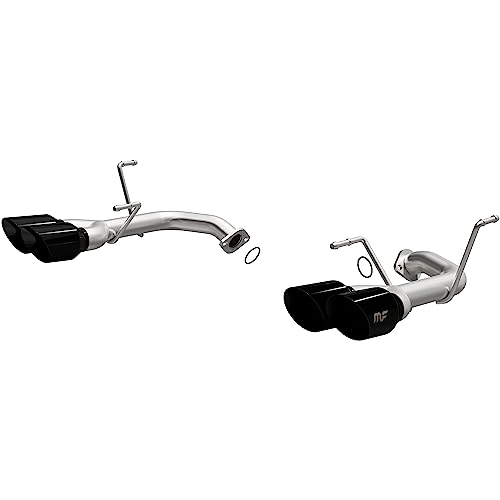 |
MagnaFlow Street Series Cat-Back Exhaust Best Daily Driver Stainless cat-back with straight-through perforated core muffler |
8.6 | 🛒 Check Price |
 |
NameLess Performance Axle-Back Exhaust Easiest Install 304 stainless axle-back with adjustable resonator sound options |
8.3 | 🛒 Check Price |
 |
GReddy Supreme SP Cat-Back Exhaust Best JDM Pick 304 stainless cat-back with removable silencer and large rolled tip |
8.1 | 🛒 Check Price |
1. Borla S-Type Cat-Back Exhaust: Best Overall
Borla’s S-Type cat-back is the system we would put on our own WRX without hesitation. The T-304 stainless construction is a step above the cheaper 409 grade many competitors use, and it shows in the weld finish and how the system shrugs off road salt and heat cycling. On a stock or lightly tuned car it wakes up the boxer rumble at idle and delivers a serious snarl on boost, yet it settles down on the highway better than almost anything else here. That last part matters more than spec sheets admit, because a WRX you actually commute in needs to be tolerable at 75 mph.
The honest weakness is tone preference. Borla tunes the S-Type to be deep and full rather than raspy and metallic, so if you’re chasing the classic high-pitched JDM bark, this will sound more muscular than you expect. Fitment is excellent on factory hangers, though on early chassis you should budget a little patience aligning the tips evenly. For a do-everything WRX exhaust, this is the one to beat.
- T-304 stainless steel construction with multi-core straight-through mufflers
- Aggressive sound under throttle with a notably restrained highway cruise
- Backed by Borla's million-mile warranty against defects
Pros: Best balance of aggression and daily livability we researched; Excellent stainless build and weld quality; Minimal drone compared to most rivals
Cons: Tone is deeper and less raspy, so JDM-sound fans may want more bark; Tip style is fixed, so you can’t mix and match looks
2. Invidia Q300 Cat-Back Exhaust: Best for Sound
If your priority is the sound that made people fall in love with the WRX in the first place, the Invidia Q300 is the benchmark. It produces that unmistakable boxer rasp, a deep burble at idle that builds into an angry top-end scream when you chase the redline. The 304 stainless body and the burnt titanium tips give it a presence that photographs as well as it sounds, and on a tuned car the straight-through path helps the turbo spool with less back pressure than the factory setup.
The trade-off is drone. The Q300 is meaningfully louder than the Borla in the highway cruising range, and on a long flat drive you’ll feel that frequency in the cabin. For a weekend car or an enthusiast who treats the soundtrack as a feature, that’s a fair price. For someone doing two hours of motorway a day, it’s the main thing to consider before buying. Fitment is clean and bolt-on, and the tip quality holds up better than most after repeated heat cycles.
- Signature Subaru rasp with a deep idle and screaming top end
- Rolled titanium-burnt tips that resist discoloration over time
- Straight-through design that frees flow without gutting low-end
Pros: Iconic WRX sound that defines the platform for many owners; Titanium tips look factory-aggressive and age well; Strong flow gains on tuned cars
Cons: Noticeable drone in the cruising rpm band; Louder than some neighbors and parking attendants will appreciate
3. Cobb Tuning Cat-Back Exhaust: Best for Tuned Builds
The Cobb cat-back is the pick for owners who are building toward real power, not just chasing volume. The 3 inch mandrel-bent stainless piping is larger than most of the field, which makes it a natural match for a car running a Cobb downpipe, an Accessport, and a higher-boost map. Within that ecosystem it’s among the most cohesive ways to set up the exhaust side of a build, and the engineering quality, from hanger placement to flange fitment, is exactly what you’d expect from a company that lives in the Subaru tuning world.
The catch is that this system is arguably overkill on a stock WRX. The 3 inch diameter is sized for flow that a factory turbo car won’t fully use, and the tone leans industrial and businesslike rather than musical. If you aren’t tuning, you’re paying for capability you won’t tap and giving up some low-end character. But for a committed build, it’s the right foundation and it plays nicely with the rest of the platform’s hardware.
- 3 inch piping sized for higher-output tuned and big-turbo cars
- Mandrel-bent stainless for smooth, uninterrupted flow
- Designed to integrate with Cobb downpipes and Accessport maps
Pros: Largest piping here, ideal for serious power goals; Cohesive system if you already run Cobb parts; Strong hangers and solid daily reliability
Cons: 3 inch diameter can be more than a stock car needs; Tone is more industrial than melodic
4. Remark Sports Touring Cat-Back Exhaust: Best Drone Control
Remark’s Sports Touring system solves the single biggest complaint about WRX exhausts, which is drone, by giving you control over it. The swappable resonated and non-resonated tip inserts mean you can run the car quiet and refined for a road trip, then pull the inserts for a louder, more aggressive note on a back road or at a meet. That flexibility is rare in this segment, and it’s genuinely useful rather than a gimmick. The 304 stainless body and contemporary tip finishes look the part too.
The honest limitation is ceiling. Even with the resonators removed, the Sports Touring doesn’t reach the raw volume or top-end ferocity of the Invidia Q300, so dedicated noise chasers may find it polite. You also need to buy into the insert system to get the full range of behavior, which adds a small step. But if your goal is one exhaust that can be both a calm commuter and a loud toy depending on the day, this is the smartest design here.
- Interchangeable resonated and non-resonated tip inserts to tune volume
- 304 stainless construction with a modern burnt or polished tip choice
- Engineered to deliver aggression without constant cabin drone
Pros: Tip inserts let you dial sound to your taste; Genuinely livable on the highway with resonators in; Clean, modern aesthetic
Cons: Costliest sound tuning flexibility comes from buying extra inserts; Less raw volume than the Invidia even uncorked
5. MagnaFlow Street Series Cat-Back Exhaust: Best Daily Driver
MagnaFlow built its name on exhausts that sound good without making you regret them on a Monday morning commute, and the Street Series for the WRX stays true to that. The straight-through perforated core delivers a smooth, deep note that adds real character at idle and under acceleration while keeping the cabin calm at cruising speed. The stainless construction and the brand’s track record mean it’s the kind of system you bolt on and forget about for years, which is exactly what a lot of WRX owners actually want.
The flip side is that it’s the most conservative-sounding option on this list. If you came to the WRX specifically for an antisocial, rasp-heavy soundtrack, the MagnaFlow will feel restrained, with a warmer, more muscle-car tone than the sharp boxer bark some buyers crave. It isn’t the exhaust for someone chasing maximum drama. For a daily-driven WRX where refinement and reliability matter as much as noise, it’s one of the easiest systems to recommend.
- Straight-through perforated core for smooth, deep tone
- Stainless construction with a polished stainless tip
- Tuned for a refined sound that stays civil at cruise
Pros: Smooth, deep note that’s easy to live with daily; Strong reputation for long-term durability; Low drone for a straight-through system
Cons: Conservative for owners wanting maximum aggression; Sound is more muscle-car warm than boxer-rasp sharp
6. NameLess Performance Axle-Back Exhaust: Easiest Install
Not everyone wants to wrestle a full cat-back into place, and that’s where the NameLess Performance axle-back makes sense. Because it replaces only the rear section behind the axle, it bolts on without dropping the mid-pipe, which makes it one of the easiest exhaust upgrades you can do in your own garage. The 304 stainless build is honest for the part of the system it covers, and NameLess offers different resonator configurations so you can pick how loud and aggressive the result is before you order.
The trade-off is inherent to the design. An axle-back changes the sound and the look, but it leaves the restrictive factory mid-section in place, so the flow and power gains are smaller than any full cat-back here. Volume also swings significantly based on which resonator setup you choose, so it pays to read the sound clips carefully before committing. For an owner who wants a meaningful upgrade in tone and a quick install without going all in, it’s a sensible entry point.
- Axle-back design installs without dropping the full mid-pipe
- 304 stainless build with multiple resonator configurations
- Bolt-on upgrade that keeps factory cat and mid-section
Pros: Simple driveway install in well under an afternoon; Sound options let you choose your aggression level; Solid stainless build for the section it covers
Cons: Smaller flow and power benefit than a full cat-back; Volume varies a lot depending on resonator choice
7. GReddy Supreme SP Cat-Back Exhaust: Best JDM Pick
For owners who want their WRX to wear its Japanese tuning roots openly, the GReddy Supreme SP delivers the look and the heritage. GReddy has been part of the JDM performance scene for decades, and the Supreme SP carries that with a large single rolled stainless tip and a removable silencer that lets you flip between a street-friendly cruise and a noticeably louder, more aggressive bark. The 304 stainless build is appropriate, and the styling is unmistakable in a sea of quad-tip systems.
The weakness is range control. With the silencer pulled, this exhaust gets loud in a way that can cross from exciting to fatiguing on a long drive, and the single big-tip aesthetic is polarizing next to the more restrained dual and quad setups elsewhere on this list. It’s a system bought with the heart as much as the spec sheet. If JDM authenticity and a standout tip are what you’re after, the Supreme SP earns its place, just go in knowing the loud mode is genuinely loud.
- Removable silencer to switch between street and loud modes
- Large single rolled stainless tip with classic JDM presence
- 304 stainless construction from a long-standing Japanese brand
Pros: Authentic JDM tuning heritage and styling; Removable silencer adds real-world flexibility; Big-tip look stands out from the crowd
Cons: Can get very loud with the silencer removed; Single large tip styling won’t suit every owner
Frequently Asked Questions
Will an aftermarket exhaust add horsepower to my WRX?
On a stock WRX, a cat-back exhaust alone usually adds only modest power because the factory turbo and downpipe remain the main restrictions. The bigger gains in sound, throttle feel, and a few extra horsepower come when the exhaust is paired with a downpipe and a tune, since the system can then flow the air the engine actually wants to move. A full cat-back like the Cobb or Borla is best thought of as one piece of a build rather than a standalone power adder, while an axle-back is mostly a sound and looks upgrade with minimal power change.
What is the difference between a cat-back and an axle-back for the WRX?
A cat-back replaces everything from the catalytic converter back, including the mid-pipe and muffler, so it changes both the sound and the flow more substantially and is harder to install. An axle-back, like the NameLess Performance system, swaps only the rear section behind the axle, which makes it a much faster bolt-on but limits the flow gains because the restrictive factory mid-section stays in place. If you want maximum sound and flow change, go cat-back. If you want a quick, simpler upgrade and a tone change, an axle-back is the easier route.
How do I stop my WRX exhaust from droning on the highway?
Drone is the resonant frequency you feel in the cabin at steady cruising rpm, and it’s the number one regret with loud WRX exhausts. The most reliable fixes are choosing a system designed with resonators, like the Borla S-Type or MagnaFlow Street Series, or picking one with swappable resonated tips like the Remark Sports Touring so you can keep it quiet for commuting. Straight-through, non-resonated systems such as the uncorked Invidia Q300 deliver the most aggressive sound but also the most drone, so match your choice to how much highway driving you actually do.
Are these exhaust systems legal for street use?
Legality depends on your location and whether the system retains the catalytic converters. A cat-back or axle-back leaves the factory catalytic converters in place, so it’s generally street legal in most areas, though some regions enforce noise limits that a very loud setup could exceed. Systems that remove or replace catalytic converters, which these cat-backs don’t, can run into emissions rules. Always check your local noise and emissions regulations, and if you live somewhere with strict testing, lean toward the quieter, resonated options on this list.
Can I install a WRX exhaust myself?
Yes, many owners install these at home with basic tools, a jack, and stands. An axle-back like the NameLess is the easiest and can often be done in under an hour since it bolts to existing hangers. A full cat-back takes longer because you’re dropping more of the system and aligning the tips evenly, and penetrating oil for the factory bolts plus a second set of hands makes it much smoother. If a flange bolt is seized or you aren’t comfortable working under the car, a shop can fit any of these quickly.
Our Verdict
For the widest range of WRX owners, the Borla S-Type Cat-Back is our top pick because it nails the balance the platform demands, an aggressive boxer note when you want it, genuine restraint on the highway, and stainless build quality backed by a strong warranty. Our runner up is the Invidia Q300, the system to choose if sound is your single most important priority and you accept some cruising drone in exchange for that iconic WRX rasp. If you’re building toward real power, step up to the Cobb cat-back, and if drone is your enemy, the Remark Sports Touring gives you the most control over how loud your car is on any given day.
More Performance Guides
- Turbocharger vs Supercharger: Choose Your Boost
- Cat-Back or Axle-Back: Which Exhaust Fits Your Goals
- Signs It’s Time to Clean Your Engine Throttle Body
- Cold Air Intake: What It Does and Real Horsepower Gains
- Catalytic Converter Failure: Signs and What It Does
- Best Aluminum Intakes for Small Block Chevy Engines


