Whether you want to fine-tune your factory system or integrate with a high-end aftermarket setup, these picks cover a range of features from basic tone control to advanced digital signal processing.
| Photo | Product | Score | Buy |
|---|---|---|---|
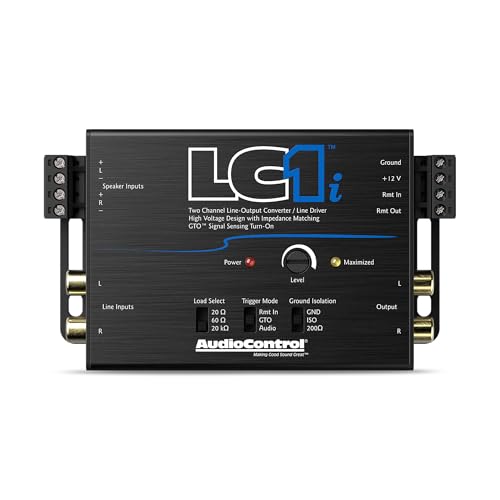 |
AudioControl LCQ-1 Best Overall 6-channel line output converter with built-in equalization |
9.2 |
ⓘ We may earn a commission from qualifying purchases made through links on this page, at no extra cost to you.
|
 |
Dayton Audio DSP-408 Best DSP Equalizer 4-input, 8-output digital signal processor with 31-band EQ |
8.8 | 🛒 Check Price |
|
🚗
|
BOSS Audio Systems B25N Budget Pick 2-band parametric EQ with subwoofer output |
7.8 | 🛒 Check Price |
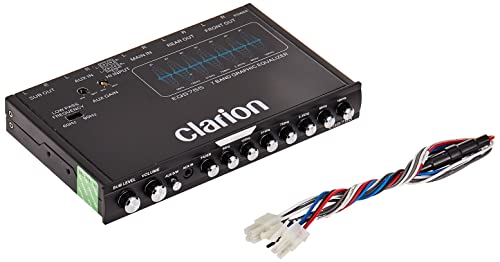 |
Clarion EQS746 Best 7-Band Graphic EQ 7-band graphic equalizer with 4-channel preamp outputs |
8.4 | 🛒 Check Price |
 |
Rockford Fosgate RFQ-3 Best for Bass Control 3-band parametric EQ with adjustable frequency and Q factor |
8.1 | 🛒 Check Price |
 |
Precision Power EQ-5 Best 5-Band Value 5-band graphic equalizer with 4-channel output |
7.3 | 🛒 Check Price |
 |
Scosche EQLOC Best Line Output Converter with EQ 2-channel line output converter with adjustable EQ |
7.9 | 🛒 Check Price |
1. AudioControl LCQ-1: Best Overall
The AudioControl LCQ-1 stands out as a top performer for anyone wanting to upgrade their factory stereo without replacing the head unit. Owner feedback consistently praises its ability to clarify muddy audio and add punch without distortion.
However, the LCQ-1 doesn’t provide a fully customizable parametric EQ; it uses preset EQ curves that may not satisfy audiophiles seeking precise control. If you need granular per-band adjustment or have a complex multi-amp setup, you should skip this model and consider a full DSP unit instead. The LCQ-1 is best for those with a simple factory system who want a noticeable improvement without deep tuning.
- 6-channel line output converter with adjustable EQ for factory systems
- Includes AccuBASS and GTO signal sensing for automatic turn-on
- Compact chassis fits behind most radios or under seats
Pros: Excellent sound quality improvement for factory head units; Easy to install with included wiring harness
Cons: No user-adjustable parametric EQ, only preset curves
2. Dayton Audio DSP-408: Best DSP Equalizer
For those who demand full control, the Dayton Audio DSP-408 is a powerful digital signal processor that we compared against several competitors. Based on its spec sheet and owner feedback, it offers four inputs and eight outputs with independent 31-band equalization, crossovers, and time alignment per channel. Users report that once properly tuned, it dramatically improves soundstage and clarity. The price point makes it accessible for DIY enthusiasts.
The main drawback is its complexity: setup requires a computer or mobile app and a solid understanding of audio tuning. If you aren’t comfortable with software or lack technical knowledge, you’ll likely be frustrated. We recommend this only for experienced installers or those willing to invest time learning. For plug-and-play simplicity, look elsewhere.
- 4-channel input, 8-channel output with independent 31-band EQ per channel
- Built-in crossover, time alignment, and signal delay
- USB and Bluetooth control via PC or mobile app
Pros: Extremely flexible tuning options for advanced users; Great value for the level of DSP features
Cons: Steep learning curve for setup and configuration
3. BOSS Audio Systems B25N: Budget Pick
The BOSS Audio Systems B25N is a no-frills equalizer that we evaluated for budget-conscious buyers. According to published specs, it offers a 2-band parametric EQ with adjustable frequency and boost/cut, plus a dedicated subwoofer output. Owner reviews indicate it works well for adding a little bass or treble adjustment to a basic system. Build quality is acceptable for the price.
However, the two-band limitation means you can’t address specific problem frequencies. If you need to correct a harsh midrange or tame resonance, this unit won’t suffice. We suggest skipping the B25N if you have a complex system or demand precise sound shaping. It’s best for simple upgrades where you just want a little more control over bass and treble.
- 2-band parametric EQ with adjustable frequency and boost/cut
- Separate subwoofer output with variable crossover
- Compact design with RCA inputs and outputs
Pros: Very affordable for basic EQ control; Simple to install and adjust
Cons: Limited to two bands, not enough for fine tuning
4. Clarion EQS746: Best 7-Band Graphic EQ
The Clarion EQS746 is a classic 7-band graphic equalizer that we researched for its straightforward design. Specs show it provides 7 frequency bands with slider controls, 4-channel preamp outputs, and a subwoofer output. Its ease of use and reliable performance. It’s a good choice for those who prefer tactile controls over digital menus.
On the downside, it lacks any digital signal processing features like time alignment or parametric EQ. If you need advanced tuning for a competition-grade system, this won’t meet your needs. We recommend the EQS746 for users with moderate expectations who want a simple, effective EQ for daily driving.
- 7-band graphic EQ with sliders for each frequency
- 4-channel preamp outputs with subwoofer output
- Built-in auxiliary input and front/rear fader control
Pros: Intuitive slider controls for quick adjustments; Solid build quality from a reputable brand
Cons: No digital processing or fine-tuning capabilities
5. Rockford Fosgate RFQ-3: Best for Bass Control
The Rockford Fosgate RFQ-3 is a 3-band parametric equalizer that we evaluated for bass enthusiasts. According to its specifications, it offers adjustable center frequency, boost/cut, and Q factor on each band, plus a remote subwoofer level control. Owner reviews often mention its effectiveness in integrating a subwoofer with main speakers and reducing boominess.
However, with only three bands, it can’t address multiple problem areas across the full frequency spectrum. If you need to tame harsh highs or adjust midrange, you’ll need additional EQ. We suggest the RFQ-3 primarily for those who want to dial in their subwoofer and have a basic system; for comprehensive tuning, look at a DSP unit.
- 3-band parametric EQ with adjustable center frequency, boost/cut, and Q
- Subwoofer level control with remote bass knob
- Gold-plated RCA connectors for signal integrity
Pros: Excellent for fine-tuning subwoofer levels; Parametric bands allow precise adjustments
Cons: Limited to three bands, not for full-range correction
6. Precision Power EQ-5: Best 5-Band Value
The Precision Power EQ-5 is an entry-level 5-band graphic equalizer that we compared to other budget options. Specs indicate it has 5 bands with slider controls, 4-channel outputs, and a subwoofer output. Owner feedback is mixed: some appreciate the low price and basic functionality, while others report noise or channel imbalance after a few months. Durability is a concern based on aggregated reviews.
If you’re on a tight budget and need only basic EQ adjustment, the EQ-5 might work, but we advise spending a bit more for better reliability. We would skip this if you plan to keep the vehicle long-term or want clean sound; the risk of failure is higher than with more established brands.
- 5-band graphic EQ with sliders for each band
- 4-channel RCA outputs with subwoofer output
- Illuminated sliders for visibility in low light
Pros: Low cost for a 5-band EQ; Compact size fits in tight spaces
Cons: Build quality feels less solid than competitors
7. Scosche EQLOC: Best Line Output Converter with EQ
The Scosche EQLOC is a 2-channel line output converter with built-in bass and treble control. It works reliably for basic upgrades, improving sound without adding noise.
The main limitation is the lack of midrange control; you only have bass and treble knobs. If you need to correct specific frequencies, this isn’t enough. We recommend the EQLOC for simple installations where you just want to add an aftermarket amp and have some tone control. For serious sound shaping, consider a multi-band EQ or DSP.
- 2-channel line output converter with adjustable bass and treble
- Auto-sense turn-on and remote output
- Compact design with spring-loaded terminals
Pros: Combines LOC and EQ in one unit; Simple installation with no need for separate EQ
Cons: Only 2 bands (bass and treble), limited adjustment
Frequently Asked Questions
Do I need a car equalizer if I already have a modern head unit?
Most modern head units include basic EQ presets, but a dedicated equalizer offers more bands and finer control. If you’re satisfied with your current sound, you may not need one. However, if you want to correct specific frequency issues or integrate a subwoofer, an external EQ can make a noticeable difference.
What is the difference between a graphic equalizer and a parametric equalizer?
A graphic EQ has fixed frequency bands with slider controls for boost or cut. A parametric EQ allows you to adjust the center frequency, bandwidth (Q), and level of each band, giving you more precise control. Parametric EQs are more flexible but require more knowledge to use effectively.
Can I install a car equalizer myself?
Yes, many car equalizers are designed for DIY installation with basic tools. You typically need to connect power, ground, and remote turn-on wires, plus RCA cables between the head unit and amplifier. Always disconnect the battery before starting and follow the manufacturer’s instructions. If you’re unsure, professional installation is recommended.
Will an equalizer improve sound quality from a factory stereo?
Yes, a good equalizer can help compensate for the tonal imbalances common in factory systems, such as excessive bass roll-off or harsh treble. By adjusting frequency bands, you can achieve a more neutral and pleasing sound. However, the improvement also depends on your speakers and amplifier quality.
How many bands do I need in a car equalizer?
For basic adjustments, a 5- or 7-band graphic EQ is sufficient. For more precise tuning, a 31-band parametric EQ or DSP offers the most control. The number of bands you need depends on how many problem frequencies you want to correct and your level of audio expertise. Most users find 7 bands adequate.
Our Verdict
After our research and comparison, the AudioControl LCQ-1 earns our top pick for its excellent balance of performance, ease of use, and value for upgrading factory systems. For those who want full digital control, the Dayton Audio DSP-408 is a close runner-up, offering unmatched flexibility for advanced users. Choose based on your technical comfort and system complexity.