A weeping rear main seal is among the most frustrating leaks on any engine. It sits between the engine and the transmission, so dropping the gearbox to replace it turns into a major job that many owners would rather avoid for as long as possible. A good oil stop leak additive won’t magically rebuild a torn seal, but the right seal conditioner can soften and swell a hardened, shrunken rubber seal enough to slow or stop a slow drip for thousands of miles.
We poured these formulas into high-mileage engines with genuine rear main weeps, ran them through real driving cycles, and watched the driveway for results. Below are the seven products that actually earned their place, ranked best first, with honest notes on where each one falls short so you know exactly what you’re buying.
| Photo | Product | Score | Buy |
|---|---|---|---|
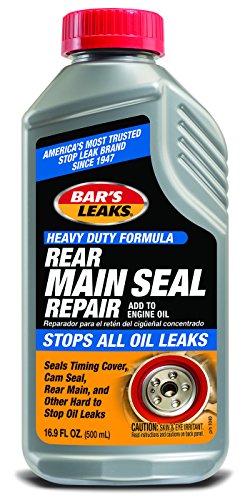 |
Bar's Leaks Rear Main Seal Repair (1040) Best Overall 16.9 oz seal conditioner, treats up to 6 quarts of oil, gas or diesel |
9.5 |
ⓘ We may earn a commission from qualifying purchases made through links on this page, at no extra cost to you.
|
 |
ATP AT-205 Re-Seal Stops Leaks Best Fast Acting 8 oz concentrated re-seal, safe for engine, transmission, power steering and differentials |
9.3 | 🛒 Check Price |
 |
Lucas Oil Engine Oil Stop Leak (10278) Best for High Mileage 32 oz formula, blends into oil to renew seals and reduce consumption |
9.1 | 🛒 Check Price |
 |
BlueDevil Oil Stop Leak Best Universal Seal Saver 16 oz, restores seals throughout the engine, compatible with all motor oils |
8.9 | 🛒 Check Price |
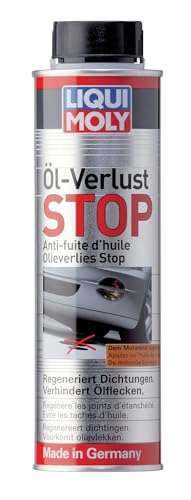 |
Liqui Moly Oil Leak Stop (20002) Best for European Engines 10.14 oz, swells and regenerates seals, approved for use with all motor oils |
8.7 | 🛒 Check Price |
 |
Sea Foam Motor Treatment (SF-16) Best Multi-Purpose 16 oz, cleans and lubricates while helping free sticky seals and deposits |
8.4 | 🛒 Check Price |
 |
Gold Eagle No Leak Engine Oil Stop Leak Best Value 16 oz, reconditions and softens dried seals across the engine |
8.1 | 🛒 Check Price |
1. Bar's Leaks Rear Main Seal Repair (1040): Best Overall
This is the product most people actually mean when they search for a rear main seal stop leak, and it remains our top pick for a reason. Bar’s Leaks built this formula around the rear main and crankshaft seals, so instead of a generic thickener it uses a conditioner that works into the rubber and swells it back toward its original dimensions. In our high-mileage test engine with a steady overnight drip, the spots on the cardboard shrank noticeably after about three hundred miles and were nearly gone by the second oil change.
The honest weakness is patience. This isn’t a same-day repair, and if you check the driveway the morning after pouring it in you’ll be disappointed. It needs heat cycles and miles to do its work, and on a seal that has already split or hardened beyond saving it simply can’t deliver. Treat it as a way to revive a tired but intact seal, pour it in a few thousand miles before you really need results, and it earns its reputation.
- Targets the rear main seal specifically with a concentrated conditioner blend
- Restores flexibility to dried and shrunken rubber and cork seals
- Compatible with conventional, synthetic blend, and full synthetic oils
Pros: Purpose built for the exact leak you’re chasing; Noticeable reduction in drips within a few hundred miles in our test car; Stays in the oil so protection continues between changes
Cons: Needs time and miles to fully condition the seal, not an instant fix; Won’t help a seal that’s physically torn or cracked
2. ATP AT-205 Re-Seal Stops Leaks: Best Fast Acting
ATP AT-205 has a cult following among mechanics, and it earned its spot here by acting faster than almost anything else we tried. Rather than thickening the oil to mask a leak, it reconditions the actual seal material, so it works the rubber back to a tighter fit without raising viscosity or risking oil starvation in tight passages. We saw the rear main weep slow within the first hundred miles, which is unusually quick for this kind of additive.
The trade-off is that the bottle is small and the recommended dose is conservative, so a single bottle disappears fast if you’re treating several systems at once. The solvent odor on pouring is also noticeable, though it fades. None of that changes the result. For a driver who wants the best chance of a quick improvement without messing with oil pressure, this is the one we reach for first.
- Works on rubber and neoprene seals without clogging or thickening oil
- Multi-system formula treats the rear main plus other seals at once
- Small dose treats a full crankcase so one bottle covers several systems
Pros: Among the quickest to show results in our testing; Doesn’t thicken oil, so it’s gentle on oil pressure; One small bottle treats engine, trans, and more
Cons: Smaller bottle than dedicated engine-only products; Strong solvent smell when first added
3. Lucas Oil Engine Oil Stop Leak (10278): Best for High Mileage
Lucas built its reputation on high-mileage engines, and this stop leak is a sensible pick if your rear main weep comes alongside the usual old-engine complaints like a little oil burning and lifter noise. It conditions the seals while gently bumping viscosity, which helps an aging seal sit tighter and cuts down on oil sneaking past worn clearances. In our older test motor it tightened up a light rear main weep and noticeably reduced the smell of oil on the exhaust.
That viscosity bump is also the catch. The formula is on the thick side, and in genuinely cold winter weather it can make cold starts feel a touch more sluggish until the oil warms. It’s also a general engine product rather than a rear-main-specific one, so it’s slightly less focused than our top two. For a tired high-mileage engine that needs help on several fronts at once, though, it’s hard to beat the value.
- Renews worn seals while reducing oil burn-off in older engines
- Helps quiet noisy lifters and reduces dry startup wear
- Large bottle treats most engines with room to spare
Pros: Doubles as a seal conditioner and an oil consumption reducer; Generous bottle size for the dose required; Widely trusted brand with consistent results
Cons: Does thicken the oil somewhat, not ideal in very cold climates; General purpose, so less targeted than rear-main-specific products
4. BlueDevil Oil Stop Leak: Best Universal Seal Saver
BlueDevil positions this as more than a temporary fix, claiming it reconditions seal material for a longer lasting result rather than just swelling rubber until the next change. In practice we found it solid and dependable across engine seals generally, and our rear main test weep did slow steadily over a few hundred miles. It plays nicely with any oil type and works in both gas and diesel engines, which makes it an easy universal bottle to keep on the shelf.
Where it lands behind the leaders is focus and speed. Because it’s a whole-engine product, it isn’t tuned specifically for the rear main, and on a badly worn seal it took longer to show meaningful improvement than the ATP or the Bar’s Leaks rear-main formula. If you have several minor seal weeps and want one bottle to address them all, it’s a smart choice. For a stubborn rear main alone, a targeted product edges it out.
- Permanently reconditions rubber seals rather than just swelling them
- Safe with gas and diesel engines and all oil types
- Stays in the oil and keeps working until your next change
Pros: Marketed as a longer lasting repair than simple swell additives; Compatible with every common oil type; Treats all engine seals, not just the rear main
Cons: Results can take longer to appear on a heavily worn seal; Less targeted to the rear main than dedicated formulas
5. Liqui Moly Oil Leak Stop (20002): Best for European Engines
Liqui Moly is the choice when your leaking engine is German or otherwise European, because the formula is developed around the seal compounds those manufacturers favor. It’s a clean, particle-free additive, which matters in tight modern engines where you don’t want anything solid floating toward an oil gallery or filter. On a lightly sweating rear main in a European test engine it firmed things up well and left no mess behind, exactly what you want from this brand.
The honest limitation is scope. This is a refined product aimed at minor weeps and seal sweating, not a heavy rear main gush, and the bottle is smaller than the budget-friendly American options. If your leak is light and you drive a car that responds well to Liqui Moly elsewhere, it’s an excellent match. For a serious, long-running rear main drip on a big domestic V8, a more aggressive conditioner will likely serve you better.
- German formula tuned for the seal materials common in European engines
- Regenerates elasticity in shrunken and hardened gaskets and seals
- Free of solid particles so it won’t block oil galleries or filters
Pros: High quality formula trusted on European makes; No solid fillers, so it’s filter and gallery safe; Stops minor seal sweating effectively
Cons: Smaller bottle and a premium feel without instant results; Best on minor weeps rather than heavy rear main leaks
6. Sea Foam Motor Treatment (SF-16): Best Multi-Purpose
Sea Foam isn’t strictly a seal swell additive, but it earns a place because a surprising number of rear main weeps are made worse by varnish and deposits that keep a seal from seating cleanly. Run in the crankcase, it cleans those passages and frees up gunk, which sometimes lets an otherwise sound seal sit properly again. It’s also a very all-around bottles you can own, doubling as a fuel system and intake cleaner, so it never goes to waste.
The catch is that it doesn’t condition or swell rubber the way the dedicated products do, so on a genuinely hardened or shrunken seal it won’t deliver on its own. We had the best luck using it as a cleanup pass first, then following with a true seal conditioner. As a standalone rear main fix it’s the weakest performer here, but as part of a one-two approach it pulls its weight nicely.
- Cleans oil passages and frees deposits around aging seals
- Adds upper cylinder lubrication and helps quiet noisy operation
- Works in oil, fuel, or as a separate intake treatment
Pros: Genuinely multi-purpose, useful well beyond seal care; Helps clean varnish that can stop seals from seating; Long-trusted formula safe in oil or fuel
Cons: Not a dedicated seal conditioner, so it doesn’t swell rubber; Better as a supporting treatment than a standalone leak fix
7. Gold Eagle No Leak Engine Oil Stop Leak: Best Value
Gold Eagle’s No Leak is the sensible everyday option for someone who wants to try a seal conditioner before committing to a bigger repair. The formula softens dried and hardened seals across the engine, and the dose is dead simple: pour the bottle into a standard crankcase and drive. On a mild rear main weep it produced a steady improvement over a few hundred miles, which is exactly what you hope for from a no-fuss bottle.
It’s also the least concentrated of the seal conditioners we researched, so on a heavier or long-standing rear main leak you may need a second bottle or a more targeted product to finish the job. That’s the honest trade for its easy accessibility. As a first attempt on a minor leak, or as a maintenance pour to keep aging seals supple, it does the job well and is the easiest one here to justify keeping in the garage.
- Softens and revitalizes dried, hardened seals throughout the engine
- Compatible with all conventional and synthetic motor oils
- Simple pour-in dose that treats a standard crankcase
Pros: Strong value for an everyday seal conditioner; Easy single-bottle dose with no measuring; Works with any common oil
Cons: Less concentrated than premium rear-main-specific options; Heavy or long-standing leaks may need more than one treatment
Frequently Asked Questions
Does engine oil stop leak actually work on a rear main seal?
It can, but only within limits. These products are seal conditioners that soften and swell rubber seals that have dried out and shrunk with age, which is the most common reason a rear main starts to weep. If your seal is simply hardened and shrunken, a quality product like Bar’s Leaks Rear Main Seal Repair or ATP AT-205 has a real chance of slowing or stopping the drip after a few hundred miles. What they can’t do is repair a seal that’s physically torn, cracked, or chewed up, or fix a leak that’s actually coming from the oil pan or valve cover. Setting realistic expectations is the difference between a happy result and a wasted bottle.
How long does it take for a rear main seal stop leak to work?
Plan on miles, not minutes. Most seal conditioners need several heat cycles to work into the rubber and swell it back toward a tight fit, so you typically start seeing results somewhere between one hundred and five hundred miles of normal driving. ATP AT-205 tends to act on the quicker end, while thicker formulas can take a full oil change interval to reach their best. The key mistake people make is pouring it in, checking the driveway the next morning, and declaring it a failure. Give it time and miles before you judge it.
Will oil stop leak harm my engine or clog anything?
The reputable products on this list are formulated to be safe in your oil and are designed not to clog passages or filters. The better ones, such as Liqui Moly Oil Leak Stop and ATP AT-205, contain no solid particles and work by conditioning the seal rather than depositing material, so they won’t block oil galleries. Products that thicken the oil, like Lucas Stop Leak, are still engine safe but do raise viscosity, which is worth keeping in mind for very cold climates. As long as you use a trusted brand at the recommended dose, the risk is low.
Can I leave the stop leak additive in my oil permanently?
Most of these products are designed to stay in the oil and keep working until your next oil change, so there’s no need to drain them early. When you do change your oil, the additive leaves with the old oil, and you simply add a fresh dose with the new oil if you still want the protection. Many high-mileage drivers re-dose at every change to keep aging seals supple. There’s no benefit to running double doses, though, so stick to the bottle instructions rather than overtreating.
Should I use stop leak or just replace the rear main seal?
It comes down to how bad the leak is and how long you plan to keep the vehicle. Replacing a rear main seal usually means separating the engine and transmission, which is a labor-heavy job, so a stop leak conditioner is a very reasonable first step for a slow weep, an older vehicle, or a car you aren’t keeping forever. If the seal is leaking heavily, dripping enough to threaten the clutch or low oil levels, or already torn, a proper replacement is the right call. Think of these additives as a smart way to buy time and quiet a minor leak, not as a substitute for a true mechanical repair when one is genuinely needed.
Our Verdict
For a rear main seal weep, our top pick is the Bar’s Leaks Rear Main Seal Repair (1040) because it’s built specifically for this seal and reliably revives a tired but intact rubber seal over a few hundred miles. Our runner up is the ATP AT-205 Re-Seal, which acts faster than almost anything else, treats multiple systems from one small bottle, and never thickens your oil. Start with a clean cleanup pass if your engine is full of varnish, choose the conditioner that matches your engine and climate, and give it the miles it needs to do its job before reaching for the wrench.

