Caked on grease is a different beast than a light dusty engine bay. When oil mist, road grime, and leaked fluid bake onto a hot block for years, it turns into a hard black crust that ordinary all-purpose cleaners just slide off of. To shift that kind of buildup you need a degreaser with real solvent strength, enough dwell power to soften the crust, and a formula that rinses clean instead of leaving a greasy film behind.
We worked through grimy small-block V8s, diesel valve covers, and neglected lawn equipment to see which degreasers actually break down hardened grease and which ones just smell strong. Below are the seven best engine degreasers for caked on grease, ranked by cutting power, ease of rinsing, and how little scrubbing they leave you to do. Every pick is a real, widely available product, and there’s one for whatever level of buildup you’re facing.
| Photo | Product | Score | Buy |
|---|---|---|---|
 |
Gunk Original Engine Degreaser EB1 Best Overall Solvent-based aerosol, 15 oz, spray and rinse formula |
9.5 |
ⓘ We may earn a commission from qualifying purchases made through links on this page, at no extra cost to you.
|
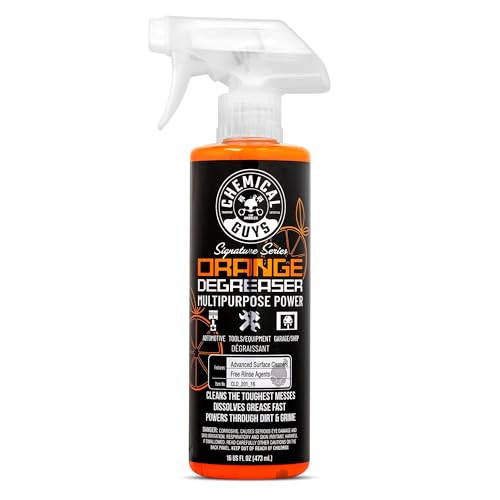 |
Chemical Guys Signature Series Orange Degreaser Best for Detailers Concentrated citrus degreaser, dilutable, 1 gallon |
9.3 | 🛒 Check Price |
 |
Purple Power Industrial Strength Cleaner and Degreaser Best Value Water-based concentrate, dilutable, 1 gallon |
9.1 | 🛒 Check Price |
 |
WD-40 Specialist Machine and Engine Degreaser Foaming Spray Best Foaming Spray Water-based foaming aerosol, 18 oz, bio-solvent formula |
9.0 | 🛒 Check Price |
|
🚗
|
Simple Green Pro HD Heavy-Duty Cleaner Concentrate Most Adaptable Concentrated water-based cleaner, dilutable, 1 gallon |
8.8 | 🛒 Check Price |
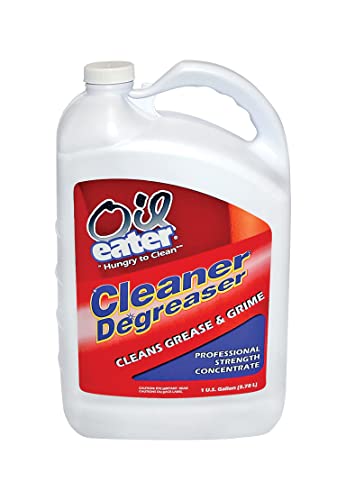 |
Oil Eater Original Cleaner and Degreaser Best Water-Based Soak Water-based concentrate, dilutable, 1 gallon |
8.5 | 🛒 Check Price |
 |
Krud Kutter Original Concentrated Cleaner Degreaser Best Low-Odor Pick Water-based concentrate, 1 gallon, low odor |
8.2 | 🛒 Check Price |
1. Gunk Original Engine Degreaser EB1: Best Overall
Gunk has been the name people reach for when an engine bay is genuinely filthy, and the Original EB1 formula earns that reputation. This is a true solvent-based degreaser, not a watered-down all-purpose spray, and that’s exactly what caked on grease demands. The aerosol lays down a thick foam that grabs onto the side of a block or a greasy valve cover, then works its way under the crust as it dwells. On a small-block that hadn’t been cleaned in a decade, one heavy coat plus a few minutes of soak let most of the buildup sheet off with nothing but a garden hose.
The trade-off is that you’re working with petroleum solvents, so the smell is sharp and you’ll want to keep it off fresh paint, soft rubber, and your skin. It’s also best used on a warm engine rather than a cold one, which means a little planning. For the worst hardened grease, though, nothing on this list lifts buildup with less scrubbing, and that’s why it takes the top spot.
- Petroleum solvent base built to penetrate baked-on grease and oil
- Foaming aerosol clings to vertical block and valve cover surfaces
- Drives down to the metal so caked layers lift off with a hose rinse
Pros: Cuts through years of hardened grease that water-based cleaners ignore; Clinging foam gives long dwell time on hot engine surfaces; Rinses off cleanly without leaving an oily residue
Cons: Strong solvent smell means you want good ventilation; Not the gentlest choice on painted or rubber components
2. Chemical Guys Signature Series Orange Degreaser: Best for Detailers
If you want one product that handles both a nasty engine bay and the rest of the car, the Chemical Guys Signature Series Orange is the smart pick. It ships as a concentrate, so for caked on grease you mix it strong, almost neat, and let the citrus solvents go to work. For lighter maintenance cleaning you dilute it way down and the same gallon stretches across dozens of jobs. That flexibility is what makes it the favorite of detailers who don’t want a shelf full of single-purpose bottles.
Because it leans on citrus solvents rather than aggressive petroleum distillates, it’s noticeably more pleasant to use and gentler on surfaces, which matters in a modern engine bay full of plastic covers and wiring looms. The flip side is that on truly fossilized grease it won’t chew through buildup in one hit the way a dedicated solvent aerosol does. You agitate with a brush, give it a second application, and it gets there, but it asks for a little more effort on the very worst crust.
- Citrus-based concentrate you dilute strong for caked grease or light for general cleaning
- Safe on most engine bay surfaces when used at the right dilution
- One gallon makes a large working volume so it lasts through many engines
Pros: Adjustable strength handles both crusty buildup and delicate finishes; Citrus formula is far easier on your nose than harsh solvents; Excellent value per use because it’s a concentrate
Cons: Needs a sprayer and water to mix, so it’s less grab-and-go; Very hard baked-on crust may need a second pass at full strength
3. Purple Power Industrial Strength Cleaner and Degreaser: Best Value
Purple Power is the jug you see on the bottom shelf of every parts store, and there’s a good reason it keeps selling. For caked on grease you use it at or near full strength, hose it on, let it dwell, agitate, and rinse. It’s a water-based alkaline degreaser rather than a solvent, so it’s non-flammable, biodegradable, and pleasant enough to use without choking on fumes. The gallon dilutes for everything from engines to greasy garage floors to mower decks, which makes it the value champion of this list.
The honest weakness is speed and surface sensitivity. On really fossilized grease it works more slowly than a Gunk-style solvent and rewards a second application and a stiff brush. And because the concentrate is fairly aggressive, you shouldn’t let it sit on bare aluminum or polished metal for long or it can leave a dull haze. Used at the right dilution and rinsed promptly, though, it punches well above its station and stretches further than almost anything else here.
- Industrial-strength alkaline formula that dilutes for many cleaning jobs
- Biodegradable, non-flammable, water-based chemistry
- Big gallon jug delivers a huge amount of usable cleaner
Pros: Tremendous coverage for the money thanks to high dilution range; Water-based and non-flammable so it’s safer to store and use; Works on engines, garage floors, tools, and equipment alike
Cons: Full-strength alkaline mix can dull bare aluminum if left too long; Slower on hardened grease than petroleum solvents
4. WD-40 Specialist Machine and Engine Degreaser Foaming Spray: Best Foaming Spray
WD-40 put real thought into this foaming degreaser, and it shows in how the product behaves on the engine. The foam is thick and visible, so you can see exactly where it lands and it stays on a valve cover or the underside of a component instead of running straight to the floor. The bio-solvent chemistry attacks grease, oil, and embedded dirt quickly, which means a relatively short dwell before you rinse, a nice convenience when you’re cleaning a warm engine outdoors.
It sits a notch below the dedicated solvent heavyweights for the worst caked grease, and the can doesn’t go very far if your whole engine bay is coated. On a focused dirty area, a leaking seal, a grimy bracket, a crusty oil pan flange, it’s excellent, and the foam control makes it easy to keep cleaner off the parts you want to protect. Pair it with a brush for the hardest spots and it handles most real-world buildup without complaint.
- Thick clinging foam stays put on vertical and overhead surfaces
- Bio-solvent formula breaks down grease, oil, and dirt
- Fast-acting so dwell time is short before rinsing
Pros: Clinging foam is easy to see and control where you spray it; Trusted WD-40 brand quality and consistency; Less harsh than pure petroleum solvent degreasers
Cons: One can doesn’t cover a very large or very dirty engine bay; Thickest baked-on crust may need agitation and a repeat coat
5. Simple Green Pro HD Heavy-Duty Cleaner Concentrate: Most All-around
Simple Green Pro HD is the heavy-duty member of the Simple Green family, and it’s the one to grab for engine work rather than the standard all-purpose version. As a concentrate you mix it strong for caked on grease and weaker for routine cleaning, and the same jug covers engines, wheels, tools, floors, and just about anything greasy in the shop. Its big selling point is chemistry that’s non-corrosive and easy on the user, which is reassuring around aluminum, sensors, and wiring.
That same gentler chemistry is its limitation against the most hardened crust. It isn’t a fast solvent, so on fossilized grease you apply it at full strength, give it real dwell time, agitate with a brush, and accept a second pass on the worst spots. It also wants a careful rinse so it doesn’t dry to a film. For anyone who values a safer, do-everything cleaner and is willing to put in a little elbow grease, it’s a genuinely useful pick.
- Heavy-duty concentrate aimed at grease, oil, and grime
- Non-flammable, non-corrosive when used as directed
- Dilutes across a wide range for engines through to general shop use
Pros: Safer chemistry that’s gentle on the user and most surfaces; Extremely multi-purpose across the whole garage; Concentrate format makes the gallon last a long time
Cons: Needs full strength and patience on truly caked grease; Requires thorough rinsing to avoid residue
6. Oil Eater Original Cleaner and Degreaser: Best Water-Based Soak
Oil Eater has a loyal following among people who clean greasy parts in a tub, and that tells you where it shines. As a water-based, biodegradable concentrate it’s at its best when grease can sit submerged and slowly release, which makes it a great choice for valve covers, brackets, oil pan baffles, and other removable components you can drop into a bucket of strong mix. It’s low odor and non-flammable, so it’s friendly to work with on the bench for long stretches.
On the engine itself, the limitation is that spraying it on a vertical block and rinsing doesn’t bite into hardened crust as fast as a clinging solvent foam. You can absolutely use it that way with full strength and a brush, but its real advantage, long soak time, is hard to deliver on an assembled engine. Think of it as a superb degreasing soak that doubles as a respectable spray cleaner, rather than the other way around.
- Water-based, biodegradable concentrate that lifts oil and grease
- Strong enough for parts soaking as well as spray cleaning
- Non-flammable and free of harsh petroleum solvents
Pros: Excellent for soaking greasy small parts until grime releases; Safer, low-odor chemistry compared to solvent aerosols; Dilutes economically for a variety of jobs
Cons: Spray-and-rinse on vertical surfaces is less aggressive than solvents; Heavy crust benefits from soaking time you can’t always give an engine
7. Krud Kutter Original Concentrated Cleaner Degreaser: Best Low-Odor Pick
Krud Kutter is the friendliest product on this list to actually use. It’s a water-based concentrate with very low odor and non-toxic chemistry, so you can clean a greasy engine in a closed garage without the eye-watering fumes of a solvent aerosol. It rinses clean, treats surfaces gently, and pulls double duty on everything from engines to greasy kitchen and patio messes, which makes it an easy bottle to justify keeping around.
Be realistic about its strength, though. Against truly caked on grease it’s the lightest cutter here, so you use it at full concentration, let it dwell, and commit to firm scrubbing with a stiff brush to break the crust. For moderate buildup and routine engine bay cleaning it does a tidy, pleasant job, and its low-odor versatility is a real plus. For the absolute worst fossilized grease, you’ll be happier reaching for one of the solvent picks higher on this list.
- Water-based concentrate that targets grease, oil, and grime
- Low odor and non-toxic when used as directed
- Cleans engines plus a variety of household and shop messes
Pros: Very low odor makes indoor and garage use comfortable; Gentle on surfaces and easy to rinse clean; Genuinely multi-purpose value across the home and garage
Cons: Lightest cutting power of this group on baked-on crust; Hardened grease needs full strength plus firm scrubbing
Frequently Asked Questions
What kind of degreaser works best on caked on grease?
For genuinely hardened, baked-on grease, a petroleum solvent-based degreaser like Gunk Original cuts the fastest because the solvents penetrate and soften the crust so it can be rinsed away with far less scrubbing. Water-based concentrates such as Purple Power, Oil Eater, and Simple Green Pro HD are safer and lower odor, and they handle heavy buildup well when used at full strength with dwell time and a stiff brush. The trade-off is that solvents work quicker on the worst crust, while water-based cleaners are gentler on you and on surfaces but ask for a bit more effort.
Should I apply engine degreaser to a hot or cold engine?
A warm engine is ideal, but not a scorching hot one. Gentle heat helps the degreaser loosen and flow into the grease, so let the engine run for a few minutes and then shut it off and allow it to cool to warm before you spray. Applying degreaser to a glowing-hot block can flash off solvents too fast and is a burn risk while you work. Cleaning stone cold also works, it just acts a little slower. Whichever you choose, cover sensitive electrical connectors and the alternator, and avoid spraying directly into the air intake.
How long should I let engine degreaser sit before rinsing?
Most fast-acting solvent and foaming sprays want roughly three to five minutes of dwell time, long enough to break down the grease but not so long that they dry out. Thicker caked on buildup benefits from agitation with a brush partway through the dwell, and a second application on the stubborn spots. Water-based concentrates can usually sit a little longer, but don’t let any degreaser dry on the surface, especially in the sun, because a dried film is harder to rinse off. Always follow the dwell guidance on the specific product label.
Is it safe to rinse engine degreaser off with water?
Yes, rinsing with water is the normal way to remove engine degreaser, and a standard garden hose works well for most jobs. The key is to protect sensitive components first. Cover or avoid spraying directly at the alternator, exposed electrical connectors, the air intake, and any open sensors, and use a gentle stream rather than a high-pressure jet that could force water into connectors. After rinsing, let the engine dry or run it briefly to evaporate moisture. If you’re mindful about where the water goes, rinsing is safe and effective.
Will engine degreaser damage paint, rubber, or aluminum?
It depends on the chemistry and how long it sits. Strong petroleum solvent degreasers can soften some rubber and dull fresh paint if left on too long, so keep them off painted body panels and rinse promptly. Aggressive alkaline concentrates like full-strength Purple Power can leave a haze on bare or polished aluminum if they dwell too long. Citrus and milder water-based cleaners such as Chemical Guys Orange, Simple Green Pro HD, and Krud Kutter are generally easier on these materials. The safe rule is to use the right product at the right strength, don’t let it dry, and rinse thoroughly when you’re done.
Our Verdict
For the worst caked on grease, the Gunk Original Engine Degreaser EB1 is our top pick because its clinging solvent foam lifts years of hardened buildup with the least scrubbing, making it the fastest way to get a filthy engine clean. Our runner up is the Chemical Guys Signature Series Orange Degreaser, the smarter buy if you want one adjustable, lower-odor concentrate that handles both crusty engine grime and the rest of your detailing work. Choose the solvent for raw cutting power, or the citrus concentrate for versatility and a gentler touch.


